Running a business is one thing. Getting a steady flow of customers is another.
You may offer excellent products, reliable services and competitive prices, but if potential customers cannot find your business online, you are missing valuable opportunities.
Today, people in India search online before choosing a restaurant, booking a hotel, joining a coaching centre, visiting a salon, buying products or hiring a service provider. They use Google Search, Google Maps, social media and online business directories to discover local businesses, compare options and make buying decisions.
This means your next customer could already be searching for a business like yours. The important question is: will they find you?
The good news is that online marketing does not always require a huge advertising budget. Small businesses, local shops, service providers, coaching centres, restaurants and startups can attract customers using affordable and practical digital marketing strategies.
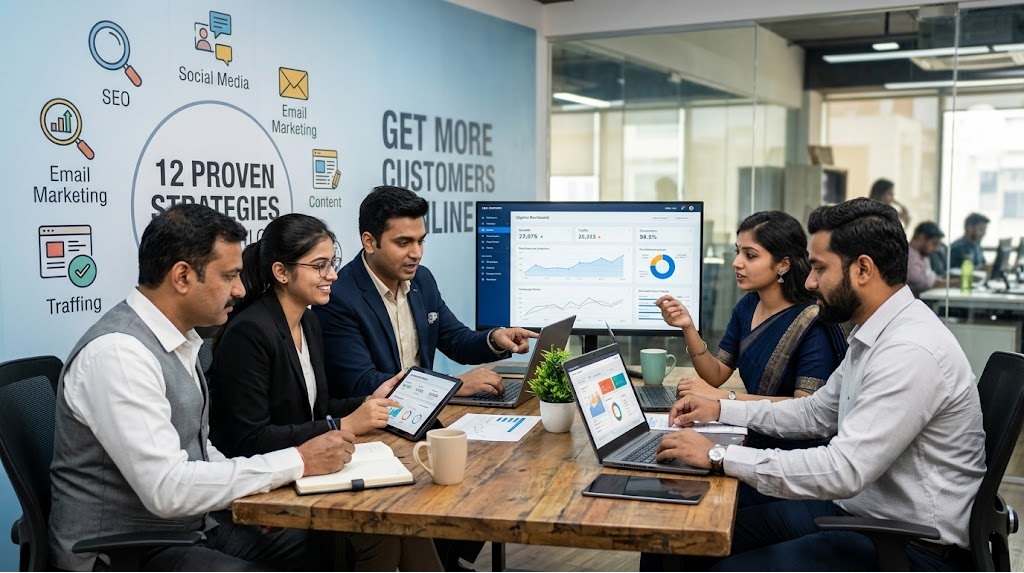
In this ultimate guide, we will explore 12 proven business marketing strategies to get more customers online in India. You will learn how to improve your online visibility, reach local customers, build trust, generate enquiries and turn online visitors into paying customers.
Understanding Online Marketing: Start with the Basics
Online marketing, also known as digital marketing, means promoting your business through the internet to reach people who may be interested in your products or services.
Unlike traditional advertising, online marketing allows customers to discover your business while actively searching for something they need.
For example:
- Someone searching for a dentist in Noida may discover your dental clinic on Google Maps.
- A parent looking for Maths tuition in Delhi may find your coaching centre through Google Search.
- Someone searching for birthday cakes near them may discover your bakery through Instagram.
- A business owner looking for website development may find your services through an online business directory.
The objective is simple: make it easier for potential customers to discover your business, understand what you offer and contact you.
Why Is Online Marketing Important for Indian Businesses?
India has a large and growing internet audience. Customers increasingly use smartphones to find nearby shops, compare prices, read reviews and contact businesses.
Whether you operate from a small shop in Jaipur, run a coaching institute in Delhi, own a restaurant in Mumbai or provide professional services in Bengaluru, your customers are likely to use online platforms to find businesses.
Here is why online marketing matters:
- Reach more potential customers: Your business can become visible to people beyond your existing customer base.
- Attract local enquiries: Reach people searching for products and services in your city or neighbourhood.
- Build business credibility: A professional online presence, genuine customer reviews and accurate business information help establish trust.
- Promote your business affordably: Several online marketing methods are available without spending money on advertisements.
- Generate direct enquiries: Customers can contact you through phone calls, WhatsApp, websites and social media.
- Compete with larger businesses: Even a small business can attract attention through useful content, strong local visibility and good customer service.
What Do You Need Before Starting Online Marketing?
You do not need to be a digital marketing expert to promote your business online. Start with a few essentials.
- A clear business name and description.
- A valid Google Business Profile, if your business is eligible.
- A working phone number and WhatsApp contact.
- A professional business email address.
- Good-quality photographs of your products, premises or services.
- A website or an online business listing.
- Accurate business location, opening hours and contact details.
Once these basics are in place, you can start implementing the following strategies.
12 Proven Business Marketing Strategies to Get More Customers Online
The most effective online marketing approach combines several methods. Relying on just one platform can limit your reach. Instead, create a strong online presence across search engines, business directories, social media and direct communication channels.
Here are 12 practical strategies that Indian business owners can use to attract more customers.
1. Create and Optimise Your Google Business Profile
If you run a local business, your Google Business Profile should be one of your first marketing priorities.
When people search for businesses near them, Google often displays local business listings along with their locations, contact details, reviews, photographs and directions.
For example, when someone searches for “best salon in Karol Bagh” or “coaching centres in Noida”, relevant local businesses may appear in Google Search and Google Maps.
Having a properly maintained Google Business Profile helps potential customers discover your business.
How to Optimise Your Google Business Profile
Add complete business information
Provide your correct business name, address, phone number, website, business category and operating hours. Make sure the information is accurate and consistent.
Choose the right business category
Select the category that best describes your primary business. Add relevant secondary categories where appropriate.
Write a useful business description
Explain what your business offers, who your customers are and what makes your products or services worth considering.
Include relevant keywords naturally, such as your business type, products, services and location.
Upload genuine photographs
Add clear photographs of your shop, office, products, team, interiors and completed work. Keep your images current.
Collect genuine customer reviews
Encourage satisfied customers to share honest feedback about their experience. Respond politely to both positive and negative reviews.
Keep your profile updated
Update opening hours, contact information, services, photographs and other details whenever something changes.
Why This Strategy Works
Google Business Profile helps you reach people who are already looking for products or services like yours.
These potential customers often have a clear requirement and may be ready to contact or visit a business.
Best for: Restaurants, hotels, coaching centres, salons, clinics, retail shops, repair services, fitness centres and other eligible local businesses.
2. List Your Business on Online Business Directories
Online business directories are platforms where customers can discover businesses based on their category, products, services and location.
Think of them as digital marketplaces for business discovery. Instead of visiting different websites to find individual businesses, customers can explore multiple options in one place.
For example, someone searching for a playschool in Gurgaon or a diagnostic centre in Delhi may discover relevant businesses through online directories.
Listing your business on multiple relevant platforms can increase your online visibility and create additional opportunities to receive enquiries.
How to Use Business Directories for Marketing
Choose relevant directories
Look for established business listing platforms that cater to your industry, city or target audience.
Create a complete business listing
Include your business name, description, address, contact details, category, services and photographs.
Add your Google Business Profile link
Connecting your listing with your Google Business Profile gives visitors another way to check your location, reviews and business information.
Include your website and WhatsApp details
Where the directory permits, add your website and WhatsApp contact so interested customers can reach you directly.
Keep your information consistent
Use the same business name, address and phone number across different platforms. Inconsistent information can confuse potential customers.
Monitor enquiries
Check whether your directory listings are generating website visits, phone calls or WhatsApp messages.
Why HotList.in Can Help Your Business Get Discovered
HotList.in is a business listing and local lead generation platform designed to help Indian businesses improve their online visibility.
Businesses can create a listing to showcase their products and services, share their Google Business Profile and provide potential customers with ways to connect.
The objective is to help businesses reach potential customers without paying commissions on the enquiries they receive.
For business owners looking for affordable online promotion, relevant business directories can be a useful addition to their marketing strategy.
Best for: Local shops, restaurants, hotels, coaching centres, service providers, healthcare businesses, travel agencies, boutiques and small businesses.
3. Build a Professional Business Website
A business website gives you a dedicated online space to explain what you offer, showcase your products and services and convert visitors into customers.
Social media platforms and business directories are useful, but your own website gives you greater control over your business information and online presentation.
A customer who discovers your business through Google or social media may visit your website before making a decision.
If your website looks professional, loads quickly and provides useful information, it can help turn that visitor into an enquiry.
Essential Pages Every Business Website Should Have
Homepage
Clearly explain what your business does, who you serve and how customers can contact you.
Your main message should be visible without requiring visitors to scroll through several sections.
About Us
Introduce your business, experience, team and the reasons customers should consider your products or services.
Products or Services
Create separate sections or pages explaining your offerings, features, pricing where appropriate and benefits.
Contact Us
Display your phone number, email address, business location and WhatsApp contact.
Include a simple enquiry form if customers need to submit detailed requirements.
Customer Reviews and Testimonials
Show genuine customer feedback to help new visitors understand the quality of your products or services.
How to Make Your Website Generate More Enquiries
- Make your phone number easy to find.
- Add a visible WhatsApp enquiry button.
- Use clear calls to action such as “Call Now”, “Get a Quote” or “Book an Appointment”.
- Make the website mobile-friendly.
- Use clear photographs and readable text.
- Avoid unnecessary pop-ups and complicated navigation.
- Ensure your website loads quickly.
You do not need an expensive website to get started. A simple, well-designed website with useful information is better than a complicated website that confuses visitors.
Best for: Almost every business, especially service providers, consultants, manufacturers, retailers, educational institutions and businesses targeting customers across multiple locations.
4. Use Local SEO to Rank Higher on Google
Search Engine Optimisation (SEO) is the process of improving your website and online content so that search engines can understand it and show it for relevant searches.
Local SEO focuses specifically on helping your business appear when people search for products or services in a particular geographical area.
For example:
- Best bakery in South Delhi
- AC repair service in Pune
- English tuition classes in Gurgaon
- Wedding photographers in Jaipur
- Diagnostic centres in Noida
These searches indicate that people are looking for specific businesses in specific locations.
How to Improve Local SEO
Use location-based keywords
Include your city, neighbourhood and service areas naturally in your website content.
For example, a salon in Rohini can create useful content around beauty services in Rohini rather than targeting only the broad keyword “beauty salon”.
Create individual service pages
If you offer several services, create separate pages explaining each one.
A dental clinic, for instance, can have individual pages for dental implants, teeth whitening, root canal treatment and orthodontic services.
Create location-specific pages carefully
If you serve multiple areas, create genuinely useful pages for those locations. Avoid publishing dozens of nearly identical pages with only the city name changed.
Optimise page titles and descriptions
Write clear SEO titles and meta descriptions that explain what the page offers and include relevant search terms.
Use descriptive headings
Organise website content using relevant H2, H3 and H4 headings. Make it easy for visitors and search engines to understand the page.
Add internal links
Connect related pages on your website so visitors can discover additional products, services and useful information.
Maintain accurate business information
Keep your website contact details consistent with your Google Business Profile and other business listings.
Understand the Difference Between SEO and Paid Advertising
SEO helps your website earn visibility in unpaid search results over time.
Google Ads allows you to pay for advertising placements and can bring traffic more quickly.
Both can be useful, but SEO is particularly important for businesses that want to build long-term organic visibility.
Remember, SEO is not an overnight process. It requires useful content, a technically sound website, relevant keywords and consistent improvement.
Best for: Businesses that want a steady source of organic traffic and local customer enquiries.
5. Promote Your Business on WhatsApp Business
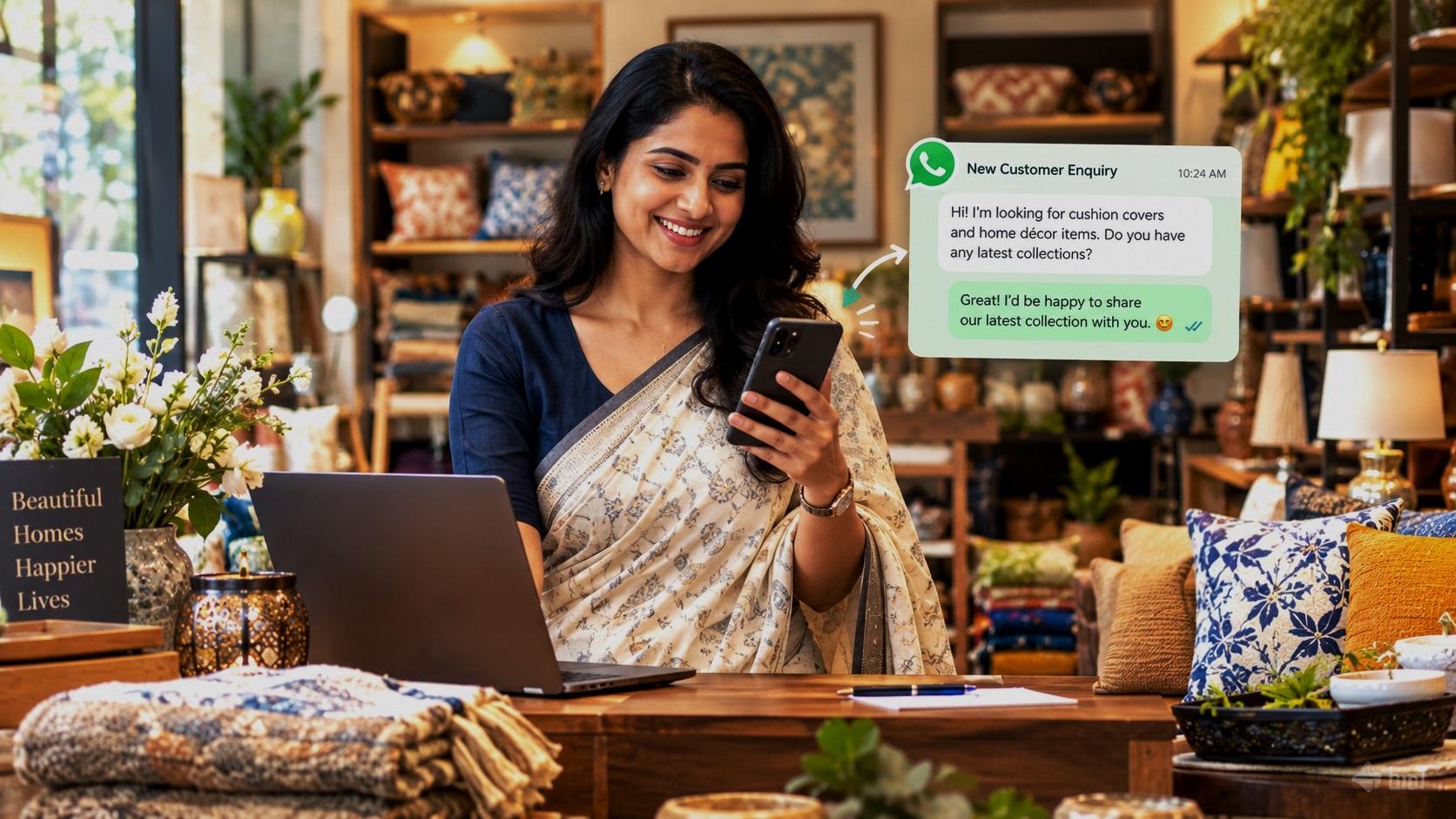
WhatsApp is one of the most convenient ways for Indian businesses to communicate with customers.
Customers already use it daily, which makes it a familiar and accessible channel for enquiries, product information, appointment bookings and customer support.
WhatsApp Business offers additional features that help small businesses manage customer communication more professionally.
How to Use WhatsApp Business for Marketing
Create a professional business profile
Add your business name, category, description, address, website, opening hours and email address.
Build a product or service catalogue
Upload product photographs, descriptions and prices where applicable. This helps customers understand your offerings without asking for every detail.
Set up automated messages
Use greeting messages to welcome new customers and away messages to inform them when you are unavailable.
Use quick replies
Save frequently used answers about pricing, delivery, appointments, availability and business hours.
Share your WhatsApp link
Place your WhatsApp contact link on your website, Google Business Profile where permitted, social media pages and business directories.
Use WhatsApp Status
Share new products, offers, customer updates, business announcements and useful information.
Send updates responsibly
Only message customers who have agreed to receive your communications. Avoid sending repeated promotional messages that may annoy people.
Turn WhatsApp Enquiries into Customers
A customer who sends a WhatsApp message has already shown interest.
Respond promptly, understand their requirement, provide accurate information and explain the next step.
For example, a coaching centre can ask about the student’s class, subject and preferred learning mode before sharing suitable course details.
A retailer can share product availability, prices and delivery information.
Best for: Retailers, boutiques, restaurants, home businesses, coaching centres, service providers, consultants and appointment-based businesses.
6. Use Instagram and Facebook to Reach More Customers
Social media marketing allows businesses to showcase their products, communicate with potential customers and build a recognisable brand.
Instagram and Facebook are particularly useful for Indian businesses because they support photographs, short videos, Stories, Reels, business pages and direct messages.
However, simply creating an account is not enough. You need to share content that gives people a reason to follow your business and eventually buy from you.
How to Promote Your Business on Instagram
Create a professional business account
Use your actual business name, a recognisable profile picture, a clear description and contact information.
Post product and service photographs
Show what you sell or offer. Use genuine photographs rather than relying entirely on generic stock images.
Create Reels
Short videos can help demonstrate products, show behind-the-scenes activities, introduce your team and explain how your services work.
Use Instagram Stories
Share daily updates, new arrivals, offers, customer feedback and important announcements.
Use relevant hashtags
Include hashtags related to your products, services, industry and location.
For example, a bakery in Delhi might use hashtags related to Delhi bakeries, birthday cakes and custom cakes.
Add your location
Location tags can help people discover your content when searching for businesses in a particular area.
How to Promote Your Business on Facebook
- Create a dedicated Facebook Business Page.
- Add complete contact and business information.
- Publish product updates and service announcements.
- Share customer testimonials with permission.
- Join relevant local community groups where business promotion is permitted.
- Respond to comments and messages.
- Share useful videos, photographs and informative posts.
What Should You Post on Social Media?
You do not need to create complicated content every day.
Use these content ideas:
- New products and services.
- Special offers and seasonal promotions.
- Frequently asked customer questions.
- Customer testimonials.
- Before-and-after results, where relevant.
- Behind-the-scenes videos.
- Tips related to your industry.
- Product demonstrations.
- Business milestones and achievements.
- Answers to common customer problems.
The key is to balance promotional content with useful and engaging information.
Best for: Restaurants, fashion stores, beauty salons, bakeries, boutiques, fitness centres, travel agencies, retailers and visually driven businesses.
7. Create Useful Content That Attracts Potential Customers
Content marketing means creating and sharing useful information that helps people understand your products, services or industry.
Instead of constantly asking people to buy something, you provide information that helps them make better decisions.
This builds credibility and gives potential customers a reason to visit your website or follow your business.
Content Marketing Ideas for Different Businesses
Coaching Centres and Educational Institutions
- How to choose the right coaching centre.
- Common mistakes students make while preparing for board exams.
- Tips to improve Mathematics and Science.
- How to prepare for competitive examinations.
Restaurants and Cafés
- Popular dishes on your menu.
- How your signature dishes are prepared.
- Food recommendations for families.
- Special seasonal menus.
Real Estate Businesses
- Things to check before buying a property.
- Understanding home loan basics.
- Tips for first-time homebuyers.
- Local property market information.
Salons and Beauty Businesses
- Hair care tips for different seasons.
- How to choose the right skincare treatment.
- Common hair care mistakes.
- Beauty service explanations.
Professional Service Providers
- Frequently asked questions about your services.
- Common customer problems and their solutions.
- Industry updates and practical advice.
- What customers should know before hiring a professional.
Which Content Formats Should You Use?
You can publish content in several formats:
- Blog articles on your website.
- Short social media posts.
- Instagram Reels.
- Facebook videos.
- Informative graphics.
- Frequently asked questions.
- Step-by-step guides.
- Educational videos.
Why Content Marketing Is Effective
Useful content can attract people who are researching a product or service before making a purchase.
For example, someone searching for “how to choose a good interior designer” may discover an article published by an interior design company.
That visitor may eventually contact the company when ready to renovate their home.
Content marketing takes time, but well-written articles and useful resources can continue attracting visitors long after publication.
Best for: Educational institutions, consultants, healthcare businesses, real estate agencies, professional service providers and businesses with expertise to share.
8. Use Google Ads and Social Media Advertising to Get Faster Results
Organic marketing methods such as SEO, social media content and business listings can take time to generate consistent results.
If you want to reach potential customers more quickly, paid online advertising can be useful.
Google Ads and Meta Ads allow businesses to promote their products and services to selected audiences.
However, advertising without a clear objective can waste money.
Google Ads for Local Businesses
Google Ads can help your business appear when people search for relevant products or services.
For example, a customer searching for “AC repair in Noida” may see advertisements from businesses offering AC repair services in that area.
Google Search campaigns are particularly useful when people are actively looking for a service.
How to Run Better Google Ads
- Choose keywords related to your actual products and services.
- Target locations where you can serve customers.
- Write advertisements that clearly explain your offering.
- Use relevant landing pages.
- Include phone calls or enquiry forms as conversion options.
- Track which keywords generate genuine enquiries.
Avoid targeting broad keywords that attract people who are unlikely to become customers.
Facebook and Instagram Ads
Meta advertising allows businesses to reach people based on factors such as location, interests and other available audience settings.
You can use advertisements to:
- Promote new products.
- Generate WhatsApp enquiries.
- Advertise special offers.
- Promote events and workshops.
- Increase awareness of your business.
- Reach people interested in your services.
Start with a Small Advertising Budget
You do not need to spend thousands of rupees immediately.
Start with a manageable budget, test different advertisements and monitor the results.
Do not judge an advertisement only by likes, views or clicks.
Measure how many people actually called, sent enquiries, booked appointments or purchased something.
Best for: Businesses that have a clear target audience, an established offering and the ability to handle additional enquiries.
9. Collect Customer Reviews and Build a Strong Online Reputation
Before spending money on a product or service, many customers check what other people say about the business.
Online reviews can influence whether someone decides to contact you, visit your shop or choose a competitor.
A business with genuine, detailed and recent reviews can make a stronger impression than one with little customer feedback.
How to Get More Genuine Customer Reviews
Ask satisfied customers
After successfully completing a purchase or service, politely request customers to share their experience.
Make reviewing easy
Share your Google review link through WhatsApp, email or a follow-up message.
Respond to every review
Thank customers for positive feedback. Respond professionally to negative feedback and try to resolve genuine concerns.
Learn from customer feedback
If several customers mention the same problem, take it seriously and improve the relevant part of your business.
Encourage honest feedback
Never buy fake reviews, offer rewards in exchange for positive ratings or ask people to post reviews without having genuine experience with your business.
Why Online Reputation Matters
Reviews help potential customers understand what to expect.
For example, someone choosing between two hotels may consider cleanliness, staff behaviour, location and service quality before making a booking.
Similarly, parents looking for a tuition centre may pay attention to feedback about teaching quality and student support.
Your online reputation is not just about ratings. It reflects how customers experience your business.
Best for: Hotels, restaurants, clinics, salons, coaching centres, service providers, retail shops and almost every customer-facing business.
10. Use Email Marketing to Stay Connected with Customers
Email marketing is a cost-effective way to communicate with existing customers and people who have voluntarily subscribed to receive updates from your business.
Unlike social media, where your content competes with countless other posts, email allows you to communicate directly with interested customers.
It is particularly useful for businesses with repeat customers, seasonal offerings or regular updates.
How to Use Email Marketing
Build an email list
Collect email addresses from customers who willingly subscribe through your website, enquiry forms, registrations or purchases.
Send useful updates
Share new product announcements, helpful information, upcoming events, seasonal offers and important business news.
Personalise your communication
Address customers appropriately and send information relevant to their interests.
Write attention-grabbing subject lines
Keep subject lines clear and interesting so recipients understand why they should open your email.
Include a clear call to action
Tell readers what to do next, such as visiting your website, viewing a product, booking an appointment or contacting your business.
Avoid excessive emails
Send messages at reasonable intervals. Always provide an easy way to unsubscribe.
Email Marketing Examples
A coaching centre can send updates about new batches, admission dates and exam preparation sessions.
A fashion boutique can announce new collections and festive offers.
A travel agency can share holiday packages and travel updates.
A service provider can send appointment reminders and maintenance information.
Best for: Coaching centres, educational institutions, e-commerce businesses, travel agencies, professional services and businesses with repeat customers.
11. Create YouTube Videos to Showcase Your Products and Expertise
Video marketing is an effective way to demonstrate what your business offers.
YouTube gives businesses an opportunity to publish useful videos that people can discover through YouTube Search and, in some cases, Google Search.
You do not need a professional camera or an expensive production team to begin.
A smartphone, clear audio and useful information are enough to create your first videos.
Video Marketing Ideas for Indian Businesses
Product-Based Businesses
- Product demonstrations.
- Unboxing videos.
- Product comparisons.
- New arrivals.
- How-to-use guides.
Service-Based Businesses
- Introduce your services.
- Explain how your process works.
- Answer common customer questions.
- Share completed projects.
- Introduce your team.
Educational Businesses
- Short concept explanations.
- Exam preparation tips.
- Subject tutorials.
- Common student mistakes.
- Expert advice for parents and students.
How to Optimise Your YouTube Videos
- Use descriptive video titles containing relevant keywords.
- Write useful video descriptions.
- Include your business name and contact information.
- Add relevant hashtags.
- Use attractive, readable thumbnails.
- Include a clear call to action.
- Link to your website or relevant business page.
- Create playlists around different products or services.
You can also repurpose your videos into shorter clips for Instagram Reels and Facebook.
This allows you to reach different audiences without creating entirely new content every time.
Best for: Educational institutions, product manufacturers, retailers, consultants, restaurants, travel businesses and service providers.
12. Use WhatsApp, Social Media and Online Listings Together to Generate More Leads
Getting your business discovered is only the first step.
The next challenge is converting interested visitors into actual enquiries and paying customers.
Many businesses lose potential customers because their contact details are difficult to find, their online information is incomplete or they take too long to respond.
This is where an integrated lead generation strategy becomes important.
Create a Simple Customer Journey
Your marketing channels should work together rather than operate independently.
For example:
- A customer searches Google for a coaching centre in their area.
- They discover your Google Business Profile or online business listing.
- They visit your website to understand your courses.
- They check reviews to evaluate your credibility.
- They click your WhatsApp button to enquire about fees and admission.
- You respond, answer their questions and guide them through the admission process.
This is how online visibility can turn into a genuine business opportunity.
Make It Easy for Customers to Contact You
Provide multiple contact options wherever possible.
- WhatsApp enquiry button.
- Click-to-call phone number.
- Website contact form.
- Email address.
- Social media direct messages.
- Business location and directions.
Do not force customers to search through multiple pages to find your contact information.
Respond to Enquiries Quickly
A customer who contacts your business may also be enquiring with your competitors.
A quick, helpful response can make a positive difference.
Follow these simple practices:
- Acknowledge enquiries promptly.
- Understand the customer’s requirement.
- Share accurate information.
- Provide clear pricing wherever possible.
- Explain the next step.
- Follow up politely when appropriate.
Track Your Leads
Maintain a simple record of enquiries.
You can use a spreadsheet to track:
- Customer name.
- Contact details.
- Date of enquiry.
- Product or service required.
- Source of enquiry.
- Current status.
- Whether the enquiry converted into a sale.
This helps you identify which marketing channels are actually bringing customers.
Best for: Every business that wants to convert online visibility into phone calls, WhatsApp enquiries, appointments and sales.
Which Online Marketing Strategies Should You Use First?
You do not need to implement all 12 strategies at once.
Your priorities should depend on your business type, marketing budget, available time and target customers.
Here is a practical guide to help you decide where to start.
| Business Type | Recommended Marketing Strategies |
|---|---|
| Restaurants and Cafés | Google Business Profile, Instagram, Facebook, Reviews, WhatsApp |
| Coaching Centres | Google Business Profile, Local SEO, Business Directories, YouTube, WhatsApp |
| Retail Shops | Google Business Profile, Business Directories, Instagram, Facebook, WhatsApp |
| Hotels and Guest Houses | Google Business Profile, Reviews, SEO, YouTube, Social Media |
| Salons and Beauty Parlours | Google Business Profile, Instagram Reels, Reviews, WhatsApp |
| Clinics and Diagnostic Centres | Local SEO, Google Business Profile, Reviews, Website |
| Real Estate Agencies | Website, Local SEO, Facebook, YouTube, Google Ads |
| Professional Services | Website, SEO, Business Directories, LinkedIn, Email Marketing |
| Travel Agencies | Website, SEO, Instagram, YouTube, WhatsApp |
| Manufacturers and Wholesalers | Website, SEO, Business Directories, YouTube, Email Marketing |
The best results generally come from combining search visibility, business discovery, customer trust and easy communication.
Free vs Paid Online Marketing: What Should Small Businesses Choose?
One of the biggest concerns for small business owners is the cost of digital marketing.
Many businesses assume that promoting themselves online requires a large advertising budget.
That is not necessarily true.
You can begin with several free marketing methods and gradually invest in paid promotion when your business is ready.
Free Online Marketing Methods
| Marketing Method | How It Helps |
|---|---|
| Google Business Profile | Helps eligible local businesses appear in Google Search and Maps |
| Social Media Pages | Allows you to promote products and services |
| Organic SEO | Helps attract unpaid search traffic |
| WhatsApp Business | Makes customer communication easier |
| YouTube Videos | Showcases products, services and expertise |
| Online Business Directories | Creates additional business discovery opportunities |
| Customer Reviews | Builds trust and credibility |
| Email Marketing | Helps maintain customer relationships |
Free does not mean effortless. These methods require time, regular updates and useful content.
Paid Online Marketing Methods
| Marketing Method | How It Helps |
|---|---|
| Google Ads | Reaches people searching for specific products or services |
| Facebook Ads | Promotes your business to selected audiences |
| Instagram Ads | Increases product and brand visibility |
| Paid Business Listings | Provides additional promotional opportunities and listing features |
| Professional Website Development | Creates a dedicated platform for your business |
| Content Marketing Services | Helps produce and distribute useful business content |
| SEO Services | Supports long-term search visibility |
How Much Should a Small Business Spend on Online Marketing?
There is no single marketing budget that works for every business.
A local shop may begin with free Google Business Profile optimisation, WhatsApp Business and social media.
A coaching centre may invest in local SEO, business listings and targeted advertising during admission season.
A restaurant may focus on Google Maps visibility, reviews, social media and local promotions.
Start with what you can afford. Measure the results before increasing your spending.
Most importantly, do not pay for marketing activities simply because someone promises thousands of views or followers. Focus on genuine customer enquiries and business growth.
7 Common Online Marketing Mistakes Indian Business Owners Should Avoid
Even businesses that actively promote themselves online sometimes struggle to generate customers.
Often, the problem is not a lack of marketing activity but a lack of direction.
Avoid these common mistakes.
1. Being Present on Every Platform Without a Plan
Creating accounts on multiple platforms does not automatically bring customers.
Choose the channels your target audience actually uses and maintain them properly.
2. Ignoring Google Business Profile Updates
Incorrect phone numbers, outdated timings and missing photographs can create a poor impression.
Keep your business information accurate.
3. Posting Only Promotional Content
Customers do not want to see advertisements all the time.
Share useful tips, demonstrations, answers to common questions and other relevant information.
4. Buying Fake Reviews and Followers
Fake engagement does not build a genuine customer base.
Focus on real reviews, meaningful interactions and actual enquiries.
5. Having No Clear Call to Action
Every marketing message should make the next step obvious.
Tell customers whether they should call, WhatsApp, visit your website or book an appointment.
6. Ignoring Mobile Users
Most local customers discover businesses through smartphones.
If your website is difficult to use on a mobile screen, you may lose potential enquiries.
7. Not Measuring Marketing Results
Without tracking, you cannot identify which activities are working.
Monitor calls, website visits, WhatsApp enquiries, bookings and sales instead of focusing only on likes and views.
How to Measure the Success of Your Online Marketing
Online marketing becomes more effective when you understand what is bringing customers to your business.
You do not need complicated software to get started. Begin by tracking a few important numbers.
Important Digital Marketing Metrics
Website visitors: How many people visit your website?
Google Business Profile interactions: How many people view your profile and interact with available features?
Phone calls: How many customers contact your business by phone?
WhatsApp enquiries: How many people send messages to ask about your products or services?
Social media engagement: Are people commenting, sharing and saving your content?
Lead conversion rate: How many enquiries eventually become paying customers?
Cost per lead: How much are you spending to generate one enquiry through paid marketing?
Return on investment: Is your marketing investment generating enough business revenue to justify the cost?
Create a Monthly Marketing Review
At the end of every month, ask yourself:
- Which platform brought the most enquiries?
- Which products or services attracted the most interest?
- Which advertisements generated genuine leads?
- Which pages received the most website traffic?
- How many enquiries converted into sales?
- What should you improve next month?
Use this information to focus on the marketing activities that produce real business results.
A Practical 30-Day Online Marketing Plan for Small Businesses
If you are new to digital marketing, the best way to start is with a simple action plan.
Rather than trying to do everything immediately, focus on building a strong foundation over the next 30 days.
Week 1: Build Your Online Presence
Day 1–2: Review your business information, phone number, address, email and contact details.
Day 3: Create or optimise your Google Business Profile, if eligible.
Day 4: Set up WhatsApp Business and complete your business profile.
Day 5: Create or update your social media business pages.
Day 6: Register your business on relevant online directories.
Day 7: Collect genuine photographs of your products, services, premises and team.
Week 2: Improve Your Visibility
Day 8–9: Research keywords customers use to find businesses like yours.
Day 10: Update your website content with relevant products, services and location information.
Day 11: Add clear contact details and WhatsApp links.
Day 12: Publish a useful social media post.
Day 13: Share a product demonstration or short business video.
Day 14: Ask satisfied customers for honest online reviews.
Week 3: Start Attracting Customers
Day 15–16: Publish an informative blog post or useful business guide.
Day 17: Share customer testimonials with permission.
Day 18: Create a short video answering a common customer question.
Day 19: Share your business listing and website with your existing network.
Day 20: Publish a product or service promotion.
Day 21: Review enquiries received through your online channels.
Week 4: Improve and Expand
Day 22–23: Check your Google Business Profile and website performance.
Day 24: Identify which social media posts received the best response.
Day 25: Update your business directory listings.
Day 26: Create another useful piece of content.
Day 27: Consider testing a small targeted advertisement if your budget permits.
Day 28: Follow up with interested customers.
Day 29: Review calls, messages, enquiries and sales.
Day 30: Prepare your marketing priorities for the next month.
At the end of 30 days, you should have a stronger online presence and a clearer understanding of which marketing channels deserve more attention.
Consistency is more important than trying to complete everything perfectly.
Frequently Asked Questions About Online Business Marketing
1. How Can I Promote My Small Business Online for Free in India?
You can promote your business for free by creating a Google Business Profile, listing your business on relevant directories, using WhatsApp Business, publishing social media content, collecting genuine customer reviews and improving your website’s SEO.
You can also create useful videos and articles to attract potential customers.
2. Which Is the Best Online Marketing Strategy for Local Businesses?
There is no single strategy that works for every business.
However, Google Business Profile optimisation, local SEO, online business directories, customer reviews and WhatsApp communication are excellent starting points for many local businesses.
3. How Can I Get More Customers from Google?
Start by creating an accurate Google Business Profile if your business is eligible.
Use relevant keywords on your website, publish useful content, maintain consistent business information and collect genuine customer reviews.
These activities can improve your chances of appearing for relevant searches, although Google rankings cannot be guaranteed.
4. Is Social Media Marketing Enough to Grow a Business?
Social media can help you build brand awareness and attract customers, but it should not be your only marketing channel.
Combine it with search engine optimisation, Google Business Profile, online directories and a professional website to create a stronger online presence.
5. How Can I Get More WhatsApp Enquiries for My Business?
Make your WhatsApp contact link easy to find on your website, social media profiles and business listings.
Promote useful products and services, share relevant offers and respond promptly to customer messages.
6. How Long Does Online Marketing Take to Show Results?
It depends on the marketing method.
Paid advertising may generate enquiries quickly, while SEO and content marketing generally take longer to produce consistent results.
Social media growth also requires regular publishing and audience engagement.
7. Do I Need a Website to Promote My Local Business?
A website is highly useful because it gives you control over how your business presents its products, services and contact information.
However, you can start promoting your business through Google Business Profile, WhatsApp Business, social media and online directories while developing your website.
8. Are Online Business Directories Useful for Small Businesses?
Yes. Relevant online directories provide additional opportunities for customers to discover your business.
A complete listing with accurate information, photographs, service details and contact options can help attract potential customers.
Choose directories that are relevant to your business and target audience.
9. Should I Hire a Digital Marketing Agency?
You can manage basic online marketing activities yourself if you have the time and willingness to learn.
However, professional support may be useful when you need advanced SEO, website development, paid advertising, content creation or a more structured marketing strategy.
Before hiring an agency, understand what services are included and how performance will be measured.
10. How Much Does Online Marketing Cost in India?
Online marketing costs vary widely depending on your business requirements.
You can begin with free tools and platforms. Paid advertising, professional SEO, website development and content marketing require additional investment.
The best approach is to start within your budget and increase spending based on measurable results.
Make Your Business Easy to Find Online
Getting more customers online is not about being present on every platform or spending money on every available marketing service.
It is about making your business visible when people need your products or services, giving them useful information, building their confidence and making it easy for them to contact you.
Start with the basics. Optimise your Google Business Profile, create complete online business listings, use WhatsApp Business, build a professional website and share useful content regularly.
Then expand into SEO, social media marketing, email campaigns, video marketing and paid advertising as your business grows.
Most importantly, remember that online visibility is only the beginning. Good products, reliable service, honest communication and satisfied customers are what turn enquiries into long-term business relationships.
Ready to get your business discovered by more customers?
Create your business presence on HotList.in and showcase your products and services to potential customers searching for businesses online.
Give your business another opportunity to be discovered. Let more customers find you online.
Related Posts
How to Get Your Business Featured in Google AI Overviews
How to Use Instagram to Promote Your Small Business in India