Facebook Marketing for Small Businesses in India

Facebook Marketing for Small Businesses in India

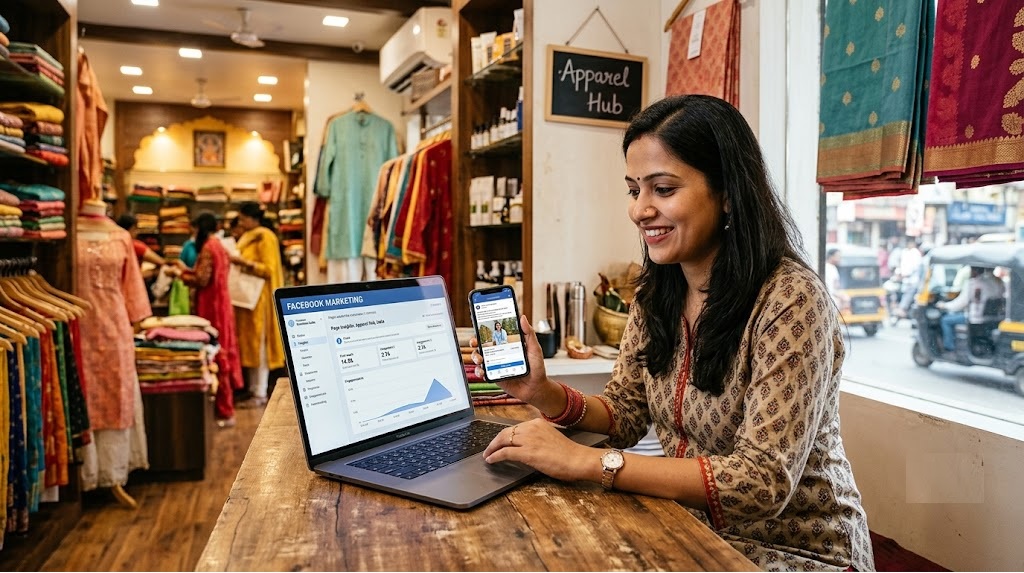
Running a small business in India is challenging. You may have excellent products, quality services and happy customers, but how do you make more people aware of your business?

Your potential customers are already spending time on Facebook. They browse local business pages, watch videos, look for recommendations, read customer reviews, discover new products and interact with businesses in their neighbourhood.

This creates a valuable opportunity for small business owners.

Facebook marketing allows local businesses to reach potential customers, showcase their products and services, build trust and generate enquiries without spending a fortune on advertising.

Whether you run a restaurant, coaching centre, beauty salon, retail shop, playschool, fitness centre, travel agency or home-based business, Facebook can help you attract more customers.

The best part? You can start with a free Facebook Business Page and grow your marketing efforts as your business develops.

This guide explains how to use Facebook marketing effectively, with practical strategies, content ideas, advertising tips and examples that Indian business owners can implement without needing a professional marketing team.

1. What Is Facebook Marketing?

Facebook marketing is the process of promoting your business, products or services through Facebook to connect with potential customers.

It involves creating and managing a Facebook Business Page, publishing useful content, sharing product photographs and videos, interacting with customers, joining relevant communities and running paid advertisements.

For example:

  • A restaurant in Delhi can share its menu, food photographs, special offers and customer feedback.
  • A coaching centre in Jaipur can publish information about courses, admission dates, faculty and student achievements.
  • A beauty salon in Mumbai can showcase its services, latest hairstyles, bridal makeup and special packages.
  • A playschool in Bengaluru can share classroom activities, learning programmes and information for parents.
  • A local clothing shop in Lucknow can display new arrivals, seasonal collections and festival offers.

The objective is simple: make your business visible to the right people and give them a reason to contact you.

Facebook Marketing vs Facebook Advertising

These two terms are often used interchangeably, but they are not the same.

Facebook marketing includes all your promotional activities on the platform, including free posts, videos, customer interactions, community participation and paid campaigns.

Facebook advertising involves paying Meta to display your advertisements to selected audiences.

You can use Facebook marketing without spending money on advertisements. However, paid advertising can help you reach more people and generate enquiries faster when campaigns are properly planned.

2. Why Should Small Businesses in India Use Facebook Marketing?

Facebook remains a useful marketing channel for businesses that want to reach local audiences, build customer relationships and promote their products or services.

Here are some important benefits.

2.1 Promote Your Business Without a Large Budget

Traditional advertising through newspapers, magazines, banners and local publications can become expensive.

Facebook offers a more affordable starting point.

You can create a Business Page, publish posts, share photographs, announce offers and communicate with potential customers without paying for every activity.

Even a small business with a limited marketing budget can establish an online presence.

2.2 Reach Customers in Your Local Area

One of the biggest advantages of Facebook is the ability to connect with people based on their location and interests.

A business does not necessarily need customers from across India. It may simply need more customers from nearby residential areas, neighbourhoods or commercial markets.

For example:

  • A dentist in Karol Bagh can target people looking for dental services in and around the area.
  • A tuition centre in Noida can reach parents living in nearby sectors.
  • A restaurant in Pune can promote its food and offers to people in surrounding localities.
  • A boutique in South Delhi can showcase its collections to potential customers nearby.

Local marketing helps businesses focus their efforts on people who are more likely to visit or purchase from them.

2.3 Showcase Your Products and Services

Customers often want to see what a business offers before making a purchase.

Facebook gives you an opportunity to showcase your products, services, facilities, staff, work samples and customer experiences.

A clothing store can display its latest collection. A restaurant can share food photographs. A salon can showcase its work. A coaching institute can introduce its teachers.

Good photographs and informative videos can help customers understand your offerings before contacting you.

2.4 Build Trust and Credibility

People are more comfortable contacting businesses when they can find useful information about them online.

An active Facebook Page with genuine photographs, regular updates, customer feedback and clear contact details creates a better impression than an incomplete or inactive page.

Responding to questions and addressing customer concerns also shows that your business is approachable and attentive.

2.5 Generate Direct Customer Enquiries

Facebook can help potential customers contact your business through Messenger, WhatsApp or other available contact options.

For example, someone interested in a coaching course can ask about fees and batches. A customer looking for a birthday cake can enquire about designs and prices.

These conversations can turn into genuine business opportunities.

2.6 Stay Connected With Existing Customers

Marketing is not only about finding new customers.

Facebook also helps you stay connected with people who have already purchased from you.

You can inform them about new products, upcoming events, seasonal offers, service updates and special promotions.

Regular communication can encourage repeat purchases and referrals.

3. How to Set Up a Facebook Business Page

Before you start promoting your business, create a professional Facebook Business Page.

A Business Page is different from a personal Facebook profile. It is designed for businesses, organisations, brands and public figures.

You can create one through Facebook and manage it using the available business management tools.

Follow these steps.

Step 1: Create Your Business Page

Log in to Facebook and look for the option to create a new Page.

Enter your business name and select the category that best describes your business.

Examples include:

  • Restaurant
  • Education
  • Beauty, cosmetic and personal care
  • Shopping and retail
  • Health and wellness
  • Travel agency
  • Professional services
  • Local service

Choose the most relevant category so that visitors can quickly understand what your business does.

Step 2: Add a Professional Profile Picture

Your profile picture should help people recognise your business.

For most businesses, the logo is the best choice.

Use a clear, high-quality image that remains recognisable even when displayed in a small circular format.

Avoid using complicated designs or photographs containing too much text.

Step 3: Add an Attractive Cover Photo

Your cover photo is one of the first things visitors notice.

Use it to communicate what your business offers.

Examples:

  • A restaurant can display its signature dishes.
  • A salon can showcase its beauty services.
  • A coaching centre can feature its classrooms and faculty.
  • A retail shop can display its latest products.

You can also include a short tagline, important service information or your location.

Make sure the design looks good on both desktop and mobile screens.

Step 4: Write a Clear Business Description

Your description should explain what your business does, where it operates and why customers should choose you.

Include relevant keywords naturally.

For example:

“Looking for quality home tuition in Noida? We provide experienced tutors for school students, covering all major subjects and educational boards. Contact us to learn more about our tuition programmes.”

A useful description should answer three questions:

  • What products or services do you offer?
  • Where is your business located?
  • How can customers contact you?

Step 5: Add Complete Business Information

An incomplete Facebook Page can make potential customers hesitate.

Add all relevant details:

  • Business name
  • Full business address
  • Phone number
  • WhatsApp contact
  • Website URL
  • Business hours
  • Email address
  • Products and services
  • Location or service areas

If customers visit your physical establishment, make sure your address and map information are accurate.

Step 6: Add a WhatsApp or Contact Button

Make it easy for customers to contact you.

Depending on the options available to your Page, add an appropriate action button such as WhatsApp, Call Now, Send Message or Contact Us.

A customer should not have to search through multiple posts to find your contact information.

Step 7: Publish Your First Few Posts

Do not leave your Page empty after creating it.

Before inviting customers to follow you, publish some useful introductory content.

Start with:

  1. An introduction to your business.
  2. Your main products or services.
  3. Photographs of your products, premises or work.
  4. Your location and contact information.
  5. A special offer or an introductory announcement.

This gives new visitors enough information to understand your business.

4. How to Promote Your Business on Facebook for Free

You do not need to run advertisements immediately.

There are several ways to promote your business organically and gradually build an audience.

4.1 Post Regularly on Your Facebook Page

Consistency matters.

An inactive Page does little to remind people that your business exists.

Create a simple posting schedule that you can maintain.

For a small business, start with three to five useful posts every week, depending on the amount of content you can create.

Your posts should not always be advertisements.

Share information that helps customers understand your products, services and expertise.

For example, a restaurant can share recipes, food preparation videos, menu updates and customer favourites.

A coaching centre can publish study tips, subject explanations, exam updates and information about new batches.

4.2 Use High-Quality Photographs

Photographs are among the easiest ways to showcase a local business.

You do not need an expensive camera or professional photography equipment.

A modern smartphone can produce good results if you pay attention to lighting, background and presentation.

Some practical ideas:

  • Photograph your actual products.
  • Show your workplace or business premises.
  • Display different product varieties.
  • Share before-and-after results where appropriate.
  • Introduce your team.
  • Show how your products are prepared or services are delivered.

Use genuine photographs rather than relying entirely on generic stock images.

Customers want to see the real business they may be purchasing from.

4.3 Create Facebook Reels

Short videos are an excellent way to introduce your business to people who may not already follow your Page.

Facebook Reels can help you demonstrate products, explain services and show what makes your business different.

Ideas for different businesses:

Business type Reel ideas
Restaurant Food preparation, popular dishes and kitchen highlights
Boutique New arrivals, styling tips and outfit combinations
Beauty salon Hair transformations and beauty tips
Coaching centre Teacher introductions and quick lessons
Fitness centre Exercise demonstrations and workout tips
Bakery Cake decoration and baking processes
Playschool Learning activities and classroom moments
Travel agency Destination highlights and travel tips

Keep videos focused on one topic.

Start with something interesting in the first few seconds. Add clear text where useful and finish with a simple action such as asking viewers to contact your business.

4.4 Share Customer Testimonials

Genuine customer feedback can influence purchasing decisions.

Ask satisfied customers whether they would be comfortable sharing their experience.

You can publish testimonials as text posts, photographs or short videos, with their permission.

For example:

“Thank you for choosing us for your special occasion. We are delighted that you enjoyed our service!”

Avoid inventing reviews or presenting paid endorsements as independent customer experiences.

Authenticity is more valuable than exaggerated promotional claims.

4.5 Share Festival and Seasonal Offers

Indian customers respond well to relevant seasonal promotions.

Use important festivals, holidays and local events as opportunities to introduce special products and offers.

Some examples include:

  • Diwali gift collections
  • Holi special offers
  • Raksha Bandhan gift packages
  • Wedding season collections
  • Summer vacation programmes
  • Back-to-school offers
  • Christmas bakery specials
  • New Year fitness memberships

Plan these promotions in advance instead of publishing them at the last minute.

4.6 Join Relevant Facebook Groups

Facebook Groups can help local businesses connect with people in specific neighbourhoods, cities and interest communities.

Look for groups related to:

  • Your city or locality
  • Local residents
  • Parents and families
  • Food and restaurants
  • Shopping and fashion
  • Education and tuition
  • Local recommendations
  • Community events

However, do not join groups simply to publish advertisements repeatedly.

Read the group rules first. Some groups do not allow commercial promotions.

Participate in discussions, answer relevant questions and share useful information.

When promotional posts are permitted, make them informative and relevant to the group.

4.7 Use Facebook Stories

Stories are useful for sharing quick updates that do not necessarily need to remain permanently on your Page.

You can use them for:

  • Daily offers
  • New product arrivals
  • Behind-the-scenes photographs
  • Business updates
  • Limited-time promotions
  • Customer feedback
  • Event announcements

Stories help keep your business visible to people who already follow your Page.

4.8 Invite Existing Customers to Follow Your Page

Your existing customers can become your first Facebook audience.

Invite friends, customers, employees, suppliers and business associates to follow your Page.

Add your Facebook Page link to your website, email signature, visiting cards, invoices and WhatsApp Business profile.

You can also display a QR code that takes customers directly to your Facebook Page.

The objective is to bring people who already know your business into your online community.

5. Facebook Content Ideas for Different Small Businesses in India

One of the biggest challenges for small business owners is deciding what to post.

If every post simply says “Buy Now” or “Contact Us”, people may lose interest.

A better strategy is to mix promotional posts with educational, informative, entertaining and trust-building content.

Here are practical content ideas for different business categories.

5.1 Restaurants, Cafés and Food Businesses

Food businesses have plenty of opportunities to create attractive Facebook content.

Post ideas:

  • Your most popular dishes.
  • Daily specials and new menu items.
  • Food preparation videos.
  • Customer favourites.
  • Kitchen and restaurant photographs.
  • Special family dining packages.
  • Festival menus and seasonal dishes.
  • Customer testimonials.
  • Restaurant location and parking information.

A simple video showing how your signature dish is prepared can be more engaging than a long advertisement.

5.2 Coaching Centres and Tuition Classes

Parents often look for educational information before selecting a coaching centre or tutor.

Useful Facebook content includes:

  • Faculty introductions.
  • Course details and admission announcements.
  • Subject-specific learning tips.
  • Exam preparation strategies.
  • Student achievements, with permission.
  • Classroom photographs.
  • Demo class announcements.
  • Information about online and offline classes.

Focus on demonstrating the quality of your teaching rather than repeatedly asking parents to enrol.

5.3 Beauty Parlours and Salons

Beauty and wellness businesses can use visual content to showcase their work.

Ideas include:

  • Latest hairstyles.
  • Makeup transformations.
  • Bridal makeup packages.
  • Skincare tips.
  • Seasonal beauty offers.
  • New treatments and services.
  • Salon interiors.
  • Customer experiences.

Always obtain permission before publishing identifiable customer photographs.

5.4 Retail Shops and Designer Boutiques

Retail businesses should use Facebook to introduce products and encourage customers to visit or enquire.

Share:

  • New arrivals.
  • Product photographs.
  • Price information.
  • Festival collections.
  • Styling suggestions.
  • Product demonstrations.
  • Special discounts.
  • Store location and opening hours.

Make it easy for customers to enquire about product availability and purchasing options.

5.5 Playschools and Daycare Centres

Parents want to understand the environment, teaching methods and safety arrangements before choosing a playschool.

Useful content includes:

  • Classroom activities.
  • Learning programmes.
  • School facilities.
  • Teacher introductions.
  • Admission announcements.
  • Parent testimonials.
  • Events and celebrations.
  • Information about age groups and timings.

Avoid publishing children’s photographs or personal information without appropriate parental consent.

5.6 Fitness Centres and Yoga Studios

Fitness businesses can attract attention by sharing useful information rather than only advertising memberships.

Try:

  • Simple exercise demonstrations.
  • Beginner workout routines.
  • Yoga tips.
  • Healthy lifestyle suggestions.
  • Trainer introductions.
  • Gym facility photographs.
  • Membership information.
  • Group activity videos.

Useful content helps establish your business as a source of fitness knowledge.

6. How to Run Facebook Ads for Small Businesses in India

Organic Facebook marketing is useful, but it may take time to build an audience.

If you want to reach more potential customers, paid Facebook advertising can help.

Facebook advertising is managed through Meta’s advertising tools.

You can create campaigns with different objectives, audiences, placements and budgets.

However, spending money without a clear marketing goal can lead to poor results.

Before creating an advertisement, decide exactly what you want customers to do.

6.1 Choose the Right Advertising Objective

Your advertising objective should match your business requirements.

Business goal Suitable advertising approach
Increase brand awareness Awareness campaigns
Get more enquiries Leads campaigns
Receive WhatsApp enquiries Click-to-WhatsApp advertising
Generate website visitors Traffic campaigns
Sell products online Sales campaigns
Promote videos Video-view focused campaigns

The available objectives and campaign options may change as Meta updates its advertising platform.

For most local businesses, enquiries, leads and sales are more meaningful goals than simply collecting likes.

6.2 Target the Right Location

Local targeting is particularly important for Indian small businesses.

There is little value in spending money reaching people in another city if your customers need to visit your physical establishment.

For example:

  • A salon in Rohini can focus on relevant nearby residential areas.
  • A restaurant in Connaught Place can promote itself to people who may visit that part of Delhi.
  • A tuition centre in Sector 62, Noida, can reach parents in nearby residential sectors.
  • A boutique in Jaipur can target relevant audiences within its delivery or service area.

Use location settings that match where your customers actually come from.

For service businesses that travel to customers, consider the areas you can realistically serve.

6.3 Select the Right Audience

Your audience should be based on the people most likely to purchase your products or services.

Consider:

  • Location
  • Age group, where relevant
  • Interests
  • Customer requirements
  • Shopping behaviour
  • Previous interactions with your business

For example, a playschool may focus on parents in its service area, while a wedding photographer may target people interested in wedding-related services.

Avoid selecting too many unrelated interests. A smaller, relevant audience can be more useful than a large audience with little interest in your offering.

6.4 Set a Realistic Advertising Budget

You do not need a huge budget to experiment with Facebook advertising.

Start with an amount your business can comfortably afford to test.

For example, you could allocate:

  • ₹150 per day for an initial small campaign.
  • ₹300 per day to test different advertisements.
  • ₹500 per day for a more substantial local campaign.

These are illustrative testing budgets, not guaranteed spending requirements or performance benchmarks.

Start small, monitor results and increase spending only when you identify an advertisement that generates worthwhile enquiries.

6.5 Create Advertisements That Encourage Action

A good Facebook advertisement should communicate three things:

  1. What are you offering?
  2. Why should customers consider your business?
  3. What should they do next?

For example, a local coaching centre could use:

Need Expert Tuition for Your Child in Noida?

Explore experienced teachers, personalised learning support and classes for different school subjects.

Contact us today to enquire about courses and admission details.

Use a relevant photograph, short video or product demonstration.

Include a clear call to action such as Send Message, WhatsApp or Learn More, depending on your campaign.

6.6 Test Different Advertisements

Do not assume that your first advertisement will perform best.

Experiment with different versions.

For example:

  • One advertisement featuring your products.
  • Another highlighting a special offer.
  • A third using a customer testimonial.
  • A fourth featuring a short video.

Compare the results and identify which version generates better-quality enquiries.

This process is called A/B testing.

7. How to Generate More WhatsApp Enquiries Through Facebook

For many Indian businesses, WhatsApp is one of the easiest ways to communicate with potential customers.

Customers are familiar with it and can quickly ask questions about prices, availability, services and appointments.

You can use Facebook to encourage visitors to start a WhatsApp conversation.

7.1 Connect Your WhatsApp Business Account

Where supported, connect your WhatsApp Business account to your Facebook Page.

This allows you to use WhatsApp as a contact option and create advertisements that direct interested customers into a conversation.

7.2 Use Clear WhatsApp Calls to Action

Your posts should tell people what they can enquire about.

Examples:

  • WhatsApp us for today’s menu.
  • Message us for course details and fees.
  • Contact us for product availability.
  • WhatsApp to book an appointment.
  • Message us for a personalised quotation.

Specific calls to action work better than vague statements such as “Contact us for more information.”

7.3 Respond to Enquiries Quickly

Getting an enquiry is only the beginning.

Customers may contact several businesses before making a decision.

Respond professionally and provide the information they need.

Prepare simple answers for frequently asked questions about pricing, timings, location, availability and services.

If you cannot respond immediately, use appropriate WhatsApp Business features such as greeting messages and away messages.

8. How to Create a Facebook Marketing Strategy for Your Business

Posting randomly is not a marketing strategy.

You need a simple plan that identifies your audience, marketing objectives, content and promotional activities.

Here is a practical framework.

Step 1: Identify Your Ideal Customers

Think about the people most likely to purchase from your business.

Ask yourself:

  • Who needs my products or services?
  • Where do these people live?
  • What problems are they trying to solve?
  • What information do they need before purchasing?
  • Why should they choose my business?

The more clearly you understand your customers, the easier it becomes to create relevant content.

Step 2: Set Clear Marketing Goals

Choose one or two primary objectives.

For example:

  • Increase local brand awareness.
  • Get 30 genuine enquiries per month.
  • Promote a new product collection.
  • Increase restaurant visits.
  • Generate admissions for upcoming courses.
  • Receive more appointment bookings.

Specific goals make it easier to evaluate your marketing efforts.

Step 3: Create a Monthly Content Calendar

Planning your posts in advance saves time and improves consistency.

You can use a simple spreadsheet or calendar to organise your content.

A useful starting point is to publish three to five posts every week.

Step 4: Use Different Content Formats

Do not depend entirely on text posts.

Experiment with:

  • Photographs
  • Reels
  • Short videos
  • Educational graphics
  • Product demonstrations
  • Customer testimonials
  • Festival announcements
  • Question-and-answer posts

Different formats help you communicate with different types of audiences.

Step 5: Engage With Your Audience

Respond to comments, answer questions and acknowledge customer feedback.

If someone asks about a product, provide useful information rather than sending a generic response.

Regular interaction helps create stronger customer relationships.

Step 6: Review Your Results

At the end of every month, examine your Facebook performance.

Identify the posts that received the most meaningful engagement and the campaigns that generated genuine enquiries.

Use these insights to improve your next month’s strategy.

9. A Simple 30-Day Facebook Marketing Plan for Indian Small Businesses

If you are new to Facebook marketing, the following 30-day plan can help you get started without feeling overwhelmed.

Period Marketing activities Objective
Days 1–3 Create your Page, add business details and contact information Establish your presence
Days 4–7 Publish introductory posts, products and services Introduce your business
Days 8–10 Share photographs, videos and customer information Build interest
Days 11–14 Join relevant local groups and participate in discussions Connect with communities
Days 15–18 Publish useful tips, demonstrations and customer feedback Build credibility
Days 19–21 Share a special offer or seasonal promotion Encourage enquiries
Days 22–25 Experiment with Reels and short videos Expand visibility
Days 26–28 Test a small local advertising campaign if your budget permits Reach potential customers
Days 29–30 Review performance and plan the next month Improve results

The purpose of this plan is to establish consistent marketing habits.

You do not need to complete every activity perfectly. Start with what you can manage and improve gradually.

10. Facebook Marketing Mistakes Small Businesses Should Avoid

Many businesses create a Facebook Page but fail to use it effectively.

Avoid these common mistakes.

10.1 Posting Only Advertisements

If every post asks people to buy something, customers may stop paying attention.

Balance promotional content with useful information, tips, demonstrations and customer stories.

10.2 Ignoring Comments and Messages

A potential customer who receives no response may simply contact a competitor.

Check your messages regularly and respond to enquiries professionally.

10.3 Using Poor-Quality Photographs

Dark, blurry or poorly presented photographs can make even excellent products look unattractive.

Use clear photographs with good lighting and uncluttered backgrounds.

10.4 Targeting Everyone

A business that targets everyone often wastes time and advertising money.

Focus on customers who are genuinely interested in your offerings and are within your service area.

10.5 Buying Fake Followers and Likes

Fake followers may increase numbers, but they do not necessarily bring customers.

Focus on building a genuine audience that has an actual interest in your business.

10.6 Running Advertisements Without Tracking Results

Do not judge an advertisement only by the number of likes or views.

Track enquiries, calls, WhatsApp conversations, appointments and actual sales.

10.7 Ignoring Other Online Marketing Channels

Facebook should not be your only online marketing platform.

Your potential customers may also discover businesses through Google Search, Google Maps, business directories, Instagram and other online platforms.

A strong marketing strategy should make your business visible in more than one place.

11. How to Measure the Success of Your Facebook Marketing

Facebook provides insights and performance data that can help you understand how people interact with your Page and advertisements.

Depending on the available reporting features, you can monitor several important measurements.

Reach

Reach tells you how many individual people saw your content.

It helps you understand how far your posts and advertisements are spreading.

Engagement

Engagement includes interactions such as reactions, comments, shares and other available post interactions.

High engagement can indicate that people find your content interesting.

Link Clicks

Link clicks help you understand whether people are interested enough to visit your website or another destination.

Messages and Enquiries

Track the number of people who contact you through Messenger, WhatsApp or other channels.

More importantly, identify how many of these enquiries are relevant to your business.

Leads and Conversions

A lead is a potential customer who has shown interest in your product or service.

A conversion occurs when someone completes a desired action, such as making a purchase, booking an appointment or enrolling in a course.

Cost Per Lead

If you run advertisements, calculate how much you spend to generate each enquiry.

For example:

If you spend ₹3,000 and receive 30 enquiries, your average cost per enquiry is ₹100.

However, do not stop at this calculation. Also examine how many enquiries become paying customers.

A campaign generating fewer but more serious enquiries may be more valuable than one producing numerous irrelevant messages.

12. Facebook Marketing Tips for Different Indian Business Locations

Local marketing requires a slightly different approach depending on where your business operates.

A business in a large metropolitan city may face different challenges from one in a smaller town.

Here are some practical suggestions.

Businesses in Delhi NCR

Focus on neighbourhoods, residential sectors and nearby commercial areas.

A coaching centre in Noida, a salon in Rohini or a restaurant in Karol Bagh should communicate its location clearly.

Mention nearby landmarks where useful so that customers can identify the business easily.

Businesses in Mumbai and Pune

Use location-specific posts to reach people in your immediate service area.

Restaurants, boutiques, fitness centres and professional service providers can highlight convenience, accessibility and relevant local offers.

Businesses in Bengaluru and Hyderabad

Businesses catering to students, working professionals and families can create content around their specific requirements.

For example, fitness centres can promote convenient workout timings, while restaurants can highlight takeaway, delivery and dining options.

Businesses in Jaipur, Lucknow, Indore and Other Cities

Local language content can help businesses connect with customers who prefer communicating in Hindi or their regional language.

You can create bilingual posts using English and Hindi or another relevant local language.

The important thing is to communicate in a way that your customers understand comfortably.

13. Facebook Marketing and Other Online Promotion Strategies: Why You Need Both

Facebook can help your business reach people who spend time on social media. However, not every potential customer discovers businesses through Facebook.

Some people search Google for a nearby restaurant, coaching centre, doctor, salon or shop.

Others look for recommendations in business directories or visit websites to compare services.

This is why combining Facebook marketing with other online promotion methods can improve your overall visibility.

13.1 Create and Optimise Your Google Business Profile

A Google Business Profile helps eligible local businesses appear in Google Search and Google Maps.

Make sure your profile contains:

  • Correct business name.
  • Accurate address and location.
  • Phone number and website.
  • Business hours.
  • Relevant categories.
  • Products and services.
  • Genuine photographs.
  • Customer reviews and responses.

Keep your information updated.

A well-maintained Google Business Profile can help people discover your business when searching for relevant local services.

13.2 Get Your Business Listed on HotList.in

Facebook helps you promote your business through social media, but a dedicated business listing can give potential customers another place to discover your products and services.

HotList.in is a business listings and local lead generation platform designed to help Indian businesses improve their online visibility and receive direct customer enquiries.

You can use HotList.in to showcase your business information and make it easier for potential customers to discover what you offer.

A HotList business listing can help you:

  • Publish your business details online.
  • Display your Google Business Profile link.
  • Direct visitors to your website.
  • Enable WhatsApp enquiries through eligible paid listings.
  • Promote your business through HotList.in and its social networks through paid listing benefits.

If you want to promote your local business beyond Facebook, a business listing can provide an additional online discovery and enquiry channel.

Visit HotList.in to explore business listing opportunities.

13.3 Use WhatsApp Business for Customer Communication

WhatsApp Business can help you manage customer conversations and respond to enquiries.

Use its available features to:

  • Create a business profile.
  • Display products and services through a catalogue.
  • Set greeting and away messages.
  • Organise conversations using labels.
  • Share product information.
  • Respond to customer questions.

Combine WhatsApp Business with Facebook and your business listing to create a convenient communication process.

13.4 Build a Simple Business Website

A website gives your business a dedicated online presence.

It allows you to provide detailed information about your products, services, pricing, location, contact details and frequently asked questions.

You can also use your website to publish useful articles that attract customers through Google Search.

Add your website link to your Facebook Page and other online business profiles.

14. Frequently Asked Questions About Facebook Marketing for Small Businesses

Is Facebook marketing free for small businesses in India?

Yes. Creating a Facebook Business Page and publishing regular organic posts are free.

However, Facebook advertising requires a budget. You may also incur costs if you hire professionals to create content or manage campaigns.

How can I promote my small business on Facebook without spending money?

Start by creating a complete Business Page. Publish useful posts, share product photographs and videos, participate in relevant Facebook Groups, invite existing customers to follow your Page and respond to enquiries.

Consistency and relevant content are important for organic promotion.

How many times should a small business post on Facebook?

Three to five quality posts per week can be a practical starting point.

However, the ideal frequency depends on your business, audience and ability to create useful content.

Focus on consistency rather than publishing several low-quality posts every day.

Are Facebook Ads worth it for small businesses?

They can be worthwhile when you have a clear objective, relevant audience and properly planned campaign.

Start with a manageable budget, test different advertisements and measure the enquiries and sales generated.

Do not spend money simply to increase likes and followers.

How can I get more local customers through Facebook?

Use location-specific content, mention your business area, participate in relevant local groups and create advertisements targeted towards people in your service area.

Make sure your contact details and location are easy to find.

Can I promote my business on Facebook without a website?

Yes. You can create a Facebook Business Page and use available contact options such as WhatsApp and Messenger to receive enquiries.

However, having a website can provide additional credibility and allow you to share more detailed information about your business.

Is Facebook better than Instagram for small businesses?

Both platforms can be useful, but their suitability depends on your products, services and target customers.

Facebook is useful for local communities, business information, Groups and customer interactions.

Instagram is particularly useful for visual content, product discovery, Reels and lifestyle-related businesses.

Many businesses can benefit from using both.

Can Facebook help a local shop increase sales?

Yes. A local shop can showcase products, announce new arrivals, share special offers and communicate directly with potential customers.

You can also use local advertising to reach people who are more likely to visit your shop or purchase your products.

How long does it take to see results from Facebook marketing?

There is no fixed timeline.

You may receive enquiries soon after publishing an offer or running an advertisement. However, building a recognisable brand, developing customer trust and generating consistent sales generally requires ongoing effort.

Monitor your results and improve your strategy over time.

15. Make Facebook Marketing Work for Your Small Business

You do not need a large marketing budget or an expert team to start promoting your business on Facebook.

You need a clear understanding of your customers, an informative Business Page, useful content and regular communication.

Start with the basics. Show people what your business offers. Share genuine photographs, answer questions, highlight customer experiences and make it easy for interested people to contact you.

As your online presence grows, combine Facebook marketing with Google Business Profile optimisation, WhatsApp Business, a website and trusted business listing platforms such as HotList.in.

Remember, the objective is not simply to get more likes, followers or views.

The real objective is to help more potential customers discover your business, trust your offerings and contact you when they need your products or services.

Start promoting your business today, stay consistent and turn your online visibility into meaningful business opportunities.

Related Posts

12 Proven Business Marketing Strategies to Get More Customers Online

How to Get Your Business Featured in Google AI Overviews

How to Use Instagram to Promote Your Small Business in India
How to Promote Your Local Business on LinkedIn

How to Use AI for Social Media Marketing

How to Use AI for Social Media Marketing

Social media has become one of the most effective ways for small businesses to reach potential customers, promote products and services, and build a strong online presence. Whether you run a restaurant, clothing shop, coaching centre, salon, bakery, fitness studio, travel agency or any other local business, platforms like Instagram, Facebook, YouTube and WhatsApp can help you connect with customers and grow your business.

But there is one common problem: creating content regularly takes time, effort and creativity.

You need attractive posts, interesting captions, promotional offers, videos, hashtags and fresh ideas to keep your audience interested. If you are managing your business yourself, finding time for all this can be difficult.

This is where Artificial Intelligence (AI) can help.

AI tools can make social media marketing easier, faster and more affordable. You can use them to generate content ideas, write promotional messages, create designs, plan campaigns, prepare video scripts and understand what your customers are looking for.

The best part? You don’t need to be a marketing expert or have technical knowledge to get started.

In this guide, we will explain how to use AI for social media marketing, which tools can help, how to create effective promotional content and how Indian business owners can use AI to attract more local customers.

What Is AI Social Media Marketing?

AI social media marketing means using artificial intelligence tools to plan, create, improve and manage your social media content and promotional activities.

Instead of spending hours thinking about what to post or how to write an advertisement, you can give an AI tool a simple instruction and get ideas, drafts and suggestions within seconds.

For example, imagine you own a bakery in Delhi.

You can ask an AI tool:

“Write an attractive Instagram post promoting our fresh chocolate cakes for birthday celebrations. Target customers in West Delhi. Include a catchy headline and encourage people to order through WhatsApp.”

The AI tool can generate a promotional caption that you can edit and publish.

Similarly, a coaching centre can use AI to create admission announcements, a clothing shop can generate festive sale campaigns, and a restaurant can prepare weekly food promotions.

AI acts like a marketing assistant that helps you complete everyday marketing tasks more efficiently.

However, remember that AI does not replace your understanding of your customers. Your business knowledge, product quality, customer service and personal touch remain essential.

Why Should Small Businesses in India Use AI for Social Media Marketing?

Small businesses often have limited marketing budgets. Hiring a professional social media manager, graphic designer and content writer may not be affordable for every business.

AI makes several marketing tasks accessible without requiring a large investment.

Here are some important benefits.

1. Save Time Creating Social Media Content

Coming up with fresh content every day can be challenging.

AI can generate post ideas, captions, headlines, promotional messages and video scripts in a few minutes.

Instead of starting from scratch, you can use these suggestions as a starting point and make them suitable for your business.

2. Promote Your Business Without Spending a Fortune

Many AI tools offer free plans or affordable options.

You can use them to write content, design promotional graphics, prepare marketing calendars and create basic videos without immediately hiring an agency.

This is particularly useful for local businesses that want to promote themselves while keeping expenses under control.

3. Create Better Promotional Campaigns

Running the same promotional message repeatedly can make your social media page boring.

AI can suggest different ways to promote your products and services.

For example, a restaurant can create separate campaigns for weekend dining, family meals, birthday celebrations, special menus and festive offers.

4. Reach Customers in Your Local Area

AI can help you create content around your location, services and target customers.

A salon in Jaipur can prepare posts targeting people interested in beauty services in Jaipur. A tuition centre in Noida can create promotional content for parents looking for tuition classes nearby.

Use location-specific keywords naturally in your captions, profile descriptions and content.

Remember that simply adding a city name or hashtag does not guarantee local reach. Your content should be relevant to people in that area.

5. Maintain Consistency

Posting regularly helps customers stay familiar with your business.

AI can help you prepare a weekly or monthly content calendar so that you always have ideas ready.

You can create several posts in one sitting and schedule them for publication throughout the week.

6. Improve Customer Communication

AI can help you write polite, professional and helpful responses to customer questions, reviews and feedback.

You can also prepare frequently used messages for enquiries about prices, timings, services, appointments and delivery.

Always check AI-generated replies before sending them, especially when they contain business commitments or customer-specific information.

Best AI Tools for Social Media Marketing

You don’t need dozens of tools to start. A few useful platforms can handle most of your basic marketing requirements.

Here are some popular AI tools that small business owners in India can explore.

1. ChatGPT – For Content Ideas, Captions and Marketing Strategies

ChatGPT can help you with almost every stage of social media content creation.

You can use it to:

  • Generate Instagram, Facebook and LinkedIn post ideas.
  • Write promotional captions and headlines.
  • Create WhatsApp marketing messages.
  • Prepare festival and seasonal campaigns.
  • Develop content calendars.
  • Write short video and Reel scripts.
  • Suggest relevant hashtags.
  • Improve existing promotional content.

Example: Ask ChatGPT to create 10 Instagram post ideas for a beauty salon in Mumbai targeting women interested in skincare, hair treatments and bridal makeup.

You can also ask it to rewrite your content in simple English, Hindi or Hinglish.

2. Canva – For Designing Attractive Social Media Posts

Canva makes it easier to create professional-looking graphics without learning complicated design software.

Its AI-powered features can help with:

  • Creating social media designs.
  • Generating design ideas.
  • Editing images.
  • Preparing promotional posters.
  • Designing Instagram Stories.
  • Creating business advertisements.
  • Producing branded templates.

You can select a suitable design template, add your business name, photographs, contact information and offer details, and create promotional material.

3. Meta AI and Meta Business Tools – For Facebook and Instagram

Businesses using Facebook and Instagram can explore Meta’s tools for managing their social media presence and advertising.

Depending on availability and account eligibility, Meta’s AI-powered features can assist with:

  • Creating and improving advertising content.
  • Generating creative variations.
  • Exploring promotional ideas.
  • Managing social media activities.
  • Understanding campaign performance.

Meta Business Suite is particularly useful for managing Facebook and Instagram accounts, scheduling posts and checking performance.

4. Google Gemini – For Marketing Ideas and Business Content

Google Gemini can help business owners brainstorm promotional ideas, write captions, prepare content plans and improve marketing messages.

You can ask it to:

  • Suggest local promotional campaigns.
  • Create product descriptions.
  • Write social media captions.
  • Develop festival marketing ideas.
  • Prepare customer FAQs.
  • Generate ideas for short videos.

It can be especially useful when you want alternative ideas or different versions of your promotional content.

5. CapCut – For Creating Short Promotional Videos

Short videos are an important part of social media marketing.

CapCut offers video-editing features and AI-assisted tools that can help you create engaging promotional videos.

You can use it for:

  • Editing product videos.
  • Adding captions and subtitles.
  • Creating promotional Reels.
  • Adding transitions and effects.
  • Preparing short business introductions.
  • Creating before-and-after videos.

Check the availability of individual features and plans in India before choosing a tool.

My suggestion: Start with ChatGPT and Canva. Add a video editing tool when you are comfortable creating regular posts. You don’t need to pay for several subscriptions when you are just starting.

15 Practical Ways to Use AI for Social Media Marketing

Now comes the most useful part.

Let’s look at how you can actually use AI to promote your business on social media.

1. Generate Social Media Post Ideas

One of the biggest challenges for business owners is deciding what to post.

You don’t have to promote your products every day. Your content should also inform, educate, entertain and help potential customers.

AI can suggest a variety of ideas based on your business category.

For example:

  • A restaurant can share popular dishes, food preparation videos, customer favourites and special offers.
  • A clothing boutique can showcase new arrivals, styling tips and festive collections.
  • A coaching centre can publish study tips, admission announcements and student success stories.
  • A salon can share skincare advice, haircare tips and treatment information.
  • A fitness centre can publish workout tips, exercise demonstrations and membership offers.

Try this AI prompt:

“Act as a social media marketing expert. I own a [business type] in [city or locality]. My target customers are [describe your customers]. Suggest 30 interesting social media post ideas that can help me attract local customers, promote my services and increase enquiries. Divide the ideas into educational posts, promotional posts, engagement posts and customer-focused content.”

You will have a month of content ideas ready to work with.

2. Write Attractive Instagram and Facebook Captions

A good photograph may catch someone’s attention, but an interesting caption can encourage them to take action.

AI can help you write captions that explain your offer, highlight benefits and encourage customers to contact you.

For example, a bakery can use this prompt:

“Write five catchy Instagram captions for a bakery in Pune promoting freshly baked chocolate cakes. Make the language simple, friendly and appealing. Include a call to action encouraging customers to order through WhatsApp.”

Ask for multiple versions and select the one that sounds most natural.

Avoid publishing generic AI-generated captions without checking them. Add details that make your business different.

3. Create Promotional Posters and Social Media Graphics

Attractive promotional graphics can help communicate your offers quickly.

You can use Canva to create designs for:

  • Special discounts.
  • New product launches.
  • Seasonal offers.
  • Festival promotions.
  • New branch openings.
  • Admission announcements.
  • Appointment bookings.
  • Limited-period deals.

For example, a clothing shop can create a festive sale poster highlighting the discount, collection, location and contact details.

AI can help you develop the headline and promotional message, while Canva can help you create the design.

Important: Always check the final design for spelling mistakes, incorrect prices, outdated contact details and misleading claims.

4. Create Reels and Short Promotional Videos

Short videos are an effective way to showcase what your business offers.

You don’t need expensive equipment or a professional video team.

A smartphone, good lighting and a simple idea are enough to get started.

AI can help you write scripts, suggest video topics and plan the sequence of shots.

For example, a restaurant can create:

  • A 15-second video showing its most popular dish.
  • A behind-the-scenes video of food preparation.
  • A short introduction to the restaurant.
  • A video showcasing its dining area.
  • A special weekend offer announcement.

Try this AI prompt:

“I own a restaurant in Bengaluru. Write a 20-second Instagram Reel script promoting our popular South Indian breakfast. Start with an attention-grabbing opening, suggest the video shots, keep the language conversational and end with a call to action.”

Record actual footage of your business and use an editing tool to put everything together.

Real photographs and videos of your products, premises, staff and services often make your content more trustworthy than generic AI-generated visuals.

5. Plan Festival and Seasonal Marketing Campaigns

India offers numerous opportunities for businesses to connect with customers through festivals and special occasions.

Diwali, Holi, Eid, Christmas, Raksha Bandhan, Navratri, Independence Day and regional celebrations can all inspire relevant promotional campaigns.

AI can help you prepare campaign ideas well in advance.

For example:

A jewellery shop can promote festive collections, a restaurant can introduce a special festive menu, and a salon can advertise wedding-season packages.

Try this AI prompt:

“Create a 7-day Diwali social media marketing campaign for a clothing boutique in Delhi. Suggest daily Instagram and Facebook post ideas, promotional captions, creative headlines and calls to action. Target local shoppers and encourage store visits and WhatsApp enquiries.”

Don’t limit your campaign to greeting posts. Give customers a genuine reason to visit your shop or enquire about your services.

6. Create Location-Based Social Media Content

Local businesses need to reach people who can actually visit their premises or use their services.

AI can help you create content targeting specific locations.

For example:

  • A restaurant in Karol Bagh can promote lunch specials to people looking for dining options in the area.
  • A playschool in Noida can create posts addressing parents searching for preschool admissions.
  • A salon in Rohini can promote hair and beauty services to nearby residents.
  • A coaching centre in Jaipur can create content around school admissions and examination preparation.

Try this AI prompt:

“I run a dental clinic in Indirapuram, Ghaziabad. Suggest 15 social media post ideas targeting people living in Indirapuram and nearby areas. Include useful dental care tips, common patient questions, service information and appointment-related posts.”

Use relevant location names naturally. Don’t stuff your captions with multiple neighbourhood names just to attract search traffic.

7. Write WhatsApp Promotional Messages

WhatsApp is an important communication and marketing channel for Indian businesses.

AI can help you create short, attractive messages that you can share with customers who have agreed to receive business updates.

You can prepare messages for:

  • New product announcements.
  • Special discounts.
  • Festival offers.
  • Appointment reminders.
  • New service introductions.
  • Seasonal promotions.
  • Business opening announcements.

Example prompt:

“Write a short and friendly WhatsApp promotional message for a beauty salon in Delhi announcing a special bridal makeup package. Keep it under 60 words and include a clear call to action to enquire or book an appointment.”

Always communicate respectfully, obtain appropriate customer consent and provide a way for recipients to stop receiving promotional messages.

8. Create Customer FAQs and Helpful Educational Posts

Customers often ask similar questions before making a purchase or booking a service.

AI can help you turn these questions into useful social media content.

For example, a travel agency can answer questions about travel documents, packages and booking procedures.

A coaching centre can explain admission requirements, course duration, subjects covered and teaching methods.

A fitness centre can publish posts answering questions about membership, personal training and beginner workouts.

These posts help customers understand your business and can reduce the time you spend answering repetitive enquiries.

Try this AI prompt:

“I run a fitness centre in Mumbai. List 20 common questions potential customers may ask before joining a gym. Turn these questions into short, useful Instagram and Facebook post ideas.”

Use your actual customer enquiries to make these posts more relevant.

9. Improve Your Business Profile and Social Media Bio

Your social media profile is often the first place potential customers visit after discovering your business.

It should clearly explain what you offer, where you are located and how customers can contact you.

AI can help you write a professional business bio.

For example:

“Write an Instagram bio for a family restaurant in South Delhi. We specialise in North Indian food, family dining and birthday celebrations. Include our location, a clear description of our services and a call to action to book a table.”

Make sure your profile includes:

  • Correct business name.
  • Clear description of products or services.
  • City and locality.
  • Contact details.
  • Website link, if available.
  • WhatsApp contact option.
  • Opening hours, where relevant.

Keep your information consistent across platforms.

10. Generate Hashtags for Your Business

Hashtags can help categorise your social media content and make it easier for interested users to discover related posts.

AI can suggest relevant hashtags based on your products, services and location.

For example, a boutique in Jaipur may use a combination of hashtags related to fashion, ethnic wear, local shopping and Jaipur.

Try this prompt:

“Suggest 15 relevant Instagram hashtags for a women’s ethnic clothing boutique in Jaipur. Include product-related, category-related and location-specific hashtags. Avoid irrelevant or overly broad hashtags.”

Use only hashtags that genuinely relate to your post.

Remember that hashtags alone will not guarantee visibility. The quality and relevance of your content matter much more.

11. Prepare a Weekly or Monthly Content Calendar

Consistency is easier when you plan your content in advance.

Instead of deciding what to post every morning, prepare a weekly or monthly calendar.

Here is a simple example for a local restaurant.

Day Content idea Purpose
Monday Introduce a popular dish Product promotion
Tuesday Share a customer favourite Build interest
Wednesday Behind-the-scenes video Build trust
Thursday Share a food-related tip Provide value
Friday Promote a weekend offer Generate enquiries
Saturday Share a restaurant video Encourage visits
Sunday Highlight customer feedback Build credibility

You can ask AI to create a similar calendar for your business category.

Try this AI prompt:

“Create a 30-day social media content calendar for my [business type] in [city]. I use Instagram and Facebook. Include a mix of promotional posts, educational content, customer engagement, short videos, product showcases and local marketing ideas. Keep the ideas practical for a small business with a limited budget.”

Prepare the content in batches so you don’t have to create everything at the last minute.

12. Respond to Customer Comments and Reviews

Customer interaction is an important part of social media marketing.

Ignoring comments and messages can mean missing potential business opportunities.

AI can help you draft responses to:

  • Product enquiries.
  • Questions about prices.
  • Service-related questions.
  • Positive customer feedback.
  • Complaints and negative reviews.
  • Requests for appointments.

For example, if a customer comments asking about the price of a product, you can ask AI to prepare a polite response that invites the customer to contact you for details.

However, don’t let AI handle customer communication without supervision.

Never invent solutions, make promises you cannot fulfil or share private customer information with AI tools.

For complaints, understand the issue and respond personally whenever possible.

13. Create Customer Testimonials and Success Stories

People often want to know what other customers think before choosing a business.

Genuine customer testimonials can help build trust.

AI can help you turn customer feedback into clear, readable social media posts.

For example, a coaching centre can create a post featuring a student’s genuine achievement, while a salon can share customer feedback about a service with permission.

A restaurant can highlight positive customer experiences.

Always use authentic feedback and obtain permission before publishing customer photographs, names or personal details.

Never ask AI to manufacture reviews or testimonials.

14. Create Different Versions of the Same Advertisement

You don’t need to use the same promotional message on every platform.

AI can help adapt your content to suit different audiences and formats.

For example, a clothing boutique launching a new collection can create:

  • A short Instagram caption.
  • A detailed Facebook post.
  • A WhatsApp promotional message.
  • A LinkedIn business update.
  • A short Reel script.

The main message remains the same, but the presentation changes according to the platform.

This saves time and helps you maintain a consistent brand identity.

15. Analyse Social Media Performance and Improve Your Content

Creating posts is only one part of marketing. You also need to understand which content is working.

Most major social media platforms provide performance insights.

Depending on the platform, you can monitor:

  • Reach: How many people saw your content.
  • Impressions: How many times your content was displayed.
  • Engagement: Likes, comments, shares and other interactions.
  • Profile visits: How many people visited your business profile.
  • Link clicks: How many people clicked your website or contact links.
  • Enquiries: How many potential customers contacted you.

You can share non-sensitive performance summaries with an AI tool and ask it to identify patterns.

Try this AI prompt:

“Here are the performance results of my last 10 Instagram posts. Analyse which types of content received the highest reach, engagement and profile visits. Suggest 10 improvements for my next month’s content strategy.”

Don’t judge a campaign only by likes. For a local business, enquiries, calls, bookings, store visits and actual sales are often more important.

Ready-to-Use AI Prompts for Different Indian Businesses

One of the easiest ways to get started with AI is to use prompts specifically designed for your business category.

Here are some practical examples you can copy and customise.

1. Restaurants and Cafés

“Act as a social media marketing expert. I own a restaurant in [city/locality] serving [cuisine]. Create 10 Instagram and Facebook post ideas to attract local customers. Include food promotions, popular dishes, family dining, special offers and customer engagement ideas.”

2. Retail Shops and Boutiques

“I own a clothing shop in [city]. My products include [product categories]. Suggest 15 creative social media posts to attract local shoppers. Include new arrivals, styling tips, festive collections, discounts and product showcases.”

3. Coaching Centres and Tuition Classes

“I run a coaching centre in [city] offering classes for [subjects/classes]. Create 15 social media content ideas targeting students and parents. Include admission promotions, study tips, examination preparation, course information and student achievements.”

4. Beauty Salons and Spas

“I own a beauty salon in [locality]. Create a 30-day Instagram content plan to promote haircare, skincare, bridal makeup and beauty treatments. Include educational posts, service promotions, customer engagement and seasonal offers.”

5. Hotels and Travel Agencies

“I manage a hotel/travel agency in [city]. Suggest 20 social media marketing ideas to attract travellers and generate bookings. Include destination highlights, room or package features, seasonal promotions, travel tips and customer experiences.”

6. Fitness Centres and Gyms

“I own a gym in [city/locality]. Create 15 Instagram and Facebook post ideas to attract new members. Include beginner fitness tips, workout videos, membership offers, trainer introductions and motivational content. Avoid unrealistic fitness promises.”

7. Medical Stores and Diagnostic Centres

“I manage a [medical store/diagnostic centre] in [locality]. Suggest 15 informative social media post ideas that help local customers understand our services, operating hours and available facilities. Keep all health-related information accurate and avoid unsupported medical claims.”

How to Create a Complete Social Media Marketing Campaign Using AI

Let’s put everything together with a practical example.

Imagine you own a beauty salon in Rohini, Delhi, and want to attract more customers.

Here is how you can use AI to plan a simple seven-day promotional campaign.

Step 1: Define Your Marketing Goal

First, decide what you want to achieve.

For example:

  • Increase enquiries for bridal makeup.
  • Promote hair spa services.
  • Attract new customers.
  • Increase salon appointments.
  • Promote a seasonal beauty package.

Avoid trying to promote everything in one campaign. Choose one main objective.

Step 2: Identify Your Target Customers

Think about the people most likely to use your services.

For a beauty salon, these could include:

  • Women living in and around Rohini.
  • Brides preparing for weddings.
  • Working professionals.
  • Customers interested in skincare and haircare.
  • People looking for regular beauty treatments.

Give this information to AI so that the content is relevant.

Step 3: Generate Your Campaign Content

Ask ChatGPT to prepare a seven-day content plan.

You can request:

  • Three promotional posts.
  • Two educational posts.
  • One short video script.
  • One customer testimonial post.

Review the suggestions and select the content that matches your services.

Step 4: Create the Designs and Videos

Use Canva to design promotional graphics.

Take actual photographs of your salon, products, interiors and services.

Use CapCut or another video editor to create short videos.

Keep your designs consistent by using the same business logo, colours and contact information.

Step 5: Publish and Promote

Publish your posts on Instagram and Facebook.

Share suitable content through WhatsApp with customers who have agreed to receive updates.

Include a clear call to action such as:

  • Call to book an appointment.
  • WhatsApp us for details.
  • Visit our salon in Rohini.
  • Enquire about our special package.

Step 6: Track Results

Monitor how many people viewed your content, visited your profile, clicked your contact link and contacted your salon.

If a particular service promotion generates more enquiries, consider creating additional content around that service.

This simple process can be repeated every week with different products, services and promotional campaigns.

How to Use AI for Paid Social Media Advertising

Organic social media content can help you build visibility, but paid advertising can help you reach specific audiences beyond your existing followers.

Facebook and Instagram advertising can be particularly useful for local businesses looking to promote offers, generate enquiries or increase awareness.

AI can help you prepare better advertising content before you spend money.

Create Better Ad Headlines and Descriptions

Ask AI to generate several versions of your advertisement.

For example:

“Write five Facebook advertisement headlines for a new restaurant in South Delhi. The restaurant offers North Indian and Chinese food. Target people interested in dining out with family and friends. Keep the headlines short and appealing.”

Compare the suggestions and choose the message that best represents your business.

Prepare Different Advertisement Creatives

Create different graphics and videos highlighting different benefits.

For example, a gym can test advertisements focusing on:

  • Modern equipment.
  • Personal training.
  • Flexible membership plans.
  • Beginner-friendly workouts.

Write Clear Calls to Action

Every advertisement should tell customers what to do next.

Examples include:

  • Call Now.
  • Book an Appointment.
  • Send WhatsApp Enquiry.
  • Visit Our Store.
  • Explore Our Services.

Use AI to Improve Your Advertising Strategy

Review your advertising results and ask AI to help interpret the performance.

However, AI cannot guarantee that an advertisement will generate sales.

Start with a manageable budget, test different creatives and monitor the actual enquiries and conversions before increasing your spending.

How Often Should a Small Business Post on Social Media?

You do not need to publish several posts every day to maintain an effective social media presence.

The important thing is to follow a realistic schedule that you can maintain.

Here is a simple starting plan:

Platform Suggested starting frequency
Instagram 3–4 posts per week
Facebook 3–4 posts per week
Instagram Stories 3–5 days per week
YouTube Shorts 1–2 videos per week
LinkedIn 2–3 posts per week, where relevant
WhatsApp Status A few useful updates each week

These are practical starting suggestions, not fixed platform ranking rules. Adjust your schedule according to your business, audience and available time.

A restaurant may benefit from frequent food photographs and videos, while a coaching centre may focus on educational content, admissions and student achievements.

Quality, relevance and consistency are more important than publishing content simply to meet a daily target.

Common AI Social Media Marketing Mistakes to Avoid

AI can make marketing easier, but using it carelessly can damage your business’s online reputation.

Here are some mistakes to watch out for.

1. Publishing AI Content Without Checking It

AI can sometimes provide incorrect information, awkward sentences or misleading claims.

Read every post before publishing. Check names, prices, offers, addresses and contact information.

2. Using Generic Content

If every business publishes similar AI-generated captions, customers have little reason to remember your brand.

Add your own experiences, product details, photographs, customer questions and local knowledge.

3. Depending Entirely on AI-Generated Images

Artificially generated photographs may look attractive, but customers also want to see the real products and services they are paying for.

Use genuine photographs of your business wherever possible.

For example, a restaurant should showcase its actual food rather than relying entirely on AI-generated dishes.

4. Posting Without a Clear Purpose

Every post should have a reason.

It could be to inform customers, introduce a product, explain a service, build trust, generate enquiries or encourage store visits.

Avoid publishing content just because an AI tool suggested it.

5. Ignoring Customer Comments and Messages

Social media is a two-way communication channel.

Respond to genuine questions, acknowledge feedback and help interested customers take the next step.

A promotional post is of little value if potential customers receive no response to their enquiries.

6. Using Too Many Hashtags

Adding dozens of unrelated hashtags does not automatically increase reach.

Choose a small number of relevant hashtags based on your business category, products, services and location.

7. Expecting Immediate Results

Social media marketing takes time.

You need to build awareness, publish useful content, interact with customers and understand which promotional activities work best.

AI can speed up the process, but it cannot replace consistent marketing.

8. Ignoring Privacy and Copyright

Do not upload confidential customer information, personal documents or sensitive business data into AI tools without understanding their privacy policies.

Use images, music and other creative material that you have permission to use. Check platform rules before publishing AI-generated or edited content.

How to Combine AI, Social Media and Online Business Listings to Get More Customers

Here is something many small business owners overlook.

Social media marketing is important, but it should not be the only way people discover your business.

A customer may see your Instagram post today, search for your business on Google tomorrow and look for your contact details on another website before deciding to visit.

That is why building visibility across multiple online platforms is important.

Think of your online marketing as three connected activities.

1. Use Social Media to Attract Attention

Instagram, Facebook and YouTube can help you introduce your business to potential customers.

Share useful content, showcase your products, announce offers and encourage people to visit your website or contact you.

2. Use Google to Help Customers Discover Your Business

Maintain an accurate and updated Google Business Profile.

Add genuine photographs, correct business hours, contact information, services and location details.

Encourage genuine customers to share their experiences.

This helps people searching for businesses and services in your area find relevant information.

3. Use Online Business Listings to Build More Visibility

Business directories provide another opportunity for customers to discover your products and services.

A detailed business listing can introduce your business to people searching for specific products, services or businesses in their city.

This is where HotList.in can help.

HotList.in is a business listing and local lead generation platform designed to help Indian businesses improve their online visibility and connect with potential customers.

You can create a business listing and provide important information about your business, including:

  • Business name and location.
  • Products and services.
  • Business description.
  • Google Business Profile link.
  • Website and contact information, depending on your listing plan.

With a paid listing, businesses can also access additional promotional features, including a website link, WhatsApp contact button and marketing support.

The idea is simple: give potential customers more opportunities to discover your business and get in touch with you.

AI-powered social media marketing and business listings can complement each other.

For example, a restaurant can use AI to create Instagram promotions, maintain its Google Business Profile and list its business on HotList.in. Together, these activities can help build a stronger online presence.

Want more people to discover your business online? Explore HotList.in and create your business listing.

A Simple 30-Day AI Social Media Marketing Plan for Indian Businesses

If you are new to AI marketing, don’t try to implement everything at once.

Start with this practical 30-day plan.

Period What to do Expected outcome
Days 1–5 Set up or improve your social media profiles and business information Stronger online presence
Days 6–10 Use AI to generate content ideas and prepare captions Ready-to-publish content
Days 11–15 Create promotional graphics and short videos Better content presentation
Days 16–20 Publish educational posts, offers and location-based content Greater customer awareness
Days 21–25 Respond to enquiries and share useful customer-focused content Better customer interaction
Days 26–30 Review performance and prepare next month’s content calendar Improved marketing strategy

During this period, also check that your Google Business Profile, website and online business listings contain accurate information.

At the end of 30 days, evaluate what worked.

Look beyond likes and followers. Count enquiries, phone calls, WhatsApp conversations, appointment requests and actual sales wherever possible.

Use those findings to plan your next campaign.

Frequently Asked Questions About AI Social Media Marketing

1. How can I use AI for social media marketing?

You can use AI to generate post ideas, write captions, create promotional messages, prepare video scripts, design marketing campaigns, plan content calendars and analyse social media performance. Tools like ChatGPT, Canva and Google Gemini can help small businesses complete these tasks more efficiently.

2. Which is the best AI tool for social media marketing?

ChatGPT is a useful starting point for generating content ideas, captions and marketing strategies. Canva is helpful for designing promotional graphics, while CapCut can assist with short video editing. The best combination depends on your marketing requirements.

3. Can small businesses use AI marketing for free?

Yes. Several AI tools offer free plans or limited free features. Small businesses can start with free versions of ChatGPT, Canva and other tools to create basic marketing content. Some advanced features may require paid subscriptions.

4. How can AI help local businesses get more customers?

AI can help local businesses create location-specific promotional content, improve their social media profiles, prepare offers, develop advertising campaigns and respond to customer enquiries. When combined with Google Business Profile optimisation and online business listings, these activities can support better local visibility.

5. Can ChatGPT create Instagram posts for my business?

Yes. ChatGPT can generate Instagram captions, headlines, content ideas, promotional messages, Reel scripts and hashtags. Give it details about your business, products, location and target audience to get more relevant suggestions.

6. How can I use AI to promote my shop in India?

You can use AI to create product promotions, festival campaigns, new-arrival announcements, discount offers, WhatsApp messages and social media content. You can also use it to prepare local marketing ideas that target customers in your city or neighbourhood.

7. Can AI manage my social media accounts automatically?

Some social media management platforms offer AI-assisted scheduling, content creation and account management features. However, it is important to review posts, respond personally to customers and monitor your accounts regularly.

8. Does AI help improve Instagram reach?

AI can help you create relevant content, experiment with different formats and maintain consistency. However, it cannot guarantee higher reach. Your content quality, audience interest, engagement and platform distribution all influence performance.

9. How much should a small business spend on AI marketing?

You can begin with free tools and a small marketing budget. As your business grows, consider paying for tools that save significant time or improve your marketing results. You do not need expensive subscriptions to start promoting your business with AI.

10. Is AI marketing suitable for traditional local businesses?

Absolutely. Restaurants, grocery stores, medical stores, clothing shops, coaching centres, salons, bakeries, gyms, hotels and many other local businesses can use AI to improve their online promotion.

Make AI Your Everyday Marketing Assistant

You don’t need a big marketing team, an expensive agency or advanced technical knowledge to promote your business online.

With the right AI tools, you can create better social media content, plan promotional campaigns, showcase your products and services, and communicate more effectively with potential customers.

Start small. Choose one or two tools, experiment with different content ideas and develop a posting schedule that suits your business.

Most importantly, don’t let AI make your business sound like every other business online. Use your own photographs, experiences, customer stories and local knowledge to create content that people can relate to.

Combine social media marketing with a strong Google Business Profile, a website where appropriate and relevant online business listings.

The goal is not simply to get more likes or followers. It is to make your business easier to discover, build customer trust and generate more genuine enquiries.

Start using AI to promote your business today, and give more customers a reason to discover what you offer.

Related Posts

How to Use AI to Get More Customers for Your Business

10 Best Free AI Marketing Tools for Small Businesses in India

How to Use AI to Promote Your Local Business on Google

How to Use ChatGPT for Local Business Marketing

error: Content is protected !!