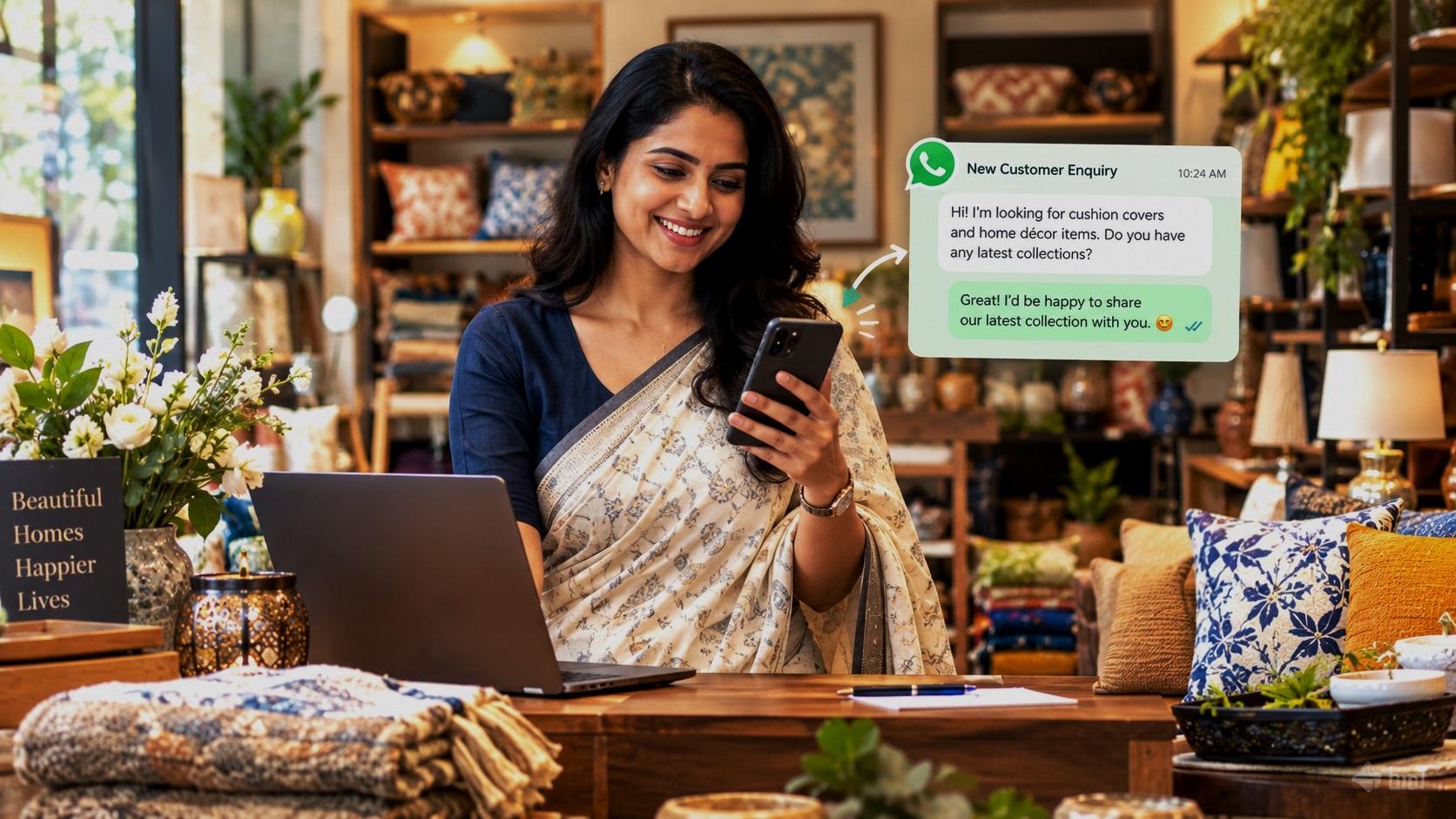
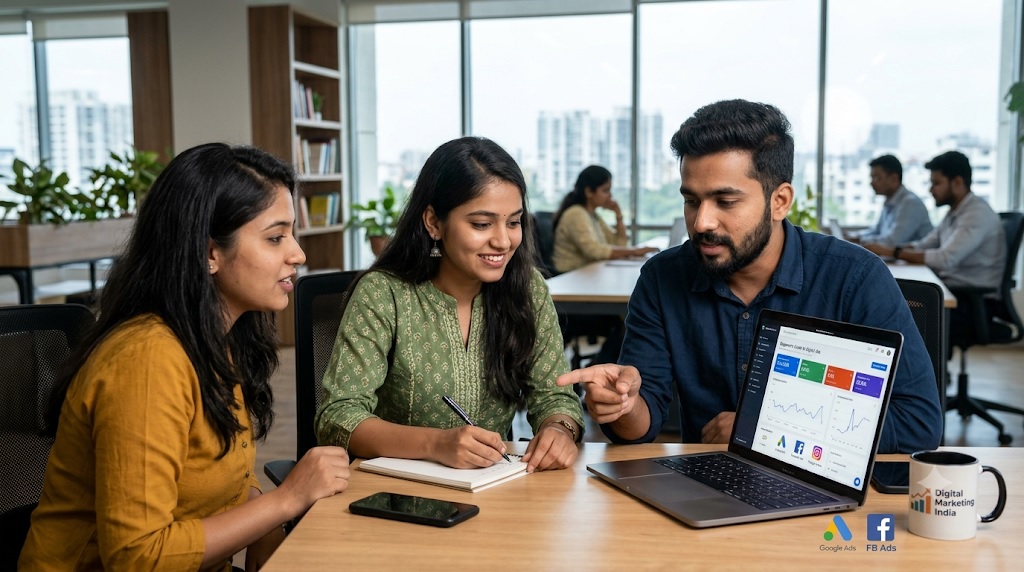
Running a local business in India is not easy. Whether you own a restaurant, coaching centre, salon, retail shop, playschool, diagnostic centre, fitness studio, hotel or any other local business, finding new customers is one of your biggest challenges.
You may already have a website, a Google Business Profile and social media accounts. You may post regularly on Facebook and Instagram, share offers on WhatsApp and ask happy customers to recommend your business. But sometimes, these efforts are not enough to bring in a steady flow of enquiries.
This is where online advertising can help.
Platforms like Google Ads, Facebook Ads and Instagram Ads allow you to promote your business to people who are most likely to become your customers. You can reach people searching for your products or services, introduce your business to potential customers in your neighbourhood, promote special offers and generate enquiries without spending a fortune.
However, online advertising can also waste money if you do not understand how it works.
Should you advertise on Google or Facebook? Is Instagram advertising worth it? How much should a small business spend? Should you hire an advertising agency or run campaigns yourself? How do you know whether your advertisements are actually bringing customers?
This beginner-friendly guide answers these questions and explains everything Indian business owners need to know about Google Ads, Facebook Ads and Instagram Ads.
Whether you have never advertised online or have already spent money without getting satisfactory results, this guide will help you make smarter advertising decisions.
1. What Is Online Advertising and How Does It Work?
Online advertising means paying digital platforms to display your business, products, services or offers to potential customers.
Instead of waiting for people to discover your business through regular posts or search results, you pay advertising platforms to give your business additional visibility.
For example:
-
A person searches Google for “best dentist near me” and sees an advertisement for a dental clinic in their area.
-
Someone browsing Facebook sees an advertisement for a new restaurant offering a special lunch deal.
-
A person watching Instagram Reels comes across an advertisement for a nearby fitness centre.
-
A parent searching for tuition classes sees an advertisement for a coaching institute offering admission for the new academic session.
In each case, a business pays an advertising platform to reach a relevant audience.
How Do Online Ads Reach Potential Customers?
Advertising platforms use information such as search queries, location, interests, browsing behaviour and other audience signals to decide which advertisements to show.
As a business owner, you can choose:
-
Location: Delhi, Mumbai, Bengaluru, Hyderabad, Pune or a specific area within a city.
-
Audience: People based on relevant interests, demographics and other available targeting options.
-
Keywords: Search terms related to your products or services, particularly on Google.
-
Budget: How much you want to spend on advertising.
-
Ad format: Text advertisements, images, videos, carousels and other formats.
-
Objective: Website visits, phone calls, WhatsApp enquiries, leads, purchases or store visits.
The advertising platform then displays your advertisement to people who match your campaign settings.
You pay according to the platform’s advertising model and campaign settings. Depending on the campaign, charges may be based on clicks, impressions, views or other results.
Paid Advertising vs Free Online Promotion
It is important to understand the difference between paid and free promotion.
| Free Promotion | Paid Advertising |
|---|---|
| Regular Facebook and Instagram posts | Sponsored Facebook and Instagram posts |
| Organic Google search visibility | Google search advertisements |
| Google Business Profile updates | Paid Google campaigns |
| WhatsApp status updates | Paid campaigns directing people to WhatsApp |
| Organic Reels and videos | Sponsored Reels and video advertisements |
Free promotion helps you build an online presence over time. Paid advertising gives your business an opportunity to reach a larger or more targeted audience.
The smartest approach is to use both. Build a strong online presence through free channels and use paid advertisements when you want additional visibility, enquiries or sales.
2. Understanding the Three Major Advertising Platforms
Google, Facebook and Instagram are three of the most popular online advertising platforms for local businesses in India.
However, they work differently and serve different marketing purposes.
Google Ads: Helps you reach people who are actively searching for products or services.
Facebook Ads: Helps you introduce your business, products and offers to relevant audiences and generate interest.
Instagram Ads: Helps you attract attention through photographs, videos, Stories and Reels.
Let’s understand each platform in detail.
3. Google Ads: Reach Customers Who Are Searching for Your Business
Google Ads is Google’s paid advertising platform. It allows businesses to display advertisements across Google Search, YouTube, websites, apps and other Google advertising properties.
For local businesses, Google Search advertising can be particularly useful because it reaches people who are already looking for a product or service.
Imagine you own a beauty salon in Karol Bagh, Delhi.
A potential customer searches for:
-
Best beauty parlour in Karol Bagh
-
Bridal makeup artist near me
-
Hair spa in Karol Bagh
-
Ladies salon near Karol Bagh
Your Google advertisement may appear when someone searches for relevant terms, depending on your campaign settings, competition and advertising eligibility.
This means you are reaching people who may already be interested in becoming your customers.
Types of Google Ads Every Business Owner Should Know
1. Google Search Ads
These are text advertisements that appear on Google search results pages, usually marked as “Sponsored”.
They are particularly useful for businesses offering services that people actively search for.
Examples:
-
Coaching centres
-
Dentists and diagnostic centres
-
Hotels and restaurants
-
Plumbers and electricians
-
Interior designers
-
Home tuition providers
-
Travel agencies
Example: If you run a coaching institute in Noida, you can advertise for relevant searches such as “NEET coaching in Noida” or “JEE coaching near Sector 62”.
When someone clicks your advertisement, you can direct them to your website, a dedicated admission page or another suitable enquiry destination.
2. Google Display Ads
Display advertisements are visual ads containing images, text and sometimes animation. They appear across participating websites and apps.
They can help you introduce your business to new audiences and remind previous website visitors about your products or services through remarketing, where eligible.
Example: A furniture showroom can use display advertisements featuring its latest sofa collection, bedroom furniture or festive discounts.
Display advertising is generally more useful for building awareness and staying visible than reaching only people with immediate purchase intent.
3. YouTube Ads
YouTube advertising allows businesses to promote videos to selected audiences.
You can use video advertisements to demonstrate products, introduce your business, explain services or promote special offers.
Example: A playschool can create a short video showing its classrooms, learning activities, facilities and admission information.
Video advertisements can be particularly effective when customers need to see or understand a product or service before making a decision.
4. Google Shopping Ads
Shopping advertisements display product photographs, prices, business information and other product details.
They are mainly useful for retailers and businesses selling physical products online.
Example: An online clothing store can advertise its dresses, footwear, handbags and accessories directly to people searching for those products.
5. Google Local and Location-Based Advertising
Google offers location-related advertising features and campaign options that can help businesses reach people around their service areas.
These can be useful for restaurants, salons, clinics, retail stores and other businesses that depend on nearby customers.
Your Google Business Profile, accurate business information and relevant location settings can play an important role in supporting local advertising.
Availability and campaign features can vary, so check the current options in your Google Ads account.
How to Set Up Your First Google Ads Campaign
You do not need to be a digital marketing expert to get started. Follow these steps.
Step 1: Create a Google Ads Account
Visit Google Ads and sign in using your Google account.
Enter your business details and follow the account setup instructions.
Step 2: Choose Your Advertising Objective
Decide what you want your advertisement to achieve.
For example:
-
More phone calls
-
More website visitors
-
More customer enquiries
-
More online purchases
-
More visits to your physical store
For a local service business, phone calls and enquiries may be more valuable than simply increasing website traffic.
Step 3: Select Your Campaign Type
If people actively search for your services, start by exploring a Search campaign.
For example, a local dentist could target searches related to dental clinics and dental treatments in the surrounding area.
Step 4: Choose Your Target Location
This is particularly important for local businesses.
If you own a salon in Rohini, you probably do not need to advertise to people living in Chennai or Kolkata.
Select the areas where you can realistically serve customers.
You can target a city, specific locations or a suitable radius, depending on the campaign options available.
Step 5: Research Relevant Keywords
Keywords are the search terms people use to find products and services.
For example, a coaching centre in Delhi might consider:
-
Coaching classes in Delhi
-
Maths tuition near me
-
Class 10 tuition in Delhi
-
CBSE coaching centre
-
Science tuition classes
Choose keywords that match what you actually offer.
Avoid irrelevant keywords that may generate clicks without bringing potential customers.
Step 6: Write Your Advertisement
Your advertisement should clearly explain:
-
What your business offers.
-
Where your business is located.
-
What makes your service useful.
-
Why customers should contact you.
-
What action they should take next.
For example:
Headline: Best Maths Coaching Classes in Rohini
Description: Expert Maths Tuition for Classes 9–12. Personalised Guidance and Exam Preparation. Contact Us Today!
Your advertisement should make a clear promise without exaggerating your services.
Step 7: Set Your Daily Budget
Decide how much you are comfortable spending every day.
Start with a manageable amount. You can increase the budget after identifying which keywords and advertisements generate genuine enquiries.
Step 8: Add Your Landing Page
A landing page is the webpage people visit after clicking your advertisement.
Do not send every visitor to your homepage.
If you advertise a particular service, direct visitors to a page explaining that service.
For example, an advertisement for bridal makeup should ideally lead to a bridal makeup page with photographs, pricing information, service details and contact options.
Step 9: Launch and Monitor Your Campaign
Once you have reviewed your settings, launch your campaign.
Monitor the performance regularly and make changes wherever necessary.
Do not assume that a campaign is successful simply because your advertisement is receiving clicks.
The real question is whether those clicks are generating valuable enquiries and customers.
4. Facebook Ads: Find New Customers and Promote Your Business
Facebook advertising is managed through Meta Ads Manager.
Facebook is one of the most widely used social media platforms in India. It offers businesses an opportunity to reach potential customers based on their location, interests, demographics and other available audience signals.
Unlike Google Search Ads, where people are actively searching for something, Facebook advertisements can introduce your business to people who may not know about it yet.
For example, imagine you own a restaurant in Gurgaon.
You can create a Facebook advertisement promoting:
-
A new restaurant opening.
-
Special weekend dining offers.
-
Family dinner packages.
-
Birthday and anniversary celebrations.
-
New dishes on your menu.
Your advertisement can reach people in selected areas around your restaurant.
This makes Facebook advertising useful for businesses that want to build awareness, promote offers and generate enquiries.
Types of Facebook Ads
1. Image Ads
Image advertisements are among the simplest ways to promote a business.
You can use a photograph of your product, shop, service or special offer along with a headline and description.
Example: A clothing store can advertise its latest collection with attractive product photographs and a special introductory offer.
2. Video Ads
Video advertisements help businesses demonstrate their products, services and facilities.
A short video can communicate much more than a long description.
Example: A gym can create a video showing its equipment, trainers, workout facilities and membership offers.
3. Carousel Ads
Carousel advertisements allow you to display multiple images or videos within one advertisement. People can swipe through the different cards.
Example: A furniture showroom can showcase sofas, dining tables, wardrobes and bedroom furniture in a single advertisement.
This format is useful when you want to promote several products or services together.
4. Lead Generation Ads
Lead generation advertisements allow people to submit their contact details through a form without necessarily visiting your website.
These advertisements can be particularly useful for businesses that depend on enquiries.
Examples include:
-
Coaching institutes collecting admission enquiries.
-
Real estate businesses collecting property enquiries.
-
Wedding planners generating customer leads.
-
Interior designers attracting potential clients.
-
Insurance and financial service businesses collecting enquiries, subject to applicable advertising policies.
You can ask for relevant details such as name, phone number, email address and the service required.
Make sure you follow applicable privacy and consent requirements when collecting and contacting leads.
5. Click-to-WhatsApp Ads
These advertisements encourage people to start a WhatsApp conversation with your business.
When someone clicks the advertisement, they are directed to a WhatsApp chat.
This is particularly useful for Indian small businesses because many customers prefer asking questions and discussing products through WhatsApp.
Example: A boutique can advertise a new festive collection and encourage interested customers to enquire about designs, sizes and prices on WhatsApp.
How to Create Your First Facebook Ad
Facebook advertisements are managed through Meta Ads Manager.
Here is a simple step-by-step process.
Step 1: Create a Facebook Business Page
If you do not already have one, create a Facebook Page for your business.
Add:
-
Your business name.
-
Profile photograph or logo.
-
Cover photograph.
-
Business description.
-
Address and contact details.
-
Website and WhatsApp information, wherever applicable.
Complete your Page information before spending money on advertisements.
Step 2: Set Up Meta Business Suite
Meta Business Suite helps you manage your Facebook and Instagram business presence.
You can manage posts, messages, notifications and other business activities from one place.
For advertising, you can use Meta Ads Manager, which offers more control over campaign objectives, audiences, placements and budgets.
Step 3: Open Meta Ads Manager
Create or access your advertising account.
Connect the relevant Facebook Page and Instagram account.
Check that your business information and payment details are correct.
Step 4: Select Your Campaign Objective
Decide what you want to achieve.
Depending on the available campaign options, you may choose objectives related to:
-
Awareness.
-
Traffic.
-
Engagement.
-
Leads.
-
App promotion.
-
Sales.
For example, a local coaching centre may want to generate admission enquiries, while a restaurant may want to promote a special offer.
Choose the objective that matches your business goal.
Step 5: Define Your Target Audience
This is one of the most important parts of Facebook advertising.
Select the location where you want to reach customers.
For a local business, start with your city or the areas you can realistically serve.
You can also use relevant audience settings based on available demographics, interests and other targeting options.
For example:
A playschool in South Delhi may want to reach parents in nearby neighbourhoods rather than advertising across the entire country.
Remember that a larger audience does not automatically mean better results.
Step 6: Choose Your Advertisement Format
Select an image, video, carousel or another suitable format.
Use clear, attractive photographs and videos that represent your actual business.
Avoid overcrowded designs, excessive text and misleading promotional claims.
Step 7: Write Your Advertisement
Your advertisement should immediately tell people what you offer.
For example:
Headline: Looking for the Best Dance Classes in Noida?
Description: Learn Dance with Experienced Instructors. Enrol Today and Explore Our New Batches!
Call to Action: Send Message or Learn More.
Give customers a clear reason to take the next step.
Step 8: Set Your Budget and Schedule
Decide your daily or campaign budget.
You can also select when your advertisement should start and stop.
For your first campaign, avoid committing a large amount of money before you understand the results.
Step 9: Publish and Monitor
Review the advertisement, audience, budget and destination before publishing.
Once approved, monitor its performance through Ads Manager.
Pay attention to enquiries, qualified leads and actual sales rather than focusing only on likes and impressions.
5. Instagram Ads: Promote Your Business Through Photos, Stories and Reels
Instagram is a visual social media platform. It is particularly useful for businesses whose products and services can be showcased through photographs and videos.
Think about businesses such as:
-
Restaurants and cafés.
-
Beauty parlours and salons.
-
Fashion boutiques.
-
Jewellery stores.
-
Hotels and resorts.
-
Fitness centres.
-
Bakeries.
-
Travel agencies.
-
Interior designers.
-
Event planners.
These businesses can use Instagram to showcase their work, attract attention and encourage potential customers to enquire.
Instagram advertisements can appear in the Feed, Stories, Reels, Explore and other eligible placements.
Different Types of Instagram Ads
1. Instagram Feed Ads
These advertisements appear while people scroll through their Instagram Feed.
You can use photographs, graphics and videos to promote products, services, offers and events.
Example: A bakery can advertise its customised birthday cakes with attractive photographs and an order enquiry option.
2. Instagram Stories Ads
Stories advertisements appear between users’ Stories.
They are generally vertical and designed for quick viewing.
You can use them to promote:
-
Limited-period offers.
-
New product launches.
-
Special discounts.
-
Events and workshops.
-
New business openings.
Example: A beauty salon can promote a festive makeover package through a short Story advertisement.
3. Instagram Reels Ads
Reels advertisements allow businesses to reach people through short-form video content.
This is a useful format for demonstrating products, sharing transformations and showing how services work.
Example: A fitness centre can create a short video showcasing workout sessions, gym facilities and membership offers.
4. Instagram Carousel Ads
Carousel advertisements allow businesses to showcase multiple photographs or videos in one advertisement.
Example: A travel agency can promote different holiday destinations, packages and experiences in one campaign.
5. Instagram Explore Ads
These advertisements can appear in the Explore section, where people discover new content based on their interests and activity.
They can help businesses reach people who may be interested in their products or services but do not follow their Instagram account.
How to Create Your First Instagram Ad
There are two common ways to promote content on Instagram.
Option 1: Boost an Instagram Post
This is the simpler option for beginners.
You can select an existing post and use the Boost feature to promote it to a wider audience.
You generally need to choose:
-
Your advertising goal.
-
Your audience.
-
Your budget.
-
The campaign duration.
Boosting is convenient when you want to give an existing post additional visibility.
Option 2: Use Meta Ads Manager
For greater control, create your Instagram campaign through Meta Ads Manager.
You can manage campaign objectives, placements, audience settings, budgets, advertisements and performance reporting.
This is generally the better approach when you want to run more structured campaigns or advertise on both Facebook and Instagram.
Should You Boost Instagram Posts or Use Meta Ads Manager?
Both options have their uses.
| Boosting Posts | Meta Ads Manager |
|---|---|
| Easy for beginners | More advanced controls |
| Promotes existing content | Creates dedicated advertisements |
| Basic campaign setup | More campaign and audience options |
| Suitable for additional visibility | Suitable for structured marketing campaigns |
| Limited control compared with Ads Manager | Detailed performance reporting |
If you are just starting out, boosting a relevant post can help you understand paid promotion.
However, if your goal is generating leads, enquiries or sales, learn to use Meta Ads Manager.
6. Google Ads vs Facebook Ads vs Instagram Ads: Which Is Best for Your Business?
This is one of the most common questions business owners ask.
The answer depends on what you sell, who your customers are and how they make purchasing decisions.
Google is particularly useful when people are actively searching for your products or services.
Facebook and Instagram are useful when you want to introduce your business, create interest and encourage people to explore your offerings.
Platform Comparison
| Feature | Google Ads | Facebook Ads | Instagram Ads |
|---|---|---|---|
| Main purpose | Capture search demand | Build awareness and generate leads | Visual promotion and discovery |
| Audience | People searching relevant terms | Targeted social audiences | Targeted social audiences |
| Best formats | Search, Display, Video, Shopping | Images, videos, carousel, leads | Feed, Stories, Reels, carousel |
| Local targeting | Yes | Yes | Yes |
| Lead generation | Yes | Yes | Yes |
| WhatsApp promotion | Available through suitable campaign options | Yes | Yes |
| Best suited for | Search-driven services | Local promotions and enquiries | Visual products and services |
Which Platform Should Different Businesses Choose?
Here are some practical examples.
| Business Type | Recommended Starting Point |
|---|---|
| Coaching centres | Google Search + Facebook |
| Restaurants | Google Search + Instagram |
| Beauty parlours | Instagram + Facebook |
| Dentists and clinics | Google Search |
| Clothing boutiques | Instagram + Facebook |
| Hotels | Google Search + Instagram |
| Playschools | Google Search + Facebook |
| Fitness centres | Instagram + Facebook |
| Plumbers and electricians | Google Search |
| Furniture shops | Facebook + Instagram |
| Travel agencies | Google Search + Instagram |
| Diagnostic centres | Google Search |
These are starting recommendations, not fixed rules. A restaurant may generate excellent results through Google Search, while a coaching centre may find Instagram particularly useful for showcasing student activities and facilities.
Our recommendation: Do not start advertising on all three platforms simply because they are available. Choose one platform that best matches your customers’ buying behaviour, understand how it works and expand gradually.
7. How Much Should Indian Small Businesses Spend on Online Advertising?
You do not need a huge advertising budget to get started.
One of the biggest advantages of digital advertising is that businesses can start with relatively small budgets and increase spending as they learn what works.
However, there is no fixed advertising cost for Google, Facebook or Instagram.
Your actual costs depend on several factors.
Factors That Affect Online Advertising Costs
1. Industry and Competition
Advertising costs can vary significantly between industries.
For example, businesses advertising in competitive categories such as real estate, insurance, education and legal services may face higher competition than businesses operating in less competitive local markets.
2. Location
Advertising in major metropolitan areas can be more competitive than advertising in smaller cities or towns.
A coaching institute in Delhi may face different advertising costs from a coaching institute in a smaller city.
3. Keywords and Audience
On Google, highly competitive keywords can cost more per click.
On Meta platforms, advertising costs depend on factors such as audience competition, campaign objective, placements and advertisement quality.
4. Advertisement Quality
An advertisement that is relevant, clear and useful to its audience has a better chance of attracting meaningful engagement.
Poor-quality advertisements can consume your budget without producing valuable results.
5. Campaign Objective
A campaign designed to generate website visits may produce very different results from one designed to generate enquiries or purchases.
Always consider the objective when evaluating advertising costs.
A Beginner’s Advertising Budget for Indian Businesses
The following is an illustrative starting budget, not a promise of advertising results or a platform price guarantee.
| Daily Budget | Approx. Monthly Budget (30 Days) |
|---|---|
| ₹100 | ₹3,000 |
| ₹200 | ₹6,000 |
| ₹300 | ₹9,000 |
| ₹500 | ₹15,000 |
| ₹1,000 | ₹30,000 |
For a small local business, starting with ₹200–₹500 per day on a carefully planned campaign may be a reasonable testing approach if the business can afford it.
You do not need to spend this amount on every platform.
For example:
-
A salon could test an Instagram campaign with ₹200 per day.
-
A local plumber could test Google Search advertising with ₹300 per day.
-
A coaching centre could begin by testing a Google Search campaign with ₹500 per day.
The right budget depends on the competition, potential customer value and number of enquiries you need.
How Much Should You Spend on Your First Campaign?
Start small and treat your first campaign as a learning exercise.
For example, suppose you run a local fitness centre and decide to test an Instagram campaign.
You spend ₹3,000 over 15 days.
At the end of the campaign, examine:
-
How many people saw your advertisement?
-
How many clicked or interacted with it?
-
How many people contacted you?
-
How many enquiries were relevant?
-
How many people visited your gym?
-
How many purchased a membership?
If the campaign produces genuine customers at a profitable cost, you can consider increasing your budget.
If it generates attention but no business, identify the problem before spending more.
Remember GST and Advertising Charges
Indian businesses should also account for applicable GST and other charges when planning their advertising budgets.
The amount charged to your payment method may differ from the amount available for advertising because of applicable taxes and billing arrangements.
Keep your invoices and advertising expense records for accounting purposes.
8. How to Target Local Customers Through Online Advertising
For a local business, reaching the right people is more important than reaching the largest number of people.
If you own a restaurant in Lajpat Nagar, you probably want customers from Lajpat Nagar and nearby areas, not people living hundreds of kilometres away.
This is why local targeting deserves special attention.
Step 1: Identify Your Actual Service Area
Write down the areas from which you can realistically attract and serve customers.
For example:
A salon in Rohini may target:
-
Rohini.
-
Pitampura.
-
Prashant Vihar.
-
Rithala.
-
Nearby residential areas.
A home tuition provider may target a smaller service area depending on travel distance.
An online tutor, on the other hand, may advertise across multiple cities or even internationally.
Step 2: Use Location-Specific Keywords
For Google Search advertising, include relevant location terms in your keyword research.
Examples:
-
Best restaurant in Karol Bagh.
-
Dentist in South Delhi.
-
Maths tuition in Rohini.
-
Hotel near New Delhi Railway Station.
-
Beauty parlour in Indirapuram.
-
AC repair service in Gurgaon.
These keywords help you connect your advertising with location-specific searches.
You should also consider broader relevant searches without a location term, provided your location targeting is configured appropriately.
Step 3: Use Local Information in Your Advertisements
Mention your area, city or service location where relevant.
For example:
Headline: Best Coaching Classes in Dwarka
Description: Expert Tuition for Classes 9–12. Experienced Teachers and Personalised Guidance. Enquire Today!
This immediately tells potential customers where your business operates.
Step 4: Make Contact Easy
Do not make potential customers search for your phone number.
Give them a clear way to contact you.
Depending on your campaign and business requirements, you can use:
-
Call buttons.
-
WhatsApp enquiry options.
-
Website enquiry forms.
-
Lead generation forms.
-
Directions to your business.
The fewer unnecessary steps customers have to take, the easier it is for them to enquire.
Step 5: Keep Your Google Business Profile Updated
Your Google Business Profile is an important part of your local online presence.
Make sure it contains:
-
Correct business name.
-
Accurate address.
-
Current phone number.
-
Business hours.
-
Website link.
-
Relevant categories.
-
Genuine photographs.
-
Updated services and products.
Encourage genuine customers to leave reviews and respond professionally to feedback.
Remember, running Google Ads does not automatically improve your organic Google Maps ranking. Paid advertising and organic local search visibility are different.
9. How to Create Advertisements That Actually Attract Customers
You can have a good advertising budget and still struggle to generate enquiries if your advertisements are poorly designed.
A successful advertisement needs to communicate the right message to the right audience.
Here are some practical tips.
1. Start With a Strong Headline
Your headline is often the first thing people notice.
Avoid vague headlines such as:
“Welcome to Our Business.”
Instead, clearly explain what you offer.
Examples:
-
Best Maths Tuition Classes in Noida.
-
Fresh Cakes for Every Celebration.
-
Affordable Bridal Makeup Packages.
-
Expert Digital Marketing Services for Small Businesses.
-
Book Your Weekend Stay in Jaipur.
Make the benefit clear.
2. Highlight What Makes Your Business Different
Why should customers choose your business?
You could highlight:
-
Experienced professionals.
-
Specialised services.
-
Convenient location.
-
Affordable packages.
-
Customised solutions.
-
Genuine customer reviews.
-
Wide product selection.
-
Home delivery.
-
Personalised attention.
Do not make claims you cannot support.
3. Use Real Photographs and Videos
Customers want to know what they are getting.
A restaurant should showcase its actual food and dining area.
A salon should showcase its work and facilities.
A hotel should display genuine room photographs.
A coaching centre should highlight its classrooms, teaching environment and facilities.
Real photographs help build trust and set realistic expectations.
4. Offer a Clear Reason to Take Action
A good advertisement should tell customers what to do next.
Examples:
-
Call Now.
-
Book Your Appointment.
-
Enquire on WhatsApp.
-
View Our Menu.
-
Explore Our Courses.
-
Get a Free Consultation.
-
Visit Our Store.
Choose an action that matches your business objective.
5. Promote Specific Products and Services
Instead of advertising everything your business offers in one advertisement, focus on a particular product, service or offer.
For example, a beauty parlour could run separate campaigns for bridal makeup, hair treatments and skincare packages.
This allows you to create more relevant advertisements and understand which services attract the most interest.
6. Use Offers Carefully
Discounts and special offers can encourage people to take action.
However, do not reduce your prices simply to attract attention.
You can also promote:
-
Free consultations.
-
Complimentary product demonstrations.
-
Limited-period packages.
-
Seasonal collections.
-
Special admission offers.
-
Loyalty benefits.
Make sure all offer conditions are clearly communicated.
7. Create Mobile-Friendly Advertisements
Most Indian customers browse the internet through smartphones.
Your advertisement, landing page, images, videos and enquiry forms should work properly on mobile devices.
Check that:
-
Text is easy to read.
-
Buttons are easy to tap.
-
Images display correctly.
-
Pages load quickly.
-
Phone numbers are clickable.
-
WhatsApp links work.
-
Forms are simple to complete.
A potential customer should not have to struggle to contact your business.
10. Why Your Online Advertisements May Not Be Generating Customers
Many business owners spend money on advertisements but receive very few enquiries.
Sometimes the problem is not the advertising platform. It is the way the campaign has been planned or executed.
Here are some common reasons.
1. Targeting the Wrong Audience
If you advertise to people who are not interested in your products or services, you will receive irrelevant clicks and enquiries.
Solution: Refine your audience, location and keywords. Focus on people who are more likely to need what you offer.
2. Choosing the Wrong Campaign Objective
If your goal is to generate enquiries but your campaign is designed primarily for traffic, you may attract visitors without receiving meaningful leads.
Solution: Select a campaign objective that matches your actual business requirement.
3. Sending Visitors to an Unhelpful Website Page
Imagine someone clicks an advertisement for a particular coaching course but lands on a homepage containing information about every course offered by the institute.
The visitor may leave without enquiring.
Solution: Create dedicated landing pages for your main products and services.
4. Poor Advertisement Design
Blurry photographs, confusing messages, too much text and unclear offers can discourage potential customers.
Solution: Use clear visuals, simple language and a strong headline.
5. No Clear Call to Action
If customers cannot understand what they should do after seeing your advertisement, they may simply move on.
Solution: Include a clear action such as Call Now, Enquire Today or WhatsApp Us.
6. Slow Response to Customer Enquiries
This is a surprisingly common problem.
A customer clicks your advertisement, sends a WhatsApp message and waits several hours for a reply.
By that time, they may have contacted a competitor.
Solution: Respond quickly, provide useful information and follow up professionally.
7. Spending Too Much Too Soon
Increasing your advertising budget before understanding campaign performance can result in unnecessary expenses.
Solution: Test, measure, improve and then scale your campaigns.
8. Ignoring Negative Keywords on Google
Some Google Search advertisements may appear for searches that are not relevant to your business.
For example, a paid coaching institute may not want clicks from people searching for free coaching materials or employment opportunities.
Solution: Review your search terms and add suitable negative keywords to prevent irrelevant searches from triggering your advertisements.
9. Not Tracking Conversions
Clicks and impressions do not tell you how many customers your advertisements generated.
Solution: Set up suitable conversion tracking for calls, forms, purchases and other important actions.
10. Failing to Follow Up With Leads
Not every customer will purchase immediately.
Some people need additional information, time or a reminder.
Solution: Maintain a simple enquiry record and follow up with interested customers, respecting their communication preferences.
11. How to Measure the Success of Your Advertising Campaigns
One of the biggest advantages of online advertising is that you can measure its performance.
Unlike traditional advertising, where it can be difficult to determine how many customers came from a newspaper advertisement or pamphlet, digital advertising provides detailed performance information.
However, you need to understand which numbers actually matter.
Important Advertising Metrics Explained
1. Impressions
Impressions tell you how many times your advertisement was displayed.
If your advertisement receives 10,000 impressions, it means it was displayed 10,000 times. It does not necessarily mean 10,000 different people saw it.
2. Reach
Reach tells you how many unique people were shown your advertisement.
This helps you understand how many individuals your campaign reached.
3. Clicks
Clicks tell you how many times people clicked your advertisement.
A high number of clicks can indicate interest, but clicks alone do not guarantee customers.
4. Click-Through Rate (CTR)
CTR measures the percentage of impressions that resulted in clicks.
For example:
If your advertisement received 5,000 impressions and 100 clicks, your CTR would be 2%.
A higher CTR can indicate that your advertisement is attracting attention, although results vary by platform, industry and campaign type.
5. Cost Per Click (CPC)
CPC tells you how much you are paying, on average, for each click.
For example:
If you spend ₹2,000 and receive 100 clicks, your average CPC is ₹20.
6. Cost Per Lead (CPL)
CPL tells you how much you spend to generate one lead or enquiry.
For example:
If you spend ₹5,000 and receive 25 enquiries, your cost per lead is ₹200.
This is a particularly useful metric for coaching centres, salons, clinics, real estate businesses and other service providers.
7. Conversion Rate
Conversion rate measures the percentage of visitors who complete a desired action.
For example, if 200 people visit your website and 10 submit an enquiry form, your conversion rate is 5%.
8. Return on Advertising Spend (ROAS)
ROAS measures the revenue generated in relation to your advertising expenditure.
For example:
If you spend ₹10,000 on advertisements and generate ₹50,000 in attributable sales, your ROAS is 5.
This means you generated ₹5 in revenue for every ₹1 spent on advertising.
Remember that revenue is not profit. You must also account for product costs, salaries, rent, delivery expenses and other business costs.
Example: Measuring a Local Business Advertising Campaign
Suppose you own a coaching centre and run a Google Ads campaign for 30 days.
Here is an illustrative example:
| Performance Metric | Result |
|---|---|
| Advertising Spend | ₹6,000 |
| Impressions | 20,000 |
| Clicks | 300 |
| Enquiries | 30 |
| Qualified Enquiries | 20 |
| New Admissions | 5 |
| Average Admission Revenue | ₹8,000 |
| Total Admission Revenue | ₹40,000 |
In this example:
-
Average cost per click = ₹20.
-
Cost per enquiry = ₹200.
-
Cost per admission = ₹1,200.
-
Attributable admission revenue = ₹40,000.
The campaign generated ₹40,000 in admission revenue against ₹6,000 in advertising expenditure.
However, the coaching centre must still consider its operating costs and the actual profitability of those admissions.
This is why tracking the complete customer journey is important.
Which Metrics Should Local Business Owners Focus On?
Do not get distracted by every number displayed in your advertising dashboard.
Focus on the metrics that affect your business.
| Business Type | Important Metrics |
|---|---|
| Restaurant | Calls, directions, reservations and orders |
| Coaching Centre | Admission enquiries and enrolments |
| Salon | Appointment enquiries and bookings |
| Hotel | Booking enquiries and confirmed reservations |
| Retail Shop | Product enquiries, store visits and sales |
| Clinic | Appointment enquiries and bookings |
| Real Estate | Qualified leads and site visits |
| E-commerce Store | Purchases, revenue and ROAS |
Ultimately, the most important question is simple:
How much business are your advertisements generating, and is it worth the money you are spending?
12. How to Track Your Advertising Results
You should never run online advertisements without a proper system for tracking enquiries and customers.
Even a simple spreadsheet can help you understand whether your advertising is working.
Use Google Analytics 4
Google Analytics 4 (GA4) helps you understand what visitors do after arriving at your website.
You can examine:
-
How many people visit your website.
-
Which pages they view.
-
Where your visitors come from.
-
How they interact with your website.
-
Which marketing campaigns bring visitors.
-
Whether visitors complete important actions.
You can also use Google Tag Manager to manage website tracking tags without repeatedly editing your website code.
Use Meta Ads Manager Reports
Meta Ads Manager provides information about your Facebook and Instagram campaigns.
You can examine:
-
Reach and impressions.
-
Link clicks.
-
Engagement.
-
Cost per result.
-
Leads.
-
Campaign expenditure.
-
Advertisement performance.
Use these reports to identify which advertisements and audiences are producing useful results.
Use UTM Tracking Links
UTM parameters are small tracking additions that you can attach to website URLs.
They help you identify where your website traffic comes from.
For example, you can create separate tracking links for:
-
Google advertisements.
-
Facebook advertisements.
-
Instagram advertisements.
-
Email campaigns.
This makes it easier to understand which marketing channel is bringing visitors.
Maintain a Customer Enquiry Register
This is particularly useful for small businesses.
Create a simple spreadsheet with the following columns:
| Date | Customer Name | Enquiry Source | Requirement | Status |
|---|---|---|---|---|
| 3 Nov | Customer A | Google Ads | Maths Tuition | Converted |
| 4 Nov | Customer B | Bridal Makeup | Follow-up | |
| 5 Nov | Customer C | Gym Membership | Pending |
Update the spreadsheet whenever you receive an enquiry.
Over time, you will understand which advertising platform is generating the most valuable customers.
13. Landing Pages: Turn Advertising Clicks Into Customer Enquiries
A landing page is one of the most important elements of a successful online advertising campaign.
Many small business owners make the mistake of sending every advertisement visitor to their website homepage.
This is not always the best approach.
A landing page is designed around one particular product, service or campaign.
For example:
-
A dentist advertising teeth whitening should direct visitors to a teeth-whitening page.
-
A coaching centre advertising Class 10 Maths tuition should direct visitors to a page about that course.
-
A hotel promoting weekend packages should direct visitors to its package details.
-
A salon advertising bridal makeup should direct visitors to its bridal services.
What Should a Good Landing Page Include?
1. A Clear Headline
Tell visitors exactly what you offer.
2. Useful Business Information
Explain your products, services, facilities and benefits.
3. Genuine Photographs
Use real photographs of your business, products, staff or completed work.
4. Customer Reviews and Testimonials
Where available, include genuine customer feedback that helps build trust.
Obtain appropriate permission before publishing customer testimonials or photographs.
5. Pricing or Offer Details
If possible, provide relevant pricing information or explain how customers can request a quotation.
6. Easy Contact Options
Include visible contact details and suitable enquiry options.
A customer should be able to call, WhatsApp or submit a form without difficulty.
7. Mobile-Friendly Design
Your landing page should display properly on smartphones.
Check page loading speed, text readability, buttons and enquiry forms.
Why Your Landing Page Matters
Imagine two businesses spending ₹5,000 each on Google Ads.
The first business sends visitors to a confusing homepage with outdated information and no visible contact button.
The second business sends visitors to a dedicated page with clear service details, photographs, customer reviews and a WhatsApp enquiry button.
Even with similar advertising expenditure, the second business may have a better opportunity to convert visitors into enquiries.
The advertisement brings people to your business. Your landing page helps convince them to take action.
14. Should You Run Online Advertisements Yourself or Hire a Digital Marketing Agency?
This is another important decision for small business owners.
You have two options: manage your campaigns yourself or hire a professional to handle them.
Both approaches have advantages.
Running Advertisements Yourself
You can learn the basics of Google Ads and Meta Ads Manager through free educational resources and practical experience.
Advantages:
-
You have direct control over your advertising budget.
-
You understand exactly where your money is being spent.
-
You can make changes whenever required.
-
You do not have to pay an agency management fee.
Disadvantages:
-
Learning advertising platforms takes time.
-
Poor campaign settings can waste money.
-
Keyword research and audience selection require attention.
-
Tracking and analysing results can be challenging.
-
You need to monitor campaigns regularly.
This option may suit business owners who have the time and willingness to learn.
Hiring a Digital Marketing Agency or Freelancer
A professional can help you plan, create, manage and optimise your advertising campaigns.
Advantages:
-
Professional campaign planning.
-
Better understanding of advertising tools.
-
Help with keyword research and audience selection.
-
Advertisement design and content creation.
-
Performance monitoring and reporting.
-
More time to focus on your business.
Disadvantages:
-
You have to pay management fees.
-
Quality and experience vary between agencies.
-
Some agencies may use generic advertising strategies.
-
You may become dependent on an external service provider.
Questions to Ask Before Hiring an Advertising Agency
Before paying an agency or freelancer, ask:
-
Have you managed advertising campaigns for businesses in my industry?
-
Will I own and control my Google Ads and Meta advertising accounts?
-
Will I have access to campaign reports?
-
How will you track calls, enquiries and sales?
-
What is your management fee?
-
Is the advertising budget separate from your service fee?
-
How often will you review and optimise campaigns?
-
What results will you measure?
-
Are there any additional charges?
-
How will you protect customer information collected through campaigns?
Important: Your advertising account should ideally remain under your business’s ownership. Give agencies or freelancers the necessary access rather than handing over complete control of your accounts.
Also, be cautious of anyone promising guaranteed sales, instant results or a fixed Google ranking through paid advertising.
15. Common Online Advertising Mistakes Indian Business Owners Should Avoid
Before launching your first campaign, understand these mistakes.
Mistake 1: Advertising Without a Clear Goal
Do not start advertising simply because competitors are doing it.
Decide whether you want calls, website enquiries, appointments, admissions, bookings or sales.
Mistake 2: Trying to Advertise Everything Together
Promoting ten different services in one advertisement can confuse customers.
Create separate campaigns or advertisements for important products and services.
Mistake 3: Targeting an Entire Country for a Local Business
A local restaurant or salon generally does not need to reach customers across India.
Focus on the locations that matter to your business.
Mistake 4: Using the Same Advertisement Everywhere
A Google Search advertisement and an Instagram Reel serve different purposes.
Adapt your message and creative format to each platform.
Mistake 5: Ignoring Customer Reviews
People often check reviews before choosing a local business.
Maintain an accurate Google Business Profile and encourage genuine customers to share their experiences.
Never purchase fake reviews or offer misleading incentives.
Mistake 6: Stopping Campaigns Too Early
Advertising platforms need sufficient time and relevant data to evaluate performance.
Avoid making major decisions based on a few hours of activity.
At the same time, do not continue spending on a clearly underperforming campaign without investigating the problem.
Mistake 7: Ignoring Competitors
Look at how similar businesses present their services, offers and advantages.
Do not blindly copy their advertisements. Identify what makes your business different.
Mistake 8: Not Checking Your Advertisements on Mobile
Your advertisements may look fine on a computer but perform poorly on smartphones.
Always preview your creatives and landing pages on mobile devices.
Mistake 9: Not Calculating Customer Acquisition Cost
Your customer acquisition cost (CAC) is the amount you spend to acquire one paying customer.
For example:
If you spend ₹10,000 on advertising and acquire 10 new customers, your advertising cost per customer is ₹1,000.
Compare this with the revenue and profit generated by each customer.
Mistake 10: Ignoring Advertising Policies
Google and Meta have advertising policies covering restricted products, misleading claims, sensitive topics, privacy and other requirements.
Some industries have additional advertising restrictions.
Healthcare, financial services, real estate, education and other regulated categories should pay particular attention to applicable rules and legal requirements in India.
Review the relevant platform policies before launching campaigns.
16. A Practical 30-Day Online Advertising Plan for Beginners
If you are advertising your business for the first time, do not try to master everything at once.
Follow this simple 30-day plan to get started.
Your First 30 Days of Online Advertising
-
Days 1–5: Prepare Your Business Online
-
Complete your Google Business Profile.
-
Set up your Facebook and Instagram business accounts.
-
Update your website and contact details.
-
Select the products or services you want to promote.
-
Identify your target customers and service locations.
-
-
Days 6–10: Plan Your First Campaign
-
Choose Google Ads or Meta Ads.
-
Research relevant keywords or audiences.
-
Decide your advertising budget.
-
Prepare advertisement photographs, videos and text.
-
Create a suitable landing page or enquiry destination.
-
-
Days 11–20: Launch and Monitor
-
Start your first advertising campaign.
-
Check that advertisements are reaching the right audience.
-
Monitor clicks, calls and enquiries.
-
Respond quickly to potential customers.
-
Identify irrelevant clicks and enquiries.
-
-
Days 21–25: Improve Your Campaign
-
Review advertisement performance.
-
Identify which keywords or audiences work best.
-
Test different headlines and photographs.
-
Improve your landing page.
-
Adjust your budget where necessary.
-
-
Days 26–30: Measure Your Results
-
Calculate your total advertising expenditure.
-
Count genuine enquiries.
-
Identify how many enquiries became customers.
-
Calculate your customer acquisition cost.
-
Decide whether to continue, improve or expand your campaign.
-
At the end of 30 days, you should have a much better understanding of how online advertising works and whether your campaign is delivering value.
Remember, the first campaign is a learning experience. You may need several rounds of testing and improvement before finding the right combination of audience, advertisement and budget.
17. Free Tools That Can Help Indian Business Owners With Online Advertising
You do not need expensive software to start promoting your business online.
Several free tools can help you plan advertisements, create content and understand campaign performance.
| Tool | How It Helps |
|---|---|
| Google Keyword Planner | Research relevant advertising keywords |
| Google Trends | Explore search interest and trending topics |
| Google Analytics 4 | Understand website visitors and campaign traffic |
| Google Tag Manager | Manage website tracking tags |
| Google Business Profile | Manage your local business presence on Google |
| Meta Business Suite | Manage Facebook and Instagram business activities |
| Meta Ads Manager | Create and manage paid campaigns |
| Canva | Design advertisements, promotional graphics and social media creatives |
| Google Sheets | Track advertising expenses and customer enquiries |
Some tools offer paid features, but their basic capabilities can be useful for beginners.
How to Use These Tools Together
Here is a simple example.
Suppose you own a coaching centre in Delhi.
-
Use Google Keyword Planner to research relevant tuition-related keywords.
-
Use Google Trends to explore changing interest in different courses.
-
Create promotional graphics using Canva.
-
Set up your Google Search campaign through Google Ads.
-
Use Meta Ads Manager to promote your courses on Facebook and Instagram.
-
Use Google Analytics 4 to understand website traffic.
-
Use Google Sheets to record enquiries, admissions and advertising costs.
This gives you a basic marketing system without investing in expensive software.
18. How to Combine Google Ads, Facebook Ads and Instagram Ads for Better Results
Although each advertising platform has its own strengths, using them together can help you reach potential customers at different stages of their buying journey.
Consider a local furniture showroom in Delhi.
Stage 1: Introduce Your Business Through Facebook and Instagram
The showroom can promote its latest furniture collection through photographs, Reels and carousel advertisements.
The objective is to introduce the products to people who may be interested in buying furniture.
Stage 2: Reach People Searching on Google
Someone who is interested in purchasing a sofa may search Google for:
-
Sofa shops near me.
-
Best furniture showroom in Delhi.
-
Modern sofa designs.
-
Affordable furniture in Delhi.
Google Search advertisements can help the showroom reach people making these searches.
Stage 3: Bring Interested Visitors Back
Where eligible and permitted, the business can use remarketing campaigns to reconnect with people who previously visited its website or interacted with its advertisements.
For example, someone who viewed a particular furniture collection but did not enquire may see another relevant advertisement.
Stage 4: Convert Interest Into Enquiries
The business can direct interested customers to a dedicated website page or WhatsApp conversation.
The page should include product photographs, important details, showroom location and contact information.
Stage 5: Follow Up and Close the Sale
The sales team can respond to enquiries, answer questions, arrange showroom visits and follow up with interested customers.
This approach combines awareness, customer interest and direct response advertising.
However, do not assume that every business needs all three platforms immediately. Start with the channel most likely to produce customers and expand when you have the resources to manage additional campaigns.
19. Is Online Advertising Worth It for Small Businesses in India?
Yes, online advertising can be valuable for small businesses, provided it is planned and managed properly.
You do not need to be a large company to advertise on Google, Facebook or Instagram.
A small salon, neighbourhood restaurant, independent coaching centre or local retail shop can use the same advertising platforms as larger businesses.
The biggest advantage is the ability to control your spending and target relevant audiences.
Consider these examples.
A Local Restaurant
A restaurant can promote:
-
New dishes.
-
Special lunch and dinner menus.
-
Weekend offers.
-
Family dining packages.
-
Home delivery.
Google Search can help reach people looking for restaurants, while Instagram can showcase food and the dining experience.
A Coaching Institute
A coaching institute can advertise:
-
New admission batches.
-
Subject-specific tuition.
-
Board examination preparation.
-
Competitive examination courses.
-
Online and offline classes.
Google Search can capture relevant course searches, while Facebook and Instagram can help generate awareness and enquiries.
A Beauty Parlour
A beauty parlour can promote:
-
Bridal makeup.
-
Hair treatments.
-
Skincare packages.
-
Festive offers.
-
Special occasion services.
Instagram is particularly useful for showcasing actual work through photographs and Reels.
A Retail Shop
A retail store can promote:
-
New arrivals.
-
Seasonal collections.
-
Special discounts.
-
Product demonstrations.
-
Store opening offers.
Facebook and Instagram can help showcase products, while Google can help customers discover the store when searching locally.
A Diagnostic Centre
A diagnostic centre can promote:
-
Available tests.
-
Diagnostic services.
-
Home sample collection, if offered.
-
Location and operating hours.
-
Appointment information.
Google Search can be useful for reaching people actively looking for relevant services. Healthcare advertisements must comply with applicable advertising and privacy requirements.
The key is to select a marketing strategy that matches your customers’ needs and your business model.
20. Online Advertising vs Free Business Listings: Which Should You Choose?
Paid advertisements can help you reach more potential customers, but they are not the only way to promote your local business online.
Free business listings are another useful option.
A business listing allows you to publish important business information on an online platform so that potential customers can discover your business.
Depending on the platform, a listing may include:
-
Business name.
-
Business category.
-
Location and address.
-
Phone number.
-
Business description.
-
Products and services.
-
Photographs.
-
Website link.
-
Google Business Profile link.
-
WhatsApp contact option.
Paid Advertising vs Business Listings
| Paid Advertising | Business Listings |
|---|---|
| Requires an advertising budget | Free listing options are available |
| Campaign-based visibility | Published business information |
| Can reach targeted audiences | Helps customers discover business details |
| Visibility depends on campaign settings and budget | Visibility depends on platform reach and search visibility |
| Can generate direct enquiries | Can provide contact and enquiry opportunities |
Both approaches serve different purposes.
Paid advertisements can provide additional visibility when you want to promote a particular service, offer or product.
Business listings can help establish your online presence and make it easier for potential customers to find and contact you.
For small businesses with limited marketing budgets, combining free business listings with carefully planned paid advertising can be a practical starting strategy.
21. Promote Your Local Business on HotList.in
Running paid advertisements is one way to attract customers, but building a strong online presence should not depend entirely on advertising expenditure.
This is where HotList.in can help local businesses.
HotList.in is a business listings and local lead generation platform designed to help Indian businesses improve their online visibility and reach potential customers.
Whether you operate a restaurant, hotel, coaching centre, playschool, retail shop, salon, fitness centre, diagnostic centre, travel agency or another local business, you can use HotList.in to publish your business information online.
Why Should You List Your Business on HotList.in?
1. Improve Your Online Visibility
Publish your business details on HotList.in and create another online presence for your business.
2. Help Customers Discover Your Business
Provide useful information about your products, services and location so that potential customers can learn about your business.
3. Connect Your Google Business Profile
Include your valid Google Business Profile link to make it easier for customers to find your business on Google.
4. Receive Direct Customer Enquiries
Give potential customers convenient ways to contact you through available contact options.
5. Promote Your Website and WhatsApp
Paid listings can include your website link and WhatsApp contact button, helping interested customers reach you directly.
6. Get Additional Promotional Support
Paid listings also receive promotional and marketing support through HotList.in and its social networks.
If you own a genuine Indian business with a valid Google Business Profile, HotList.in offers an affordable way to establish an additional online presence.
Get your business listed on HotList.in and start building your online visibility today.
22. Frequently Asked Questions About Google Ads, Facebook Ads and Instagram Ads
1. Which is better for small businesses: Google Ads or Facebook Ads?
It depends on your business and marketing objectives.
Google Ads is particularly useful when people are actively searching for your products or services. Facebook Ads can help you introduce your business to new audiences, promote offers and generate enquiries.
For many local businesses, using both platforms strategically can be beneficial.
2. How much does Google Ads cost in India?
Google Ads does not have one fixed advertising price.
Costs depend on factors such as keywords, competition, location, industry, campaign type and bidding strategy.
You can control your campaign budget and start with an amount that suits your business.
3. Can I advertise my small business on Instagram for ₹100 per day?
You can explore small-budget Instagram promotions, depending on the available campaign settings and minimum budget requirements.
However, a ₹100 daily budget may provide limited reach and results in competitive markets.
Start with a manageable budget and evaluate whether it generates meaningful enquiries.
4. Do I need a website to run Google Ads?
Not necessarily for every campaign.
Some advertising formats support other destinations, such as phone calls or eligible lead forms.
However, a professional, mobile-friendly website or landing page can be extremely useful for explaining your products and services and converting visitors into customers.
5. Can I advertise my business on Google without a Google Business Profile?
Yes. A Google Business Profile is not compulsory for every type of Google Ads campaign.
However, for a local business, maintaining an accurate and complete Google Business Profile is highly recommended.
6. Are Facebook Ads and Instagram Ads the same?
They are both part of Meta’s advertising ecosystem and can be managed through Meta Ads Manager.
However, they appear on different platforms and may require different creative formats and advertising approaches.
You can choose suitable placements depending on your campaign.
7. How long does it take to get customers from online advertisements?
There is no guaranteed timeframe.
Some campaigns may generate enquiries soon after launch, while others need testing, optimisation and adjustments.
Results depend on your industry, competition, budget, audience, advertisement quality and customer demand.
8. Can I target customers in a specific area or neighbourhood?
Yes. Google Ads and Meta advertising platforms provide location-targeting options.
This is particularly useful for businesses such as restaurants, salons, clinics, coaching centres and retail shops.
However, check the location settings carefully to ensure they match the areas you actually serve.
9. Are Google Ads better than SEO?
Google Ads and SEO serve different purposes.
Google Ads provides paid visibility through advertising campaigns.
SEO helps improve your website’s organic visibility in search results over time.
Both can be valuable parts of a long-term digital marketing strategy.
10. Should I advertise on Facebook and Instagram together?
You can run campaigns across both platforms through Meta Ads Manager.
However, choose placements based on your target audience, advertisement format and campaign results.
You do not have to use every placement.
11. Can online advertising help a business with no website?
Yes. Depending on the campaign and platform, you may be able to direct customers to WhatsApp, phone calls, eligible lead forms or other supported destinations.
However, having a website can strengthen your online presence and give customers more information about your business.
12. How do I know whether my advertising is profitable?
Track your advertising expenditure, enquiries, paying customers, revenue and associated business costs.
Calculate your cost per customer and compare the profit generated with your advertising expenditure.
Do not judge a campaign solely by clicks, likes or impressions.
13. Can I run Google Ads and Facebook Ads without hiring an agency?
Yes. Both platforms offer self-service advertising tools.
You can create and manage your own campaigns after learning the basics.
Start with simple campaigns, monitor the results and increase complexity as your understanding improves.
14. What is the difference between boosting a post and running an advertisement?
Boosting is a simpler way to promote an existing social media post.
Running campaigns through Meta Ads Manager offers more advanced controls over objectives, audiences, placements, budgets and reporting.
15. Do online advertisements guarantee sales?
No. Advertising platforms can help you reach potential customers, but they cannot guarantee purchases.
Your products, pricing, customer service, reputation, competition and sales process all influence whether an enquiry becomes a customer.
Start Advertising Smarter, Not Just Spending More
Google Ads, Facebook Ads and Instagram Ads offer Indian business owners powerful opportunities to reach potential customers, promote products and services, generate enquiries and grow their businesses.
However, successful online advertising is not simply about spending money.
It starts with understanding your customers, selecting the right advertising platform, creating useful advertisements, targeting relevant locations and making it easy for people to contact you.
You do not need to master every advertising tool or spend thousands of rupees immediately.
Start with one platform, one clear business objective and a manageable budget. Monitor your results, understand what works and improve your campaigns gradually.
At the same time, do not depend entirely on paid advertising. Build your Google Business Profile, maintain your social media presence, create useful website content and list your business on relevant online business directories.
The goal is to make your business easier to discover, easier to trust and easier to contact.
Remember: The best advertising strategy is not the one that gets the most clicks. It is the one that helps you attract the right customers and grow your business profitably.
Related Posts
25 Creative Social Media Post Ideas for Small Businesses in India
How to Promote Your Local Business on Quora, Reddit & Facebook Groups
25 YouTube Video Ideas for Local Businesses in India to Attract More Customers