What to Post on Social Media to Promote Your Business

What to Post on Social Media to Promote Your Business

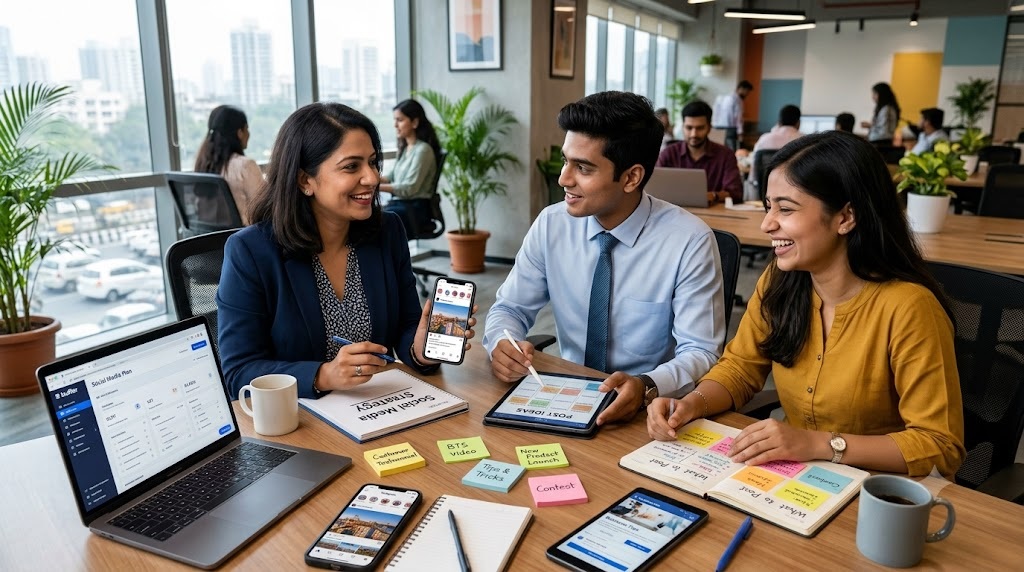
Social media has become one of the easiest ways for businesses to reach potential customers, showcase their products and services, and build relationships with people in their local area. Whether you run a restaurant, coaching centre, salon, retail shop, hotel, clinic, fitness studio or home-based business, the right social media content can help more people discover what you offer.

But there is one problem that many business owners face: What should you actually post on social media?

You may have created an Instagram or Facebook page, uploaded a few pictures and shared occasional updates. But after some time, you run out of ideas. You start wondering what to post next, how often to post and whether your content is reaching the right people.

Simply posting pictures of your products or repeatedly advertising your services is not enough. People want useful information, interesting content, helpful suggestions, attractive visuals and reasons to trust your business.

The good news is that you don’t need a professional marketing team or an expensive advertising budget to create interesting social media content. With a little planning and the right ideas, you can create posts that attract attention, encourage conversations and bring potential customers closer to your business.

This guide explains what to post on social media to promote your business, with 30 practical content ideas, examples for different industries and a simple posting strategy that Indian business owners can start using immediately.

Why Social Media Content Matters for Your Business

Having a social media account is only the first step. What matters is how you use it to communicate with potential customers.

Think about how people choose a restaurant, coaching centre, salon or clothing store. Before making a decision, they often look at pictures, read customer reviews, check available services and see what the business is sharing online.

Your social media content helps them understand what you offer and whether your business is worth considering.

A well-maintained social media presence can help you:

  • Increase business visibility: Introduce your products and services to people who may not know your business exists.
  • Build customer trust: Share genuine customer experiences, your work, team and business activities.
  • Showcase your products and services: Give potential customers a closer look at what you offer.
  • Generate enquiries: Encourage people to contact you through WhatsApp, phone calls, direct messages or your website.
  • Stay connected with customers: Keep existing customers informed about new products, offers and updates.
  • Build a recognisable brand: Develop a consistent identity that people can remember.

However, successful social media marketing is not about posting every day just for the sake of it. It is about sharing content that gives people a reason to notice, remember and contact your business.

First, Understand What Your Customers Want to See

Before deciding what to post, think about the people you want to attract.

A restaurant customer may want to see food pictures, menus, prices and customer experiences. Parents looking for a coaching centre may want to know about teachers, subjects, teaching methods and student achievements.

Similarly, someone searching for a beauty salon may be interested in services, treatment results, hygiene and pricing.

Your content should answer the questions potential customers are already asking.

Identify Your Target Audience

Start by understanding:

  • Who are your potential customers?
  • What products or services are they looking for?
  • What problems can your business solve?
  • What information would help them make a buying decision?
  • What makes your business different from competitors?

For example:

Business type What customers want to know
Restaurant Menu, food pictures, prices, offers and location
Coaching centre Courses, teachers, subjects, results and batches
Beauty salon Services, pricing, transformations and hygiene
Retail shop Products, prices, new arrivals and offers
Hotel Rooms, facilities, photographs, location and booking details
Fitness centre Trainers, equipment, memberships and workout programmes
Diagnostic centre Available tests, facilities, timings and services
Playschool Activities, safety, teachers and learning environment
Travel agency Destinations, packages, itineraries and pricing
Home tuition provider Subjects, classes, teaching experience and learning approach

Once you understand what your customers want, creating relevant social media content becomes much easier.

30 Social Media Content Ideas to Promote Your Business

Here are 30 practical social media post ideas that businesses across India can use on Instagram, Facebook and other platforms.

You don’t have to use all of them at once. Choose the ideas that suit your business and adapt them to your products, services and customers.

1. Introduce Your Business

If someone discovers your social media page for the first time, can they understand what your business does?

Create an introductory post explaining who you are, what you offer and whom you serve.

Include:

  • Your business name and location.
  • Your main products or services.
  • What customers can expect.
  • How people can contact you.

Example: A coaching centre can introduce itself by highlighting its subjects, classes, teaching approach and experienced faculty.

A good introduction gives new visitors a reason to explore your page.

2. Showcase Your Products

Product photographs are among the most useful types of content for retail businesses.

Show your products clearly, highlighting their features, appearance, uses and benefits.

Ideas include:

  • New clothing collections.
  • Latest mobile accessories.
  • Furniture and home decor.
  • Beauty and skincare products.
  • Bakery items and special desserts.
  • Gifts and handmade products.

Use clear photographs and write simple descriptions. Mention important details such as sizes, available colours, prices or how customers can order.

3. Highlight Your Services

If you provide services rather than sell physical products, explain exactly what customers can get from you.

For example:

  • A salon can showcase haircuts, facials and beauty treatments.
  • A diagnostic centre can highlight available health tests.
  • A travel agency can introduce domestic and international tour packages.
  • A digital marketing agency can explain its SEO, website development and advertising services.

Don’t assume that customers already know everything about your business. Explain your services in simple language.

4. Share Customer Reviews and Testimonials

People often feel more comfortable choosing a business when they see positive experiences shared by other customers.

Share genuine customer feedback, testimonials and reviews, with permission where appropriate.

You can create:

  • Customer testimonial graphics.
  • Short video reviews.
  • Screenshots of genuine feedback.
  • Customer experience stories.

For example, a restaurant can share a customer’s experience with its food and service, while a coaching centre can highlight genuine student or parent feedback.

Never create fake reviews or misleading testimonials. Authentic feedback is much more valuable.

5. Announce New Products and Services

Have you introduced something new? Tell people about it!

New arrivals, additional services, special courses and upgraded facilities can all become interesting social media posts.

Examples:

  • A boutique announcing its latest festive collection.
  • A coaching centre introducing a new batch.
  • A restaurant launching a new menu.
  • A fitness centre introducing a new training programme.

Use attractive photographs or a short video to make the announcement more engaging.

6. Share Special Offers and Discounts

Promotional offers can encourage people to try your products or services.

You can announce:

  • Festival discounts.
  • Seasonal offers.
  • Special introductory prices.
  • Combo deals.
  • Limited-period promotions.
  • Membership benefits.

For example, a restaurant could promote a weekend family meal offer, while a beauty salon could introduce a festive grooming package.

Always mention the offer period, conditions and how customers can avail themselves of it.

7. Show Behind-the-Scenes Activities

People enjoy seeing what happens behind the scenes of a business.

Instead of sharing only finished products, show the effort and people involved in creating them.

Ideas include:

  • A baker preparing fresh cakes.
  • A chef cooking a special dish.
  • A boutique designing a new outfit.
  • A salon preparing its workspace.
  • A retailer arranging new stock.
  • A coaching teacher preparing lesson material.

These posts make your business feel more approachable and give customers a better understanding of your work.

8. Introduce Your Team

People connect with people, not just business names.

Introduce the individuals who make your business work.

Share photographs, short videos and brief introductions of your employees, trainers, teachers, chefs or service professionals.

For example, a playschool can introduce its teachers, while a fitness centre can showcase its trainers and their areas of expertise.

This helps customers feel more familiar with the people they may interact with.

9. Share Helpful Tips and Advice

Educational content gives people a reason to follow your social media page even when they are not ready to purchase anything.

Share useful information related to your industry.

Examples:

  • A salon can share haircare and skincare tips.
  • A restaurant can share food storage and cooking suggestions.
  • A coaching centre can share study techniques.
  • A fitness studio can share exercise and healthy lifestyle tips.
  • A travel agency can share travel planning advice.
  • An electronics shop can explain how to maintain electronic devices.

Keep your tips practical, easy to understand and relevant to your customers.

10. Answer Frequently Asked Questions

Think about the questions customers repeatedly ask before purchasing from you.

Turn those questions into social media posts.

For example:

A coaching centre can answer:

  • Which classes do you teach?
  • Which subjects are available?
  • Are online classes available?
  • What are your batch timings?

A restaurant can answer:

  • Do you offer home delivery?
  • Is family seating available?
  • Do you have vegetarian options?
  • Where are you located?

Answering common questions saves time and helps potential customers make decisions.

11. Create Short Videos and Reels

Short-form videos are a useful way to demonstrate products, services and everyday business activities.

You don’t need expensive equipment. A smartphone, good lighting and a clear idea are enough to get started.

Video ideas include:

  • A quick tour of your shop.
  • A product demonstration.
  • A food preparation video.
  • A before-and-after transformation.
  • A short introduction to your services.
  • A glimpse of your daily business activities.

Start with an interesting opening so viewers understand why they should continue watching.

12. Share Before-and-After Results

Before-and-after content works particularly well for businesses where customers can see a visible transformation.

Examples:

  • A salon showing a haircut or styling transformation.
  • An interior designer showing a renovated room.
  • A cleaning service showing a completed project.
  • A fitness trainer sharing a client’s progress with consent.
  • A home decor business showing a redesigned space.

Always use genuine photographs and obtain permission before sharing identifiable customer images.

13. Highlight Your Business Location

Local customers need to know where they can find you.

Create posts featuring your shop, office, restaurant, clinic or service centre.

Include:

  • Your complete address.
  • Nearby landmarks.
  • Directions or a location pin.
  • Opening hours.
  • Contact details.

You can also create a short video showing how to reach your business from a nearby landmark.

This is especially useful for businesses that depend on customers visiting their physical location.

14. Share Festival and Seasonal Greetings

India has numerous festivals and seasonal occasions that provide opportunities to connect with customers.

Create relevant posts for:

  • Diwali.
  • Holi.
  • Eid.
  • Christmas.
  • Navratri.
  • Independence Day.
  • Republic Day.
  • New Year.
  • Regional festivals.

You can also create seasonal content around summer products, monsoon services, winter collections and festive shopping.

Don’t limit these posts to greetings. Connect the occasion naturally with your business wherever appropriate.

15. Run Polls and Ask Questions

Social media should encourage conversations, not just one-way advertising.

Ask questions that customers can answer easily.

Examples:

  • Which flavour would you choose: chocolate or vanilla?
  • What new clothing collection would you like to see?
  • Which subject does your child find most challenging?
  • Morning or evening workout?
  • What type of food should we add to our menu?

Instagram Stories and Facebook offer interactive features such as polls and question stickers.

These activities help you understand customer preferences and encourage participation.

16. Share Special Business Achievements

Have you completed an important project, reached a milestone or received recognition?

Share the achievement with your audience.

Examples:

  • Completing five years in business.
  • Opening a new branch.
  • Receiving an industry award.
  • Reaching an important customer milestone.
  • Introducing a new facility.
  • Completing a major project.

Explain why the achievement matters and acknowledge the customers who supported your journey.

17. Showcase Your Work or Completed Projects

If your business provides professional services, your completed work can become one of your strongest marketing tools.

For example:

  • An architect can showcase completed building projects.
  • An interior designer can share room transformations.
  • A photographer can display recent assignments.
  • A caterer can showcase event arrangements.
  • A digital marketing agency can explain a successful campaign.

Use photographs, short videos and simple descriptions to demonstrate the quality of your work.

18. Introduce Your Most Popular Products or Services

Customers often appreciate recommendations when they are unsure what to choose.

Create posts highlighting your best-selling or most popular offerings.

Examples:

  • A restaurant can introduce its most popular dishes.
  • A boutique can showcase its bestselling outfits.
  • A salon can highlight frequently booked treatments.
  • A bookstore can recommend popular titles.
  • A travel agency can feature frequently requested destinations.

Make sure your claims about popularity are genuine.

19. Explain the Benefits of Your Products or Services

Don’t just tell customers what you sell. Explain why they might need it.

For example, a water purifier retailer can explain the features and uses of different purification systems.

A fitness centre can explain how a structured workout programme supports fitness goals.

A coaching centre can explain how regular practice and individual attention can support a student’s learning.

Focus on customer benefits rather than simply listing product features.

20. Share Customer Success Stories

Stories are more engaging than ordinary advertisements because they show how your business helps people.

For example:

  • A tuition provider can share a student’s learning journey with appropriate permission.
  • A travel agency can share a customer’s memorable holiday experience.
  • An interior designer can explain how a home renovation improved the client’s space.
  • A business consultant can describe a client’s completed project.

Use real experiences and avoid exaggerated claims or guaranteed results.

21. Create Educational Carousels

A carousel allows you to share multiple related slides in one social media post.

It is especially useful for information that cannot be explained in a single photograph.

Ideas include:

  • Five mistakes to avoid when buying a smartphone.
  • Seven study habits for school students.
  • Six tips for choosing the right skincare products.
  • Five things to check before booking a hotel.
  • A step-by-step guide to selecting a fitness programme.

Keep each slide focused on one idea. Use short headings, simple sentences and readable text.

22. Share Product Demonstrations

Customers often want to see how something works before purchasing it.

Create short videos demonstrating the use of your products.

Examples:

  • An electronics store demonstrating a new gadget.
  • A kitchenware shop showing how a product works.
  • A beauty retailer demonstrating a makeup product.
  • A furniture store showing storage features.
  • A sports shop demonstrating fitness equipment.

A useful demonstration can answer questions that a product photograph cannot.

23. Introduce Your Business Values

Customers may want to know more about the people and principles behind a business.

Share what makes your business different.

You could talk about:

  • Your commitment to quality.
  • Your customer service approach.
  • Your product selection process.
  • Your experience in the industry.
  • Your focus on customer satisfaction.
  • Your approach to hygiene, safety or reliability.

Keep these posts genuine. Show how your values are reflected in your everyday work.

24. Share Local Community Activities

Local businesses have an advantage: they are part of the communities they serve.

Use social media to highlight meaningful local activities.

Examples:

  • Participating in a local exhibition.
  • Supporting a neighbourhood event.
  • Organising a community workshop.
  • Sponsoring a local sports activity.
  • Taking part in a charity initiative.

Such content can help your business build stronger connections with people in its surrounding area.

25. Announce Upcoming Events and Workshops

If you organise events, workshops, training sessions or special activities, promote them through social media.

Examples:

  • A coaching centre announcing a career guidance seminar.
  • A fitness studio promoting a free fitness session.
  • A playschool announcing a parent interaction programme.
  • A restaurant promoting a special food event.
  • A boutique announcing a festive exhibition.

Mention the date, venue, timings, registration process and contact details.

26. Share Price Lists and Service Packages

Many customers hesitate to contact a business when they cannot find basic pricing information.

Wherever possible, make your pricing and service packages easy to understand.

For example:

  • A salon can share its service menu.
  • A fitness centre can introduce membership packages.
  • A hotel can highlight room categories.
  • A tuition provider can explain available courses and fee structures.
  • A travel agency can introduce different holiday packages.

Clear information helps customers decide whether your offering suits their needs.

27. Create Myth-Busting Posts

Every industry has misconceptions that can confuse customers.

Create posts that explain the facts in a simple way.

Examples:

  • A fitness trainer can address common exercise myths.
  • A skincare professional can clarify misconceptions about skincare.
  • An electronics retailer can explain common battery myths.
  • A coaching centre can discuss misconceptions about exam preparation.
  • A travel agency can clarify common travel documentation misunderstandings.

These posts position your business as a helpful source of information.

28. Share Comparisons and Buying Guides

Customers often compare different options before making a purchase.

Help them understand what to look for.

Examples:

  • An electronics shop can compare different types of headphones.
  • A furniture store can explain the differences between materials.
  • A travel agency can compare holiday destinations.
  • A beauty salon can explain different hair treatments.
  • A retailer can help customers choose products based on their needs.

Focus on useful buying advice rather than simply promoting the most expensive option.

29. Introduce Limited-Time Products or Services

Create excitement around special products, seasonal collections or temporary services.

Examples:

  • A bakery introducing a special festive cake.
  • A restaurant announcing a weekend special menu.
  • A boutique promoting a limited festive collection.
  • A travel agency introducing a seasonal package.
  • A gift shop showcasing special occasion hampers.

Use genuine availability information and clear deadlines. Avoid artificial urgency.

30. Create a Strong Call-to-Action Post

Every business should occasionally publish posts that clearly tell potential customers what to do next.

For example:

  • Looking for a reliable home tutor? Contact us today.
  • Want to explore our latest collection? Visit our store.
  • Planning a family dinner? Reserve your table.
  • Need professional beauty services? Book your appointment.
  • Looking for a fitness programme? Get in touch with our team.

Include the appropriate contact details, WhatsApp number, website or location.

A good call to action removes confusion and makes it easier for interested people to take the next step.

What Should Different Types of Businesses Post on Social Media?

The best content depends on your industry. A restaurant does not need to post the same things as a coaching centre or a diagnostic clinic.

Here are practical examples for some popular Indian business categories.

Restaurants, Cafes and Food Businesses

Food is naturally visual, making photographs and short videos particularly useful.

Recommended content:

  • Popular dishes and food photography.
  • Kitchen preparation videos.
  • New menu announcements.
  • Customer reviews.
  • Special meal offers.
  • Festival menus.
  • Restaurant interiors and ambience.
  • Chef introductions.
  • Home delivery information.
  • Food preparation and hygiene practices.

Example post: “Craving something delicious this weekend? Discover our freshly prepared special menu. Visit us with your family or contact us for more details.”

Coaching Centres and Tuition Classes

Parents want to know about teaching quality, subjects, teachers and the learning environment.

Recommended content:

  • Introduction to teachers.
  • Subjects and classes offered.
  • New batch announcements.
  • Study tips and learning advice.
  • Classroom activities.
  • Student achievements.
  • Parent testimonials.
  • Exam preparation guidance.
  • Admission announcements.
  • Online and offline class details.

Example post: “Preparing for Class 10 board exams? Join our Mathematics and Science batches and strengthen your concepts with regular practice.”

Retail Shops and Designer Boutiques

Retail businesses should regularly showcase their products and give customers reasons to visit.

Recommended content:

  • New arrivals.
  • Product photographs.
  • Latest collections.
  • Styling suggestions.
  • Product demonstrations.
  • Seasonal offers.
  • Festive collections.
  • Customer purchases and feedback.
  • Gift ideas.
  • Store walkthroughs.

Example post: “Looking for the perfect festive outfit? Explore our latest collection and find styles for every occasion.”

Beauty Salons and Spas

Customers want to see the quality of services, available treatments and the salon environment.

Recommended content:

  • Hair and beauty transformations.
  • Available treatments.
  • Skincare tips.
  • Seasonal beauty advice.
  • Salon tours.
  • Staff introductions.
  • Customer testimonials.
  • Special packages.
  • New services.
  • Appointment reminders.

Example post: “Get ready for the festive season with our special beauty and grooming services. Contact us to explore available treatments.”

Hotels and Travel Agencies

Travel-related content gives businesses plenty of opportunities to share attractive visuals and useful information.

Recommended content:

  • Room photographs.
  • Hotel facilities.
  • Guest experiences.
  • Popular destinations.
  • Holiday packages.
  • Travel planning tips.
  • Seasonal offers.
  • Nearby attractions.
  • Booking information.
  • Short destination videos.

Example post: “Planning a family holiday? Explore our comfortable accommodation and convenient facilities for a memorable stay.”

Fitness Centres and Gyms

Fitness businesses can use educational and motivational content to attract people interested in improving their fitness.

Recommended content:

  • Workout demonstrations.
  • Trainer introductions.
  • Exercise tips.
  • Gym tours.
  • Equipment demonstrations.
  • Membership information.
  • Fitness challenges.
  • Group workout sessions.
  • Member experiences.
  • Healthy lifestyle advice.

Example post: “Ready to make fitness part of your daily routine? Explore our training programmes and take the first step towards your fitness goals.”

Playschools and Daycare Centres

Parents want to understand the environment, safety, activities and learning opportunities available to their children.

Recommended content:

  • Classroom activities.
  • Creative learning sessions.
  • Art and craft activities.
  • Teacher introductions.
  • Special celebrations.
  • Learning programmes.
  • Parent testimonials.
  • School facilities.
  • Admission announcements.
  • Children’s activity highlights, with appropriate parental consent.

Example post: “Little hands, big discoveries! Explore how our activity-based learning programmes encourage curiosity and creativity.”

Diagnostic Centres and Medical Stores

Healthcare-related businesses should prioritise accurate, responsible and informative content.

Recommended content:

  • Available diagnostic services.
  • Operating hours.
  • Facility information.
  • Available laboratory tests.
  • Booking procedures.
  • General health awareness.
  • Seasonal health information.
  • Equipment and facility introductions.
  • Customer service information.
  • Important service updates.

Avoid sharing patient information without consent or making unsupported medical claims.

How to Choose the Right Social Media Platforms for Your Business

You don’t need to be active on every social media platform. Start with the platforms where your potential customers are most likely to discover and interact with your business.

Instagram

Instagram is particularly useful for businesses that can showcase products, services and experiences visually.

Good content formats include:

  • Reels.
  • Photographs.
  • Carousels.
  • Stories.
  • Customer testimonials.
  • Product demonstrations.

It works well for restaurants, boutiques, beauty salons, fitness centres, hotels, travel agencies and lifestyle businesses.

Facebook

Facebook offers useful ways to connect with local communities and customers.

You can share:

  • Business updates.
  • Product photographs.
  • Offers and promotions.
  • Customer reviews.
  • Events.
  • Videos.
  • Informative posts.

A Facebook business page also gives people another place to discover your business and find its contact information.

WhatsApp Business

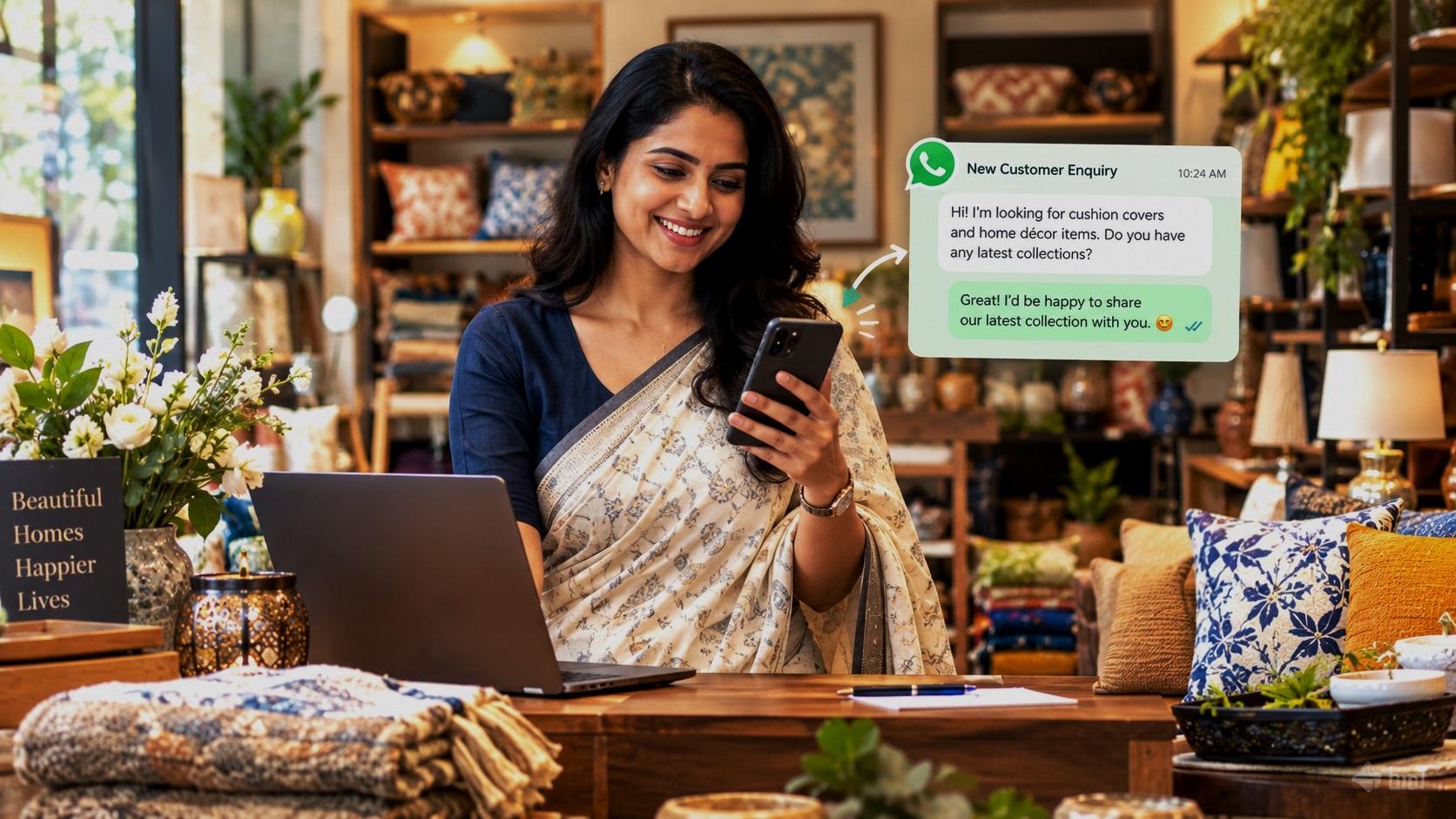
WhatsApp Business is useful for communicating directly with interested customers.

You can use it to:

  • Share product catalogues.
  • Answer customer questions.
  • Send updates to customers who have opted in.
  • Share offers and announcements.
  • Provide appointment information.
  • Respond to enquiries.

Use WhatsApp Status to share regular business updates. Keep promotional messages relevant and avoid sending unsolicited bulk messages.

YouTube

YouTube is particularly useful when your business can provide demonstrations, explanations or educational content.

Examples include:

  • Product demonstrations.
  • Tutorials.
  • Cooking videos.
  • Educational lessons.
  • Fitness guidance.
  • Customer success stories.
  • Business introductions.

You can also create YouTube Shorts to share shorter videos.

My suggestion: Start with Instagram and Facebook if your business is highly visual. Add WhatsApp Business for customer communication. Consider YouTube if you can regularly produce useful video content.

How Often Should You Post on Social Media?

One of the biggest mistakes business owners make is posting regularly for a few days and then disappearing for weeks.

You don’t need to publish several posts every day. A manageable and consistent schedule is more useful than an ambitious plan you cannot maintain.

Here is a simple starting schedule:

Platform Suggested frequency
Instagram 3–4 posts per week
Facebook 3–4 posts per week
Instagram Stories 3–5 days per week
WhatsApp Status 3–5 days per week
YouTube Shorts 1–2 videos per week

These are practical starting recommendations, not fixed platform rules. Adjust them according to your available time, audience response and business requirements.

A Simple 7-Day Social Media Content Calendar

If you are unsure what to post each day, use this weekly plan.

Day What to post Example
Monday Educational content Five tips related to your industry
Tuesday Product or service showcase Highlight a popular offering
Wednesday Customer feedback Share a genuine testimonial
Thursday Behind the scenes Show your team or daily activities
Friday Promotional post Announce a special offer
Saturday Video or Reel Demonstrate a product or service
Sunday Engagement post Ask a question or run a poll

You can change this schedule depending on your industry. For example, a restaurant may focus more on weekend offers, while a coaching centre may share more educational content.

How to Create Attractive Social Media Posts Without Hiring a Designer

You don’t need advanced graphic design skills to create professional-looking social media content.

A few simple practices can make a noticeable difference.

1. Use Clear, High-Quality Photographs

Use good lighting and avoid blurry or poorly framed pictures.

Show your actual products, premises, services and team wherever possible. Original photographs help customers get a more realistic idea of your business.

2. Write Attention-Grabbing Headlines

The first line should give people a reason to stop scrolling.

Instead of writing:

“Our shop has new products.”

Try:

“Looking for the Perfect Festive Outfit? Explore Our Latest Collection!”

Instead of:

“We offer tuition classes.”

Try:

“Help Your Child Build Stronger Maths Concepts with Expert Guidance.”

3. Keep Your Text Short and Readable

People often browse social media quickly.

Use:

  • Short headlines.
  • Simple sentences.
  • Clear product descriptions.
  • Easy-to-read fonts.
  • Enough space between text elements.

Avoid filling an image with too much information.

4. Use Your Business Branding Consistently

Use the same business name, logo and brand colours across your social media accounts.

This helps people recognise your business when they come across your posts on different platforms.

5. Always Include a Clear Call to Action

Tell people what they should do after seeing your post.

Examples:

  • Call us for details.
  • WhatsApp us to enquire.
  • Visit our store today.
  • Explore our website.
  • Book your appointment.
  • Send us a message.

Make sure the relevant contact information is easy to find.

How to Get More Engagement on Your Social Media Posts

Publishing content is only one part of social media marketing. You also need to encourage people to interact with your business.

Here are some practical ways to improve engagement.

Respond to Comments and Messages

When someone asks a question, reply politely and promptly.

A person who comments on your product or asks about your services may be a potential customer. Don’t leave genuine enquiries unanswered.

Use Relevant Hashtags

Hashtags can help categorise your content and make it easier for people to discover relevant posts.

Use a combination of:

  • Business-related hashtags.
  • Product or service hashtags.
  • Industry hashtags.
  • Location-based hashtags.

For example, a restaurant in Karol Bagh, Delhi, could use relevant tags such as #KarolBagh, #DelhiRestaurants and #FoodInDelhi.

Avoid adding dozens of unrelated hashtags. Choose those that accurately describe your post.

Tag Your Location

For local businesses, location is important.

Mention your city, neighbourhood or service area in captions where relevant. Use location tags when available.

This gives potential local customers useful context about where you operate.

Encourage Customers to Share Their Experiences

Ask satisfied customers to share genuine feedback or tag your business when appropriate.

Customer-generated content can help introduce your business to people beyond your existing audience.

Always seek permission before reposting their photographs or videos.

Share Content That People Find Useful

A useful post gives people a reason to save it, share it or revisit it.

For example, a travel agency can share a holiday packing checklist, while a coaching centre can publish a revision timetable.

Think beyond advertising. Make your social media page worth following.

Common Social Media Marketing Mistakes Business Owners Should Avoid

Even businesses that post regularly sometimes struggle to get meaningful results because of avoidable mistakes.

Posting Only Advertisements

If every post says “Buy Now”, “Visit Us” or “Contact Us”, people may lose interest.

Mix promotional posts with educational information, customer experiences, demonstrations and engaging content.

Ignoring Comments and Messages

Social media is a communication channel. If customers contact you and receive no response, they may approach another business.

Check your messages regularly and respond professionally.

Using Poor-Quality Images

Blurry photographs, overcrowded designs and unclear text can make your business look less professional.

Take time to create clean, attractive posts.

Copying Competitors

You can learn from other businesses, but copying their posts does not help establish your own identity.

Show your actual products, services, team, experience and business personality.

Sharing Incorrect Information

Check prices, timings, contact details, offers and product descriptions before publishing.

Incorrect information can confuse customers and damage trust.

Being Inconsistent

Long gaps between posts make your business appear inactive.

Create a simple weekly calendar and prepare a few posts in advance.

Buying Followers or Fake Engagement

Large follower numbers do not automatically translate into customers.

Avoid fake followers, artificial likes and misleading engagement services. Focus on reaching people who are genuinely interested in your products or services.

How to Measure Whether Your Social Media Marketing Is Working

Getting likes and followers can feel encouraging, but they are not the only measures of success.

Your real objective should be to attract relevant people and generate genuine business opportunities.

Pay attention to the following:

Metric What it tells you
Reach How many people saw your content
Profile visits How many people explored your business profile
Engagement How people interacted with your posts
Saves and shares Whether people found your content useful
Website clicks How many people visited your website
WhatsApp clicks How many people showed interest in contacting you
Enquiries How many potential customers contacted you
Conversions How many enquiries resulted in bookings or sales

Instagram and Facebook provide built-in insights for business accounts. WhatsApp Business can also help you understand customer conversations.

Review your results regularly.

For example, if product demonstration videos generate more enquiries than ordinary product photographs, create more demonstration videos.

If location-based posts attract nearby customers, make local information a regular part of your content.

Remember: The purpose of social media marketing is not simply to become popular online. It is to make your business easier to discover, trust and contact.

How to Promote Your Business Beyond Social Media

Here is something many small business owners overlook.

Even if you maintain active Instagram and Facebook pages, your business may still be difficult to discover when someone searches for your products or services elsewhere online.

For example, someone searching Google for a restaurant in Karol Bagh, a coaching centre in Noida or a beauty salon in Rohini may not necessarily discover your social media page.

That is why social media should be one part of your overall online marketing strategy.

Build a Strong Online Business Presence

Along with social media, consider these important steps:

1. Create and Maintain a Google Business Profile

A Google Business Profile helps customers discover relevant business information through Google Search and Maps.

Keep your business name, address, phone number, working hours, services and photographs updated.

2. Get Your Business Listed on Online Business Directories

Business directories provide another way for potential customers to discover your products and services.

Choose relevant directories and maintain accurate business information.

A well-maintained business listing should clearly display:

  • Business name and description.
  • Products and services.
  • Location and contact details.
  • Website link.
  • WhatsApp contact option, where available.
  • Relevant photographs.

3. Make It Easy for Customers to Contact You

Don’t make interested customers search for your phone number or website.

Provide convenient contact options such as:

  • WhatsApp.
  • Phone calls.
  • Website enquiry forms.
  • Email.
  • Direct messages.

The easier it is to contact your business, the fewer obstacles potential customers face when making an enquiry.

4. Keep Your Online Information Consistent

Your business name, address, phone number and other important details should be accurate across your website, social media accounts and online listings.

Inconsistent information can confuse potential customers.

5. Connect Your Social Media Accounts to Your Business Website and Listings

Use your online platforms to support each other.

Share your website on social media, add social media links to your business website and include relevant website and contact links in your online business listings.

This creates multiple ways for potential customers to find and connect with you.

How HotList.in Helps Indian Businesses Build Their Online Presence

Creating social media content is important, but your business also needs a place where potential customers can discover its details, explore its services and contact you directly.

This is where HotList.in can help.

HotList.in is a business listing and local lead generation platform designed to help Indian businesses improve their online visibility and reach potential customers.

Whether you own a restaurant, hotel, coaching centre, playschool, retail shop, fitness centre, diagnostic centre, beauty salon or another local business, you can create a dedicated business listing on HotList.in.

What Can Your Business Get on HotList.in?

Your business listing provides another online destination where potential customers can discover your business and access its contact information.

You can continue using Instagram, Facebook and WhatsApp to publish engaging content while using HotList to strengthen your business’s online presence.

Get your business listed on HotList.in and make it easier for potential customers to discover and contact you.

Frequently Asked Questions

1. What should I post on social media to promote my business?

Share a mix of product photographs, service highlights, customer reviews, educational tips, behind-the-scenes videos, special offers, business updates and customer success stories. Your content should help potential customers understand your business and give them reasons to contact you.

2. Which social media platform is best for small businesses in India?

Instagram, Facebook and WhatsApp Business are useful starting points for many Indian businesses. Instagram works well for visual content, Facebook helps businesses connect with local communities, and WhatsApp Business makes direct customer communication easier. YouTube is another useful option for businesses that can create educational or demonstration videos.

3. How many times should a business post on social media?

A good starting point is three to four posts per week on Instagram and Facebook, supported by regular Stories or WhatsApp Status updates. The ideal frequency depends on your business, audience and ability to create useful content consistently.

4. How can I promote my business on Instagram without spending money?

Create a professional business profile, share original photographs and videos, publish useful Reels and carousels, use relevant hashtags, mention your location and interact with your audience. You can also encourage satisfied customers to share their experiences.

5. What type of social media content attracts customers?

Content that answers customer questions, demonstrates product benefits, showcases real customer experiences and provides useful information can attract relevant audiences. Product demonstrations, customer testimonials, educational posts and clear promotional offers are useful formats.

6. How can a local business reach more customers on social media?

Mention your location, create content relevant to local customers, share business updates, respond to enquiries and encourage customers to interact with your posts. Combine social media marketing with an updated Google Business Profile and online business listings.

7. Can I promote my business on social media without hiring a marketing agency?

Yes. Small business owners can manage basic social media marketing themselves using a smartphone and simple design tools. Start with a manageable posting schedule, use original business photographs and focus on content that answers customer needs.

8. How long does social media marketing take to show results?

There is no fixed timeline. Results depend on your industry, competition, content quality, audience and consistency. Some posts may generate enquiries quickly, while building a recognisable brand and an engaged audience generally requires ongoing effort.

Make Every Social Media Post Count

Promoting your business on social media doesn’t have to be complicated or expensive.

You don’t need to post something extraordinary every day. Start by showing people what you sell, explaining how your services help them, sharing useful information and giving them a reason to trust your business.

Use photographs, videos, customer experiences, educational posts and occasional offers to keep your content interesting.

Most importantly, make it easy for interested people to contact you.

Remember that social media is just one part of building a successful online presence. Combine it with a well-maintained Google Business Profile, relevant online business listings, an updated website and convenient WhatsApp contact options.

Start with a few ideas from this guide, create a simple weekly content calendar and keep improving based on what your audience responds to.

The more useful, genuine and relevant your content is, the better your chances of turning social media attention into real business enquiries.

Related Posts

Instagram Marketing for Small Businesses in India

How to Get More Google Reviews for Your Business
How to Turn Website Visitors into Customers

Facebook and Instagram Ads for Small Businesses in India

Facebook and Instagram Ads for Small Businesses in India

Facebook and Instagram Ads for Small Businesses in India

Running a small business in India is not easy. You have products to sell, customers to serve, employees to manage and expenses to control. Finding new customers while managing everything else can be challenging.

You may already have a Facebook page or an Instagram account. You might post pictures of your products, share offers, upload videos and wait for people to contact you. But getting consistent enquiries through regular posts is not always easy.

This is where Facebook and Instagram advertising can help.

With the right advertising strategy, even a small business with a limited marketing budget can reach potential customers in its city, neighbourhood or target market. You don’t need a large marketing team or an expensive advertising agency to get started.

This guide explains how Facebook and Instagram ads work, how much they cost in India, how to choose the right audience, create effective advertisements and turn interested people into paying customers.

Whether you own a restaurant, clothing store, coaching centre, salon, clinic, hotel, bakery, fitness centre or any other local business, you will find practical ideas to promote your business online.

1. What Are Facebook and Instagram Ads?

Facebook and Instagram ads are paid advertisements that businesses use to promote their products, services, offers and brands to selected audiences.

Both platforms are owned by Meta and allow businesses to create and manage advertisements through Meta Ads Manager.

Unlike regular social media posts, which mainly reach your existing followers and some additional users, paid advertisements can reach people who have never heard of your business.

For example:

  • A restaurant in Delhi can advertise its lunch offers to people living nearby.
  • A beauty salon in Pune can reach women interested in beauty and skincare services.
  • A coaching centre in Jaipur can promote its admission programmes to parents and students.
  • A clothing boutique in Mumbai can showcase its latest collection to potential customers.
  • A fitness centre in Bengaluru can attract people interested in fitness and healthy living.

The biggest advantage is that you can decide whom you want to reach, where your advertisements should appear and how much you want to spend.

2. Why Should Small Businesses in India Advertise on Facebook and Instagram?

Facebook and Instagram offer small businesses an opportunity to compete for attention without needing the advertising budgets of large companies.

Here are some important benefits.

Reach More Potential Customers

Your social media followers represent only a small part of your potential market.

Paid advertisements help you reach people beyond your existing audience. You can introduce your business to new customers based on location, interests and other available targeting options.

Promote Your Business Locally

Local advertising is particularly useful for businesses that depend on customers from specific areas.

For example, if you operate a salon in Rohini, Delhi, reaching people across the entire country may not be useful. You want to attract customers who can actually visit your salon.

Facebook and Instagram ads allow you to focus your campaigns on relevant geographical areas.

Generate Direct Customer Enquiries

You don’t always need customers to visit your website before contacting you.

Depending on the campaign objective, you can encourage people to:

  • Send a WhatsApp message.
  • Contact your business through Instagram Direct.
  • Fill out an enquiry form.
  • Visit your website.
  • Call your business.

This makes social media advertising particularly useful for service providers and local businesses.

Showcase Products and Services Visually

A picture of a delicious restaurant meal, an attractive clothing collection, a beautifully designed home or a salon makeover can quickly capture attention.

Instagram and Facebook provide several advertising formats that help businesses showcase what they offer.

Control Your Advertising Budget

You can start with a modest budget, test different advertisements and increase spending when you find a campaign that generates worthwhile results.

You don’t have to commit to a large advertising contract or spend a fixed amount every month.

3. Facebook Ads vs Instagram Ads: Which Is Better for Your Business?

Both platforms offer valuable advertising opportunities, but their audiences and content formats can serve different purposes.

Facebook Ads Instagram Ads
Useful for reaching local communities Excellent for visual product promotion
Suitable for many age groups Popular for visual discovery and trends
Supports lead forms and messaging Strong for Reels, Stories and shopping discovery
Useful for events, offers and services Useful for fashion, food, beauty and lifestyle
Offers multiple advertising placements Offers highly engaging visual formats

When Should You Choose Facebook Ads?

Facebook can be useful for businesses targeting local communities, families, homeowners, working professionals and other customer groups.

Consider Facebook advertising if you operate:

  • Coaching and tuition centres.
  • Diagnostic centres.
  • Home improvement services.
  • Restaurants and hotels.
  • Real estate services.
  • Local retail stores.
  • Professional service businesses.

When Should You Choose Instagram Ads?

Instagram is particularly useful when your products or services can be presented through attractive photographs and videos.

Consider Instagram advertising if you operate:

  • Fashion boutiques.
  • Beauty salons.
  • Restaurants and cafés.
  • Bakeries.
  • Jewellery stores.
  • Fitness centres.
  • Interior design businesses.
  • Travel and lifestyle services.

Should You Advertise on Both Platforms?

For many small businesses, advertising on both platforms is a sensible starting point.

You can use Meta Ads Manager to manage campaigns across Facebook and Instagram, then evaluate which placements generate better enquiries and customers.

Don’t assume that one platform will always perform better. Results depend on your business, audience, advertisement and campaign objective.

4. How Much Do Facebook and Instagram Ads Cost in India?

One of the first questions small business owners ask is: How much money do I need to advertise on Facebook and Instagram?

The good news is that you can start with a relatively small budget.

Meta uses an auction system to deliver advertisements. The actual cost depends on several factors, including:

  • Your target audience.
  • Location and competition.
  • Advertising objective.
  • Quality and relevance of your advertisement.
  • Time of year.
  • Number of businesses competing for the same audience.

There is no fixed price for reaching a particular number of people or generating one customer enquiry.

Suggested Starting Advertising Budgets

The following are illustrative testing budgets, not official Meta prices or guaranteed performance benchmarks.

Daily budget Approximate 30-day budget Suitable for
₹100 ₹3,000 Small initial experiments
₹200 ₹6,000 Testing local audiences and creatives
₹300 ₹9,000 Regular local campaigns
₹500 ₹15,000 More extensive campaign testing
₹1,000 ₹30,000 Businesses ready to scale

You don’t need to start with ₹1,000 per day. Begin with an amount you can comfortably afford to test.

How Much Should a Small Business Spend?

Your advertising budget should depend on the value of a new customer and the profit your business earns.

For example, imagine you own a beauty salon.

  • Average customer bill: ₹1,000.
  • Estimated profit per visit: ₹400.
  • Advertising expenditure: ₹3,000.
  • New customers acquired through advertising: 15.

Your advertising cost per customer would be ₹200.

If those 15 customers each generate ₹400 in profit, your total profit before advertising expenditure would be ₹6,000. After deducting ₹3,000 in advertising expenditure, you would have ₹3,000 remaining.

This is a simplified example. You should also consider repeat visits, discounts, operating expenses and the time required to convert enquiries into paying customers.

Remember: A campaign that generates inexpensive clicks is not necessarily successful. What matters is how many genuine enquiries and profitable customers you acquire.

5. How to Set Up Facebook and Instagram Advertising

You don’t need advanced technical knowledge to start advertising. However, setting up your accounts correctly will make campaign management easier.

Step 1: Create a Facebook Business Page

Your business should have a dedicated Facebook Page rather than relying only on a personal profile.

Add the following information:

  • Correct business name.
  • Business category.
  • Profile picture or business logo.
  • Cover photograph.
  • Business description.
  • Address and location, where applicable.
  • Contact number.
  • Website and WhatsApp details.
  • Business hours.

Use clear photographs and keep your information accurate.

Step 2: Set Up an Instagram Professional Account

Switch your Instagram account to a professional Business account.

Complete your profile with:

  • Business name.
  • Relevant username.
  • Clear profile photograph.
  • Short business description.
  • Location.
  • Contact information.
  • Website link.
  • WhatsApp contact option, where available.

Your profile should immediately tell visitors what you sell, where you operate and how they can contact you.

Step 3: Set Up Meta Business Suite

Meta Business Suite helps you manage your Facebook Page and Instagram account from one place.

You can use it to:

  • Manage messages and comments.
  • Schedule posts.
  • Review account performance.
  • Manage connected business assets.
  • Access advertising tools.

Step 4: Open Meta Ads Manager

Meta Ads Manager is the main platform for creating and managing advertising campaigns.

It allows you to choose campaign objectives, define audiences, set budgets, create advertisements and track performance.

For better control and reporting, use Ads Manager rather than depending entirely on the Boost Post option.

6. Choose the Right Facebook and Instagram Advertising Objective

Before creating an advertisement, decide what you want people to do.

Meta offers different campaign objectives to support different business goals.

Choosing the right objective is important because the advertising system uses it to find people who are more likely to take the action you want.

Awareness

Use an awareness campaign when you want more people to discover your business.

This can be useful when:

  • Opening a new shop.
  • Launching a new restaurant.
  • Introducing a new brand.
  • Promoting a new business location.
  • Building recognition in a local market.

Traffic

Traffic campaigns aim to send people to a destination such as your website or landing page.

Use this objective when you want potential customers to explore:

  • Your product collection.
  • Service information.
  • Business website.
  • Special offers.
  • Online catalogue.

However, website visits alone don’t guarantee enquiries or sales.

Engagement

Engagement campaigns help encourage interactions with your content.

These may include video views, post engagement or messaging interactions, depending on the campaign setup.

They can help increase interest in your products, services and brand.

Leads

Lead campaigns are particularly useful for businesses that depend on enquiries.

Potential customers can submit their details through an instant form or use other supported contact methods.

Examples include:

  • Coaching centres collecting admission enquiries.
  • Real estate agents collecting property enquiries.
  • Interior designers receiving project enquiries.
  • Clinics receiving appointment requests.
  • Travel agencies collecting holiday package enquiries.

Sales

Sales campaigns are designed to encourage purchases or other valuable conversion actions.

They are particularly useful for businesses with online stores, product catalogues or websites that can track customer purchases.

Which Objective Should You Choose?

Business requirement Suitable objective
Introduce a new business Awareness
Send people to your website Traffic
Encourage content interaction Engagement
Collect customer enquiries Leads
Generate online purchases Sales

Choose the objective based on your actual business goal, not simply because one option sounds more attractive.

7. How to Target the Right Customers for Your Local Business

One of the biggest advantages of Facebook and Instagram advertising is the ability to reach relevant audiences.

However, showing your advertisements to everyone is rarely a good strategy.

A local business should concentrate on people who are most likely to purchase its products or services.

Target Customers by Location

Location targeting is particularly important for Indian local businesses.

For example:

  • A restaurant in Karol Bagh can focus on nearby areas of Delhi.
  • A salon in Rohini can target relevant neighbourhoods.
  • A coaching centre in Noida can reach parents and students in nearby sectors.
  • A boutique in South Delhi can target potential shoppers in its service area.

Start with a realistic geographical area based on how far customers are willing to travel.

Target Customers by Age and Demographics

Think about the people most likely to purchase from you.

For example:

Business Potential customer audience
Playschool Parents of young children
Coaching centre Students and parents
Beauty salon People interested in beauty services
Fitness centre People interested in fitness
Furniture store Homeowners and people furnishing homes
Wedding photographer People planning weddings

Use age and demographic filters where appropriate, while following Meta’s advertising policies and any applicable restrictions.

Target Customers by Interests

Depending on available targeting options, you can explore interests related to your business.

For example:

  • A fitness centre can explore fitness-related audiences.
  • A bakery can explore baking and food-related audiences.
  • A travel agency can explore travel-related audiences.
  • A clothing store can explore fashion-related audiences.

Remember that interest targeting is not a guarantee of buying intent.

Use Custom Audiences

Custom Audiences can help you reconnect with people who have already interacted with your business.

Depending on your available data and permissions, these audiences can include:

  • Existing customers.
  • Website visitors.
  • People who engaged with your Facebook Page.
  • Instagram account engagers.
  • People who watched your videos.
  • Previous customer enquiry lists.

This can be particularly useful when promoting a new offer to people who already know your business.

Try Lookalike Audiences

Lookalike Audiences help businesses reach new people who share characteristics with an existing customer or other source audience.

For example, if you have a good-quality customer list, you may be able to use it to find people with similar characteristics.

Availability and eligibility depend on your account, data source and Meta’s current requirements.

8. How to Create Facebook and Instagram Ads That Attract Customers

You can target the right people and still get poor results if your advertisement doesn’t capture their attention.

People scroll through social media quickly. Your advertisement needs to communicate its value within a few seconds.

Write a Headline That Grabs Attention

Avoid vague headlines such as:

“Welcome to Our Business.”

Instead, communicate a specific benefit.

Examples:

  • Looking for the Best Cakes in Rohini?
  • Upgrade Your Fitness with Personal Training in Noida.
  • Admissions Open for Classes 6–12.
  • Discover the Latest Fashion Collection in Karol Bagh.
  • Get Professional Home Cleaning Services in Delhi.

Use High-Quality Photographs

Your photographs should show what customers can actually expect from your business.

A restaurant should showcase its food. A clothing store should display its collection. A salon should feature its services and genuine work.

Avoid blurry photographs, excessive text and misleading product images.

Create Short and Engaging Videos

Short videos are an effective way to demonstrate products and services.

For example:

  • Restaurants can show food preparation and popular dishes.
  • Salons can demonstrate their services.
  • Fitness centres can showcase workouts.
  • Boutiques can present new collections.
  • Coaching centres can introduce teachers and classrooms.
  • Hotels can offer a quick tour of their rooms and facilities.

Make the first few seconds interesting. Add captions so people can understand your message even when their sound is turned off.

Include a Clear Call to Action

Every advertisement should tell people what to do next.

Examples:

  • Send Us a WhatsApp Message.
  • Book Your Appointment Today.
  • Enquire About Our Courses.
  • Explore Our Latest Collection.
  • Call Us for More Information.
  • Visit Our Website.

Don’t make potential customers guess how to contact you.

9. Best Facebook and Instagram Ad Formats for Small Businesses

Meta offers several advertising formats. You should select the one that presents your business most effectively.

Image Ads

Image advertisements are simple and suitable for promoting individual products, services, discounts and special offers.

Use clear photographs with a short headline and a strong call to action.

Video Ads

Video ads help demonstrate your products, services, premises and customer experience.

They work particularly well when people need to see what makes your business different.

Carousel Ads

Carousel ads allow you to display multiple images or videos in one advertisement.

They are useful for:

  • Clothing collections.
  • Restaurant menus.
  • Different service packages.
  • Property listings.
  • Product categories.
  • Multiple business offerings.

Each card can highlight a different product or benefit.

Instagram Stories and Reels Ads

Stories and Reels are full-screen vertical formats that can help businesses present engaging visual content.

Use them to showcase:

  • New products.
  • Limited-time offers.
  • Behind-the-scenes activities.
  • Customer experiences.
  • Product demonstrations.
  • Business introductions.

Design these advertisements for mobile screens and avoid placing important text where platform interface elements may cover it.

Lead Form Ads

Lead form ads allow potential customers to submit their details without necessarily visiting your website.

You can ask for relevant information such as:

  • Name.
  • Phone number.
  • Email address.
  • Service required.
  • Preferred location.

Keep the form short. Asking for too many details can discourage people from completing it.

Make sure you follow applicable privacy and consent requirements when collecting customer information.

10. WhatsApp Advertising: Turn Social Media Interest into Direct Enquiries

For many Indian businesses, WhatsApp is one of the most convenient ways to communicate with customers.

Meta supports advertisements that can start conversations through WhatsApp, subject to account eligibility and setup.

These advertisements can be particularly useful for businesses where customers want to ask questions before making a purchase.

For example:

A coaching centre

“Looking for expert tuition for your child? Message us on WhatsApp to enquire about courses, subjects and fees.”

A beauty salon

“Want to book your next makeover? Contact us on WhatsApp for appointments and service details.”

A restaurant

“Planning a family dinner? Message us on WhatsApp to enquire about our menu and reservations.”

A travel agency

“Planning your next holiday? Message us to explore available travel packages.”

How to Improve WhatsApp Enquiries

  • Respond to enquiries promptly.
  • Create a clear business profile.
  • Display your services and product catalogue.
  • Prepare answers to frequently asked questions.
  • Share accurate prices and service details.
  • Follow up politely when appropriate.
  • Avoid sending unwanted promotional messages.

Getting a WhatsApp enquiry is only the first step. Good communication and timely follow-up help turn interest into business.

11. 10 Facebook and Instagram Ad Ideas for Different Indian Businesses

Not every business should advertise in the same way. Your advertisement should reflect what customers actually want.

Here are practical ideas for different business categories.

Business type Advertisement idea
Restaurant Promote popular dishes and meal offers
Coaching centre Advertise new batches and admissions
Beauty salon Showcase services and special packages
Clothing store Display new arrivals and seasonal collections
Playschool Introduce facilities, activities and admissions
Fitness centre Promote membership and training programmes
Diagnostic centre Highlight available tests and facilities
Hotel Showcase rooms, amenities and location
Bakery Feature cakes, customised orders and celebrations
Travel agency Promote holiday packages and destinations

Examples of Effective Advertisement Messages

For a restaurant

“Craving delicious food in Karol Bagh? Explore our menu, discover our special dishes and plan your next meal with us.”

For a coaching centre

“Admissions Open! Looking for experienced teachers and focused academic support? Enquire about our upcoming batches today.”

For a boutique

“Discover the latest styles for every occasion. Explore our new collection and contact us for details.”

For a fitness centre

“Ready to take your fitness seriously? Explore our training programmes and find the right membership for your goals.”

These examples are starting points. Add your business name, actual location, genuine offers and a clear way to contact you.

12. How to Measure the Success of Your Facebook and Instagram Ads

Don’t judge an advertisement only by the number of likes, comments or views it receives.

Your actual business objective should determine which results matter.

Here are the important advertising metrics to understand.

Reach

Reach tells you how many unique people saw your advertisement.

It helps you understand how widely your campaign is being distributed.

Impressions

Impressions represent the total number of times your advertisement was displayed.

One person may see the same advertisement multiple times.

Click-Through Rate (CTR)

CTR measures the percentage of impressions that resulted in clicks.

A higher CTR can indicate that your advertisement is attracting interest, although it doesn’t automatically mean that people are becoming customers.

Cost Per Click (CPC)

CPC tells you how much you pay for each click, based on the relevant click metric reported in Ads Manager.

It helps you compare the cost of attracting visitors.

Cost Per Lead

This measures how much you spend to generate an enquiry.

For example, if you spend ₹3,000 and receive 30 leads, your cost per lead is ₹100.

However, not all leads are genuine or equally valuable.

Conversion Rate

Conversion rate measures how many people complete the action you want them to take.

This might be making a purchase, booking an appointment or becoming a paying customer.

Return on Advertising Spend (ROAS)

ROAS compares the revenue attributed to your advertising with your advertising expenditure.

For example, if a campaign generates ₹20,000 in attributed sales from ₹5,000 in advertising expenditure, the ROAS is 4.

ROAS is not the same as profit. You must still account for product costs, operating expenses and other business expenses.

Track the Entire Customer Journey

A successful campaign should be evaluated beyond the advertising dashboard.

Keep track of:

  • Total enquiries received.
  • Genuine enquiries.
  • Appointments booked.
  • Customers acquired.
  • Sales generated.
  • Revenue earned.
  • Repeat purchases.

This will help you identify which campaigns actually contribute to business growth.

13. 10 Common Facebook and Instagram Advertising Mistakes to Avoid

Many small businesses waste advertising money because they start campaigns without a clear plan.

Avoid these mistakes.

1. Advertising Without a Clear Objective

Decide whether you want website visits, enquiries, appointments or purchases before creating your campaign.

2. Targeting Everyone

An advertisement designed for everyone may attract very few relevant customers. Focus on your actual target market.

3. Using Poor-Quality Images

Blurry photographs, outdated product pictures and unattractive designs can make people ignore your advertisement.

4. Writing Long and Confusing Advertisements

Keep your message simple. Highlight the main benefit and tell people what to do next.

5. Ignoring Mobile Users

Most social media browsing happens on mobile devices. Make sure your advertisements, website and enquiry forms work properly on smartphones.

6. Spending Too Much Too Soon

Don’t increase your budget simply because an advertisement has received likes or views. First evaluate its actual performance.

7. Not Testing Different Advertisements

Try different headlines, photographs, videos and calls to action. Small changes can influence campaign performance.

8. Ignoring Customer Enquiries

An advertisement may generate interest, but delayed responses can cause potential customers to approach competitors.

9. Sending Customers to a Poor Website

If your website is slow, confusing or difficult to navigate, visitors may leave without contacting you.

10. Stopping Campaigns Too Quickly

Give campaigns sufficient time and budget to gather useful information. Avoid making decisions based on a handful of clicks or enquiries.

14. How to Get Better Results from Facebook and Instagram Ads on a Small Budget

If you own a small business, every rupee spent on advertising matters.

You don’t need complicated campaigns to get started. Focus on the following practical steps.

Start with One Business Goal

Choose one clear objective, such as generating WhatsApp enquiries or collecting admission enquiries.

Don’t try to achieve everything through one advertisement.

Promote Your Most Popular Product or Service

Start with something customers already want.

A restaurant can promote its best-selling meal. A boutique can showcase a popular collection. A coaching centre can advertise its most in-demand courses.

Focus on Your Local Market

If customers need to visit your premises, target a realistic service area.

Avoid spending money reaching people who are unlikely to become customers because of distance.

Test Two or Three Creative Ideas

Try different photographs, videos or headlines.

Compare their performance using relevant metrics rather than choosing the advertisement with the most likes.

Make Contact Easy

Give people a clear next step. A WhatsApp button, enquiry form, telephone number or website link can make it easier for interested customers to reach you.

Follow Up with Every Genuine Enquiry

Create a simple record of enquiries and their outcomes.

Note whether a person contacted you, booked an appointment, purchased a product or stopped responding.

This will help you understand the real value of your advertising expenditure.

15. Do You Need a Website to Run Facebook and Instagram Ads?

No. You can run several types of Facebook and Instagram campaigns without having a website.

For example, you can use advertisements that generate enquiries through WhatsApp, Instagram messages or instant lead forms.

However, having a professional online presence can make your business more credible.

When potential customers discover your business through an advertisement, they may want to know:

  • What does the business offer?
  • Where is it located?
  • What products or services are available?
  • How can they contact the business?
  • Does the business have a website?
  • Can they see customer reviews?

If they cannot find reliable information, they may hesitate before making an enquiry.

Why Your Business Should Have an Online Listing

A business listing provides an additional place where potential customers can discover your business information.

A useful listing can display:

  • Business name and category.
  • Location and contact details.
  • Products and services.
  • Google Business Profile link.
  • Website link.
  • WhatsApp contact option.
  • Business photographs.

This gives interested customers another way to learn about your business and contact you.

16. Promote Your Business Beyond Facebook and Instagram with HotList.in

Facebook and Instagram advertising can help your business reach new audiences. However, building a strong online presence should not depend on paid advertisements alone.

Think about what happens when someone sees your advertisement but wants to learn more about your business before contacting you.

They may search for your business name on Google, look for your location, check your website or search for your contact details.

This is where HotList.in can help.

HotList is a business listing and local lead generation platform designed to help Indian businesses improve their online visibility and connect with potential customers.

You can create a business listing and give customers another place to discover your products and services.

What Can Your HotList Business Listing Offer?

Depending on the selected listing plan, your business can benefit from:

  • Published business information and details.
  • A link to your Google Business Profile.
  • A website link.
  • A direct WhatsApp contact button.
  • Business promotion on HotList.in and its social networks.

Give your business more opportunities to be discovered. Create your HotList business listing and start building your online presence.

17. Your 30-Day Facebook and Instagram Advertising Action Plan

If you are new to social media advertising, the easiest way to begin is to follow a simple plan.

Here is a practical 30-day approach.

Week 1: Prepare Your Business

  • Set up your Facebook Business Page.
  • Complete your Instagram Business profile.
  • Add correct contact information and business details.
  • Prepare attractive photographs and short videos.
  • Decide which product or service you want to promote.
  • Create a clear advertising budget.

Week 2: Launch Your First Campaign

  • Open Meta Ads Manager.
  • Choose your advertising objective.
  • Define your target location and audience.
  • Prepare two or three advertisement variations.
  • Add an appropriate call to action.
  • Launch your campaign with a manageable budget.

Week 3: Review and Improve

  • Check your campaign performance.
  • Compare different advertisements.
  • Review the quality of enquiries.
  • Identify which audiences respond better.
  • Improve your photographs, videos or advertising message.

Week 4: Focus on What Works

  • Pause advertisements that consistently perform poorly.
  • Continue testing promising creatives.
  • Follow up with interested customers.
  • Calculate your cost per genuine enquiry.
  • Review actual sales and customer acquisition costs.
  • Consider increasing your budget if the campaign is profitable.

At the end of 30 days, you should have a much clearer understanding of which advertisements attract your potential customers and what it costs to generate business enquiries.

18. Frequently Asked Questions About Facebook and Instagram Ads in India

Are Facebook and Instagram ads suitable for small businesses in India?

Yes. Small businesses can use these platforms to reach potential customers, promote products and services, generate enquiries and build brand awareness. You can start with a modest testing budget and increase spending according to results.

What is the minimum budget for Facebook and Instagram ads in India?

There is no single minimum budget suitable for every campaign. Meta uses an advertising auction system, and actual costs depend on your objective, audience, competition and campaign settings. Start with an affordable budget and test your advertisements before increasing expenditure.

Can I advertise on Facebook and Instagram without a website?

Yes. You can run campaigns that direct people to WhatsApp, Instagram messages or instant lead forms. However, having a website or a detailed online business listing can provide additional information and help build customer confidence.

Which is better for local business advertising: Facebook or Instagram?

Both can work well. Facebook can be useful for local communities, services and broad audience reach, while Instagram is particularly effective for visual products, food, fashion and lifestyle businesses. Test both platforms to identify what works for your business.

How can I get WhatsApp enquiries through Facebook and Instagram ads?

You can create eligible messaging campaigns that direct interested users to WhatsApp. Use an attractive advertisement, a relevant offer and a clear message encouraging customers to enquire.

How long does it take to see results from Facebook and Instagram ads?

Some campaigns may start generating activity soon after launch, but meaningful results take testing and evaluation. The time required depends on your audience, advertising budget, competition, offer and follow-up process.

Can I manage Facebook and Instagram ads myself?

Yes. Small business owners can create and manage campaigns through Meta Ads Manager. Start with simple objectives, learn the available settings and review performance regularly. You can consider professional help when your advertising requirements become more complex.

Are Facebook and Instagram ads better than Google Ads?

They serve different purposes. Facebook and Instagram can help introduce your products and services to people who may be interested in them. Google Ads can reach people actively searching for particular products or services. The better option depends on your business and marketing goals.

Do Facebook and Instagram ads guarantee customers?

No. Advertising can generate visibility, website visits and enquiries, but it cannot guarantee sales. Your product quality, pricing, customer service, advertisement and follow-up process all influence the final result.

Make Facebook and Instagram Advertising Work for Your Business

Facebook and Instagram advertising can open new opportunities for small businesses across India. You don’t need a huge marketing budget to get started. You need a clear goal, an understanding of your customers, an attractive advertisement and a sensible approach to spending.

Start small. Promote your best products or services. Reach people who are most likely to become customers. Test different advertisements and measure the enquiries and sales they generate.

Most importantly, remember that advertising is only one part of building a successful online presence.

Make sure customers can easily find your business information, understand what you offer and contact you when they are interested.

Combine effective social media advertising with a credible online presence through your website, Google Business Profile and business listings on platforms such as HotList.in.

The objective is simple: help more people discover your business, build their confidence in what you offer and make it easier for them to become your customers.

Related Posts

Instagram Marketing for Small Businesses in India

How to Get More Google Reviews for Your Business

How to Turn Website Visitors into Customers

What to Post on Social Media to Promote Your Business

How to Turn Website Visitors into Customers

How to Turn Website Visitors into Customers

Getting people to visit your website is a good start. But what happens after they arrive?

Do they call your business, send a WhatsApp message, ask for a quotation or make a purchase? Or do they simply browse a few pages and leave without contacting you?

This is a challenge many small business owners in India face. They invest time and money in building a website, promoting their business and attracting visitors, but struggle to turn that website traffic into actual customers.

The problem is not always a lack of visitors. Sometimes, the website does not give people enough reasons to stay, trust the business or take the next step.

The good news is that you don’t need an expensive website or a huge marketing budget to improve your results. A few practical changes can make your website more useful, build customer confidence and encourage visitors to contact you.

In this guide, we will explain how to turn website visitors into customers, improve your website conversion rate and generate more enquiries for your local business in India.

1. Understand What Your Website Visitors Want

Before trying to sell anything, understand why people are visiting your website.

Imagine someone searching Google for a coaching centre in Delhi. They click on your website because they want to know about your courses, fees, teachers, location and admission process.

Another person visiting a beauty salon website may want to check the services, prices, photographs and appointment availability.

These visitors have different requirements. Your website should answer their questions quickly.

Understand the reason behind each visit

Most website visitors fall into one of these categories:

  • People looking for information: They want to understand your products, services or business.
  • People comparing options: They are checking different businesses before making a decision.
  • People ready to buy: They already know what they want and are looking for the right business.
  • People looking for contact details: They want your phone number, address, opening hours or WhatsApp number.

Your website should make it easy for all these visitors to find what they need.

Give visitors the information they are searching for

Don’t make potential customers search through multiple pages to understand what you offer.

Clearly mention:

  • Your business name and what you do.
  • Products or services you provide.
  • Locations you serve.
  • Prices or starting prices, wherever possible.
  • Your business experience and expertise.
  • Contact information.
  • Customer reviews and testimonials.

The easier you make it for people to understand your business, the more likely they are to consider contacting you.

2. Make a Strong First Impression

Your website is often the first interaction a potential customer has with your business.

People form an impression within seconds. If your website looks outdated, confusing or unprofessional, they may leave without exploring your services.

You don’t need an expensive design. You need a clean, attractive and easy-to-use website.

Keep your homepage simple and clear

Your homepage should immediately answer three important questions:

  1. What does your business offer?
  2. Who are your products or services for?
  3. How can someone contact you?

For example, a local interior designer could use a headline such as:

“Affordable Home Interior Design Services in Delhi”

Below this, add a short introduction explaining the services and a prominent button saying “Get a Free Consultation”.

This is much more effective than a vague headline such as “Welcome to Our Website”.

Use professional photographs

Good photographs help visitors understand what they can expect from your business.

A restaurant should display attractive photographs of its food and dining area. A salon can showcase its services and interiors. A furniture store can display its products, while a coaching centre can show its classrooms and learning facilities.

Whenever possible, use genuine photographs of your business rather than relying entirely on generic stock images.

Avoid unnecessary clutter

Too many advertisements, pop-ups, animations and distracting elements can make your website difficult to use.

Keep the layout clean, use readable fonts and organise information into clearly defined sections.

Your objective is simple: help visitors find what they need without confusion.

3. Make Your Website Mobile-Friendly

This is particularly important for Indian businesses.

Many people discover local businesses through their smartphones. They search Google, browse websites, compare services and contact businesses while travelling, shopping or relaxing at home.

If your website does not work properly on mobile devices, you could lose potential customers.

Check your website on different mobile devices

Open your website on your own smartphone and check:

  • Does the website fit the screen properly?
  • Can visitors read the text without zooming in?
  • Do photographs display correctly?
  • Are buttons large enough to tap?
  • Can visitors find your phone number easily?
  • Does the website load quickly?
  • Is the contact form easy to complete?

Pay particular attention to your homepage, product pages, service pages and contact page.

Make important actions easy to find

Your phone number, WhatsApp button and enquiry form should be easy to access.

Don’t make visitors scroll through several sections just to find your contact details.

A mobile-friendly website makes it easier for potential customers to take action whenever they are interested in your products or services.

4. Create Clear Calls to Action That Encourage Visitors to Contact You

One of the biggest mistakes business owners make is assuming visitors will automatically know what to do next.

They won’t always do that.

Someone may like your services but leave because they cannot find a clear way to contact you.

This is where calls to action become important.

A call to action, commonly called a CTA, is a message or button that encourages visitors to take a specific step.

Use action-oriented buttons

Instead of using generic buttons such as “Click Here” or “Read More”, use clear messages that tell visitors exactly what will happen.

Examples include:

  • Call Now
  • WhatsApp Us
  • Get a Free Quote
  • Book an Appointment
  • Request a Callback
  • Enquire Now
  • View Our Products
  • Schedule a Consultation

Choose buttons according to your business requirements.

For example, a diagnostic centre may use “Book a Test”, while a travel agency may use “Get a Holiday Package”.

Place your buttons strategically

Your main call-to-action button should appear near the top of your homepage, where visitors can see it without scrolling.

You can also repeat it after important sections, such as your services, pricing and customer testimonials.

However, avoid placing too many different buttons together. Give visitors one clear next step at a time.

5. Add a WhatsApp Button to Generate More Business Enquiries

WhatsApp has become an important communication channel for Indian businesses.

Customers often prefer sending a quick message rather than filling out a lengthy enquiry form or waiting for someone to answer a phone call.

Adding a WhatsApp button to your website can make contacting your business much easier.

Make it easy for customers to start a conversation

Place a WhatsApp button in a visible location on your website.

When visitors click it, they should be able to start a conversation with your business directly.

You can also use a pre-filled message to make the process easier.

For example:

“Hello, I visited your website and would like to know more about your services.”

This saves customers time and helps you understand where their enquiries are coming from.

Respond to enquiries promptly

Getting a WhatsApp message is only the first step.

Respond as quickly as possible, answer questions clearly and provide the information customers need.

If someone enquires about your services, don’t simply reply with “Call us”. Try to understand their requirement and guide them towards the next step.

A helpful response can turn an interested visitor into a paying customer.

6. Build Trust Before Asking People to Buy

People are careful about spending their money, particularly when dealing with a business they have never visited or purchased from before.

They want to know whether your business is genuine, reliable and capable of delivering what it promises.

Your website should answer these concerns.

Display genuine customer reviews and testimonials

Customer feedback is one of the strongest ways to build confidence.

Ask satisfied customers to share their experiences and display genuine testimonials on your website.

Where possible, include:

  • The customer’s first name, with permission.
  • Their feedback about your service.
  • The product or service they purchased.
  • A genuine photograph, if they agree.

You can also link to your Google Business Profile so visitors can read more customer reviews.

Never publish fabricated testimonials or misleading ratings. Authentic feedback is much more valuable.

Show your business credentials

Help visitors understand who they are dealing with.

Depending on your business, you can display:

  • Years of experience.
  • Professional qualifications.
  • Certifications and registrations.
  • Awards and achievements.
  • Business photographs.
  • Important business milestones.
  • Associations or professional memberships.

For example, a coaching institute can introduce its teachers and qualifications. A healthcare service can display relevant professional credentials, while an established restaurant can showcase its premises and food preparation standards.

Create an informative About Us page

Don’t treat your About Us page as an afterthought.

Tell visitors when your business started, what you specialise in and how you help customers.

A genuine introduction makes your business more approachable and gives people a reason to trust you.

7. Create Dedicated Pages for Your Products and Services

If your business offers multiple products or services, don’t put everything on one crowded page.

Create separate pages that explain each important offering.

This helps visitors find relevant information and also creates more opportunities to appear in Google search results.

Explain each service properly

Every important service page should include:

  • What the service involves.
  • Who can benefit from it.
  • Problems it helps solve.
  • Important features and benefits.
  • Pricing or starting prices, where possible.
  • Photographs or examples of your work.
  • Frequently asked questions.
  • A clear enquiry button.

For example, a digital marketing agency in Delhi could create separate pages for SEO services, website development, social media marketing and Google Business Profile management.

Each page can target a different search query and attract visitors who are specifically interested in that service.

Write for customers, not just search engines

Avoid filling your pages with repeated keywords.

Explain your products and services in simple language. Focus on the questions customers actually ask.

Useful information is more likely to keep visitors engaged and encourage them to contact you.

8. Use Local SEO to Attract Customers from Your Area

For a local business, attracting visitors from the right geographical area is often more valuable than attracting thousands of random visitors.

A salon in Rohini, Delhi, wants customers from Rohini and nearby areas. A restaurant in Karol Bagh wants people searching for places to eat in that locality.

This is where local SEO becomes important.

Local SEO helps your business appear in relevant searches made by people looking for products and services in a particular location.

Target location-based keywords

Include your city, locality and service in relevant website content.

Examples:

  • Best beauty salon in Rohini.
  • Home tutors in South Delhi.
  • Diagnostic centre in Noida.
  • Interior designers in Gurgaon.
  • Restaurants in Karol Bagh.
  • Digital marketing agency in Jaipur.

Use these phrases naturally in your page titles, headings, descriptions and website content.

Don’t create unnecessary pages for every nearby locality with almost identical information. Each location page should provide genuinely useful and relevant details.

Keep your business information consistent

Your business name, address and phone number should be accurate across your website and other online platforms.

Also, maintain an updated Google Business Profile with:

  • Correct business address.
  • Phone number.
  • Opening hours.
  • Business categories.
  • Website link.
  • Services and products.
  • Genuine photographs.

Consistency helps customers identify and contact your business without confusion.

9. Improve Your Website Loading Speed

People don’t like waiting for websites to load.

If your homepage takes too long to open, visitors may return to Google and choose another business.

A slow website can also affect user experience and search performance.

Practical ways to make your website faster

Compress photographs: Large image files can slow down your website. Resize and compress photographs before uploading them.

Use reliable hosting: Choose a hosting provider that offers good performance and adequate resources for your website.

Remove unnecessary plugins: Too many WordPress plugins can affect performance. Keep only the ones you actually need.

Use caching: A suitable caching solution can help pages load faster.

Enable browser caching: This can reduce loading time for returning visitors.

Use a content delivery network: A CDN can help deliver website content efficiently to visitors in different locations.

You can check your website performance using Google PageSpeed Insights.

Aim for a fast, smooth experience on both mobile and desktop devices.

10. Make Your Contact Forms Simple

Contact forms are useful for collecting customer enquiries, but complicated forms can discourage visitors.

Imagine someone interested in your services being asked to fill in 15 different fields just to request a quotation.

Many people will simply leave.

Ask only for essential information

For most small businesses, a simple enquiry form needs:

  • Name.
  • Phone number or email address.
  • Service required.
  • Short message.

You can collect additional information later when you speak to the customer.

Tell visitors what happens after submitting the form

Don’t leave people wondering whether their enquiry was received.

Display a confirmation message such as:

“Thank you for contacting us. Our team will get in touch with you shortly.”

Also, make sure your forms work correctly and that enquiries reach the right email address or team member.

Test them regularly rather than assuming everything is working.

11. Display Your Prices and Offers Clearly

Price is an important factor when customers compare businesses.

Many visitors leave a website because they cannot find even basic pricing information.

You don’t necessarily have to publish every price, particularly if your services require customised quotations. However, providing some guidance can help customers make informed decisions.

Help customers understand what they are paying for

You can display:

  • Starting prices.
  • Service packages.
  • Product prices.
  • Consultation charges.
  • Special offers.
  • What’s included in each package.

For example, a website development company could display three service packages with different features and prices.

A coaching institute could explain its courses, duration and fee structure.

Clear pricing reduces unnecessary enquiries and attracts people who are genuinely interested in your offerings.

12. Use Blogs to Attract Potential Customers

A business blog is more than a place to publish company news.

It can help your website attract people who are searching Google for information related to your products and services.

For example:

A furniture shop can publish articles about choosing furniture for small homes.

A beauty salon can write about skincare routines and haircare.

A coaching institute can publish study tips, exam preparation guides and subject-related articles.

A travel agency can create guides about popular holiday destinations and travel planning.

Write articles that answer customer questions

Think about the questions people ask before purchasing from you.

Create useful articles around those questions.

For example:

  • How to Choose the Right Interior Designer for Your Home.
  • What to Look for Before Joining a Coaching Institute.
  • How to Choose the Best Diagnostic Centre Near You.
  • 10 Things to Check Before Buying a New Sofa.
  • How to Choose the Right Wedding Photographer.

Link your blog articles to relevant service pages

This is important.

If someone reads an article about choosing an interior designer, provide a link to your interior design services.

If someone reads about preparing for board exams, guide them towards your coaching programmes.

This helps interested readers discover your offerings without having to search for them.

13. Use Social Media to Bring Interested Visitors to Your Website

Social media platforms can help you reach potential customers, showcase your work and introduce your business to new audiences.

However, simply posting photographs and promotional messages is not enough.

Your social media content should give people a reason to visit your website.

Choose the right platforms for your business

Different platforms serve different audiences.

Instagram: Useful for restaurants, salons, boutiques, fitness centres, travel agencies, interior designers and businesses that can showcase their work visually.

Facebook: Useful for local community engagement, business updates, promotions and reaching different customer groups.

LinkedIn: Suitable for professional services, consultants, training companies, B2B businesses and corporate service providers.

YouTube: Useful for businesses that can explain products, demonstrate services, share tutorials or create educational videos.

You don’t have to be active everywhere. Choose platforms that suit your customers and business category.

Share content that creates interest

Try publishing:

  • Product photographs and demonstrations.
  • Short videos explaining your services.
  • Customer success stories.
  • Behind-the-scenes photographs.
  • Useful tips and advice.
  • New product announcements.
  • Special offers.
  • Answers to frequently asked questions.

Include a relevant website link whenever it helps visitors learn more or take action.

14. Make Your Business Easy to Find on Multiple Online Platforms

One of the biggest mistakes local business owners make is depending entirely on their website or one social media account.

Your potential customers may discover businesses through Google searches, online directories, social media, recommendations and local business platforms.

The more credible places where customers can discover your business, the more opportunities you have to attract attention.

Create a consistent online business presence

Start with these important platforms:

Google Business Profile: Helps customers discover your business through Google Search and Google Maps.

Your business website: Provides detailed information about your products, services and contact options.

Social media profiles: Help you showcase your work, communicate with customers and share updates.

Online business directories: Allow customers to discover your business while searching for products and services.

WhatsApp Business: Provides a convenient way for customers to ask questions and make enquiries.

List your business on HotList.in

HotList.in helps Indian businesses build their online presence and reach potential customers.

You can create a business listing that introduces your products and services to people searching for businesses online.

A HotList business listing can provide an additional discovery point for your business, alongside your website, Google Business Profile and social media accounts.

Business owners can start with a free listing or choose the paid listing for additional promotional features.

  • Google Business Profile link.
  • Website link.
  • WhatsApp contact button.
  • Promotion on HotList.in and its social networks.
  • Additional online visibility for your business.

Having multiple online discovery points gives potential customers more opportunities to find your business and contact you.

15. Follow Up with Visitors Who Show Interest

Not every website visitor will become a customer immediately.

Some people need time to compare prices, discuss their requirements with family members or evaluate different businesses.

If someone has already contacted you, make sure you handle that enquiry properly.

Respond to enquiries quickly

When someone submits a form, sends a WhatsApp message or requests a quotation, respond as soon as possible.

A delayed response can give competitors an opportunity to win that customer.

Personalise your communication

Avoid sending the same generic message to everyone.

Understand what the customer needs and provide relevant information.

For example, if someone enquires about a birthday party venue, share the available packages, photographs, capacity and booking details.

Follow up politely

If a potential customer doesn’t respond immediately, a polite follow-up can help.

For example:

“Hello, we are following up on your enquiry about our services. Please let us know if you need any additional information. We would be happy to help.”

Don’t send repeated messages or pressure people into purchasing.

16. Track Your Website Performance and Understand What Is Working

You cannot improve your website conversion rate if you don’t know what visitors are doing.

Website analytics can help you understand which pages attract visitors, where they come from and which actions they take.

Use Google Analytics 4

Google Analytics 4 (GA4) helps you understand:

  • How many people visit your website.
  • Which pages receive the most traffic.
  • Where your visitors come from.
  • How visitors use your website.
  • Which traffic sources generate enquiries.
  • Which devices people use.

You can also configure events to track important actions, such as form submissions, phone number clicks and WhatsApp button clicks.

Use Google Search Console

Google Search Console helps you understand how your website performs in Google Search.

You can find:

  • Which search queries bring visitors.
  • Which pages receive impressions and clicks.
  • Your average search positions.
  • Pages with indexing problems.
  • Opportunities to improve search visibility.

Use this information to identify pages that attract visitors but generate very few enquiries.

These pages may need better calls to action, clearer information, stronger trust signals or more useful content.

17. Understand and Improve Your Website Conversion Rate

Getting visitors is one part of digital marketing. Converting them into customers is another.

Your website conversion rate measures the percentage of visitors who complete a desired action.

That action could be submitting an enquiry form, making a phone call, booking an appointment or purchasing a product.

How to calculate your website conversion rate

Use this simple formula:

Conversion Rate = (Number of Conversions ÷ Total Website Visitors) × 100

For example:

Imagine your website receives 2,000 visitors in one month.

Out of these, 40 people submit genuine enquiry forms.

Your enquiry conversion rate is:

(40 ÷ 2,000) × 100 = 2%

<PRIVATE_PERSON>

This means 2% of your website visitors completed the selected enquiry action.

Remember that an enquiry is not necessarily a sale. Track enquiries and actual paying customers separately to understand your business results.

What is a good website conversion rate?

There is no single conversion rate that works for every business.

A restaurant, an online store, a coaching institute and a professional service provider have different customer journeys.

Instead of chasing a universal percentage, establish your current conversion rate and work towards improving it.

For example, you could test a more visible WhatsApp button, simplify your contact form or improve your service descriptions.

Small improvements can make a meaningful difference over time.

18. Common Website Mistakes That Drive Potential Customers Away

Even businesses with good products and services can lose customers because of avoidable website problems.

Here are some mistakes worth checking.

No clear information about the business

Visitors should not have to guess what your company does or where it operates.

Hidden contact details

If customers cannot find your phone number, WhatsApp button or enquiry form, they may choose another business.

Poor mobile experience

Small text, broken layouts and difficult navigation can frustrate smartphone users.

Outdated information

Old photographs, incorrect phone numbers, expired offers and outdated opening hours reduce customer confidence.

Too much promotional content

Constantly asking visitors to buy without providing useful information can make your website feel pushy.

No customer reviews or trust signals

People want reassurance before spending money with an unfamiliar business.

Slow response to enquiries

A website can generate excellent enquiries, but poor follow-up can waste those opportunities.

Review your website regularly and fix these issues before spending more money on advertising.

19. A Practical 30-Day Plan to Turn More Website Visitors into Customers

You don’t need to make every change at once.

Follow this simple 30-day action plan to improve your website and create more opportunities for business.

Week 1: Improve your website basics

  • Review your homepage and rewrite unclear headlines.
  • Make your website mobile-friendly.
  • Check loading speed.
  • Add visible phone and WhatsApp buttons.
  • Update your business information and contact details.

Week 2: Build customer confidence

  • Add genuine customer testimonials.
  • Display photographs of your business, products or services.
  • Improve your About Us page.
  • Create detailed product and service pages.
  • Add clear pricing information wherever possible.

Week 3: Improve customer enquiries

  • Simplify your contact forms.
  • Add relevant calls to action.
  • Test all enquiry forms and WhatsApp links.
  • Create useful blog articles.
  • Link your blog content to relevant service pages.

Week 4: Increase visibility and measure results

  • Update your Google Business Profile.
  • Share your website pages on social media.
  • Create or improve your online business listings.
  • Set up Google Analytics 4 and Search Console.
  • Review website traffic, enquiries and customer conversions.

At the end of 30 days, identify which changes produced the best results and continue improving them.

Frequently Asked Questions

1. How can I turn website visitors into paying customers?

Start by understanding what visitors need. Provide clear information about your products and services, display genuine customer reviews, make contact details visible and add easy enquiry options such as phone and WhatsApp buttons. Respond promptly to enquiries and guide interested visitors towards purchasing.

2. Why is my website getting traffic but no enquiries?

Your website may attract visitors who are not looking for your services, or it may fail to convince interested people to take action. Common problems include unclear content, poor mobile design, missing contact buttons, limited trust signals and complicated enquiry forms.

3. How can I increase my website conversion rate?

Improve your homepage, make calls to action more visible, simplify contact forms, provide useful information and display genuine customer testimonials. Test different changes and monitor which ones generate more enquiries.

4. How can a small business get more customers from its website without spending money on advertising?

Focus on SEO, useful blog content, local search visibility, customer reviews, social media promotion and online business listings. Make sure visitors can easily contact you through phone, WhatsApp or enquiry forms.

5. Is WhatsApp important for converting website visitors into customers in India?

Yes. WhatsApp offers a convenient way for potential customers to ask questions, discuss requirements and request information. A visible WhatsApp button can reduce the effort required to contact your business and encourage more enquiries.

6. Should I display prices on my business website?

Whenever possible, provide clear prices, starting prices or service packages. If your services require customised quotations, explain what affects the price and offer an easy way to request an estimate.

7. How long does it take to get customers from a website?

There is no fixed timeline. Businesses with existing traffic and strong customer demand may generate enquiries quickly. Others may need several months of SEO, content development and website improvements to build visibility and attract relevant visitors.

8. How can I promote my local business website in India?

Use local SEO, Google Business Profile, social media, online business directories, customer reviews and relevant blog content. Make sure your website includes your service areas, accurate contact details and convenient enquiry options.

Turn Your Website into a Customer-Generating Asset

Your website should do more than introduce your business to the world. It should help potential customers understand what you offer, build confidence in your services and take the next step towards contacting you.

You don’t need thousands of visitors to grow your business online. You need the right visitors, useful information, a trustworthy online presence and an easy way for people to reach you.

Start with the basics. Improve your website, make your contact options visible, publish helpful content, collect genuine customer reviews and build your presence across relevant online platforms.

Most importantly, don’t forget to measure your results.

Every improvement that makes it easier for customers to discover, understand and contact your business brings you one step closer to turning website traffic into real business opportunities.

Want to give your business more opportunities to be discovered online?

Create your business listing on HotList.in and help potential customers discover your products and services.

Related Posts

Instagram Marketing for Small Businesses in India

How to Get More Google Reviews for Your Business
Facebook and Instagram Ads for Small Businesses in India

What to Post on Social Media to Promote Your Business

How to Get More Google Reviews for Your Business
How to Get More Google Reviews for Your Business
Imagine a customer searching for a restaurant, salon, coaching centre, hotel, clinic or repair service near them on Google. They find several businesses offering similar products or services. Some have hundreds of positive reviews, while others have only a handful.

Which business is more likely to attract their attention?

In many cases, customers will first consider the business with more genuine, positive customer feedback. Reviews help people understand what others think about a business before they spend their money or make an enquiry.

For local businesses in India, Google reviews have become an important part of online marketing. Whether you run a small retail shop, a beauty salon, a restaurant, a diagnostic centre, a tuition centre or a professional service, customer reviews can influence how potential customers view your business.

The good news is that you don’t need a large marketing budget to get more Google reviews. You need a good customer experience, a simple review process and a consistent approach to asking customers for feedback.

This guide explains how Google reviews work, why they matter, how to get more genuine reviews and how to manage customer feedback to build a stronger online reputation.

1. What Are Google Reviews and Why Do They Matter?

Google reviews are ratings and written feedback that customers leave on a business’s Google Business Profile. Customers can share their experience, give a star rating and sometimes upload photographs.

These reviews appear when people search for a business on Google or explore businesses through Google Maps.

For example, someone searching for a dentist in Delhi, a restaurant in Jaipur or a coaching centre in Noida may come across several local businesses. Their Google profiles can display customer ratings, reviews, photographs, contact information and other business details.

This information helps potential customers decide which business they want to contact or visit.

Why Customers Check Google Reviews Before Choosing a Business

People want to feel confident before spending money. They often look for answers to simple questions:

  • Do other customers recommend this business?
  • Is the product or service worth the price?
  • Does the business provide good customer service?
  • Is the staff professional and helpful?
  • Are customers satisfied with their experience?
  • Does the business respond when customers have a problem?

Google reviews help answer these questions through real customer experiences.

How Google Reviews Help Local Businesses

Build customer trust: Positive, genuine reviews give potential customers more confidence when considering your business.

Improve online visibility: Reviews are among the factors that Google considers when determining local search rankings. However, collecting more reviews alone does not guarantee a higher position.

Influence buying decisions: Customers often compare ratings and read feedback before choosing between similar businesses.

Increase enquiries and visits: A convincing business profile can encourage people to call, request directions, visit your website or contact you.

Highlight your strengths: Customer feedback can show what people appreciate most about your products, services and customer experience.

Identify areas for improvement: Negative and constructive feedback can help you discover problems that may otherwise go unnoticed.

In short, Google reviews do more than display star ratings. They help build your business reputation and influence how potential customers discover and evaluate your business.

2. Set Up and Optimise Your Google Business Profile First

Before you start asking customers for reviews, make sure your business has a properly maintained Google Business Profile.

Your Google Business Profile is your business’s public information page on Google Search and Google Maps. It allows customers to find essential details without having to visit your website first.

If your business profile is incomplete or contains incorrect information, potential customers may hesitate to contact you.

Essential Information Every Business Should Add

Make sure your profile contains:

  • Business name: Use your actual business name consistently.
  • Business category: Select the most relevant primary category and suitable additional categories.
  • Address: Add your correct business address if customers visit your premises.
  • Phone number: Provide a working contact number.
  • Business hours: Keep opening and closing times accurate.
  • Website: Add your official website, if available.
  • Business description: Clearly explain what you offer, who you serve and what makes your business useful.
  • Photographs: Upload genuine pictures of your shop, office, products, staff, premises or completed work.

For businesses serving customers at their locations, such as plumbers, electricians and home repair professionals, configure the service area correctly.

Keep Your Business Information Updated

Review your profile regularly.

If you change your phone number, address, business hours, services or website, update the information on Google.

Incorrect details can result in missed calls, frustrated customers and lost business opportunities.

A complete and accurate profile gives customers a better first impression and makes it easier for them to connect with you.

3. How to Get More Google Reviews for Your Business
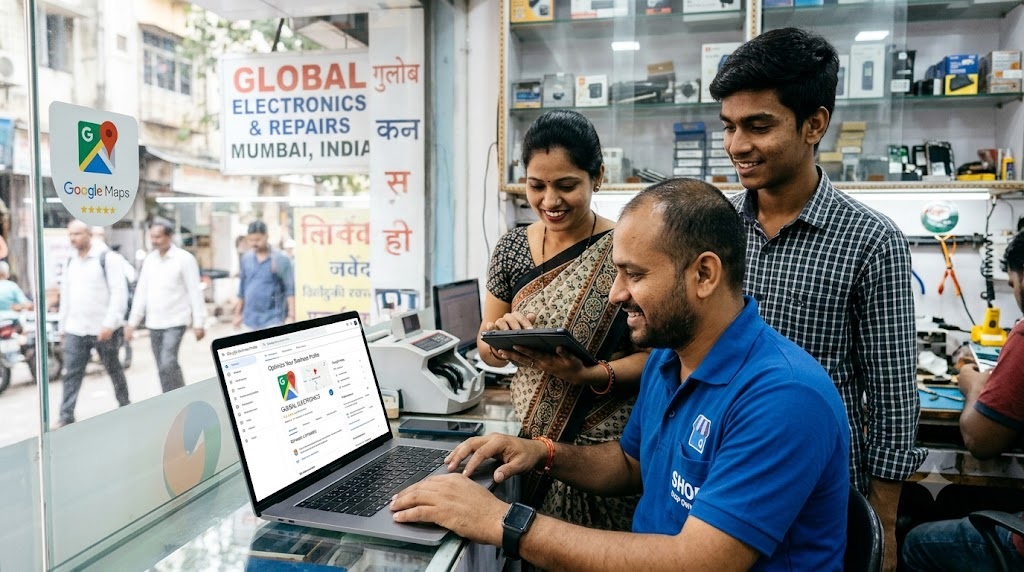
The most effective way to collect more Google reviews is surprisingly simple: ask satisfied customers at the right time and make the process easy.

Many customers are happy with a product or service but never think about leaving a review unless someone asks them.

Here are practical ways to encourage more genuine customer feedback.

1. Ask Customers Directly After a Positive Experience

One of the easiest ways to get Google reviews is to ask customers when they have just experienced good service.

For example:

  • A restaurant owner can ask customers after a pleasant dining experience.
  • A salon can request feedback after completing a service.
  • A retailer can ask after a customer has purchased and used a product.
  • A hotel can request a review after a guest’s stay.
  • A coaching centre can invite parents to share their genuine experience after they have received its services.

The timing matters.

Don’t interrupt customers or pressure them while they are busy. Choose a natural moment when they are comfortable and have had enough experience with your business to provide meaningful feedback.

A simple request works well:

“We hope you had a good experience with us. If you have a moment, please share your feedback on Google. It would really help our business.”

2. Share Your Google Review Link on WhatsApp

WhatsApp is one of the most practical ways for Indian businesses to communicate with customers.

Instead of asking customers to search for your business on Google, send them a direct review link.

This saves time and makes it easier for them to leave feedback.

How to Get Your Google Review Link

  1. Sign in to the Google account associated with your Business Profile.
  2. Search for your business name on Google.
  3. Open your Business Profile management options.
  4. Find the option to request reviews or share your review form.
  5. Copy the review link provided by Google.
  6. Save it somewhere convenient so you can share it whenever needed.

You can now send this link to customers through WhatsApp.

Ready-to-Use WhatsApp Review Message

“Thank you for choosing [Business Name]. We hope you enjoyed our service. Your feedback means a lot to us. If you have a moment, please share your genuine experience by leaving us a Google review.

[Insert Google Review Link]

Thank you for supporting our business!”

Keep the message short, friendly and personal. Avoid sending repeated reminders to customers who have not responded.

3. Create a QR Code for Google Reviews

A QR code makes it easy for customers to open your Google review page using their smartphones.

You can create a QR code using your Google review link and display it at places where customers can easily notice it.

Some useful locations include:

  • Restaurant tables and billing counters.
  • Shop reception and payment counters.
  • Salon mirrors and waiting areas.
  • Hotel reception desks.
  • Clinic reception areas.
  • Coaching centre reception desks.
  • Product packaging and printed customer information cards.

Add a simple message next to the QR code:

“Enjoyed Our Service? Share Your Experience on Google!”

Customers can scan the code, open your review page and leave their feedback.

Make sure the QR code leads directly to your genuine Google review form. Test it before printing and displaying it.

4. Send Review Requests After Completing a Service

Some businesses don’t interact with customers at a physical location.

For example, a digital marketing agency may work remotely, a home tutor may teach online and a repair professional may visit customers at their homes.

In these situations, send a review request after completing a service or reaching a meaningful stage in the customer relationship.

You can use:

  • WhatsApp messages.
  • SMS.
  • Follow-up emails.
  • Customer service conversations.
  • Payment confirmation messages.

For example, a home cleaning company can request feedback after completing a cleaning assignment. An online tutor can invite parents to share their genuine experience after they have received sufficient tuition services.

The key is to ask customers who have actually experienced your business.

5. Add Your Google Review Link to Your Website

Your website is another useful place to encourage customer feedback.

Visitors who have already purchased from you or used your services may be willing to leave a review.

You can add a simple section such as:

“Have You Experienced Our Service? Share Your Feedback on Google.”

Place the review link where customers can easily find it.

Useful locations include:

  • Contact page.
  • Customer feedback page.
  • Website footer.
  • Thank-you page after a completed enquiry or purchase.
  • Customer service section.

Don’t make the review request too prominent or distracting. It should be a convenient option for customers rather than an interruption.

6. Include a Review Request in Your Follow-Up Process

A good customer follow-up process can help your business collect reviews consistently.

For example, after a customer purchases a product or completes a service, you can send a thank-you message.

Once the customer has had an opportunity to experience the product or service, invite them to share feedback.

A simple process could look like this:

  1. Customer purchases a product or service.
  2. Your business completes the transaction or service.
  3. You send a thank-you message.
  4. You share your Google review link.
  5. You respond to the customer’s feedback when it appears.

This approach makes review collection part of your normal customer service routine.

7. Train Your Employees to Request Customer Feedback

If you have employees who interact with customers, involve them in your review collection process.

Train your team to:

  • Deliver friendly and helpful customer service.
  • Explain how customers can share feedback.
  • Politely mention the Google review option.
  • Share the official review link when appropriate.
  • Direct customer complaints to the right person.

For example, a restaurant manager can politely invite customers to review their experience when they finish their meal.

A salon receptionist can share the review QR code after a service is completed.

However, employees should never pressure customers, write reviews on their behalf or ask them to give a particular rating.

The objective is to make it easy for genuine customers to share their experiences.

8. Ask Regular Customers for Honest Feedback

Repeat customers can be an important source of genuine reviews because they have experienced your products or services more than once.

If someone regularly visits your shop, orders from your restaurant or uses your professional services, you can invite them to share their experience.

Don’t assume that a loyal customer will automatically leave a review.

A polite request can make the difference.

However, avoid repeatedly asking the same customer for reviews or trying to generate multiple reviews from a single experience.

9. Use Email to Request Customer Reviews

If your business collects customer email addresses with permission, email can be another effective way to request feedback.

For example, an online retailer can send a follow-up email after an order has been delivered.

A hotel can request feedback after checkout.

A professional service provider can send a review invitation after completing a project.

Keep your email simple:

Subject: How Was Your Experience with Us?

“Thank you for choosing [Business Name].

We value your feedback and would love to know about your experience with our products and services.

Please share your honest feedback on Google:

[Insert Google Review Link]

Thank you for your support.”

Send review requests only to genuine customers and respect their communication preferences.

10. Make Customer Satisfaction Your Priority

No review strategy can replace good products and services.

Customers are more likely to share positive feedback when they receive what they were promised and feel that the business genuinely cares about them.

Focus on:

  • Delivering consistent product and service quality.
  • Providing accurate information about prices and services.
  • Responding politely to customer questions.
  • Avoiding unnecessary delays.
  • Resolving complaints quickly.
  • Treating every customer with respect.

A satisfied customer may recommend your business to others and share their experience online.

That is how a strong reputation develops over time.

4. How to Get More Google Reviews for Different Types of Businesses

Every business interacts with customers differently. Therefore, the best way to request reviews depends on the type of business you operate.

Here are some practical examples for Indian business owners.

Restaurants, Cafes and Food Businesses

Customers often make quick decisions about restaurants based on ratings, photographs and reviews.

To encourage genuine feedback:

  • Display a Google review QR code near the billing counter.
  • Ask customers about their dining experience.
  • Share your review link through WhatsApp after an order.
  • Request feedback from customers who have ordered through your own website or directly.
  • Encourage customers to describe their experience honestly.

Focus on food quality, hygiene, service, ambience and timely delivery.

Hotels, Guest Houses and Travel Businesses

Travellers often compare multiple hotels before making a reservation.

Encourage guests to share their experiences after checkout.

Pay attention to:

  • Room cleanliness.
  • Staff behaviour.
  • Check-in and check-out experience.
  • Location and facilities.
  • Overall value for money.

A polite follow-up message with your Google review link can help guests share their feedback.

Coaching Centres, Tuition Classes and Educational Institutes

Parents often look for reviews before choosing a coaching centre or tuition provider.

Ask parents who have genuinely experienced your teaching services to share their feedback.

They may comment on:

  • Teaching quality.
  • Teacher communication.
  • Learning environment.
  • Student progress.
  • Timeliness and support.

Always respect student and parent privacy. Never disclose confidential student information in public review responses.

Salons, Beauty Parlours and Spas

Personal service businesses depend heavily on customer satisfaction and repeat visits.

After completing a service, politely invite customers to share their experience.

Customers may provide feedback about staff behaviour, cleanliness, service quality and the overall experience.

A QR code at the billing counter or reception can make the process convenient.

Retail Shops and Local Stores

Whether you run a clothing shop, electronics store, grocery store or furniture showroom, customer reviews can help build trust.

You can request feedback after a purchase or once the customer has had enough time to use the product.

Make it easy for customers to find your Google review link through WhatsApp or a QR code at the store.

Clinics, Diagnostic Centres and Healthcare Businesses

Patients and customers often consider trust, professionalism and service quality when choosing healthcare providers.

Invite genuine patients or customers to share feedback without pressuring them.

Maintain strict patient confidentiality. Never ask people to reveal private medical information in a public review or disclose it when responding.

Home Service and Professional Businesses

Electricians, plumbers, interior designers, pest control companies, repair professionals and consultants can request reviews after completing an assignment.

A short WhatsApp follow-up is often convenient.

Ask customers to share their honest experience of service quality, punctuality, communication and professionalism.

5. How to Respond to Google Reviews and Build Customer Trust

Getting reviews is only one part of managing your online reputation.

You should also respond to them.

When potential customers see that a business takes customer feedback seriously, it creates a positive impression.

Google allows businesses to reply to reviews through their Business Profile.

How to Respond to Positive Google Reviews

Thank customers for taking the time to share their experiences.

A good response should sound personal and genuine.

For example:

Customer Review: “Excellent service. The staff was very helpful and the products were good.”

Business Response: “Thank you for your kind words! We are happy to know you had a good experience with us. We appreciate your support and look forward to serving you again.”

Avoid copying and pasting exactly the same response to every customer.

Mention something relevant from the customer’s feedback whenever appropriate.

How to Respond to Negative Google Reviews

Negative reviews can be uncomfortable, especially for small business owners. However, ignoring them or responding angrily can make the situation worse.

Instead, stay calm and professional.

Follow these steps:

  1. Read the review carefully.
  2. Understand the customer’s complaint.
  3. Acknowledge their experience.
  4. Apologise when your business has made a mistake.
  5. Explain how you intend to address the issue.
  6. Offer a suitable private contact channel to discuss personal details.

Example of a Professional Response to a Negative Review

“We are sorry to hear that your experience did not meet your expectations. Customer satisfaction is important to us, and we would like an opportunity to understand what happened. Please contact us at [Phone Number] so that our team can look into the matter and assist you.”

Never argue with customers publicly or disclose their personal information.

If a review violates Google’s policies, you can report it for review. However, a negative review is not automatically removable simply because you disagree with it.

Should You Respond to Every Google Review?

Yes, make it a regular business practice.

Try to respond to new reviews promptly.

Even a short, thoughtful response shows that your business values customer feedback.

It also gives potential customers an opportunity to see how you communicate and handle concerns.

6. How Many Google Reviews Does Your Business Need?

There is no fixed number of reviews that guarantees better Google rankings or more customers.

The right approach is to build a steady collection of genuine customer feedback over time.

For example, consider two businesses:

  • Business A has 12 reviews, most of which are several years old.
  • Business B has 65 reviews collected gradually from customers over the past year.

A potential customer may find Business B more reassuring, particularly if the reviews describe recent experiences.

However, the total number of reviews is not the only thing that matters.

Pay attention to:

Review quality: Detailed feedback can help potential customers understand what your business does well.

Review ratings: Your overall rating influences how customers perceive your business.

Review consistency: A steady flow of genuine feedback is more useful than a sudden, artificial increase.

Review recency: Recent experiences help customers understand what they can expect today.

Owner responses: Thoughtful replies demonstrate that you value customer relationships.

Don’t become obsessed with reaching a particular number. Focus on providing a better customer experience and making it easy for people to share honest feedback.

7. Do Google Reviews Improve Local SEO Rankings?

Yes, Google reviews can contribute to local SEO, but they are not the only ranking factor.

Google explains local search rankings through three main considerations:

Relevance

Relevance refers to how well your business profile matches what someone is searching for.

For example, if someone searches for a bakery, Google tries to identify businesses that offer bakery products and related services.

Choosing the correct business category, adding accurate details and describing your services clearly can help Google understand your business.

Distance

Distance refers to how far a business is from the person searching or the location mentioned in the search.

For example, someone searching for a salon near Connaught Place may see different results from someone searching in Karol Bagh.

A business cannot simply collect reviews to overcome distance.

Prominence

Prominence refers to how well-known or established a business appears to be.

Google considers information such as links, review numbers and ratings as part of understanding a business’s prominence.

This is where genuine customer reviews can contribute to your local online presence.

How to Use Google Reviews as Part of Your Local SEO Strategy

For better local visibility, combine review management with other important activities:

  • Keep your Google Business Profile complete and updated.
  • Select accurate business categories.
  • Add relevant products and services.
  • Upload genuine photographs.
  • Collect authentic customer reviews.
  • Respond to customer feedback.
  • Maintain consistent business information online.
  • Build links and mentions from relevant websites.
  • Keep your website useful and easy to navigate.

Remember, no single activity guarantees a top position on Google Maps. Local SEO works best when several good practices are followed consistently.

8. Common Google Review Mistakes Every Business Owner Should Avoid

While trying to collect more reviews, some businesses make mistakes that can damage their credibility or violate Google’s review policies.

Avoid the following practices.

Never Buy Google Reviews

Buying reviews from websites, agencies or individuals is a bad idea.

These reviews may be fake, misleading or removed by Google.

They also fail to provide genuine information about your business.

Build your reputation through real customer experiences.

Don’t Ask Friends or Family to Write Fake Customer Reviews

Reviews should come from people who have genuinely experienced your business.

Asking friends, relatives or employees to pretend to be customers can mislead potential buyers.

Never Offer Money or Discounts in Exchange for Reviews

Do not offer cashback, free products, gifts, discounts or other benefits in exchange for Google reviews.

Google prohibits incentivised reviews.

You can invite customers to share honest feedback, but the decision and rating must remain entirely theirs.

Don’t Ask Only Happy Customers to Leave Reviews

Your review collection process should not filter customers based on whether they are likely to give positive ratings.

Invite genuine feedback without discouraging customers who may have had a less satisfactory experience.

Don’t Pressure Customers to Give Five Stars

Never tell customers what rating they must provide.

Avoid messages such as “Please give us five stars” or “Only positive reviews are accepted.”

Customers should be free to share their honest experiences.

Don’t Write Reviews on Behalf of Customers

Never create customer reviews yourself or ask employees to post reviews pretending to be customers.

Every review should reflect the actual experience and words of the person submitting it.

Don’t Ignore Negative Feedback

Ignoring genuine complaints can make customers feel that your business does not care.

Respond professionally and try to resolve the issue.

9. How to Monitor and Manage Your Google Reviews

Getting reviews is an ongoing activity, not a one-time marketing campaign.

Make it a regular part of your business management routine.

Check Your Reviews Regularly

Open your Google Business Profile and review new customer feedback.

Look for recurring complaints, common questions and positive comments.

These can reveal useful information about your business.

Identify Repeated Customer Complaints

Suppose several customers mention delayed deliveries.

This may indicate that your delivery process needs improvement.

If multiple customers praise a particular employee, you know that the person is delivering a good customer experience.

Use feedback to make practical business improvements.

Track Your Ratings and Review Growth

You can maintain a simple monthly record of:

  • Total number of Google reviews.
  • Overall star rating.
  • New reviews received.
  • Positive customer comments.
  • Common complaints.
  • Responses provided.

This helps you understand how your online reputation is developing.

Make Review Management Someone’s Responsibility

If you run a larger business, assign responsibility for monitoring reviews to a suitable employee.

For a small business, you can manage this yourself.

The important thing is to avoid leaving customer feedback unattended.

10. How to Get More Google Reviews: A Simple 30-Day Action Plan

If you want to improve your Google review collection process, start with this simple 30-day plan.

You don’t need expensive marketing tools or a dedicated marketing team.

Week 1: Prepare Your Business Profile

  • Check that your Google Business Profile is verified.
  • Correct your business name, phone number and address.
  • Update business hours and services.
  • Add recent photographs.
  • Generate your Google review link.
  • Create and test your review QR code.

Week 2: Start Asking Customers

  • Train employees to request genuine feedback politely.
  • Share your review link with customers through WhatsApp.
  • Display your QR code at your business premises.
  • Send appropriate follow-up messages after completed services.
  • Make review requests part of your customer service process.

Week 3: Improve Customer Experience

  • Read the reviews you have received.
  • Identify recurring customer complaints.
  • Improve areas where customers have highlighted problems.
  • Respond to positive and negative reviews.
  • Check whether your business information is consistent online.

Week 4: Build a Long-Term Routine

  • Continue asking genuine customers for feedback.
  • Add your review link to your website.
  • Include review requests in suitable customer follow-ups.
  • Monitor your review growth.
  • Evaluate customer feedback and make improvements.

At the end of 30 days, review what worked and continue the activities that fit your business.

The objective is to create a sustainable system for collecting genuine customer feedback rather than chasing a sudden increase in star ratings.

11. How HotList.in Can Help Strengthen Your Business’s Online Presence

Getting more Google reviews is an important step towards building customer trust. However, your online presence should not depend on Google alone.

Think about what happens when someone searches for your business.

They may find your Google Business Profile, visit your website, explore social media pages or look for your business on online directories.

The more easily customers can discover accurate information about your business, the easier it becomes for them to contact you.

This is where HotList.in can help.

HotList.in is a business listing and local lead generation platform that helps Indian businesses establish an additional online presence and reach potential customers.

Get Your Business Listed on HotList.in

You can create a business listing to showcase your business information and help potential customers discover your products and services.

HotList listings can help businesses:

  • Establish an additional online presence.
  • Showcase business information and services.
  • Connect their Google Business Profile.
  • Direct potential customers to their website.
  • Receive direct enquiries through WhatsApp with an eligible paid listing.
  • Gain additional visibility through HotList.in and its social media promotion.

A HotList listing is an additional way to present your business online. It does not replace your Google Business Profile, guarantee Google rankings or promise a specific number of enquiries.

If you want to expand your business’s online presence, consider creating your listing on HotList.in.

12. Frequently Asked Questions About Google Reviews

How can I get more Google reviews for my business?

Ask genuine customers to share their experiences after purchasing your products or using your services. Send your Google review link through WhatsApp, display a QR code at your premises and add the review link to your website. Make the process simple and never pressure customers.

How do I share my Google review link with customers?

Sign in to the Google account associated with your Business Profile, search for your business on Google and use the option to request or share reviews. Copy the review link and send it to customers through WhatsApp, SMS or email.

How can I create a QR code for Google reviews?

Copy your Google review link and use a trusted QR code generator to create a QR code. Download it, scan it using another phone to test it and display it at your business premises.

Do Google reviews help improve local search rankings?

Yes. Reviews, including their number and ratings, contribute to Google’s understanding of a business’s prominence. However, local rankings also depend on relevance, distance and other factors. More reviews do not guarantee a higher ranking.

Can I offer discounts in exchange for Google reviews?

No. Google prohibits offering money, discounts, gifts or other incentives in exchange for reviews. Invite customers to share honest feedback without offering rewards or influencing their ratings.

How many Google reviews should a small business have?

There is no fixed number that every business needs. Focus on collecting genuine reviews consistently and maintaining good customer service. Review quality, ratings and recency also matter when potential customers evaluate your business.

How should I respond to a negative Google review?

Stay calm, acknowledge the customer’s concern and respond professionally. Avoid arguments and personal comments. Where necessary, invite the customer to contact your business privately so you can investigate and resolve the issue.

Can I remove a negative Google review?

You cannot remove a review simply because it is negative or critical. You can report reviews that violate Google’s policies. Google will assess the report and decide whether the review qualifies for removal.

Why are some Google reviews not showing?

Google may filter or remove reviews that appear to violate its policies or are detected as suspicious. Some reviews may also take time to appear. If a review is missing, check your Business Profile and Google’s review policies rather than asking customers to repeatedly post the same review.

Are Google reviews free?

Yes. Customers can leave Google reviews without paying, and businesses can receive and respond to reviews through their Google Business Profile without purchasing a review collection service.

Should I respond to every Google review?

Yes. Responding to genuine reviews is a good customer service practice. Thank customers for positive feedback and address negative feedback politely and professionally.

Google reviews work!

For Indian business owners, Google reviews are more than just numbers displayed beside a business name. They are an opportunity to build trust, understand customers, improve services and strengthen your online reputation.

You don’t need hundreds of reviews overnight. You need a business that consistently delivers good experiences and a simple process that encourages customers to share honest feedback.

Start by updating your Google Business Profile. Ask satisfied customers for reviews, share your review link through WhatsApp, display a QR code and respond to customer feedback regularly.

At the same time, build your business’s presence beyond Google by maintaining accurate information across your website, social media platforms and relevant business directories.

Small, consistent efforts can make a meaningful difference in how customers discover, evaluate and choose your business.

Give customers a reason to recommend your business, make it easy for them to share their experience and let your reputation grow one genuine review at a time.

Related Posts

Instagram Marketing for Small Businesses in India

How to Turn Website Visitors into Customers

Facebook and Instagram Ads for Small Businesses in India

What to Post on Social Media to Promote Your Business

Effective Ways to Generate Online Customer Leads for Your Local Business in India

Effective Ways to Generate Online Customer Leads for Your Local Business in India

Running a local business in India is no longer just about having a good shop, offering quality services or getting customers through word of mouth. Today, people use Google, WhatsApp, social media and online business directories to find products, compare services and decide whom to contact.

Whether you run a coaching centre, restaurant, hotel, salon, diagnostic centre, retail shop, tuition service, travel agency or any other local business, your potential customers are already searching online. The real question is: Can they find your business, trust it and contact you easily?

Online customer lead generation helps you turn online visibility into genuine enquiries, phone calls, WhatsApp messages, appointments and sales.

This guide explains the basics of online lead generation and shows you practical, affordable ways to attract potential customers for your local business in India.

1. What Is Online Customer Lead Generation?

Online customer lead generation is the process of attracting people who may be interested in your products or services and encouraging them to contact your business.

A lead is a potential customer who shows interest in what you offer. This could be someone who calls your shop, sends a WhatsApp message, fills out an enquiry form, requests a quotation or books an appointment.

For example, imagine you own a coaching centre in Noida. A parent searches Google for “best coaching centre near Sector 15 Noida.” They find your business listing, check your reviews and click your WhatsApp button to ask about fees.

That enquiry is a lead.

Similarly, a person searching for a diagnostic centre in Jaipur, a wedding photographer in Delhi or a hotel in Karol Bagh may become a customer after discovering your business online.

How Does Online Lead Generation Work?

The process is straightforward:

  1. Get discovered: Make your business visible where potential customers search.
  2. Build trust: Show accurate business details, useful information, reviews and evidence of your work.
  3. Encourage contact: Give visitors a clear way to call, message or submit an enquiry.
  4. Follow up: Respond promptly, answer questions and help interested people make a decision.
  5. Convert leads into customers: Turn genuine enquiries into bookings, purchases or paid services.

The goal is not simply to get more website visitors or social media followers. It is to attract people who are likely to buy from your business.

2. Understand Your Ideal Customer Before Spending Money

Before choosing any online marketing method, identify the people you want to reach.

Marketing becomes easier and more effective when you know exactly who your customers are, what they need and where they are likely to search for a solution.

Identify Your Target Audience

Consider these questions:

  • Who is most likely to buy your product or service?
  • Which age group or customer segment do you serve?
  • Which city, locality or neighbourhood do your customers come from?
  • What problem does your business solve?
  • What information do customers need before making a purchase?
  • Why should they choose your business over a competitor?

For example, a playschool may target parents living within a few kilometres, while a travel agency offering international tour packages may serve customers across several cities.

A home tutor may focus on parents looking for classes in a particular neighbourhood, whereas an online tutor can reach students throughout India and even overseas.

Choose the Right Local Keywords

Think about what a customer would type into Google when searching for your services.

Examples include:

  • Best salon in Rohini
  • Affordable hotel in Karol Bagh Delhi
  • Maths tuition classes in Indirapuram
  • Diagnostic centre near me
  • Wedding photographer in Lucknow
  • Digital marketing agency in Pune
  • Best bakery in South Delhi

These are examples of local search keywords. They combine a product or service with a location or a specific need.

Use relevant phrases naturally in your website pages, business descriptions, online listings and social media content. Avoid stuffing the same keywords repeatedly into every sentence.

Practical tip: Start with five to ten search phrases your ideal customers might use. Build your online presence around the services and locations that matter most to your business.

3. Optimise Your Google Business Profile

For businesses that serve customers at a physical location or travel to customers, a Google Business Profile is one of the most important starting points for online visibility.

It can help your business appear on Google Search and Google Maps when people look for relevant products and services nearby.

Complete Every Important Business Detail

Make sure your profile contains:

  • Your correct business name
  • The most suitable business category
  • Accurate address or service area, as applicable
  • Current phone number
  • Business hours and holiday timings
  • Website link, if available
  • Relevant products and services
  • Good-quality photographs
  • A clear business description

Keep your information accurate and consistent. Incorrect phone numbers, outdated timings and mismatched addresses can cause customers to lose trust or contact the wrong business.

Use the Right Business Category

Choose the category that best describes your main business. Add relevant additional categories only when they accurately represent the services you provide.

For example, a business that primarily provides dental care should not choose an unrelated category simply because it seems popular.

Add Genuine Business Photographs

Show customers what they can expect when they visit or hire you.

A restaurant can share photographs of its food and dining area. A salon can display its premises and examples of its work, with appropriate customer permission. A coaching centre can show its classrooms and facilities.

Use genuine, relevant photographs rather than misleading stock images.

Collect Genuine Customer Reviews

Reviews help potential customers understand other people’s experiences with your business.

After completing a sale, service or appointment, politely ask satisfied customers to share honest feedback on Google.

Respond professionally to positive and negative reviews. If a customer raises a genuine concern, acknowledge it and explain how you will address it.

Never buy fake reviews, offer rewards in exchange for positive reviews or ask people to post misleading feedback.

Important: A complete Google Business Profile improves your chances of being discovered, but it does not guarantee top rankings. Google considers several factors, including relevance, distance and prominence.

4. Create a Website That Generates Enquiries

A website gives your business a dedicated online space where customers can learn about your services and decide whether to contact you.

You do not need an expensive, complicated website to begin generating leads. A small business can start with a focused website that clearly explains what it offers and how customers can get in touch.

What Should Your Business Website Include?

At a minimum, include these essential elements:

  • A clear headline: Tell visitors what your business offers and whom you serve.
  • Services or products: Explain what customers can buy or book.
  • Location and service area: Mention the cities or neighbourhoods you serve.
  • Contact information: Display your phone number, email and WhatsApp contact option where appropriate.
  • Customer reviews: Share genuine testimonials with permission.
  • Business photographs: Show your products, premises, team or completed work.
  • A clear call to action: Encourage visitors to call, enquire, book or request a quotation.

For example, a plumbing business in Gurugram could use a headline such as “Plumbing Services in Gurugram for Homes and Offices” followed by its services, service areas and a prominent contact option.

This is much more useful than a vague headline such as “Welcome to Our Website.”

Create Separate Pages for Important Services

If your business offers several services, give each major service its own useful page.

For example, a coaching institute might have separate pages for:

  • Class 9 and 10 tuition
  • Class 11 and 12 tuition
  • JEE preparation
  • NEET preparation

A salon might have pages for haircuts, bridal makeup and skincare services.

Each page should explain the specific service, who it is for, relevant pricing information where appropriate, and how to enquire.

Make Your Website Mobile-Friendly

Many Indian customers discover businesses and contact them through smartphones. Your website should load reasonably quickly, display correctly on smaller screens and make important buttons easy to tap.

Test your website on a mobile phone. Check whether customers can read the content, find your phone number and submit an enquiry without difficulty.

A website that looks impressive on a desktop but is difficult to use on mobile can lose potential leads.

5. Use Online Business Directories to Increase Visibility

Online business directories allow customers to discover businesses by category, service and location.

They can be particularly useful for small businesses that want additional visibility without investing heavily in a full digital marketing campaign.

For example, someone searching for a hotel in Delhi, a tutor in Hyderabad or a beauty parlour in Jaipur may explore an online directory before contacting a business.

Choose Directories That Match Your Business

Look for platforms that:

  • Accept businesses in your category
  • Reach customers in your target city or service area
  • Display clear business information
  • Allow potential customers to contact you
  • Provide a useful business profile page
  • Have transparent listing terms and pricing

Do not submit your business to every directory you find. Focus on relevant platforms that can help customers discover and contact you.

Make Your Business Listing Useful

A good business listing should include:

  • Correct business name and category
  • Clear description of products or services
  • Accurate location and contact information
  • Business hours, where relevant
  • Genuine photographs
  • Website link
  • Google Business Profile link, where supported
  • WhatsApp contact option, where available

Avoid writing a description that simply repeats your business name or contains a long list of unrelated keywords.

Explain what you offer, whom you serve and what a customer should do next.

Consider HotList.in for Local Business Promotion

HotList.in is a business listings and local lead generation platform designed to help Indian businesses improve online visibility and make it easier for potential customers to discover their services.

A business listing can give customers another place to find your business information and explore your offerings.

Depending on the listing plan, a business can use its profile to direct potential customers to its Google Business Profile, website and WhatsApp contact option. Additional promotion can help businesses present their offerings to a wider online audience.

For local business owners, this provides another opportunity to make their business discoverable without relying entirely on social media or paid advertisements.

When evaluating any business listing platform, check the available features, pricing, listing duration and terms before choosing a plan.

6. Use WhatsApp to Turn Interest into Enquiries

WhatsApp is already a familiar communication tool for many Indian consumers. Businesses can use it to answer questions, share product details, confirm appointments and follow up with interested customers.

A customer who is not ready to call may be more comfortable sending a quick message.

Make It Easy for Customers to Contact You

Where suitable, add a WhatsApp contact button to your website and business profiles.

Use WhatsApp Business to organise your communication and present your business professionally.

Useful features include:

  • A business profile with your description, hours and contact information
  • Greeting messages for new conversations
  • Away messages when you cannot respond
  • Quick replies to frequently asked questions
  • Labels to organise enquiries by status
  • A product or service catalogue, where appropriate

Prepare Replies to Common Questions

Customers often ask the same questions before purchasing.

A coaching centre may receive questions about fees, class timings, subjects and batches. A hotel may receive questions about room availability, facilities and check-in times.

Prepare short, clear answers to save time and help customers get the information they need.

For example:

“Thank you for contacting ABC Coaching Centre. Please share the student’s class, preferred subject and locality so we can provide the relevant batch details.”

Follow Up Without Being Pushy

If someone enquires but does not complete a booking, a polite follow-up may help.

Ask whether they need any additional information. Do not repeatedly message people who have declined or opted out, and respect their communication preferences.

The key principle: Make it easy for interested customers to start a conversation, then respond promptly and helpfully.

7. Promote Your Business on Social Media

Social media can help your business reach new audiences, demonstrate its expertise and maintain relationships with existing customers.

However, simply creating an account and posting occasional advertisements is unlikely to deliver consistent results.

Choose platforms based on your customers and the type of business you run.

Choose the Right Social Media Platforms

Instagram

Instagram can work well for salons, boutiques, restaurants, bakeries, fitness centres, cafés, photographers and other visually oriented businesses.

Share useful photographs, short videos, demonstrations, customer-approved testimonials and information about your products or services.

Facebook

Facebook can be useful for local communities, neighbourhood businesses, classes, events and businesses targeting customers who use local groups and pages.

Participate in relevant community discussions and follow each group’s promotional rules.

YouTube

YouTube is useful for businesses that can demonstrate expertise, explain a process or answer common customer questions.

A tutor can publish educational videos. A fitness trainer can demonstrate exercises. A home improvement business can explain common repair problems.

Include relevant business details and a clear way for interested viewers to contact you.

LinkedIn

LinkedIn is particularly useful for professional services, consultants, B2B companies, recruitment services, training providers and businesses targeting other businesses.

Publish practical insights, case studies and useful advice rather than posting only promotional messages.

Follow a Simple Content Plan

You do not need to publish several times every day. Consistency and relevance matter more than posting constantly.

Try this weekly schedule:

Day Content idea
Monday A common customer problem and its solution
Tuesday A product or service demonstration
Wednesday A useful tip related to your industry
Thursday A genuine customer testimonial or case study
Friday An explanation of your service, offer or booking process
Saturday A behind-the-scenes look at your business
Sunday Answers to frequently asked questions

Adjust the schedule to suit your resources. Three useful posts a week are better than seven repetitive posts that offer little value.

Add a Clear Call to Action

Every promotional post should make the next step obvious.

Depending on your business, invite people to:

  • Send a WhatsApp message
  • Call to check availability
  • Request a quotation
  • Book an appointment
  • Visit your business profile
  • Explore your products or services

Avoid asking people to perform too many actions in one post.

8. Use Local SEO to Attract Customers from Google

Search engine optimisation, commonly called SEO, helps your website and business pages appear when people search for relevant products or services.

Local SEO focuses on searches connected to a particular city, neighbourhood or service area.

Unlike advertising, SEO does not require you to pay for every click. However, it takes time, effort and ongoing improvements, and rankings are never guaranteed.

Find the Search Terms Your Customers Use

Start by identifying phrases related to your products, services and locations.

Examples:

  • Best dentist in Dwarka
  • English tutor in Gurgaon
  • Affordable wedding photographer in Mumbai
  • AC repair service in Chennai
  • Organic grocery store in Bengaluru

Use Google Search suggestions, your customers’ questions and available keyword research tools to identify relevant searches.

Prioritise keywords that reflect a genuine need and are relevant to your business.

Optimise Your Website Pages

For important pages:

  • Write a descriptive page title.
  • Use a clear heading that explains the service.
  • Mention the relevant city or locality naturally.
  • Describe your services in useful detail.
  • Include answers to common customer questions.
  • Link to related service pages.
  • Provide accurate contact information.

For example, a page about dental implants in Dwarka should explain the service, the consultation process and how patients can contact the clinic. It should not merely repeat “best dentist in Dwarka” throughout the page.

Publish Helpful Local Content

Articles can help your business answer questions customers search for before making a purchase.

A tax consultant could publish an article explaining common tax filing mistakes. A wedding photographer could write about choosing photography packages. A tutor could share practical examination preparation tips.

Create content that solves real problems and demonstrates your knowledge.

Do not publish dozens of nearly identical pages for different localities unless each page provides genuinely useful information for customers in that area.

9. Run Google Ads to Generate Leads Faster

SEO and organic social media can take time to produce consistent results. If you need enquiries sooner and have a suitable budget, paid advertising may help.

Google Ads allows businesses to advertise against relevant search terms and reach people who are actively looking for products or services.

For example, a customer searching for “emergency electrician in Pune” may have an immediate need. A relevant advertisement can put your business in front of that customer.

Start with a Focused Campaign

Before launching a campaign:

  1. Select one main service or product.
  2. Target the cities or localities you actually serve.
  3. Choose keywords that indicate customer intent.
  4. Write an advertisement that clearly explains your offering.
  5. Direct visitors to a relevant landing page or suitable contact option.
  6. Track calls, form submissions and WhatsApp enquiries where measurable.

Avoid sending every visitor to your homepage if you have a more relevant service page.

Set a Budget You Can Afford

Start with a manageable test budget rather than spending heavily before understanding your results.

Track how many enquiries the campaign generates, how many are genuine, how many become paying customers and how much revenue those customers bring in.

A campaign that generates many clicks but few qualified enquiries may be less valuable than one that produces fewer, more relevant leads.

Remember that advertising costs vary by industry, location, competition and customer demand.

10. Use Facebook and Instagram Ads for Local Reach

Meta advertising can help businesses reach audiences on Facebook and Instagram.

Unlike search advertising, which can capture people actively looking for a service, social media advertising can introduce your business to relevant audiences before they begin searching.

This can work well for products, local events, classes, beauty services, restaurants, retail offers and other businesses with a clear audience.

Choose an Objective That Matches Your Goal

Depending on the options available for your account and campaign, you may focus on:

  • WhatsApp conversations
  • Enquiry forms
  • Phone calls or other contact actions
  • Website visits
  • Purchases or bookings

Select the objective that most closely matches the result you want.

Test Different Advertisements

Create a few variations with different headlines, images or offers.

For example, a fitness centre could test an advertisement highlighting personal training against one highlighting flexible membership options.

Compare the quality and cost of the enquiries each advertisement generates. Do not judge success only by likes, views or reach.

Avoid Advertising Without a Follow-Up Process

Before paying for advertisements, make sure your business can respond to incoming enquiries, answer questions and fulfil the orders or appointments it receives.

Paid advertising can increase demand, but it cannot compensate for poor customer service or an unclear offer.

11. Generate Leads Through Google Maps and Local Search Intent

Many people use Google Maps to discover nearby businesses, check directions, view photographs and read reviews.

Your Google Business Profile is an important part of this discovery process.

However, visibility depends on several factors, and no business can guarantee that it will appear first for every nearby search.

Improve Your Local Discovery Opportunities

  • Keep your profile information accurate.
  • Choose relevant categories and services.
  • Collect genuine reviews consistently.
  • Respond to customer feedback.
  • Add useful, current photographs.
  • Maintain a website or other suitable online presence.
  • Ensure your contact details are easy to find.

If your business serves customers at their locations rather than at a shop, configure your service areas accurately and follow Google’s eligibility guidelines.

Never create fake business addresses or misleading profiles to target additional locations.

12. Offer Something Valuable to Encourage Enquiries

People are more likely to contact your business when they understand what they will receive and why it is worth their time.

A clear offer can help reduce hesitation and give potential customers a reason to take the next step.

Examples of Offers for Different Businesses

Business type Lead-generating offer
Coaching centre Free counselling session or course information
Tutor Introductory discussion about the student’s learning needs
Salon A clearly priced introductory service
Fitness centre Trial session, where available
Diagnostic centre Clear information about available tests and booking
Restaurant A specific meal offer or menu highlight
Travel agency A customised holiday quotation
Interior designer Initial project discussion
Accountant A consultation about the customer’s requirements
Retail shop Product demonstration or a special promotion

Choose offers that make sense financially and are easy for your team to deliver.

A free offer is not always necessary. Clear pricing, reliable service, convenient appointments or a quick quotation can be equally effective.

Make the Next Step Simple

Instead of writing “Contact us for more information,” use a more specific message.

For example:

“Planning a family holiday? Send us your destination, travel dates and budget to request a customised quotation.”

Specific instructions help potential customers understand what information to provide and what happens next.

13. Turn Customer Questions into New Leads

Many customers hesitate because they do not have enough information to make a decision.

Your online content should answer the questions people commonly ask before contacting you.

Create a List of Frequently Asked Questions

Depending on your business, customers may want to know:

  • What services do you provide?
  • How much does the service cost?
  • Which areas do you serve?
  • What are your working hours?
  • How do I book an appointment?
  • How long does the process take?
  • What makes your service suitable for my needs?
  • What payment methods do you accept?

Publish accurate answers on your website, business profiles and social media pages.

For services where prices depend on the customer’s requirements, explain what affects the price and how to request an estimate.

Use Short Videos to Explain Your Services

A short video can show customers how a product works, explain a service or answer a common question.

For example, a tutor could explain a difficult concept, a restaurant could show how a popular dish is prepared, and a repair service could demonstrate how to identify a common problem.

Keep videos focused. Explain one useful point at a time and provide a clear way to enquire.

Avoid making unsupported claims, especially in healthcare, financial services and other regulated fields.

14. Build Trust Before Asking for the Sale

Customers often compare several businesses before making a decision. Your online presence should give them enough information to feel comfortable contacting you.

What Builds Customer Trust?

Accurate information: Use consistent business details across your website and profiles.

Real photographs: Show your actual premises, products, staff or work wherever appropriate.

Genuine reviews: Let customers describe their real experiences.

Clear pricing: Explain fees, packages and additional charges where relevant.

Professional communication: Respond politely, answer questions and avoid making promises you cannot fulfil.

Evidence of experience: Share relevant qualifications, examples of work, case studies or business experience where appropriate.

Transparent policies: Explain cancellation terms, delivery timelines, warranties or service conditions when relevant.

A professional-looking listing or website helps, but the actual experience must match what you promise.

15. Use Email and Customer Follow-Ups to Recover Lost Leads

Not every customer will buy during the first interaction. Some need more time, additional information or approval from someone else.

A simple follow-up system can help you reconnect with interested prospects without spending money to attract them again.

Keep a Record of Enquiries

Use a spreadsheet or customer relationship management (CRM) tool to track:

  • Customer name and contact details, where appropriately collected
  • Date of enquiry
  • Product or service requested
  • Source of the lead
  • Current status
  • Follow-up date
  • Final outcome

You could organise leads into categories such as New Enquiry, Contacted, Interested, Quotation Sent, Converted and Not Proceeding.

Follow Up at the Right Time

After sending a quotation, ask whether the customer needs any clarification.

If someone requested details about a course, send the relevant information and offer to answer questions.

For customers who have agreed to receive further communication, email can be useful for sharing updates, useful content and relevant offers. Follow applicable privacy, consent and messaging rules, and provide a way to opt out where required.

Do not purchase random contact lists or send unsolicited bulk messages.

16. Use Referral Marketing Alongside Online Promotion

Word of mouth remains valuable for local businesses. Online tools can make it easier for satisfied customers to recommend your services to others.

Encourage Happy Customers to Recommend You

After providing a good experience, invite customers to share your business details with people who may need your services.

You can also make your business profile, website or contact information easy to share through WhatsApp.

For example, a parent satisfied with a tutor may recommend the tutor to another family. A restaurant customer may share its menu with colleagues. A local contractor may receive enquiries from previous customers’ neighbours.

Referral programmes can be useful, but any incentive should be transparent and comply with the rules applicable to your industry and the platform involved.

Make Every Customer Experience Worth Sharing

The strongest referral strategy begins with reliable service, honest communication and a positive customer experience.

Do not depend on referrals alone. Combine them with search visibility, business listings and other suitable online channels to reach new customers consistently.

17. Use Lead Generation Platforms to Expand Your Reach

Building your own website, maintaining social media accounts and managing advertisements all require time and effort.

Business listing and lead generation platforms offer another route for customers to discover your business.

The right platform can help you reach people who are already exploring businesses in your category or location.

What Should You Look for in a Lead Generation Platform?

Before joining, evaluate:

  • Whether the platform serves your target audience
  • Whether your business category is relevant
  • Whether your listing can display useful business information
  • Whether customers can contact you directly
  • Whether you can include your website or Google Business Profile
  • Whether WhatsApp contact is available
  • Whether promotional support is included
  • Whether the pricing and duration are clear
  • Whether you retain control over how you respond to enquiries

Be cautious about paying large sums for vague promises of guaranteed leads or sales.

Ask what the service actually includes and how results will be measured.

Why Direct Enquiries Matter

Some lead generation services sell the same lead to several businesses or act as intermediaries between customers and service providers.

A platform that lets interested customers contact your business directly can make communication simpler and help you build your own customer relationships.

However, direct contact options alone do not guarantee enquiries. Your results still depend on visibility, relevance, customer trust, pricing and follow-up.

For Indian business owners looking for additional online visibility, HotList.in offers a way to present business information and direct interested customers towards available contact channels, depending on the listing plan.

Consider it as one part of a broader lead generation strategy rather than a replacement for every other marketing channel.

18. Common Online Lead Generation Mistakes to Avoid

Even businesses that invest time and money in digital marketing can struggle to generate useful enquiries. Often, the problem is not the absence of marketing but the way it is managed.

Mistake 1: Trying Every Platform at Once

Managing Google, several social media accounts, paid advertising and multiple directories simultaneously can become overwhelming.

Start with a few channels that match your customers and business goals. Expand after you understand what works.

Mistake 2: Focusing Only on Likes and Followers

Likes, views and followers may indicate interest, but they do not automatically translate into sales.

Measure calls, messages, bookings, qualified enquiries and paying customers.

Mistake 3: Ignoring Incoming Enquiries

A customer may contact a competitor if you take too long to respond.

Set a realistic response target, monitor your contact channels and make sure someone is responsible for handling new enquiries.

Mistake 4: Using Incomplete or Incorrect Business Details

A broken website link, incorrect phone number or outdated address can cost you a potential customer.

Review your important business profiles regularly.

Mistake 5: Spending on Ads Without Tracking Results

If you cannot tell which advertisement generated an enquiry, it becomes difficult to improve your campaign.

Use tracking tools and record the source of each lead wherever possible.

Mistake 6: Making Unrealistic Promises

Avoid guaranteed rankings, exaggerated claims and misleading offers.

Build your marketing around the real benefits your business can deliver.

Mistake 7: Giving Up Too Early

Some channels can produce enquiries quickly, while others take months to develop.

Evaluate results over an appropriate period, make improvements and focus on meaningful business outcomes rather than expecting every method to work immediately.

19. How to Measure Your Online Lead Generation Results

You do not need expensive software to start measuring performance. A spreadsheet is enough for many small businesses.

Track a few important numbers every week or month.

Essential Lead Generation Metrics

Metric What it tells you
Website visitors How many people visit your website
Business profile views How often people view your profile, where the platform provides this data
Calls and messages How many people try to contact you
Total enquiries How many potential customers contact your business
Qualified leads How many enquiries match your target customer
Conversion rate What percentage of leads become paying customers
Cost per lead How much you spend to generate each lead
Customer acquisition cost How much you spend to acquire each new customer
Revenue generated How much business those leads produce

Understand the Difference Between Leads and Sales

Suppose your business receives 50 enquiries in one month. Of these, 30 are relevant potential customers, and 10 eventually buy from you.

Your conversion rate from qualified leads to customers is:

10 ÷ 30 × 100 = 33.3%

This tells you more than the total number of enquiries alone.

A business with 20 highly relevant enquiries may perform better than one with 100 enquiries from people who are unlikely to buy.

Calculate Your Cost Per Lead

Suppose you spend ₹5,000 on a marketing campaign and receive 25 enquiries.

Your cost per lead is:

₹5,000 ÷ 25 = ₹200

But this figure does not tell you whether the campaign is profitable. You also need to know how many leads became customers, how much those customers spent and what it cost to serve them.

The real goal is profitable customer acquisition, not simply generating the cheapest leads.

20. A Practical 30-Day Online Lead Generation Plan for Indian Businesses

If you are new to online promotion, do not try to implement everything at once. Follow this simple 30-day plan and build your online presence step by step.

Week 1: Build Your Foundation

Day 1–2: Define your target customer. Identify the services you want to promote, the customers you want to reach and the areas you serve.

Day 3–4: Review your Google Business Profile. Correct your business details, categories, contact information and hours, if applicable.

Day 5–6: Improve your website or main business page. Explain your services clearly, add relevant contact options and check the mobile experience.

Day 7: Prepare your lead tracking sheet. Create columns for enquiry date, source, customer requirement, status and outcome.

Week 2: Expand Your Online Visibility

Day 8–9: Improve your business listings. Review relevant online directories and update your business information.

Day 10–11: Prepare useful content. Create posts answering common customer questions.

Day 12–13: Publish your first posts. Share useful information on the social media platforms your audience uses.

Day 14: Request honest reviews. Invite recent, satisfied customers to share genuine feedback without offering incentives for positive ratings.

Week 3: Make It Easier to Generate Enquiries

Day 15–16: Improve WhatsApp communication. Set up your business profile, greeting message and frequently used replies.

Day 17–18: Create a focused service page or offer. Explain one important service and provide a clear way to enquire.

Day 19–20: Test a short video or demonstration. Answer one common customer question.

Day 21: Review the results. Record calls, messages, website activity and enquiries from the channels you can measure.

Week 4: Test, Improve and Scale

Day 22–24: Identify the strongest channel. Determine which sources are generating the most relevant enquiries.

Day 25–26: Improve weak points. Update unclear descriptions, improve contact options or adjust your content.

Day 27–28: Consider a small advertising test. If your budget permits, test one focused campaign with clear tracking.

Day 29: Follow up on outstanding enquiries. Contact interested prospects appropriately and answer any remaining questions.

Day 30: Review the month. Compare leads, conversions and spending. Decide which activities to continue, improve or stop.

At the end of the month, you should have a clearer understanding of where your customers come from and which activities deserve more attention.

21. Which Online Lead Generation Methods Are Best for Your Business?

There is no single method that works equally well for every business. The right approach depends on your target customers, location, budget and the time you can devote to marketing.

Business type Recommended starting points
Restaurant or café Google Business Profile, local listings, Instagram and WhatsApp
Coaching centre Google Search, local SEO, business listings and educational content
Tutor or tuition service Relevant directories, local search, educational videos and parent enquiries
Salon or beauty parlour Google Maps, Instagram, customer reviews and appointment messaging
Hotel or travel agency Google Business Profile, a useful website, relevant directories and targeted advertising
Retail shop Google Maps, local listings, WhatsApp Business and social media
Diagnostic centre Accurate business information, local search and compliant healthcare promotion
Consultant or professional service Website SEO, LinkedIn, referrals and relevant business directories
Home service provider Local search, Google Business Profile, service-area listings and customer reviews
B2B business LinkedIn, targeted search advertising, a professional website and direct enquiries

Start with the methods most likely to reach your customers. You can add more channels as your business grows.

22. How Small Businesses Can Generate Leads on a Limited Budget

You do not need a large marketing budget to begin promoting your business online.

The important thing is to build a strong foundation before spending money on advertisements.

Start with These Affordable Activities

  • Complete and maintain your eligible Google Business Profile.
  • Create or improve a simple, mobile-friendly website.
  • Register on relevant business directories after checking their terms.
  • Share useful content consistently on suitable social media platforms.
  • Ask satisfied customers for honest reviews.
  • Use WhatsApp Business to handle enquiries efficiently.
  • Keep a record of where your leads come from.
  • Follow up with interested prospects.
  • Reinvest in the channels that produce paying customers.

Choose Paid Services Carefully

Free marketing methods can take time, and paid services may help you reach more customers. The best decision depends on the likely return and the resources available to you.

Compare the actual benefits of each service rather than choosing solely by price.

For example, a paid listing may be useful if it offers additional visibility, relevant promotional support or convenient contact options at a price your business can justify.

Likewise, paid advertising may be worth testing when your business has a clear offer, an effective follow-up process and enough capacity to serve new customers.

Do not assume that a paid service will automatically generate sales. Evaluate the results.

23. Your Online Lead Generation Checklist

Use this checklist to identify the most important tasks for your business.

  • I know which customers and locations I want to target.

  • My Google Business Profile is accurate, where applicable.

  • My website or business page explains my services clearly.

  • My phone number and contact links work correctly.

  • My business appears on relevant online directories.

  • I have genuine photographs and useful business information online.

  • I encourage honest customer reviews.

  • I use suitable social media platforms consistently.

  • Customers can contact me easily through an appropriate channel.

  • I respond to enquiries promptly.

  • I track the source and outcome of my leads.

  • I know which marketing activities generate paying customers.

  • I review my results and improve my approach regularly.

You do not need to complete every item on the first day. Begin with the basics and improve your online presence systematically.

Turn Your Online Visibility into Real Business Opportunities

Generating online customer leads in India does not require you to be an expert in digital marketing. It requires a clear understanding of your customers, a professional online presence, relevant information and a reliable way for people to contact you.

Start by improving your Google Business Profile, creating a useful website or business page, listing your business on relevant directories and making contact through phone or WhatsApp convenient. Then use social media, local SEO and paid advertising where they make sense for your business.

Most importantly, track your enquiries and focus on the methods that bring you genuine customers.

Your business does not need to be visible everywhere. It needs to be visible in the right places, to the right people, at the right time.

Looking to improve your local business visibility? Explore HotList.in to discover how a business listing can help present your business information online and connect interested customers with your available contact channels.

Start with the basics, stay consistent and build a lead generation system that supports your business growth over time.

Frequently Asked Questions

1. What is the best way to generate online leads for a local business in India?

Start with an accurate Google Business Profile, a useful website or business page, relevant online business listings and easy contact options. Add local SEO, social media and paid advertising according to your customers and budget.

2. Can I generate leads online without a website?

Yes. Depending on your business, you can start with an eligible Google Business Profile, relevant online directories, social media pages and WhatsApp Business. However, a website can provide greater control over your content, service information and customer enquiries.

3. How can I get local customers from Google?

Keep your Google Business Profile accurate, choose relevant categories, collect genuine reviews, add useful photographs and maintain a helpful website where possible. Use location-specific information naturally and ensure your services match what customers are searching for.

4. How much does online lead generation cost in India?

Costs vary widely. You can start with free tools and organic marketing, while websites, paid listings, professional services and advertisements may involve additional costs. Set a budget based on your business needs and measure the enquiries and sales generated.

5. How long does it take to generate online leads?

Some paid campaigns and well-targeted offers can generate enquiries quickly, while SEO, organic content and reputation building may take weeks or months. Results depend on your industry, competition, location, budget and the quality of your marketing.

6. Are online business directories useful for local businesses?

They can be useful when they reach your target audience and provide accurate business information and convenient contact options. Choose relevant directories, review their terms and measure whether they generate meaningful enquiries.

7. How do I turn online leads into paying customers?

Respond promptly, understand the customer’s needs, provide clear information and pricing, answer questions and follow up appropriately. Track how many enquiries become customers so you can improve both your marketing and sales process.

8. Is WhatsApp useful for local business lead generation?

Yes. WhatsApp can make it easy for customers to ask questions, request quotations, book appointments and receive relevant information. A well-managed WhatsApp Business profile and timely, professional responses can support the conversion process.

9. Should I choose SEO or paid advertising?

SEO can help build long-term organic visibility, while paid advertising can bring targeted traffic more quickly when campaigns are well designed. Many businesses benefit from combining both, but the right balance depends on their budget, goals and ability to convert enquiries into sales.

10. How can HotList.in help local businesses?

HotList.in provides a platform for presenting business information online and helping potential customers discover local businesses. Depending on the listing plan, businesses can direct visitors to their Google Business Profile, website and WhatsApp contact option, with additional promotional support available through applicable paid features.

Related Posts

How to Get More Customers for Your Small Business in India

How to Rank Higher on Google Maps and Attract More Local Customers

How to Promote Your Business Online for Free in India: 10 Practical Ways

How to Get More Customers from Your Google Business Profile

How to Get More Customers from Your Google Business Profile

How to Get More Customers from Your Google Business Profile

If you run a shop, restaurant, coaching centre, salon, clinic, hotel, bakery or any other local business in India, your next customer could be searching for you on Google right now.

Someone in your area might be searching for “best salon near me”, “CA in Noida”, “restaurants in Karol Bagh”, “best coaching centre in Jaipur” or “dentist near me”. Your business could appear in those search results, giving potential customers a chance to discover your services, check your reviews, call you, get directions or visit your website.

But simply creating a Google Business Profile is not enough. You need to build a complete, accurate and trustworthy profile, keep it updated, encourage genuine customer reviews and make it easy for people to contact you.

This guide explains how to use your Google Business Profile to attract more local customers, increase enquiries and grow your business without spending a fortune on advertising.

1. What Is a Google Business Profile?

A Google Business Profile is a free business listing that allows eligible businesses to manage how they appear on Google Search and Google Maps.

When someone searches for your business name or looks for services you provide in your area, your profile may display important information such as:

  • Business name and category
  • Address or service area
  • Phone number and opening hours
  • Customer reviews and ratings
  • Photos and videos
  • Products and services
  • Website link
  • Directions and other available contact options

For example, a person searching for a playschool in Ghaziabad may compare several nearby businesses before deciding which one to contact. A complete profile with genuine reviews, useful photographs, accurate timings and clear contact details can help your business stand out.

Why Is Google Business Profile Important for Local Businesses in India?

Indian customers frequently use Google to discover nearby businesses, compare options and check whether a business looks reliable before making a purchase.

A well-maintained profile can help you:

  • Reach customers actively searching for your products or services.
  • Appear in relevant local search results and Google Maps.
  • Build trust through genuine reviews and business information.
  • Generate phone calls, direction requests and website visits.
  • Promote your offerings without paying for every click.
  • Compete with larger businesses in your local market.

The biggest advantage: Your business can be discovered by people who already have an interest in what you offer.

However, creating a profile does not guarantee a top ranking or a fixed number of enquiries. Results depend on factors such as relevance, distance, prominence, competition and the quality of your overall online presence.

2. Start with the Basics: Create or Claim Your Google Business Profile

Before working on promotion, make sure you control your business listing.

Step 1: Check Whether Your Business Already Exists on Google

Search for your business name on Google and Google Maps.

If a listing already exists, check whether you can claim and manage it. Avoid creating a duplicate profile for the same business and location.

If you cannot find your business, you can create a new profile through Google’s official Business Profile service.

Step 2: Verify Your Business

Google may require verification to confirm that you are authorised to manage the business. The available verification method depends on Google’s assessment of your business and account.

Complete the verification process and keep your account secure. A verified profile gives you access to the available management features, although verification alone does not guarantee better rankings.

Step 3: Enter Accurate Business Information

Check every detail before publishing it.

Your business name should reflect your real-world business name. Do not add unnecessary keywords, locations or promotional phrases to the name just to improve rankings.

For example, if your actual business name is “Sharma Dental Clinic”, do not rename it “Best Dentist in Noida Cheap Dental Clinic Sharma Dental Clinic” unless that wording genuinely forms part of your established business name.

Such keyword stuffing can violate Google’s guidelines and put your profile at risk.

3. Choose the Right Business Category

Your primary business category tells Google what your business mainly does. It can influence which relevant searches your profile may appear for.

Select the Most Accurate Primary Category

Choose the category that best describes your main business activity, not simply the broadest category available.

Examples include:

  • A restaurant should choose the most suitable restaurant category.
  • A tuition centre should select an appropriate tutoring or coaching category.
  • A diagnostic facility should select the category that accurately represents its services.
  • A beauty salon should choose the relevant salon category.
  • A hotel should choose the appropriate accommodation category.

Add Relevant Secondary Categories

If your business genuinely provides additional services covered by other available categories, add the relevant secondary categories.

For instance, a business that operates as both a hair salon and a beauty salon may qualify for suitable categories covering those activities.

Do not add unrelated categories just because they have high search volume.

Practical tip: Review your categories whenever your business expands or changes its main services. Keep them relevant to what customers can actually buy from you.

4. Complete Every Important Section of Your Profile

An incomplete listing may leave customers with unanswered questions. A complete profile helps people decide whether your business meets their needs.

Business Hours

Enter your normal opening hours and update them for public holidays, festivals and temporary closures.

This is particularly important in India, where operating hours may change during Diwali, Holi, Eid, Christmas, regional festivals or other holidays.

Incorrect timings can lead to wasted visits and disappointed customers.

Phone Number

Use a phone number that customers can reach during business hours.

Test the number periodically. If you use a mobile number, make sure someone answers calls or returns missed calls promptly.

Address and Service Areas

If customers visit your premises, enter your accurate business address.

If you travel to customers, configure your service area appropriately. Businesses that do not serve customers at their address should follow Google’s rules for service-area businesses rather than displaying a misleading address.

Website and Contact Details

Add your official website if you have one. Check that it loads properly on mobile phones and that the contact details are correct.

Where Google offers additional contact or booking features for your business category, use the relevant options if they genuinely help customers.

Business Description

Write a clear description explaining what your business offers, whom you serve and what makes your services useful.

Avoid exaggerated claims, excessive promotional language and repeated keywords.

For example:

“ABC Coaching Centre provides classroom coaching for Classes 9–12 in Mathematics, Science and Commerce. Students receive subject-focused instruction, regular practice and exam preparation support.”

This is more helpful than a description filled with repeated phrases such as “best coaching centre”, “top coaching centre” and “number one coaching classes”.

5. Add High-Quality Photos and Videos

Customers often want to see a business before visiting or contacting it. Genuine photographs can help them understand what to expect.

Which Photos Should You Upload?

Choose images that show the real business and its offerings.

Business type Useful photos
Restaurant or café Food, seating, dining area and menu items
Hotel Guest rooms, reception, facilities and exterior
Coaching centre Classrooms, learning spaces and facilities
Playschool Classrooms, play areas and learning environment
Retail shop Store interior, products and display shelves
Salon or beauty parlour Interior, equipment and services offered
Clinic or diagnostic centre Reception, facilities and premises, with appropriate patient privacy
Bakery Cakes, baked products, counter and shop interior

How to Make Your Photos More Effective

Use Real Photographs

Show your actual premises, staff, products and facilities. Avoid misleading stock photos that create expectations your business cannot meet.

Make Sure Images Are Clear

Use good lighting, clean backgrounds and photographs that accurately represent your business.

You do not need an expensive camera. A modern smartphone is often sufficient.

Add New Photos Regularly

Upload new photographs when you introduce products, renovate your premises, add facilities or change your displays.

Quality and accuracy matter more than uploading a large number of repetitive images.

Follow Privacy Rules

Obtain appropriate permission before publishing identifiable photographs of customers, especially children. Do not reveal private customer information.

Remember: Photos help potential customers make decisions, but they do not guarantee a particular ranking or number of enquiries.

6. Get More Genuine Google Reviews

Reviews are one of the most useful ways to build trust with prospective customers.

When comparing two similar businesses, people may pay attention to the quality, quantity and recency of reviews, along with the actual comments customers leave.

How to Ask Customers for Reviews

The simplest approach is to ask satisfied customers to share honest feedback about their experience.

You can request a review after a completed purchase, service appointment, class or stay.

For example, you could send this WhatsApp message:

“Thank you for choosing our business. We value your feedback. If you have a moment, please share an honest review of your experience on Google. Your feedback helps us improve our services.”

Use Google’s review link or QR code to make the process convenient.

How Can Different Businesses Encourage Reviews?

  • Restaurants: Ask customers to share feedback after their visit.
  • Coaching centres: Invite students or parents to review their genuine experience.
  • Hotels: Request feedback after checkout.
  • Salons: Ask customers for feedback after their appointment.
  • Retail shops: Invite customers to share their experience after a purchase.
  • Service providers: Request a review after completing the work.

Always follow Google’s current review policies.

Never Buy Fake Reviews

Do not purchase reviews, create fake customer accounts, offer discounts in exchange for positive reviews or pressure customers to leave only favourable feedback.

Google prohibits fake engagement and incentivised reviews. Such practices can damage customer trust and lead to review removal or other restrictions.

Respond to Every Review You Can

Thank customers who leave positive reviews. If someone raises a genuine concern, respond calmly and professionally.

For example:

“Thank you for your feedback. We are sorry your experience did not meet expectations. Please contact our team so we can understand the issue and work towards a suitable resolution.”

Avoid arguments, personal information or aggressive replies.

Pro tip: A professional response to criticism can reassure future customers that you take service quality seriously.

7. Keep Your Profile Active and Updated

Your profile should reflect the business as it operates today, not how it operated several months ago.

Publish Updates When Appropriate

If Google Posts or other update features are available for your profile, use them to communicate useful information.

You can share:

  • New products or services
  • Seasonal offers and promotions
  • Upcoming events
  • New facilities
  • Changes in business hours
  • Relevant announcements

For example, a coaching centre might announce admissions for a new academic session, while a restaurant could introduce a seasonal menu.

Keep each update specific, accurate and useful. Include a clear next step where appropriate, such as calling the business or visiting its website.

Do not assume that posting every day will automatically improve your ranking. Focus on useful information rather than posting merely to appear active.

Update Your Products and Services

If your profile supports product or service listings, use them to explain what customers can purchase.

Include accurate names, descriptions, prices where appropriate and relevant photographs.

A salon might list haircuts, styling and beauty services. A coaching centre could explain its available classes and subjects.

This helps prospective customers understand your offering before contacting you.

8. Use Local Keywords Naturally

Local search optimisation helps Google understand what your business offers and where it operates.

A customer might search for “best bakery in Indiranagar”, “Maths tuition in Rohini” or “AC repair in Gurugram”.

Your online presence should clearly communicate your services and relevant location.

Identify the Searches Your Customers Use

Start by writing down the terms real customers might use to find your business.

For example:

  • Dentist in Noida
  • CBSE tuition classes in Jaipur
  • Wedding photographer in Delhi
  • Vegetarian restaurant in Pune
  • Ladies’ boutique in Lucknow
  • Home tutor in Kolkata

Consider variations based on the service, locality, customer need and language.

Use Keywords in the Right Places

Include relevant phrases naturally in:

  • Your website’s page titles and headings
  • Service descriptions on your website
  • Useful articles and local guides
  • Business directory descriptions where permitted
  • Your products and services information
  • Relevant customer-facing content

Keep your actual business name, address, category and other profile information accurate. Do not add search terms to your business name unless they are genuinely part of the real-world name.

Create Separate Website Pages for Important Services

If you have a website, consider creating dedicated pages for your major services and locations you genuinely serve.

For example, a coaching business might have separate pages for Class 10 Maths, Class 12 Physics and entrance exam preparation.

Each page should offer useful information rather than simply repeating a keyword.

A page that explains course details, fees, timings, teaching methods and how to enquire is more valuable to customers than a page created only to rank for a search term.

9. Improve Your Website to Turn Visitors into Customers

Your Google Business Profile may bring people to your website, but your website must help them take the next step.

A visitor who cannot find your phone number, service details or pricing information may leave without contacting you.

Make Your Website Mobile-Friendly

Many Indian customers browse on smartphones. Your website should load quickly, display correctly on smaller screens and make important information easy to find.

Check that buttons, forms, photographs and text work properly on mobile devices.

Put Contact Information Where People Can Find It

Display your phone number, WhatsApp contact option where appropriate, business location and opening hours prominently.

Do not force visitors to navigate several pages just to find your contact details.

Explain Your Services Clearly

For each major service, explain:

  • What you provide
  • Who the service is suitable for
  • How your service works
  • Important pricing or booking information
  • Why customers might choose your business
  • How to enquire or place an order

Avoid vague statements such as “We provide the best services at the best prices” without explaining what customers actually receive.

Add Trust-Building Information

Where appropriate, display genuine testimonials, qualifications, relevant certifications, real business photographs and examples of completed work.

Make sure every claim is accurate and that you have permission to publish customer testimonials or project photographs.

Use Clear Calls to Action

Tell visitors what to do next.

Examples include:

  • Call for an appointment
  • Request a quotation
  • Check course details
  • Book a table
  • Ask about availability
  • Enquire on WhatsApp

A good website does more than provide information. It makes the buying process easier.

10. List Your Business on Relevant Online Directories

Your Google Business Profile is important, but it should not be the only place where customers can discover your business.

Relevant business directories provide additional opportunities to promote your services, strengthen your online presence and reach people who use those platforms.

Why Business Listings Can Help

A useful business listing can give potential customers another way to discover your business and access important information.

Depending on the platform, your listing may include:

  • Business name and description
  • Products or services
  • Contact number
  • Website link
  • Google Business Profile link
  • Location and business photographs
  • WhatsApp contact option

Choose directories that serve your target customers and allow you to maintain accurate information.

Use HotList.in to Promote Your Local Business

Indian business owners can also use HotList.in to create an additional online presence for their business.

HotList.in is a business listings and local lead generation platform designed to help businesses promote their products and services, improve online visibility and make it easier for potential customers to contact them.

A business listing on HotList.in can provide an additional discovery point beyond your Google Business Profile.

Depending on the listing plan, business owners can present their business details and Google Business Profile link, with paid listing features that include website and WhatsApp links and promotional support.

How HotList.in Can Complement Your Google Business Profile

1. Give customers another way to discover your business.

Your HotList business page provides an additional online listing where prospective customers can learn about your business.

2. Connect your online presence.

Including your Google Business Profile link helps interested visitors access your Google listing and find relevant business information.

3. Make enquiries easier.

Eligible paid listings can include website and WhatsApp buttons, helping visitors move from discovering your business to contacting you.

4. Support your promotional efforts.

Paid listings include promotional support through HotList.in and its social networks, offering an additional way to showcase your business.

The key benefit is that you can use multiple relevant online channels to make your business easier to discover and contact.

A directory listing does not guarantee leads or higher Google rankings. Its value depends on its relevance, visibility, the information you provide and whether visitors become genuine enquiries.

11. Use WhatsApp to Convert Enquiries into Customers

For many Indian businesses, WhatsApp is an important channel for answering questions, sharing information and completing sales.

If your Google Business Profile and other online listings support relevant contact links, make sure those links direct customers to a working business number.

Make It Easy for Customers to Ask Questions

Depending on your business, customers may want to know:

  • Product availability
  • Service charges
  • Appointment timings
  • Course fees
  • Delivery options
  • Booking availability
  • Location and directions

Respond clearly and professionally.

Reply Promptly

An enquiry can go cold if the customer waits too long for an answer.

Assign someone to monitor incoming calls and messages during business hours. If you cannot respond immediately, acknowledge the enquiry and provide a realistic response time.

Keep Your Replies Useful

Instead of replying only with “Call us”, answer the customer’s immediate question where possible.

For example, if someone asks about tuition fees, explain the available options or ask which class and subject they need.

Make sure your answers are accurate and avoid making promises you cannot fulfil.

Follow Up Without Spamming

If a customer has requested a quotation or details, a polite follow-up may help move the conversation forward.

Do not repeatedly message people who have not agreed to receive promotional communication. Respect customer preferences and applicable privacy and messaging rules.

12. Use Offers and Promotions to Attract More Customers

A clear, relevant offer can encourage prospective customers to take action, especially when they are comparing similar businesses.

Examples include:

  • A restaurant promoting a seasonal menu
  • A salon announcing a festive package
  • A coaching centre opening registrations for a new session
  • A retailer promoting a new product range
  • A hotel advertising a special package
  • A service provider offering a clearly defined introductory service

Make Your Offer Specific

Explain what the customer receives, who can use the offer, when it expires and any important conditions.

Avoid misleading discounts or offers that are difficult to redeem.

If your Google Business Profile supports a relevant offer or update feature, use it in accordance with Google’s policies.

Promote the Same Offer Across Relevant Channels

You can share a suitable offer on your website, business directory listings, social media and WhatsApp communications where appropriate.

Keep the details consistent so customers are not confused by different prices or expiry dates.

13. Understand What Influences Google Local Rankings

Many business owners assume that frequent posting or adding more keywords will automatically push their business to the top of Google.

That is not how local rankings work.

Google identifies three main factors for local results: relevance, distance and prominence.

Relevance: How Well Your Business Matches the Search

Relevance refers to how closely your business profile matches what someone is looking for.

Accurate categories, complete information and clear descriptions of your actual services help Google understand your business.

Distance: How Near Your Business Is to the Searcher

Distance considers how far your business is from the location associated with a search.

A business cannot legitimately change its physical location simply to appear closer to more customers. Service-area businesses must also follow Google’s address and service-area requirements.

Prominence: How Well-Known Your Business Is

Prominence relates to how established or well-known a business appears to be.

Google may consider information such as reviews, links and other signals from across the web.

A strong reputation and a useful online presence can support visibility, but no single activity guarantees a top position.

What Should You Do?

Focus on the factors you can control:

  • Keep your profile accurate and complete.
  • Choose the correct business categories.
  • Earn genuine customer reviews.
  • Maintain a professional website.
  • Publish useful information.
  • Build a consistent presence on relevant platforms.
  • Deliver good customer service and respond to enquiries.

Avoid anyone promising a guaranteed number-one ranking in exchange for a fee.

14. Track Your Results and Identify What Works

Promotion becomes more effective when you measure what happens after people discover your business.

Google Business Profile provides performance information for eligible profiles. The available metrics may vary, but can include how people discover your profile and actions they take.

Monitor Important Metrics

Profile Views and Search Visibility

Check how people discover your business and which search terms or search categories are reported in your profile performance data.

Use these insights to understand whether your profile is reaching relevant audiences.

Calls and Website Clicks

Review the available call-related and website-click metrics.

Compare changes over time, keeping in mind that a click or call attempt is not necessarily a confirmed sale.

Direction Requests

For businesses with physical premises, direction requests may indicate interest from people considering a visit.

However, a direction request does not guarantee that the person arrived or made a purchase.

Actual Leads and Sales

Your own records are essential. Track how many enquiries become paying customers.

You can maintain a simple spreadsheet containing:

  • Date of enquiry
  • Customer’s requested service
  • Enquiry source
  • Whether you responded
  • Whether the customer purchased
  • Sale value, where relevant

Ask customers how they found you, and record their answers consistently.

Calculate the Value of Your Marketing

For example, suppose your business receives 40 enquiries in a month and 10 of those enquiries become customers.

Your enquiry-to-customer conversion rate is:

10 ÷ 40 × 100 = 25%

If the 10 customers generate ₹20,000 in sales, your average sales value per customer is ₹2,000.

These figures help you evaluate your results, although revenue is not the same as profit. Also consider your service costs, operating expenses and the time spent handling enquiries.

15. Common Google Business Profile Mistakes to Avoid

Even a promising business can lose potential customers through avoidable errors.

Using the Wrong Business Name

Do not add extra keywords or promotional claims to your profile name. Use your genuine business name and follow Google’s guidelines.

Keeping Incorrect Contact Details

An old phone number, incorrect address or outdated opening hours can prevent customers from reaching you.

Review your information regularly.

Creating Duplicate Profiles

Multiple profiles for the same business and location can create confusion and may violate Google’s rules.

Follow the appropriate process for existing profiles, relocations and legitimate additional business locations.

Ignoring Reviews

Unanswered complaints can create a poor impression. Respond professionally and use feedback to improve your service.

Buying Fake Reviews

Fake or incentivised reviews can undermine trust and violate Google’s policies.

Focus on genuine customer experiences.

Uploading Misleading Photos

Images should represent your actual business, products and facilities.

Do not use photographs that create false expectations.

Failing to Answer Enquiries

Marketing is wasted when interested customers cannot get a response.

Make sure someone monitors your phone, email, website forms and WhatsApp messages.

Depending on Google Alone

Search visibility can change, and customers use different platforms to find businesses.

Build a broader online presence through your website, relevant business directories, social media and customer referrals.

16. A Practical 30-Day Plan to Get More Customers

You do not need to implement everything in one day. Follow this plan to improve your business’s online presence step by step.

Week 1: Fix the Basics

  • Claim and verify your Google Business Profile if needed.
  • Check your business name, category, phone number and address.
  • Update opening hours, service areas and website details.
  • Complete relevant profile sections.
  • Check that customers can contact you successfully.

Week 2: Build Trust

  • Upload clear, genuine photographs.
  • Review your products and services information.
  • Create or update important website pages.
  • Ask recent customers for honest reviews.
  • Respond to existing reviews professionally.

Week 3: Expand Your Online Presence

  • Publish useful business updates where supported.
  • Share relevant offers or new services.
  • List your business on suitable online directories.
  • Consider a HotList.in listing as an additional discovery channel.
  • Check that your website and contact links work on mobile phones.

Week 4: Measure and Improve

  • Review your available Google Business Profile performance data.
  • Record calls, WhatsApp enquiries and website leads.
  • Identify which services generate the most interest.
  • Check how quickly you respond to customers.
  • Improve the pages, listings and processes that are not performing well.

At the end of the month, compare your results with the previous period. Continue the activities that produce meaningful enquiries and paying customers.

17. Frequently Asked Questions

Is Google Business Profile free in India?

Yes. Google Business Profile is a free service for eligible businesses. You do not need to pay Google to create or manage a standard profile. Advertising through Google Ads is a separate, optional service.

How long does it take to get customers from Google Business Profile?

There is no fixed timeline. Results depend on your location, competition, business category, profile quality, customer demand and other factors. Some businesses may receive enquiries quickly, while others need sustained improvement over time.

Can I get customers without a website?

Yes. Your Google Business Profile can help customers discover your business even if you do not have a website. Depending on the features available, they may call you, request directions or use other contact options. However, a useful website can provide additional information and support customer enquiries.

How many Google reviews should my business have?

There is no universal target. Focus on earning genuine reviews consistently and delivering good customer experiences. Review quality, relevance and recency can matter to prospective customers, so avoid treating a particular review count as a guarantee of success.

Should I post on Google Business Profile every day?

Daily posting is not essential. Publish accurate, useful updates when you have something relevant to share. Keep your business information current and prioritise customer service, genuine reviews and accurate details.

Does a Google Business Profile guarantee first-page rankings?

No. Google local rankings depend on factors including relevance, distance and prominence. No legitimate service can guarantee a particular position for every search.

Can a business use HotList.in and Google Business Profile together?

Yes. A business can use HotList.in as an additional online listing channel while maintaining its Google Business Profile. Depending on the HotList plan, the listing may include a Google Business Profile link, website link, WhatsApp button and promotional support. Neither listing guarantees leads or a specific Google ranking.

What should I do if my Google Business Profile is suspended?

Review Google’s applicable profile guidelines and the reason given for the suspension. Correct any policy issues and follow the official reinstatement process. Avoid creating replacement profiles to bypass a suspension.

Turn Your Online Visibility into Real Business Growth

Your Google Business Profile can become a valuable source of local enquiries when you manage it properly. Start with accurate business information, choose relevant categories, upload genuine photographs, collect honest reviews and make it easy for customers to contact you.

Then strengthen your online presence with a useful website, relevant business directories, social media and responsive customer service.

Most importantly, measure what happens after people discover your business. Views and clicks are useful indicators, but genuine enquiries, satisfied customers and profitable sales are the results that matter.

You do not need a massive marketing budget to get started. You need accurate information, consistent effort and a clear plan for turning interested visitors into customers.

Give your business more opportunities to be discovered. Alongside your Google Business Profile, explore a business listing on HotList.in to create another online touchpoint, showcase your services and help potential customers connect with you.

Start with the basics, improve one step at a time and build an online presence that works for your business.

Related Posts

How to Get More Customers for Your Small Business in India

How to Rank Higher on Google Maps and Attract More Local Customers

How to Promote Your Business Online for Free in India: 10 Practical Ways

Effective Ways to Generate Online Customer Leads for Your Local Business in India

How to Promote Your Business Online for Free in India: 10 Practical Ways

How to Promote Your Business Online for Free in India 10 Practical Ways

Running a business in India is not easy. Whether you own a shop, coaching centre, restaurant, salon, clinic, bakery, travel agency or home-based business, you need customers to know that you exist.

Earlier, businesses relied mainly on word of mouth, newspaper advertisements, banners and pamphlets to attract customers. Today, people search online before choosing a nearby shop, comparing service providers, booking a class or deciding where to eat.

The good news? You do not need a big marketing budget to start promoting your business online. You can use free digital platforms to help people discover your business, learn about your products and services, contact you directly and become paying customers.

The key is to choose the right platforms, share useful information and make it easy for potential customers to reach you.

This ultimate guide explains 10 practical ways to promote your business online for free in India, even if you have limited technical knowledge or no previous marketing experience.

First, Understand What Online Business Promotion Means

Online business promotion means using the internet to make more people aware of your business and encourage them to contact you, visit your shop, book your services or buy your products.

For example:

  • A restaurant wants nearby customers to discover its menu and visit.
  • A tuition teacher wants parents to enquire about available classes.
  • A clothing shop wants local shoppers to see its latest collection.
  • A digital marketing agency wants businesses to request a quotation.
  • A home baker wants customers to place orders through WhatsApp.

Although their products and services differ, these businesses share the same goal: getting discovered by the right customers and turning that attention into enquiries and sales.

What Do You Need Before You Start?

Before promoting your business, prepare these basic details:

  • Business name: Use the same name consistently across platforms.
  • Business description: Explain what you sell, whom you serve and where you operate.
  • Contact details: Keep your business phone number and email address updated.
  • Location and service area: Mention your city, neighbourhood or the areas you serve.
  • Business photographs: Use genuine pictures of your products, premises, team or completed work.
  • A clear offer: Tell customers what they can buy, book, enquire about or visit you for.

You do not need a professional website or expensive equipment to begin. A smartphone, an internet connection and accurate business information are enough to get started.

10 Practical Ways to Promote Your Business Online for Free in India

1. Create and Optimise Your Google Business Profile

For a local business, this is one of the most important places to start.

A Google Business Profile helps eligible businesses appear on Google Search and Google Maps. When someone searches for a service in their area, a well-maintained profile can help them discover your business, check your location, view photographs, read reviews and contact you.

For example, a person searching for “best bakery in Indirapuram” may discover local bakeries through Google Search or Maps.

How to Set Up Your Profile Properly

If your business is eligible, create or claim your profile and complete the verification process.

Pay attention to these details:

  • Business name: Use your actual business name, not a list of promotional keywords.
  • Business category: Select the category that most accurately describes your main activity.
  • Address or service area: Provide accurate information according to your business model.
  • Phone number: Use a number that customers can reach.
  • Opening hours: Update regular hours and holiday timings.
  • Products and services: Add relevant offerings and descriptions wherever the available features permit.
  • Photographs: Upload genuine pictures that help customers understand what you offer.
  • Business description: Explain your services, specialities and service area clearly.

Keep Your Profile Active

Creating a profile is only the beginning. Review your details regularly, respond to customer reviews and publish updates when appropriate.

Ask genuine customers to leave honest reviews after using your products or services. Never purchase fake reviews or offer incentives in exchange for positive ratings.

Also, remember that a Google Business Profile is not a magic button. Your visibility depends on several factors, including relevance, distance and how well-known your business is. No one can guarantee a particular ranking.

Best for: Shops, restaurants, salons, clinics, coaching centres, repair services, local professionals and other eligible businesses that serve customers in person or within a defined service area.

2. List Your Business on Free Online Business Directories

Many business owners believe that creating a Google Business Profile is enough. However, potential customers use different platforms to find businesses, compare services and discover local options.

An online business directory allows you to publish information about your business on a separate website. Depending on the platform, your listing may include your business description, location, products, services, contact information and links to your other online profiles.

For example, a parent searching for tuition classes in Noida might discover a coaching centre through a business directory rather than finding it directly on Google.

What Should You Include in Your Business Listing?

A useful business listing should contain:

  • Your correct business name.
  • A clear description of your products or services.
  • Your city and the areas you serve.
  • A working phone number or other contact method.
  • Genuine business photographs, where supported.
  • Your Google Business Profile link, if available.
  • Your website and social media links, if you have them.

Write a description that explains what makes your business useful to customers. Avoid copying the same generic paragraph everywhere.

Choose directories that are relevant to Indian customers, your industry or your location. Check their reputation, terms and actual benefits before submitting your details. Some platforms offer free basic listings alongside paid advertising or premium upgrades.

Try HotList.in for Business Visibility

HotList.in is a business listing and local lead generation platform that helps businesses showcase their products and services online.

Business owners can use HotList.in to publish a business listing and give potential customers another place to discover their offerings. Depending on the listing plan, a profile can also help customers reach the business through available contact options and external links.

A business listing is especially useful for owners who do not have a website yet and want to establish another online presence without investing heavily in digital marketing.

Best for: Local shops, hotels, restaurants, coaching centres, salons, service providers, retailers and small businesses looking for additional online visibility.

3. Use WhatsApp Business to Connect With Customers

WhatsApp is widely used across India, making it a practical communication channel for small businesses. WhatsApp Business provides tools that help eligible businesses present their offerings and manage customer conversations.

However, there is a difference between having a WhatsApp number and using WhatsApp to promote your business effectively.

Set Up Your WhatsApp Business Profile

Install WhatsApp Business if it suits your needs, then complete your business profile with:

  • Business name and category.
  • A short business description.
  • Business address or service area, where relevant.
  • Opening hours.
  • Contact information.
  • A catalogue of products or services, where supported.

Use the catalogue feature to display product photographs, descriptions and prices where appropriate. Customers can browse your offerings without asking you to send every detail individually.

Make It Easy for Customers to Contact You

Add your WhatsApp contact option to your business directory listings, website, social media profiles and other promotional materials where supported.

You can also prepare a short greeting message for new enquiries and quick replies to frequently asked questions.

For example, a coaching centre might use a quick reply explaining the classes offered, teaching mode, available batches and how parents can enquire about fees.

Promote Responsibly

Share useful updates with customers who have agreed to receive them. Ask permission before adding people to groups, and avoid sending repeated unsolicited promotional messages.

Best for: Retailers, home businesses, tutors, consultants, salons, travel agents, restaurants and service providers who handle enquiries or orders directly.

4. Promote Your Business Through Facebook

Facebook remains a useful platform for reaching local communities, especially when your customers participate in neighbourhood groups, city-based communities or industry-related discussions.

You can create a Facebook Page for your business and use it to publish information about your products, services, offers and activities.

Make Your Facebook Page Useful

Start with the essentials:

  • Add your correct business name and category.
  • Write a clear description of what you offer.
  • Include your location and contact details.
  • Upload a recognisable profile picture and a genuine cover photograph.
  • Add relevant contact or action buttons where available.
  • Keep your business information updated.

What Should You Post?

You do not need to publish advertisements every day. Useful content often gives people a better reason to follow your business.

For example:

  • A restaurant can share its menu, new dishes and preparation videos.
  • A salon can explain different treatments and show its work with customer permission.
  • A coaching centre can share study tips, class updates and learning resources.
  • A clothing shop can showcase new arrivals and styling suggestions.
  • A repair service can explain common problems and how to prevent them.

Participate in Local Facebook Groups

Search for relevant groups in your city or neighbourhood. Read their rules before posting, because some groups prohibit advertising or allow it only on specific days.

Contribute useful answers when people ask questions related to your expertise. If promotional posts are permitted, share a concise introduction to your business and a way to contact you.

Avoid repeatedly posting identical advertisements across multiple groups. It can annoy members and damage your reputation.

Best for: Local retailers, restaurants, fitness centres, coaching businesses, event services, home businesses and companies serving specific communities.

5. Use Instagram to Showcase Your Products and Services

Instagram is particularly useful when people can understand the value of your business by looking at photographs or short videos.

You can use a professional account to showcase your work, answer common questions and help potential customers learn more about your offerings.

Optimise Your Instagram Profile

Make sure your profile clearly communicates:

  • What your business does.
  • Who your products or services are for.
  • Which city or area you serve.
  • How customers can contact you.
  • Where people can find additional information.

Use a recognisable business name and a short, relevant bio. Include an appropriate contact method and a website or business listing link if available.

Create Content People Want to See

Here are some practical ideas:

Business type Content ideas
Restaurant or bakery Menu highlights, food preparation and new products
Boutique or clothing shop New arrivals, styling tips and fabric details
Salon Haircare advice, treatment explanations and finished looks
Coaching centre Study tips, subject explainers and classroom activities
Fitness centre Exercise demonstrations, beginner advice and training routines
Home service business Work demonstrations, maintenance tips and completed projects

Short videos, especially Reels, can help people discover your content beyond your existing followers. Use clear captions, good lighting and an opening that immediately tells viewers why the content is worth watching.

Use Local Hashtags and Location Tags

If your business serves a particular city, mention the location naturally in your captions and use relevant location tags where available.

For example, a bakery in Jaipur might publish content about its products and mention Jaipur in the caption. This gives viewers useful context and helps you communicate whom you serve.

Hashtags can organise content, but they do not guarantee reach. Relevant content, audience interest and consistency matter more than adding dozens of unrelated hashtags.

Best for: Fashion stores, restaurants, cafés, bakeries, salons, fitness centres, event businesses and visually appealing products or services.

6. Create Short Videos for YouTube and Other Social Platforms

Video marketing does not require an expensive camera, studio or professional editing team.

A smartphone can be enough to create useful videos that explain your products, demonstrate your services or answer questions customers regularly ask.

You can publish short videos on YouTube Shorts and, where suitable, reuse your original content on Instagram Reels and Facebook.

What Videos Should a Small Business Make?

Think about the questions customers ask before making a purchase.

For example:

  • A tutor can explain a difficult concept in one minute.
  • A restaurant can introduce a popular dish.
  • A travel agency can explain what customers should check before booking a tour.
  • A plumber can demonstrate simple ways to identify a leaking tap.
  • A boutique can show how to style one outfit for different occasions.
  • A business consultant can explain a common mistake made by new business owners.

Follow a Simple Video Structure

Start With a Problem or Question

The opening few seconds should tell viewers what they will learn.

For example: “Opening a bakery? Here are three things to check before buying your first oven.”

Give One Clear Answer

Focus on a single useful tip, demonstration or product feature. Avoid lengthy introductions and unnecessary promotional claims.

Tell Viewers What to Do Next

Invite interested viewers to visit your business profile, contact you or explore your services.

Keep your contact information accurate, and use links where the platform supports them.

Make Your Videos Easy to Understand

Record in a quiet place with sufficient lighting. Speak clearly, keep the video focused and add readable captions when practical.

You do not need to go viral to benefit from video marketing. A helpful video that reaches a small number of relevant local customers may be more valuable than a widely viewed video that attracts people who will never buy from you.

Best for: Businesses that can demonstrate their expertise, products, processes or results.

7. Build a Local Network Through LinkedIn

LinkedIn is not just for job seekers and large companies. It can also help business owners connect with potential clients, suppliers, professionals and other businesses.

It is particularly useful for B2B services, consultants, training providers, agencies, manufacturers and professional service firms.

Create a Credible Business Presence

Complete your personal profile and, where appropriate, create a LinkedIn Page for your business.

Explain what you do, which customers you serve and what problems you help solve. Include your location and relevant contact information.

Share Knowledge Instead of Only Advertising

A useful LinkedIn post might explain:

  • Three common mistakes businesses make when choosing a vendor.
  • How a company can improve its customer service.
  • What buyers should check before selecting a service provider.
  • A lesson learned while completing a project.
  • A practical solution to a common industry problem.

Share genuine examples and useful insights. Avoid exaggerated claims and content that simply repeats promotional slogans.

Connect With Relevant People

Build your network thoughtfully by connecting with people in your industry, potential business customers and local business communities.

Personalise connection requests when appropriate. Participate in discussions by offering meaningful answers instead of immediately sending sales messages.

Best for: Consultants, marketing agencies, IT firms, manufacturers, professional services, corporate trainers and B2B businesses.

8. Use Local Online Communities and Classified Platforms

Your potential customers may already be discussing their needs in neighbourhood communities, local forums and online marketplaces.

These platforms can help you identify demand and introduce your business to people who may benefit from your products or services.

Where Can You Participate?

Depending on your business and location, consider:

  • Neighbourhood and resident welfare association groups.
  • Local community forums.
  • City-based business groups.
  • Relevant online classifieds.
  • Industry-specific communities.
  • Local event and activity groups.

Always check whether commercial posts are allowed and whether the platform is reputable.

How to Promote Your Business Without Spamming

Suppose you run a computer repair service in Gurugram. Instead of posting “Best computer repair service, contact now” repeatedly, you could answer a community member’s question about laptop overheating and explain a few basic troubleshooting steps.

Where permitted, you can then mention that you provide local repair services and share your business contact details.

This approach demonstrates your knowledge and gives people a reason to trust you.

Use Classifieds Carefully

Some classified platforms allow free advertisements in selected categories, while others charge for particular listings or promotional features.

Check the current terms, avoid duplicate advertisements and never misrepresent your products or services.

Be cautious of suspicious requests for advance payments, verification codes or sensitive financial information.

Best for: Home services, tutors, repair technicians, local retailers, event services and businesses targeting a particular neighbourhood or city.

9. Create Useful Content That Answers Customer Questions

Content marketing means publishing information that helps people understand a problem, make a decision or use a product or service.

You do not need to become a full-time blogger. Even a few well-written articles or practical posts can answer important customer questions and give your business additional opportunities to be discovered through search engines.

Start With Questions Customers Actually Ask

Think about the questions you hear before people buy from you.

A tuition centre might answer, “How should parents choose tuition classes for Class 10?”

A salon could explain, “What should you know before getting a hair treatment?”

A local accountant might publish, “Which documents should a small business keep for tax preparation?”

A furniture shop could discuss, “How do you choose furniture for a small apartment?”

These topics are useful because they address real needs rather than simply promoting a business.

How to Write Content That Helps Your Business

Choose One Specific Topic

A focused article is easier to write and more useful than a general article trying to cover everything.

Use Simple Language

Explain the issue clearly. Use examples, practical steps and short paragraphs. Write for customers rather than trying to impress search engines with complicated words.

Include Relevant Local Information

If you serve a particular area, mention it naturally when relevant. For example, an article about choosing a home tutor could include information useful to parents looking for tuition in your city.

Add a Natural Next Step

At the end, tell readers how they can learn more about your services or contact your business. The invitation should relate directly to the article.

Can Free Content Help With Google Rankings?

Useful content can support your search visibility, but publishing an article does not guarantee that it will appear at the top of Google.

Search engines consider multiple factors, including relevance, quality, competition and the overall usefulness of a page.

Focus on genuinely answering questions and building a useful online presence instead of publishing large numbers of thin, repetitive articles.

Best for: Professionals, educational businesses, consultants, service providers, retailers and businesses whose customers research before purchasing.

10. Encourage Customer Reviews, Referrals and Repeat Business

Getting discovered online is important, but it is only one part of growing a business.

People also want to know whether a business is trustworthy, whether its products are reliable and whether previous customers have had a good experience.

Honest reviews, personal recommendations and positive customer relationships can help build that confidence.

Ask Satisfied Customers for Honest Reviews

After completing a service or fulfilling an order, ask customers if they would be willing to share an honest review on an appropriate platform.

Make the process simple by sharing the correct review link.

Never buy reviews, create fake customer accounts or pressure customers to provide positive feedback. Genuine feedback is more valuable than an artificially high rating.

Respond Professionally to Reviews

Thank customers who leave positive feedback. If someone raises a genuine concern, respond politely and try to resolve the issue.

Avoid sharing private customer information in public replies.

A professional response to criticism can demonstrate that your business takes customer satisfaction seriously.

Encourage Referrals

Satisfied customers may recommend your business to friends, relatives and colleagues.

You can encourage this naturally by providing reliable service, explaining your offerings clearly and asking happy customers to share your business details with people who may need them.

If you offer referral rewards, explain the conditions honestly and comply with the relevant platform’s policies.

Stay Connected With Existing Customers

Where customers have agreed to receive updates, share useful information about new products, seasonal services or relevant offers.

Avoid unnecessary messages. The goal is to remain helpful and memorable, not to overwhelm people with advertisements.

Best for: Almost every business, especially those that depend on trust, repeat purchases and recommendations.

How to Choose the Right Free Promotion Methods for Your Business

You do not need to use every platform at once. Start with the methods that fit your business, your customers and your available time.

Business type Recommended starting points
Retail shop Google Business Profile, business directories, WhatsApp Business and Instagram
Restaurant or café Google Business Profile, Instagram, Facebook and short videos
Coaching centre or tutor Google Business Profile if eligible, directories, YouTube and Facebook
Salon or beauty business Google Business Profile, Instagram, WhatsApp Business and customer reviews
Home service provider Google Business Profile if eligible, local communities, directories and reviews
Consultant or agency LinkedIn, useful articles, business directories and professional networking
Home-based business WhatsApp Business, Instagram, relevant local groups and online directories
B2B company LinkedIn, business directories, useful content and professional referrals

These are starting recommendations, not rigid rules. For example, a home-based business may not qualify for a Google Business Profile if it does not meet Google’s eligibility requirements. A business serving customers entirely online should choose platforms appropriate to its actual business model.

A Simple 30-Day Free Online Promotion Plan

The biggest challenge for many business owners is not understanding what to do. It is finding the time to do it consistently.

Use this four-week plan to build your online presence without trying to manage everything on the first day.

Week 1: Establish Your Online Presence

Goal: Make your business easier to find.

  • Check or create your Google Business Profile, if eligible.
  • Prepare a clear business description and accurate contact details.
  • Create a WhatsApp Business profile if useful for your business.
  • Set up or improve one relevant social media page.
  • Submit your business to a suitable free online directory, such as HotList.in.

By the end of the first week, your basic business information should be available on the platforms most relevant to your customers.

Week 2: Publish Useful Content

Goal: Give potential customers a reason to notice you.

  • Publish two or three useful social media posts.
  • Share genuine product or service photographs.
  • Create one short video demonstrating a product, process or useful tip.
  • Answer a common customer question in a post or short article.
  • Share relevant updates through appropriate channels.

Focus on quality and usefulness rather than publishing simply to meet a quota.

Week 3: Build Trust and Local Connections

Goal: Help potential customers feel confident about contacting you.

  • Ask satisfied customers for honest reviews.
  • Respond to existing customer feedback.
  • Participate in relevant local or industry discussions.
  • Connect with potential business partners or customers.
  • Share useful information in communities where business promotion is permitted.

Do not send unsolicited bulk messages or post advertisements where they are prohibited.

Week 4: Review Results and Improve

Goal: Identify what is bringing genuine business enquiries.

  • Check which posts received meaningful engagement.
  • Review enquiries received through phone, WhatsApp and other channels.
  • Ask new customers how they discovered your business.
  • Identify which platforms generated useful leads.
  • Continue the activities that produced the best results.

At the end of 30 days, you should have a clearer understanding of where your customers discover your business and which promotional activities deserve more attention.

How to Measure Whether Your Free Promotion Is Working

Online visibility is useful, but visibility alone does not pay your bills. You need to understand whether your promotional efforts are leading to customer enquiries and sales.

Track a few simple numbers every week.

1. Business Profile Performance

Where platform analytics are available, review how customers discover your business and which interactions they make, such as website visits, calls or direction requests.

2. Website and Listing Visits

Check how many people visit your website or business listing. More visits can be encouraging, but their quality matters more than the total number alone.

3. Customer Enquiries

Count genuine enquiries received through calls, WhatsApp, email, social media and contact forms.

Record where each enquiry originated whenever possible.

4. Sales and Bookings

Track how many enquiries result in a purchase, booking, appointment or paid service.

For example, if Instagram brings 40 enquiries but only one purchase, while a business directory brings 12 enquiries and four purchases, the directory may be generating more valuable leads for your business.

5. Time Spent on Promotion

Your time is valuable, too. Compare the effort required by each platform with the enquiries and sales it generates.

A simple spreadsheet can help you monitor these numbers without paying for specialised software.

Common Mistakes to Avoid When Promoting Your Business Online

Even free marketing can waste time when it is poorly managed. Avoid these common mistakes.

Trying to Be Everywhere at Once

Managing ten platforms badly is less useful than maintaining three platforms properly. Start with the channels your customers actually use.

Posting Only Advertisements

People do not want to see constant sales messages. Share useful information, demonstrations, answers to common questions and genuine business updates alongside promotional posts.

Using Inconsistent Business Information

Different phone numbers, outdated opening hours and conflicting addresses can confuse customers. Keep your details accurate and consistent.

Ignoring Customer Enquiries

A potential customer may contact several businesses. Respond promptly when possible, answer questions clearly and explain the next step.

Buying Fake Reviews or Followers

Artificial engagement does not guarantee genuine customers and can damage your credibility. Build your audience through relevant content, reliable service and honest customer feedback.

Expecting Immediate Results

Online promotion takes time. Some methods may generate enquiries quickly, while others may take months to build visibility. Results depend on your industry, location, competition and execution.

Assuming Free Means No Effort

You may not need to pay a platform to publish a basic listing or post, but you still need to invest time in maintaining your information, creating content and responding to customers.

Do You Need a Website to Promote Your Business Online?

A website can be valuable, but you do not have to build one before beginning online promotion.

You can start with a Google Business Profile where eligible, a suitable business directory listing, a social media page and WhatsApp Business.

These platforms can help potential customers discover your business and contact you.

However, a website becomes increasingly useful when you want greater control over your online presence, detailed product or service pages, customer enquiries, online bookings or e-commerce functionality.

It also gives you a dedicated place to publish useful articles and explain your offerings in detail.

A practical approach is to establish your basic online presence first and invest in a website when it supports your business goals and budget.

Can You Promote Your Business Online for Free Without Hiring a Digital Marketing Agency?

Yes. Many small businesses can handle the basics themselves.

You can create a business profile, publish social media posts, share product photographs, write useful articles, request honest customer reviews and participate in relevant communities without hiring an agency.

Start with a manageable routine. For example, spend 20–30 minutes a day updating your business information, publishing useful content or responding to enquiries.

As your business grows, you can decide whether paid advertising, professional content creation or specialised marketing support is worth the investment.

Be realistic about what you can manage. A simple, consistent approach is usually more practical than an ambitious plan that you abandon after a week.

Start Small, Stay Consistent and Make Your Business Easy to Find

Promoting your business online for free in India is possible, but success depends on more than creating accounts and posting advertisements.

You need accurate business information, useful content, trustworthy customer feedback and convenient ways for potential customers to contact you.

Start by establishing your presence on the platforms most relevant to your customers. Improve your Google Business Profile if eligible, use WhatsApp Business where appropriate, publish useful social media content, list your business on relevant directories and build relationships with customers.

Most importantly, track which activities generate genuine enquiries and sales. Spend more time on the methods that work for your business instead of trying to follow every marketing trend.

If you are looking for another place to showcase your business online, explore the listing options on HotList.in. A business listing can help you present your offerings and give potential customers another way to discover your business.

You do not need a huge marketing budget to take the first step. Start with what you have, make your business information easy to find and build your online presence one useful action at a time.

Frequently Asked Questions

1. What is the best way to promote a small business online for free in India?

Start with an eligible Google Business Profile, relevant free business directories, WhatsApp Business and one or two suitable social media platforms. The best combination depends on your industry, location and target customers.

2. How can I promote my local shop on Google for free?

Create or claim an eligible Google Business Profile, verify it, add accurate business information, upload genuine photographs, maintain opening hours and encourage honest customer reviews. Visibility is not guaranteed, but a complete and accurate profile can help customers discover your shop.

3. Can I advertise my business online without a website?

Yes. You can use suitable business directories, social media profiles, WhatsApp Business and other relevant platforms to introduce your products or services and receive enquiries. A website can be added later as your business grows.

4. Where can I list my business online for free in India?

You can explore Google Business Profile, where eligible, and relevant business directories such as HotList.in. Check each platform’s eligibility rules, free-plan features and terms before submitting your business details.

5. How can I get more customers through WhatsApp?

Set up a clear business profile, organise your product or service information, respond promptly to enquiries and share useful updates with customers who have agreed to receive them. Make it easy for interested people to contact you through your other online profiles.

6. How long does free online business promotion take to show results?

There is no fixed timeline. Some businesses may receive enquiries soon after improving their online presence, while others may need several weeks or months of consistent effort. Results depend on demand, competition, customer trust and the quality of your promotion.

7. Is free online promotion enough for a small business?

It can be enough to establish an online presence and generate enquiries, particularly when you are starting out. As your business grows, you may decide to invest in a website, paid advertising or professional marketing based on measurable results.

8. What should I do first if my business is not getting online enquiries?

Check that your contact information is correct, your offerings are clearly explained and your profiles are easy to navigate. Publish useful content, make contacting you simple and track where visitors come from. If people visit your profiles but do not enquire, review whether your information answers their questions and gives them a clear reason to contact you.

Related Posts

How to Get More Customers for Your Small Business in India

How to Rank Higher on Google Maps and Attract More Local Customers

How to Get More Customers from Your Google Business Profile

Effective Ways to Generate Online Customer Leads for Your Local Business in India

How to Rank Higher on Google Maps and Attract More Local Customers

How to Rank Higher on Google Maps and Attract More Local Customers

If you own a shop, restaurant, coaching centre, salon, clinic, hotel, diagnostic centre or any other local business in India, your next customer could be searching for you on Google Maps right now.

Someone in Delhi might search for “best dentist near me.” A parent in Noida might look for “IAS coaching institute near me.” A customer in Jaipur might search for “best sweet shop in Jaipur.”

Google displays local businesses that it considers relevant to the search, helpful to the customer and located in the right area. If your business appears prominently, potential customers can discover your location, check your reviews, call you, visit your website or ask for directions.

But if your competitors appear before you, customers may contact them instead.

The good news is that you do not need a huge advertising budget to improve your local visibility. You need an accurate Google Business Profile, a well-managed online presence, genuine customer reviews, useful business information and a consistent effort to promote your business locally.

This ultimate guide explains how Google Maps rankings work, how Indian business owners can improve their visibility, which mistakes to avoid and how to turn online searches into real enquiries and sales.

1. Understand How Google Maps Ranking Works

Before trying to improve your ranking, it is important to understand what Google considers when showing local businesses.

Google’s local search system primarily considers three factors.

Relevance: Does Your Business Match the Search?

Relevance measures how closely your business matches what someone is looking for.

For example, if a customer searches for “vegetarian restaurant in South Delhi,” Google will look for businesses that offer vegetarian food and are relevant to that location and search.

Your business category, services, description, products and other profile details help Google understand what you offer.

What you should do: Describe your actual services clearly and choose the most appropriate business category. Do not add unrelated keywords simply to attract more searches.

Distance: How Close Is Your Business?

Distance refers to how far your business is from the searcher or the location specified in the search.

A bakery in Karol Bagh may appear prominently for a customer searching nearby but may not rank as highly for someone searching in Dwarka.

You cannot control where every customer searches from. However, you can make sure your business address or service area is accurate.

Prominence: How Well-Known Is Your Business Online?

Prominence reflects how established and recognised your business appears to be.

Google may consider factors such as reviews, links from other websites and other information about your business across the web.

A business with a complete profile, genuine reviews and a strong online presence may have an advantage over a similar business with very little information available.

Can You Guarantee the Number One Position on Google Maps?

No. Nobody can guarantee that your business will always rank first on Google Maps.

Rankings change depending on the search term, the customer’s location, competition and other factors. A business may rank well for one service but poorly for another.

Your goal should be to improve your visibility for the searches that matter to your business and convert that visibility into enquiries, visits and sales.

2. Create and Optimise Your Google Business Profile

Your Google Business Profile is one of the most important tools for local online promotion. It allows your business to appear on Google Search and Google Maps.

If you have not created one, start by checking whether Google already has a listing for your business. Claim an existing profile if appropriate, or create a new one if necessary.

Follow Google’s verification process to establish that you are authorised to manage the business.

Choose the Correct Primary Business Category

Your primary category tells Google what your business mainly does.

For example:

  • A business primarily offering IAS coaching should select the most suitable coaching or educational category available.
  • A business providing dental treatment should select the appropriate dentist category.
  • A business selling medicines should choose the relevant pharmacy category.
  • A restaurant should select the category that accurately describes its establishment.

Choose the closest accurate category rather than a broad category that does not describe your main activity.

Should You Add More Categories?

Yes, when they genuinely describe other important activities of your business. However, avoid adding categories simply because they are popular or might attract more searches.

Accurate categorisation helps Google understand your business without misleading potential customers.

Enter Your Business Name Correctly

Use the real-world name your business consistently uses on its signage, website, official materials and customer communications.

Do not add extra keywords, locations, phone numbers or promotional phrases to your business name unless they are genuinely part of its established name.

For example, if your business is called Sunrise Dental Clinic, do not rename it “Sunrise Dental Clinic Best Dentist Cheap Dental Treatment Delhi” merely to target more searches.

Keyword stuffing can violate Google’s guidelines and may lead to profile restrictions.

Keep Your Address and Contact Details Accurate

Customers should be able to find and contact you without confusion.

Check that your profile contains:

  • Your correct business address, if you serve customers at that location.
  • A working business phone number.
  • Your official website, if available.
  • Accurate opening and closing times.
  • Correct holiday hours and temporary closures.
  • Your genuine service areas, where applicable.

If you operate from home and visit customers instead of receiving them at your address, follow Google’s rules for service-area businesses. Do not display a residential address that should be hidden under those rules.

Consistency is important. Your business name, address and phone number should be accurate wherever they are published online.

Write a Useful Business Description

Your business description should tell potential customers what you offer, who you serve and what makes your business worth considering.

For example, a coaching centre might explain the classes it teaches, the competitive exams it covers, the student groups it serves and its teaching approach.

A salon might describe its hair, skin and beauty services, its location and the types of customers it serves.

Use natural language. Mention important services and relevant locations where they fit naturally, but do not fill the description with repeated keywords.

Your description should help a customer decide whether your business meets their needs.

3. Add Complete and Detailed Business Information

A half-completed profile leaves customers with unanswered questions. They may choose a competitor simply because that competitor provides clearer information.

List Your Products and Services

Add the products or services your business actually provides.

A restaurant can list its menu items and relevant offerings. A salon can describe its haircuts, styling and beauty treatments. A coaching institute can list the subjects, classes and examinations it covers.

Where appropriate, include useful details such as:

  • Service descriptions.
  • Product names.
  • Pricing or price ranges, when practical.
  • Available options.
  • Relevant service conditions.

Accurate information helps customers understand what to expect before contacting you.

Keep Your Opening Hours Updated

Incorrect opening hours can cost you customers and damage trust.

Update your hours when your schedule changes. Add special hours for public holidays, festivals and other occasions when your business operates differently.

For Indian businesses, this is particularly important around Diwali, Holi, Eid, Durga Puja, regional festivals and other local holidays.

Use the Features Relevant to Your Business

Depending on your business category and eligibility, your Google Business Profile may support features such as appointments, booking links, menus, product information, messaging or other customer actions.

Use the features that genuinely help customers take the next step.

For example, a clinic may benefit from an appointment link, while a restaurant may benefit from a menu. A service business may find a website link useful for explaining its offerings.

Not every feature is available to every business or in every region.

4. Upload High-Quality Photos and Videos

Customers often compare businesses visually before making a decision.

A restaurant with clear pictures of its food and dining area gives customers a better idea of what to expect. A boutique can showcase its products, while a fitness centre can display its equipment and facilities.

Which Photos Should You Upload?

Choose genuine, clear and recent photographs of your business.

Useful examples include:

  • Exterior photos: Help customers recognise the building and entrance.
  • Interior photos: Show the premises, seating, facilities or workspace.
  • Product photos: Display the actual products you sell.
  • Service photos: Show your team performing genuine business activities.
  • Team photos: Introduce the people customers will interact with.
  • Work samples: Demonstrate the quality of your services, where appropriate.

Use good lighting and avoid blurry, heavily edited or misleading images.

How Often Should You Add New Photos?

There is no universal posting frequency that guarantees higher rankings. However, keeping your visual information current helps customers see that your business is active and accurately represented.

For example, a restaurant could update its photos when it introduces a new menu. A retailer could showcase new products, while a hotel could update photographs after renovating its rooms.

Do not upload repetitive images merely to increase the number of photos.

5. Get More Genuine Google Reviews

Customer reviews are valuable because they help prospective customers evaluate your business before contacting you.

They can also contribute to your local prominence. However, the number of reviews alone does not guarantee a higher ranking.

Ask Satisfied Customers for Reviews

Make it easy for genuine customers to share their experiences.

You can request reviews after completing a service, delivering a product or helping a customer solve a problem.

For example, a salon could ask a customer for feedback after an appointment. A coaching centre could invite parents to share their genuine experience of its services.

Send customers your official Google review link or QR code where available.

A simple request might say:

“Thank you for choosing our business. If you have a moment, we would appreciate an honest Google review about your experience. Your feedback helps us improve and helps other customers make informed decisions.”

Never Buy Reviews or Offer Rewards for Positive Feedback

Avoid buying reviews, posting fake reviews, asking staff to pose as customers or offering discounts in exchange for positive ratings.

Do not selectively ask only customers you expect to leave favourable reviews if this amounts to review gating. Invite genuine feedback without manipulating the outcome.

Fake or incentivised reviews can undermine trust and violate Google’s policies.

Respond to Positive and Negative Reviews

A thoughtful response shows that you pay attention to customer feedback.

For positive reviews, thank the customer and mention something relevant to their experience.

For negative reviews, remain professional. Acknowledge the concern, explain what you can do to address it and invite the customer to discuss the matter privately when appropriate.

For example:

“Thank you for sharing your feedback. We are sorry that your experience did not meet expectations. Please contact our team so we can understand the issue and work towards resolving it.”

Do not argue publicly, reveal private customer information or make promises you cannot keep.

What If You Receive a Fake or Abusive Review?

Report a review through the appropriate Google process if it violates Google’s policies. Provide any relevant evidence and avoid retaliating against the reviewer.

A negative review is not automatically a policy violation simply because you disagree with it.

6. Use Local Keywords to Reach the Right Customers

Local keyword research helps you understand the terms customers use when searching for businesses like yours.

The goal is not to insert as many keywords as possible. It is to understand customer intent and make your business information useful for relevant searches.

Identify the Searches Your Customers Make

Think about three types of searches.

Service-Based Searches

These describe what the customer wants.

Examples:

  • AC repair service.
  • Bridal makeup artist.
  • Class 10 Maths tuition.
  • Dental clinic.
  • Website development services.

Location-Based Searches

These specify an area.

Examples:

  • AC repair in Noida.
  • Bridal makeup artist in South Delhi.
  • Class 10 Maths tutor in Gurgaon.
  • Dental clinic in Jaipur.

Near-Me Searches

These indicate that the customer wants a nearby option.

Examples:

  • Bakery near me.
  • Gym near me.
  • Diagnostic centre near me.
  • Restaurant near me.

You do not need to add the words “near me” repeatedly to your profile. Google can use the searcher’s location and other context when determining relevant local results.

How to Find Useful Local Keywords

Start with the services that generate the most revenue or enquiries for your business.

Then consider:

  1. The main service or product customers want.
  2. The neighbourhoods, localities or cities you genuinely serve.
  3. Related services customers commonly need.
  4. Questions customers ask before purchasing.
  5. Search terms that lead to meaningful enquiries rather than irrelevant traffic.

For example, a coaching institute in Sector 15, Noida, might focus its website content on IAS coaching, UPSC preparation and its actual location rather than trying to rank for every education-related term.

Use these insights to improve your website pages, service descriptions and business content naturally.

7. Build a Website That Supports Your Google Maps Visibility

A Google Business Profile is important, but it should not be your entire online presence.

A website gives you more control over how you explain your services, answer customer questions and convert visitors into enquiries.

It also gives search engines additional information about your business.

Create Dedicated Pages for Important Services

If your business offers several services, consider creating a separate page for each major service.

For example, a digital marketing agency might have individual pages for SEO services, website development and social media marketing.

A coaching institute might create pages for UPSC preparation, SSC coaching and individual courses it genuinely offers.

Each page should explain the service, who it is for, how it works, what customers can expect and how to enquire.

Avoid creating dozens of nearly identical pages with only the locality name changed. Each page should provide genuine value to people searching in that area.

Create Useful Location Pages

If your business genuinely serves multiple locations, explain your services in the context of those locations.

A home tuition provider serving several areas of Delhi NCR, for example, could explain which areas it covers, the classes it teaches and whether it offers online or in-person tuition.

Do not claim to have physical offices in locations where you have none. Do not create misleading pages solely to capture local search traffic.

Make Your Website Mobile-Friendly

Many customers discover local businesses using their phones.

Your website should load reasonably quickly, display properly on smaller screens and make important information easy to find.

Check that visitors can easily:

  • Read your business details.
  • Understand your services.
  • Tap your phone number to call.
  • Open WhatsApp, if you offer it.
  • Find your address or service area.
  • Submit an enquiry form.
  • Navigate to relevant pages.

A slow or confusing mobile website can waste the opportunity created by a good local search position.

Add Clear Calls to Action

Every important page should guide customers towards a useful next step.

Depending on your business, this could be:

  • Call Now.
  • Request a Quote.
  • Book an Appointment.
  • Enquire on WhatsApp.
  • Visit Our Store.
  • View Products and Services.

Make sure these actions work correctly and that your team responds to enquiries promptly.

Use Local Business Structured Data Where Appropriate

Structured data is a way of providing search engines with organised information about your business.

Appropriate LocalBusiness or more specific business schema may help search engines understand details such as your business name, address, phone number and opening hours.

Use accurate information that matches your visible website content. Validate the implementation and do not assume that adding schema automatically improves rankings or guarantees enhanced search results.

8. Keep Your Business Information Consistent Across the Internet

Your business details may appear on your website, social media profiles, local directories, industry websites and other platforms.

When these details are accurate and consistent, customers can identify your business more easily.

Check Your Name, Address and Phone Number

Review your main online profiles to ensure that your business information is correct.

Pay particular attention to:

  • Business name.
  • Address and locality.
  • Phone number.
  • Website URL.
  • Opening hours.
  • Main services.

If you move premises or change your phone number, update your important profiles promptly.

Older listings with incorrect contact details can send customers to the wrong place or make it harder for them to reach you.

List Your Business on Relevant Local Directories

Local business directories can help customers discover your business beyond Google Maps.

Choose credible directories that are relevant to your industry, city or target audience.

For example, a hotel may benefit from suitable hospitality and travel platforms, while a tuition provider may find education directories more relevant.

Prioritise directories that offer useful business information and genuine discovery opportunities rather than submitting your details to hundreds of low-quality websites.

How HotList.in Can Help Your Business Get Discovered

Your online visibility does not have to depend on a single platform.

HotList.in provides Indian businesses with an additional way to showcase their services and help potential customers discover them online.

A business listing can give customers another place to learn about your business and find the information needed to contact you.

Depending on the listing plan, HotList.in can also help connect your business profile with your Google Business Profile, website and WhatsApp, while providing promotional support through HotList.in and social networks.

For local business owners, the practical benefit is having another online channel through which potential customers can discover their services and move towards making an enquiry.

The key is to maintain accurate information and make it easy for customers to take action.

9. Use Social Media to Strengthen Your Local Presence

Social media can help customers discover your business, learn about your offerings and stay informed about updates.

Although social media activity is not a direct Google Maps ranking guarantee, it can support your broader marketing efforts by generating awareness, website visits and enquiries.

Choose Platforms That Suit Your Business

You do not need to maintain every social media platform.

Choose the channels that your customers use and that suit your type of business.

  • Instagram: Useful for restaurants, boutiques, salons, cafés, bakeries and visually appealing products.
  • Facebook: Useful for community-oriented businesses, local offers, events and customer engagement.
  • LinkedIn: Useful for professional services, B2B companies, consultants and business networking.
  • YouTube: Useful for demonstrations, educational videos, tutorials and detailed service explanations.
  • WhatsApp Business: Useful for customer communication, enquiries, product information and follow-ups.

Keep your business name and contact details accurate across your profiles.

Publish Content That Helps Customers

Avoid making every post a sales pitch.

Share information that helps people understand your business and make informed decisions.

A restaurant could introduce popular dishes. A coaching centre could share study tips. A salon could explain haircare routines. A retailer could demonstrate how to use its products.

Include your location where relevant, and make sure customers know how to contact you.

Promote Your Business Listing

When you publish a business profile on HotList.in or another relevant directory, share that listing through your social media channels and customer communications.

This gives people another way to discover your services and find your contact information.

Always use the correct listing URL and check that it opens properly on mobile devices.

10. Use Google Business Profile Posts and Updates

Where available in your profile, Google Business Profile posts and updates can help communicate useful information to customers who find your business on Google.

You can use them to announce offers, share news, promote events or highlight relevant products and services.

What Should You Post?

Consider sharing:

  • New products or services.
  • Seasonal offers with clear terms.
  • Upcoming events.
  • Important business announcements.
  • New menus or service options.
  • Useful information about your business.

For example, a bakery could announce its festive gift boxes before Diwali. A coaching institute could share details of an upcoming batch. A hotel could highlight a new facility.

Use clear text, genuine photographs and a relevant call to action.

Keep the information current and remove or update expired offers where appropriate.

Important: Posts are a communication tool, not a guaranteed ranking shortcut. Their main value is helping potential customers understand what your business offers and encouraging them to take the next step.

11. Make It Easy for Customers to Contact You

Visibility is only useful when it leads to meaningful customer action.

A business may receive profile views without generating enough calls or enquiries if customers cannot quickly find the information they need.

Offer Clear Contact Options

Make your phone number, website, address and available enquiry channels easy to find.

If you use WhatsApp for business, provide a working link and respond within a reasonable time.

If customers need appointments, explain how to book them.

If you sell products, give clear information about availability, pricing and delivery wherever possible.

Respond Quickly to Enquiries

A customer searching for a nearby business may contact several providers before making a decision.

If your business responds promptly while a competitor takes hours to reply, you may have an advantage.

Set up a simple process to manage incoming calls, website forms and WhatsApp messages.

For example, record the customer’s name, enquiry, date, source and follow-up status. This makes it easier to track potential sales and prevents enquiries from being forgotten.

Track Which Enquiries Become Customers

Do not measure success only by the number of calls or messages.

Also track how many enquiries become appointments, store visits, bookings or sales.

This helps you identify which services and marketing channels generate the most value.

12. Understand Your Google Business Profile Performance

You cannot improve what you never measure.

Google Business Profile provides performance information for eligible profiles, although the available metrics and reporting options can change.

Use the data to understand how customers discover and interact with your business.

Important Metrics to Monitor

Search Terms

Where available, review the searches that helped customers find your profile.

These can reveal which services or customer needs are associated with your business.

Calls

Monitor calls attributed to your profile where reporting is available.

Compare trends over time and consider whether changes in customer demand, seasonality or your marketing activity may explain them.

Website Clicks

Track visits from your business profile to your website.

Use website analytics to understand what visitors do after arriving, such as viewing service pages or submitting enquiry forms.

Direction Requests

For businesses that receive customers at a physical location, direction requests can indicate interest in visiting your premises.

However, a request does not necessarily mean that the customer arrived or made a purchase.

Bookings and Other Customer Actions

Where supported, review bookings and other available interactions.

Compare these figures with your own records so you can understand which enquiries turn into actual business.

Track Website Traffic Properly

Use Google Analytics or another suitable analytics tool to understand website visits and conversions.

Where practical, use consistent campaign tracking parameters for links you control, such as links in promotional campaigns or directory listings. This can help you distinguish traffic sources.

Avoid assuming that every website visit or enquiry came directly from Google Maps unless your tracking supports that conclusion.

Check Rankings From More Than One Location

Local rankings can vary across neighbourhoods, even within the same city.

A business in Gurugram may appear prominently for searches nearby but less prominently for people searching from another part of Delhi NCR.

Check your visibility for important services and relevant locations. Use consistent search terms and compare results over time.

Do not rely entirely on a single search from your own phone to judge your overall local ranking.

13. Common Google Maps SEO Mistakes to Avoid

Many business owners spend time trying to improve their rankings but unknowingly make mistakes that weaken their online presence.

Keyword Stuffing the Business Name

Adding service names, city names and promotional terms to your business name can violate Google’s guidelines if those terms are not part of the real-world name.

Use the correct business name and optimise the other profile fields appropriately.

Creating Duplicate Business Profiles

Do not create multiple profiles for the same business at the same location simply to occupy more space in search results.

Follow Google’s rules for legitimate business locations and departments. Resolve duplicate profiles through the appropriate process.

Buying Fake Reviews

Fake reviews can damage credibility and violate Google’s policies.

Build reviews through genuine customer experiences and honest requests for feedback.

Using Incorrect Business Addresses

Never use a virtual office, residential address or other location in a way that misrepresents where your business operates or violates Google’s eligibility rules.

If you serve customers at their locations, configure your service-area profile correctly.

Ignoring Negative Reviews

Leaving customer complaints unanswered can create a poor impression.

Respond professionally, investigate genuine problems and improve your service where needed.

Neglecting Your Website

A complete Google Business Profile cannot compensate for a website that contains outdated details, broken links or unclear service information.

Keep both your profile and website accurate.

Expecting Instant Results

Local SEO takes time, and results vary by industry, competition, location and the quality of your online presence.

Avoid agencies or individuals promising guaranteed rankings within a fixed number of days.

Focusing on Rankings Instead of Customers

A top position is not valuable if it attracts irrelevant visitors or fails to generate enquiries.

Focus on the searches your customers actually make, the services they need and the actions that lead to sales.

14. A Practical 30-Day Google Maps SEO Plan for Indian Businesses

You do not have to complete everything at once. Use this four-week plan to establish the basics and build a consistent local marketing routine.

Week 1: Fix the Fundamentals

Goal: Make your business information accurate and complete.

  • Claim or verify your Google Business Profile, where required.
  • Check your primary category and relevant additional categories.
  • Correct your name, address, phone number and hours.
  • Add a useful business description.
  • Review your services and available profile features.
  • Check your website and contact links.

By the end of the week, customers should be able to understand what your business offers and how to contact you.

Week 2: Improve Trust and Presentation

Goal: Help customers evaluate your business.

  • Upload genuine, high-quality photos.
  • Add useful products or service information.
  • Ask recent customers for honest reviews.
  • Respond to existing reviews.
  • Check your business details on important online platforms.
  • Fix outdated contact information where necessary.

Focus on accuracy and customer confidence rather than trying to complete every task in a single day.

Week 3: Strengthen Your Online Presence

Goal: Reach more relevant local customers.

  • Improve the main service pages on your website.
  • Add useful location information where appropriate.
  • Publish relevant business updates.
  • Share useful content on suitable social media channels.
  • Create or improve your listing on relevant directories, including HotList.in.
  • Ensure that customers can call, visit your website or enquire easily.

Choose activities that fit your budget, industry and available time.

Week 4: Measure and Improve

Goal: Identify what is working.

  • Review available Google Business Profile performance data.
  • Check website visits and enquiry numbers.
  • Monitor calls, bookings and customer visits where possible.
  • Identify the services generating the most enquiries.
  • Review customer feedback for recurring issues.
  • Plan the next month’s updates and promotional activities.

Use the results to prioritise the changes that are most likely to improve customer experience and business outcomes.

Your Ongoing Weekly Routine

After the first month, spend a little time each week maintaining your online presence.

Check for new reviews, respond to enquiries, update important information, share useful business content and review your results periodically.

Consistency is more sustainable than making a large number of changes once and then abandoning your profile.

15. Google Maps SEO Tips for Different Types of Indian Businesses

The same fundamentals apply to most businesses, but the best way to attract customers depends on what you sell and whom you serve.

Retail Shops and Local Stores

Keep your business hours, location and contact details accurate. Add genuine product photos, explain your main product categories and make it easy for customers to check availability.

Use local promotions and relevant directory listings to reach shoppers looking for nearby stores.

Restaurants, Cafés and Bakeries

Use clear photographs of your food, menu and premises. Keep opening hours and menu information current.

Encourage genuine reviews, respond to customer feedback and make booking, ordering or visiting information easy to find where applicable.

Coaching Centres and Tuition Providers

Explain the classes, subjects, boards, courses and examinations you actually cover.

Publish useful educational content on your website and social media. Help parents understand your teaching approach, location, available learning options and enquiry process.

Salons, Spas and Beauty Businesses

Showcase genuine examples of your services, maintain accurate hours and make appointment details easy to access.

Respond to reviews professionally and clearly explain the treatments or services you provide.

Clinics, Diagnostic Centres and Pharmacies

Ensure that your location, hours, contact details and services are accurate.

Give customers clear information about appointments, available facilities and the services you provide. Follow all applicable rules on advertising, privacy and professional claims.

Hotels and Guest Houses

Keep your property details, photographs, facilities, contact information and booking options current.

Make sure customers can understand the accommodation you offer and how to make a reservation.

Home-Service Businesses

For plumbers, electricians, repair technicians and other businesses that travel to customers, configure your service area accurately.

Explain the services you provide, the areas you cover and how customers can request a visit or estimate.

Professional and B2B Service Providers

For consultants, accountants, digital marketing agencies and other professional service businesses, focus on clear service pages, relevant credentials, accurate contact details and useful information that answers customer questions.

If your business is not eligible for a Google Business Profile because it does not meet Google’s requirements, focus on your website, professional directories and other legitimate online marketing channels instead.

16. Should You Hire a Local SEO Agency?

You can manage many Google Business Profile tasks yourself. However, professional assistance may be useful if you have limited time, face strong local competition or need help with technical website optimisation.

Before hiring an agency, ask what work it will actually perform.

A reliable provider should be able to explain its approach to profile optimisation, website improvements, local content, review management and performance measurement.

Ask for clear reporting and realistic expectations.

Be cautious of providers who promise guaranteed first-place rankings, offer fake reviews or suggest adding misleading keywords to your business name.

You should retain ownership and control of your Google Business Profile and website. Give third parties only the access they need.

If you hire an agency, focus on measurable outcomes such as qualified enquiries, calls, bookings and sales, not just ranking screenshots.

17. Frequently Asked Questions About Google Maps SEO

How long does it take to rank higher on Google Maps?

There is no fixed timeline. Some profile improvements can help customers immediately by making information more useful, while changes in search visibility may take longer. The timeframe depends on your starting position, competition, location and the work required.

Is a Google Business Profile free?

Creating and managing a Google Business Profile is free for eligible businesses. You do not need to pay Google simply to create an ordinary business profile.

You may still choose to invest in website development, professional photography, local SEO or advertising.

Do Google reviews improve Maps rankings?

Reviews contribute to local prominence, and positive ratings can help customers evaluate your business. However, reviews do not guarantee higher rankings. Genuine feedback, professional responses and strong customer service are more sustainable than attempts to manipulate ratings.

Do I need a website to rank on Google Maps?

A website is not always required to have a Google Business Profile or appear on Google Maps. However, a well-maintained website can strengthen your online presence, provide detailed service information and help convert visitors into customers.

Can I rank on Google Maps without an office?

Some businesses that visit customers at their locations can qualify as service-area businesses. They must follow Google’s eligibility and address-display rules. An online-only business without an eligible in-person customer interaction generally cannot qualify for a Google Business Profile simply because it has a website.

Do I need to add my city name to every service description?

No. Use locations naturally where they help customers understand your service area. Repeating city names or keywords unnecessarily can make your content less useful.

Do social media posts improve Google Maps rankings?

Social media can support brand awareness, customer engagement and website traffic, but posting regularly is not a guaranteed direct ranking factor. Focus on useful content and genuine customer engagement.

Is it necessary to pay for Google advertising to rank on Maps?

No. Organic local search visibility and paid advertising are different. You can improve your Google Business Profile and local online presence without running ads, although advertising may be useful for some businesses.

What should I do if my competitor ranks above me?

Compare the relevance and completeness of both businesses’ information, the accuracy of your categories, the quality of your website, genuine customer reviews and the usefulness of your service information.

Remember that distance also affects local results. A competitor closer to the searcher may appear above you even if you have a well-maintained profile.

Do not copy competitors’ names, reviews or content. Improve your own business information and customer experience.

Turn Google Maps Visibility into More Local Business

Ranking higher on Google Maps is not about finding one secret trick. It is about making your business easy to understand, easy to find and worth contacting.

Start with an accurate Google Business Profile. Add useful service information and genuine photos. Build customer trust through honest reviews. Strengthen your website, maintain consistent business details and use relevant online directories and social media to expand your reach.

Then measure what matters: calls, enquiries, bookings, visits and sales.

For Indian business owners, the opportunity is significant. Customers are already searching online for nearby shops, services, professionals and businesses. A strong local online presence helps your business compete for that attention without relying entirely on expensive advertising.

Start improving your Google Maps presence today, and make it easier for your next local customer to discover your business.

Alongside Google Business Profile and your website, consider listing your business on HotList.in to give potential customers another way to discover your services and contact you.

The aim is simple: improve your visibility, earn customer trust and turn online discovery into real business growth.

Related Posts

How to Get More Customers for Your Small Business in India

How to Promote Your Business Online for Free in India: 10 Practical Ways

How to Get More Customers from Your Google Business Profile

Effective Ways to Generate Online Customer Leads for Your Local Business in India

How to Get More Customers for Your Small Business in India

How to Get More Customers for Your Small Business in India

Running a small business in India takes hard work. You may offer excellent products, provide reliable service and treat every customer well, yet still struggle to attract enough new customers. The problem is not always your product or pricing. Sometimes, people simply do not know your business exists.

Today, customers search online before choosing a nearby shop, restaurant, coaching centre, salon, clinic, hotel, repair service or other local business. They compare options on Google, check reviews, look at photos, visit websites and contact businesses on WhatsApp.

This creates a huge opportunity for small business owners. You do not need a massive advertising budget to get noticed. With the right online presence, clear business information and consistent promotion, you can help more people discover your business and turn their interest into enquiries and sales.

This guide explains how to get more customers for your small business in India, starting with the basics and moving towards practical online marketing strategies you can implement step by step.

1. Start With the Basics: Make It Easy for Customers to Find You

Before spending money on advertising, make sure customers can discover your business and contact you without difficulty.

Identify Your Ideal Customers

You cannot effectively market your business if you try to appeal to everyone. Start by understanding who is most likely to buy from you.

Ask yourself:

  • Who needs my products or services?
  • Where do these customers live or work?
  • What problem does my business solve for them?
  • What matters most to them: price, quality, convenience, trust or speed?
  • Where do they usually look for businesses like mine?

For example, a playschool in Noida needs to reach parents living nearby. A coaching centre may target students and parents searching for exam preparation. A hotel in Karol Bagh should attract travellers looking for accommodation in that area.

The more clearly you understand your customers, the easier it becomes to choose the right marketing methods.

Focus on Your Local Area First

For most neighbourhood businesses, customers within a practical travelling distance are the most valuable.

A local restaurant needs people who can visit. A salon needs customers who can reach its location. A home tutor may serve a particular neighbourhood or city, while an online tutor can target students across India or abroad.

Start by identifying your main service area. Include your city, locality and nearby areas wherever they naturally fit into your online business information.

For example, instead of promoting a business only as a “Beauty Parlour”, describe it as a “Beauty Parlour in Rohini, Delhi” when that accurately reflects its location.

This helps potential customers understand immediately whether your business is relevant to them.

Make Your Business Information Consistent

Your business name, address, phone number, opening hours and services should be accurate wherever your business appears online.

Check your Google Business Profile, website, business directories and social media pages.

Incorrect phone numbers, outdated timings and conflicting addresses can cost you customers. Someone who cannot confirm your location or reach you may simply choose another business.

2. Create and Optimise Your Google Business Profile

For a local business in India, a Google Business Profile is one of the most important starting points for online promotion.

It can help your business appear in Google Search and Google Maps when people look for relevant products or services nearby.

Set Up Your Profile Properly

Claim or create your Google Business Profile and complete all the details relevant to your business.

Include:

  • Your correct business name and address, where applicable.
  • A working phone number.
  • Accurate opening hours and holiday timings.
  • The most relevant primary and additional categories.
  • A clear description of your business.
  • Products and services you actually offer.
  • Your website link, if available.
  • Good-quality photographs of your premises, products, team or work.

Follow Google’s eligibility and verification requirements. Do not create fake locations, add misleading keywords to your business name or use an address that does not comply with Google’s rules.

Choose the Right Business Category

Your primary category helps Google understand what your business does.

A restaurant should select the appropriate restaurant category rather than a broad category that does not describe its main activity. Similarly, a diagnostic centre, tuition centre, hotel and clothing shop should choose categories that accurately reflect their services.

Add other relevant categories only when they genuinely apply.

Add Fresh Photos Regularly

Photos help potential customers understand what they can expect before visiting or contacting you.

A restaurant can share pictures of its dishes and dining area. A boutique can showcase its designs. A hotel can display rooms and facilities. A coaching centre can show its classrooms and learning environment.

Use genuine, clear photographs. Keep them current and relevant to the services you offer.

Collect Genuine Customer Reviews

Reviews help people judge whether your business is worth considering.

After completing a successful transaction or service, politely ask the customer to share an honest review on Google. You can send a direct review link through WhatsApp or display a QR code at your premises.

Never buy fake reviews, offer rewards in exchange for positive reviews or pressure customers to change their feedback.

How to Respond to Reviews

Thank customers who leave positive feedback. If someone complains, respond calmly, acknowledge the concern and explain how you will address it.

Your response is also visible to future customers. A thoughtful reply can demonstrate that you take customer service seriously.

Keep Your Profile Active

Update your hours, add new photos, publish relevant offers where available and respond to customer questions.

An accurate, complete profile gives people more reasons to consider your business. However, no single update guarantees a higher Google ranking. Local visibility depends on several factors, including relevance, distance and prominence.

3. Build a Simple Website That Turns Visitors Into Customers

A website gives your business a place to explain what you offer, demonstrate credibility and guide potential customers towards taking action.

You do not need a complicated website to begin. A small business can start with a clear, mobile-friendly website containing the essential information.

What Should Your Business Website Include?

At a minimum, include:

  • A clear homepage: Explain what your business does and whom it serves.
  • Products or services: Describe your offerings, prices or starting prices where appropriate.
  • Location and service area: Tell visitors where you operate.
  • Contact details: Display your phone number, email and address where relevant.
  • WhatsApp contact: Make it easy for visitors to enquire.
  • Customer reviews: Feature genuine testimonials with permission.
  • Business photographs: Show your products, premises, team or completed work.
  • A clear call to action: Tell visitors what to do next, such as call, enquire, book or visit.

Put your most important information near the top of the page. Visitors should not have to search through several sections just to understand your services or find your contact details.

Make Your Website Mobile-Friendly

Many Indian customers browse and contact businesses using smartphones. Your website should load quickly, display properly on smaller screens and make phone numbers easy to tap.

Test it on your own mobile phone. Check whether visitors can read the text, view the photographs, navigate the pages and contact you without frustration.

Create Separate Pages for Important Services

If you offer several services, give each major service its own useful page.

For example, a coaching centre might create separate pages for NEET coaching, JEE preparation and foundation classes. A digital marketing agency might create pages for SEO, website development and social media marketing.

Each page should explain the specific service, its benefits, who it is for and how to enquire.

This approach can help search engines understand your offerings and connect relevant pages with relevant searches.

Do Not Have a Website Yet?

You can still begin promoting your business through your Google Business Profile, relevant business directories and social media. However, a website can provide greater control over your information, content and customer journey.

Start with the channels you can maintain consistently, then expand as your business grows.

4. List Your Business on Online Business Directories

Many business owners overlook directories because they assume customers only use Google or social media. In reality, relevant online directories can provide another way for people to discover local businesses.

A directory listing can display your business name, location, services, contact information, photographs and links to your other online properties, depending on the platform.

Choose Directories That Suit Your Business

Look for directories that:

  • Accept genuine businesses in your category.
  • Have useful business profile pages.
  • Allow accurate contact and location information.
  • Provide a clear way for customers to enquire.
  • Offer reasonable terms and transparent pricing.
  • Let you link to your website or Google Business Profile where permitted.

Avoid submitting your details to every directory you find. A smaller number of relevant, trustworthy listings is more useful than a large number of poor-quality listings.

Use HotList.in to Promote Your Local Business

HotList.in is a business listings and local lead generation platform designed to help Indian businesses improve their online visibility and connect with potential customers.

You can explore a business listing as another way to present your business online. Depending on the listing option, your profile can help people discover your services and access links such as your Google Business Profile, website and WhatsApp contact.

For business owners, the objective is simple: give potential customers another opportunity to find your business and take the next step.

A listing is most useful when its details are accurate, its description explains your services clearly and its contact options work properly.

How to Make Your Business Listing More Effective

Write a specific business description rather than a generic introduction. Mention your main services, location and the customers you serve.

For example, “We provide family accommodation near Karol Bagh Metro Station in Delhi” is more informative than “We provide the best services to our customers.”

Use genuine photographs, check your contact details and link to your existing online presence wherever the platform permits.

Once your listing is published, share it with customers and on your social media profiles. You can also include the link in appropriate business communications.

Important: Online listings increase your opportunities to be discovered, but they do not guarantee enquiries or sales. The results depend on your business category, location, profile quality, customer demand and the promotion you do.

5. Use WhatsApp to Turn Interest Into Enquiries

WhatsApp is a familiar communication channel for customers across India. It allows small businesses to answer questions, share product details and follow up with people who are interested in buying.

Set Up WhatsApp Business

If you regularly communicate with customers, consider using the WhatsApp Business app.

Set up your business profile with your name, description, category, address where applicable, business hours and website.

Use the available features that suit your business, such as:

  • A product or service catalogue.
  • Quick replies to common questions.
  • Greeting and away messages.
  • Labels to organise customer conversations.
  • A direct click-to-chat link.

These tools can help you respond more efficiently and avoid losing enquiries in a crowded inbox.

Make It Easy for Customers to Message You

Add your WhatsApp link to your website, business listings, social profiles and appropriate promotional material.

Use a clear invitation such as:

“Message us on WhatsApp for prices, availability and details.”

If a potential customer asks about a product, reply with the relevant information rather than sending a long, generic sales pitch.

Respond Quickly and Professionally

Customers often contact several businesses before making a decision. A timely, helpful response can give you an advantage.

Try to answer these questions in your first reply:

  1. Is the requested product or service available?
  2. What does it cost?
  3. What is included?
  4. Where is the business located or which areas does it serve?
  5. What should the customer do next?

If you cannot respond immediately, use an appropriate away message and follow up when you are available.

Use Broadcasts Carefully

You can share new products, seasonal offers and useful updates with customers who have agreed to receive them.

Do not send repeated promotional messages to people who have not consented to receive them. Respect requests to stop receiving messages and follow applicable privacy and messaging rules.

The goal is to build customer relationships, not annoy people into blocking your business.

6. Promote Your Business on Social Media

Social media can help people discover your business, understand what you offer and develop confidence in your products or services.

You do not need to be active on every platform. Choose the channels your customers actually use and that you can manage consistently.

Choose the Right Platforms

Instagram: Useful for boutiques, restaurants, salons, cafés, bakeries, fitness centres and businesses with visually appealing products or services.

Facebook: Can help local businesses reach community groups, neighbourhood audiences and people interested in local services.

YouTube: Useful for tutorials, demonstrations, educational content, product explanations and videos that answer customer questions.

LinkedIn: Suitable for professional services, consultants, B2B companies, training providers and businesses targeting other professionals.

WhatsApp: Useful for direct enquiries, customer communication and sharing updates with an appropriate audience.

Choose one or two platforms to start. Build a consistent presence before adding more.

What Should You Post?

Avoid making every post a sales advertisement. Give people reasons to follow your business even when they are not ready to buy.

Useful content ideas include:

  • Product demonstrations and service explanations.
  • Before-and-after examples where appropriate and truthful.
  • Answers to frequently asked questions.
  • Customer testimonials shared with permission.
  • Behind-the-scenes photographs and videos.
  • New arrivals, seasonal products and genuine offers.
  • Tips related to your industry.
  • Short videos showing how your product or service solves a problem.

For example, a bakery can share cake designs and decorating videos. A tutor can explain a difficult concept. A salon can demonstrate hair-care techniques. A furniture shop can show how to choose furniture for a small home.

Follow a Simple Posting Routine

You do not need to publish several times a day.

Start with a manageable schedule, such as three useful posts each week. Mix educational content, product showcases, customer proof and promotional posts.

Use clear captions, relevant local terms and a simple call to action. When appropriate, direct people to your website, WhatsApp or business listing.

Consistency is more sustainable than posting heavily for one week and disappearing for the next month.

7. Improve Your Local SEO to Attract Customers From Google

Local SEO means improving your online presence so that people searching for relevant products or services in your area have a better chance of discovering your business.

For example, potential customers may search for:

  • Best bakery in Indiranagar, Bengaluru.
  • Affordable coaching centre in Jaipur.
  • Diagnostic centre near me.
  • Bridal makeup artist in South Delhi.
  • AC repair service in Gurugram.

Your business information and website should make it clear which services you offer and where you operate.

Find the Search Terms Your Customers Use

Think about what a real customer would type into Google.

Combine your service with relevant locations, products or customer needs.

For example:

  • “Ladies tailor in Lajpat Nagar”
  • “Class 10 Maths tuition in Pune”
  • “Family hotel in Karol Bagh”
  • “Dentist in Sector 15 Noida”

You can use Google Search suggestions, related searches and keyword research tools to discover additional phrases.

Do not simply repeat keywords everywhere. Use them naturally where they help customers understand your business.

Optimise Your Website Pages

For important pages, write a clear page title, a useful description and a heading that identifies the service.

For example:

Page title: Home Tuition in Dwarka, Delhi | ABC Tutors

Main heading: Home Tuition for School Students in Dwarka

The page should then explain the classes covered, subjects offered, service area, teaching approach and enquiry process.

Only use locations and services that genuinely apply to your business.

Create Useful Local Content

Answer questions that your potential customers commonly ask.

A furniture shop could publish a guide to choosing furniture for small apartments. A coaching centre could explain how students can prepare for board exams. A restaurant could describe its menu and options for family gatherings.

Useful content can attract people who are researching a purchase before contacting a business.

Build Trustworthy Local Mentions

Keep your business information consistent on reputable directories and relevant industry websites. Genuine mentions, links and recommendations from local organisations may also support your online presence.

Avoid buying spammy backlinks, creating fake business locations or publishing dozens of nearly identical pages for different localities.

Local SEO takes time. Focus on making your business useful, relevant and easy to understand rather than chasing shortcuts.

8. Use Online Advertising Without Wasting Your Budget

Free promotion is valuable, but paid advertising can help you reach potential customers more quickly when your targeting and offer are appropriate.

The key is to start small, measure results and invest more only when you understand what works.

Google Ads for Customers With Strong Buying Intent

Google Ads can display your business when people search for specific services or products.

For example, a plumber might target searches related to plumbing services in a particular city. A coaching centre could target relevant course searches in its service area.

To control spending:

  • Target locations you can actually serve.
  • Choose keywords closely related to your services.
  • Write clear, relevant advertisements.
  • Direct visitors to a matching landing page.
  • Track calls, enquiries, bookings and sales.
  • Review irrelevant searches and exclude them where appropriate.

Do not pay for large volumes of clicks if those visitors are unlikely to become customers.

Facebook and Instagram Ads

These platforms can help you introduce your products or services to selected audiences and promote offers, events or new launches.

Use clear photographs or short videos, explain the benefit and give viewers one obvious next step.

For example, a local gym might promote a trial session, while a boutique could showcase its latest collection and invite customers to enquire.

Start With a Small Test Budget

Decide how much you can afford to spend without putting pressure on your cash flow.

Test one campaign, one audience and a clear offer. Track how many genuine enquiries it generates and how many of those enquiries become paying customers.

Do not judge a campaign only by likes, impressions or clicks. A campaign that attracts fewer people but generates profitable sales may be more valuable.

9. Turn More Enquiries Into Paying Customers

Getting people to notice your business is only the first step. You must also help interested customers make a decision.

Many small businesses lose potential sales because they respond slowly, provide unclear prices or fail to follow up.

Make Your Offer Clear

Explain what the customer receives, how much it costs and why it is useful.

Avoid vague claims such as “best quality at best prices” unless you provide specific information to support the value you offer.

A more useful offer might explain the service included, the delivery time, the warranty where applicable or the exact items included in a package.

Display Prices or Explain How to Get a Quote

If your prices are fixed, displaying them can reduce unnecessary questions and help customers make quicker decisions.

If prices depend on the customer’s requirements, explain the factors that affect the cost and offer a straightforward way to request a quote.

Be transparent about additional charges and terms.

Follow Up With Interested Customers

Some customers need time to compare options, consult family members or arrange their budget.

If someone has asked for a quote but has not responded, a polite follow-up may help.

For example:

“Hello, I am following up on the quotation we shared for your requirement. Please let us know if you have any questions or would like to discuss the options.”

Follow up appropriately and respect the customer’s decision if they are no longer interested.

Remove Unnecessary Steps

Make the buying process as simple as possible.

If customers can enquire on WhatsApp, avoid forcing them to complete a long form first. If they need to visit your shop, provide clear directions and opening hours. If you accept bookings, explain how to confirm an appointment.

Every unnecessary obstacle can reduce the chance of completing a sale.

10. Build Customer Trust Before Asking for a Sale

People are more likely to contact a business when they feel confident that it is genuine and capable of meeting their needs.

This is particularly important when customers are comparing unfamiliar businesses online.

Show Real Evidence of Your Work

Use genuine photographs, actual products, completed projects and customer feedback shared with permission.

A contractor can show completed renovation projects. A tutor can describe their teaching approach and qualifications accurately. A restaurant can showcase its real menu and dining area.

Avoid misleading photographs, exaggerated claims and promises you cannot fulfil.

Make Contact Details Easy to Verify

Display a working phone number and accurate business information. If you have a physical location, make the address and directions clear.

For service businesses that operate at customers’ locations, explain the areas you cover and how appointments are arranged.

Explain Your Policies Clearly

Tell customers about delivery, cancellations, warranties, returns, payments or appointment changes where relevant.

Clear policies reduce confusion and demonstrate professionalism.

Deliver What You Promise

Online promotion may attract the first purchase, but the actual customer experience determines whether people return and recommend you.

Provide the agreed service, communicate delays honestly and resolve problems fairly.

A satisfied customer can become a repeat buyer and recommend your business to friends, family and colleagues.

11. Use Customer Referrals to Generate More Business

Word-of-mouth recommendations remain valuable for small businesses. Online marketing can make those recommendations easier to share.

Ask Satisfied Customers for Referrals

After a successful transaction, ask customers whether they know someone who might benefit from your products or services.

Make it easy for them to share your website, business listing, social media page or WhatsApp contact.

For example, a tuition centre can provide its course information page to parents who want to recommend the centre to other families.

Create a Customer Referral Programme

Depending on your business model, you may offer a clearly explained referral benefit, subject to applicable rules and platform policies.

Keep the programme simple. Explain who qualifies, what the benefit is and when it applies.

Do not make referral incentives conditional on customers leaving positive reviews. Referrals and honest reviews should remain separate.

Stay Connected With Existing Customers

Use appropriate follow-ups to inform previous customers about relevant new products, seasonal services or upcoming offers.

For example, a car service centre can remind customers when routine maintenance is due. A clothing shop can inform interested customers about a new collection.

Keep messages useful and respectful. Repeated, irrelevant promotions can damage relationships.

12. Use Offers and Promotions to Attract New Customers

A well-designed offer can encourage customers to try your business, but discounts are not the only way to attract attention.

Choose Offers That Make Business Sense

Depending on your industry, consider:

  • A first-visit offer for new customers.
  • A seasonal package.
  • A product bundle that provides useful value.
  • A free consultation where appropriate.
  • A trial class or demonstration.
  • A limited-time offer with genuine dates and conditions.

For example, a fitness centre might offer a trial session, while a bakery could promote a festive gift box.

Avoid Competing Only on Price

If you constantly lower prices, customers may begin to choose you only when you are the cheapest.

Instead, highlight the value you provide through quality, convenience, expertise, service, location or a specialised offering.

Your goal should be to attract the right customers at a price that supports a sustainable business.

Promote Offers Across Your Online Channels

Share relevant offers through your website, Google Business Profile features where available, social media, WhatsApp communications with consenting recipients and business listings that permit promotional content.

Keep the terms clear, use accurate dates and remove expired offers promptly.

13. Create a Simple Online Marketing Plan for Your Business

You do not need to implement every strategy at once. A practical plan helps you make steady progress without becoming overwhelmed.

Week 1: Fix the Essentials

  • Review your Google Business Profile and correct any errors.
  • Check your phone number, opening hours, location and services.
  • Prepare clear business photographs.
  • Set up or improve your WhatsApp Business profile.
  • Identify your ideal customers and primary service areas.

Week 2: Improve Your Online Presence

  • Create or update a simple mobile-friendly website.
  • Add clear service descriptions and contact options.
  • List your business on relevant, reputable directories.
  • Ensure your online business information is consistent.
  • Ask recent satisfied customers for honest reviews.

Week 3: Start Promoting Consistently

  • Choose one or two suitable social media platforms.
  • Publish useful content about your products or services.
  • Share your website and business listing.
  • Answer common customer questions in posts or short videos.
  • Make it easy for interested people to contact you.

Week 4: Measure and Improve

  • Review calls, WhatsApp messages and website enquiries.
  • Identify which promotional channels generated genuine leads.
  • Follow up on outstanding quotations.
  • Ask customers how they discovered your business.
  • Improve weak pages, offers or response processes.
  • Consider a small advertising test if your budget permits.

After the first month, repeat the process. Keep the activities that generate worthwhile results and improve those that do not.

14. Measure Results Instead of Guessing

Online marketing should help your business achieve real commercial goals. Track the numbers that show whether your efforts are bringing you closer to those goals.

Track These Five Numbers

1. Enquiries: How many calls, WhatsApp messages, forms and booking requests did you receive?

2. Qualified leads: How many enquiries came from people who genuinely needed your products or services?

3. Sales: How many enquiries became paying customers?

4. Customer acquisition cost: How much did you spend on marketing to acquire each new customer?

5. Repeat business: How many customers returned or referred someone else?

You can start with a simple spreadsheet. Record the date, enquiry source, customer requirement, outcome and sale value where appropriate.

Use Google Business Profile performance data, website analytics and advertising reports where available. Ask customers how they found you when the source is unclear.

Understand Your Marketing Numbers

Suppose you spend ₹3,000 on a campaign and receive 30 enquiries. Ten become paying customers.

Your cost per enquiry is ₹100, and your marketing cost per acquired customer is ₹300.

These figures help you evaluate the campaign, but they do not tell the whole story. You must also consider the revenue, profit margin, repeat purchases and other costs associated with those customers.

A channel that generates fewer enquiries may still be more profitable if it attracts customers who spend more or return regularly.

15. Common Online Marketing Mistakes Small Businesses Should Avoid

Even good businesses can waste time and money when their online promotion lacks direction.

Creating Profiles and Then Abandoning Them

An incomplete social media page or outdated business listing may give customers the wrong impression. Choose channels you can maintain and keep essential information current.

Using the Same Generic Message Everywhere

Different customers have different needs. A restaurant, tuition centre and diagnostic clinic should not use identical marketing messages.

Explain the specific problem your business solves and why your intended customers should consider it.

Buying Fake Reviews or Followers

Fake engagement can damage trust and may violate platform rules. Focus on real customers, useful content and genuine recommendations.

Spending on Ads Before Fixing the Basics

If your contact details are wrong, your website is confusing or your response time is poor, advertising may simply send more potential customers into a broken process.

Fix the customer journey before increasing your advertising spend.

Expecting Instant Results From SEO

Search visibility generally requires time, useful content, accurate information and ongoing improvement. Do not abandon a sensible strategy simply because it has not produced immediate results.

At the same time, review the evidence regularly and adjust your approach if the results remain weak.

Ignoring Existing Customers

Acquiring a new customer can require considerable effort. Good service, relevant follow-ups and consistent communication can help you earn repeat business without relying entirely on new leads.

16. A Practical Checklist for Indian Small Business Owners

Use this checklist to assess whether your business is ready to attract more customers online.

  • My ideal customers and service area are clearly defined.

  • My Google Business Profile is accurate and complete, if eligible.

  • My phone number and contact details work.

  • My business has clear photographs and service descriptions.

  • My website works properly on mobile phones, if I have one.

  • My WhatsApp contact is easy to find.

  • My business appears on relevant online directories.

  • I publish useful content on suitable social media platforms.

  • I request genuine customer reviews without pressure.

  • I respond to enquiries promptly.

  • I follow up appropriately on quotations and interested leads.

  • I track enquiries, sales and marketing costs.

  • I review my results and improve my marketing regularly.

You do not have to complete everything in one day. Start with the areas that are most important to your customers and work through the checklist steadily.

17. Make Your Small Business Easier to Discover Online

Getting more customers does not always require expensive advertising, a large marketing team or complicated technology. It requires a clear understanding of your customers, a trustworthy online presence and a reliable process for turning interest into sales.

Start with your Google Business Profile, accurate business information and easy contact options. Build a website when you can, promote your services on suitable platforms, use reputable business directories and share useful content consistently.

Most importantly, measure what happens after someone discovers your business. More visibility is valuable when it leads to genuine enquiries, paying customers and long-term relationships.

For Indian small business owners, the opportunity is to make every online channel work together. Your Google Business Profile helps people find you, your website explains your offering, your business listings expand your discovery opportunities, your social media content builds familiarity and your WhatsApp contact makes it easy to enquire.

Start small, stay consistent and improve based on real results. Your business does not need to be the biggest in your city to win more customers. It needs to be visible to the right people, trustworthy when they find it and easy to contact when they are ready to buy.

Frequently Asked Questions

How can I get more customers for my small business in India?

Start by improving your Google Business Profile, keeping your contact details accurate, collecting genuine reviews and making it easy for customers to contact you. Then use a suitable mix of a website, online business directories, social media, WhatsApp and paid advertising where appropriate.

How can I promote my local business online for free?

You can improve your Google Business Profile, publish useful social media content, request genuine customer reviews, share your business information with interested customers and explore free business listing options. Results depend on your market, competition, business profile and consistency.

Is a website necessary for a small business?

A website is not essential for every business to begin online promotion, but it can help you explain your services, establish credibility and generate enquiries. Businesses without a website can start with suitable Google, directory and social media profiles.

How does Google help local businesses get customers?

Google Search and Google Maps can help people discover relevant businesses when they search for products and services. An accurate, complete Google Business Profile can improve the information available to potential customers, although placement and visibility are not guaranteed.

Are online business directories useful for local businesses?

Relevant directories can provide another discovery channel and may direct potential customers to your contact details, website or other business profiles. Choose reputable platforms, maintain accurate information and evaluate whether each listing generates useful traffic or enquiries.

How much should a small business spend on online marketing?

There is no single budget that suits every business. Start with affordable activities you can maintain, set a spending limit for paid promotion and measure the cost of acquiring customers. Increase your budget only when you have evidence that your marketing generates worthwhile business.

How long does it take to get customers through online marketing?

You may receive enquiries quickly through referrals, direct sharing or paid advertising, while SEO and organic visibility often take longer to develop. The timing depends on your industry, location, competition, offer and how effectively you manage enquiries.

What is the most important online marketing strategy for a local business?

Begin with accurate business information, a well-maintained Google Business Profile where eligible and an easy way for customers to contact you. Then build a consistent combination of local SEO, relevant business listings, useful content and customer follow-up based on your business needs.

Related Posts

How to Rank Higher on Google Maps and Attract More Local Customers

How to Promote Your Business Online for Free in India: 10 Practical Ways

How to Get More Customers from Your Google Business Profile

Effective Ways to Generate Online Customer Leads for Your Local Business in India

error: Content is protected !!