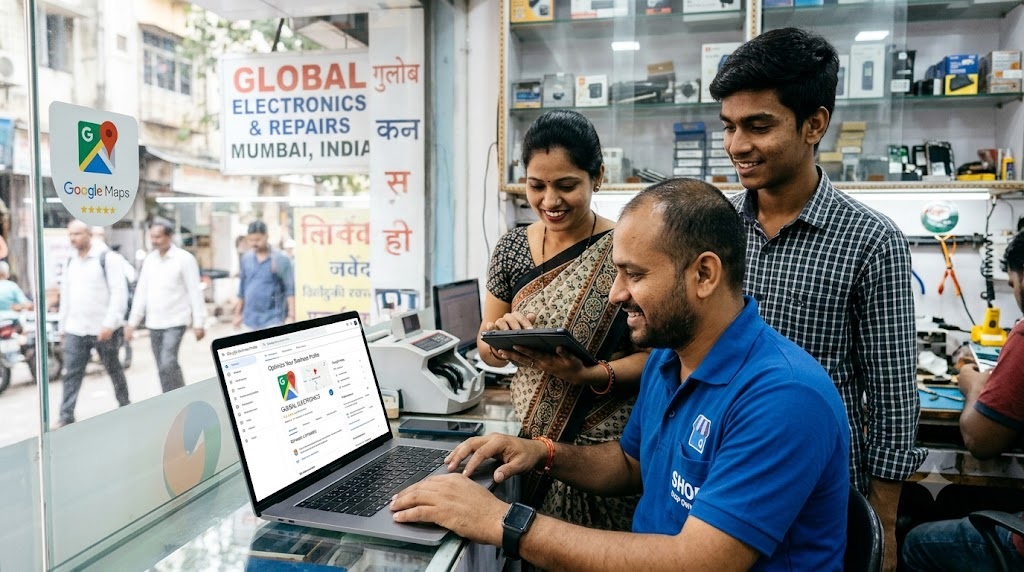
If you run a shop, restaurant, coaching centre, salon, clinic, hotel, bakery or any other local business in India, your next customer could be searching for you on Google right now.
Someone in your area might be searching for “best salon near me”, “CA in Noida”, “restaurants in Karol Bagh”, “best coaching centre in Jaipur” or “dentist near me”. Your business could appear in those search results, giving potential customers a chance to discover your services, check your reviews, call you, get directions or visit your website.
But simply creating a Google Business Profile is not enough. You need to build a complete, accurate and trustworthy profile, keep it updated, encourage genuine customer reviews and make it easy for people to contact you.
This guide explains how to use your Google Business Profile to attract more local customers, increase enquiries and grow your business without spending a fortune on advertising.
1. What Is a Google Business Profile?
A Google Business Profile is a free business listing that allows eligible businesses to manage how they appear on Google Search and Google Maps.
When someone searches for your business name or looks for services you provide in your area, your profile may display important information such as:
- Business name and category
- Address or service area
- Phone number and opening hours
- Customer reviews and ratings
- Photos and videos
- Products and services
- Website link
- Directions and other available contact options
For example, a person searching for a playschool in Ghaziabad may compare several nearby businesses before deciding which one to contact. A complete profile with genuine reviews, useful photographs, accurate timings and clear contact details can help your business stand out.
Why Is Google Business Profile Important for Local Businesses in India?
Indian customers frequently use Google to discover nearby businesses, compare options and check whether a business looks reliable before making a purchase.
A well-maintained profile can help you:
- Reach customers actively searching for your products or services.
- Appear in relevant local search results and Google Maps.
- Build trust through genuine reviews and business information.
- Generate phone calls, direction requests and website visits.
- Promote your offerings without paying for every click.
- Compete with larger businesses in your local market.
The biggest advantage: Your business can be discovered by people who already have an interest in what you offer.
However, creating a profile does not guarantee a top ranking or a fixed number of enquiries. Results depend on factors such as relevance, distance, prominence, competition and the quality of your overall online presence.
2. Start with the Basics: Create or Claim Your Google Business Profile
Before working on promotion, make sure you control your business listing.
Step 1: Check Whether Your Business Already Exists on Google
Search for your business name on Google and Google Maps.
If a listing already exists, check whether you can claim and manage it. Avoid creating a duplicate profile for the same business and location.
If you cannot find your business, you can create a new profile through Google’s official Business Profile service.
Step 2: Verify Your Business
Google may require verification to confirm that you are authorised to manage the business. The available verification method depends on Google’s assessment of your business and account.
Complete the verification process and keep your account secure. A verified profile gives you access to the available management features, although verification alone does not guarantee better rankings.
Step 3: Enter Accurate Business Information
Check every detail before publishing it.
Your business name should reflect your real-world business name. Do not add unnecessary keywords, locations or promotional phrases to the name just to improve rankings.
For example, if your actual business name is “Sharma Dental Clinic”, do not rename it “Best Dentist in Noida Cheap Dental Clinic Sharma Dental Clinic” unless that wording genuinely forms part of your established business name.
Such keyword stuffing can violate Google’s guidelines and put your profile at risk.
3. Choose the Right Business Category
Your primary business category tells Google what your business mainly does. It can influence which relevant searches your profile may appear for.
Select the Most Accurate Primary Category
Choose the category that best describes your main business activity, not simply the broadest category available.
Examples include:
- A restaurant should choose the most suitable restaurant category.
- A tuition centre should select an appropriate tutoring or coaching category.
- A diagnostic facility should select the category that accurately represents its services.
- A beauty salon should choose the relevant salon category.
- A hotel should choose the appropriate accommodation category.
Add Relevant Secondary Categories
If your business genuinely provides additional services covered by other available categories, add the relevant secondary categories.
For instance, a business that operates as both a hair salon and a beauty salon may qualify for suitable categories covering those activities.
Do not add unrelated categories just because they have high search volume.
Practical tip: Review your categories whenever your business expands or changes its main services. Keep them relevant to what customers can actually buy from you.
4. Complete Every Important Section of Your Profile
An incomplete listing may leave customers with unanswered questions. A complete profile helps people decide whether your business meets their needs.
Business Hours
Enter your normal opening hours and update them for public holidays, festivals and temporary closures.
This is particularly important in India, where operating hours may change during Diwali, Holi, Eid, Christmas, regional festivals or other holidays.
Incorrect timings can lead to wasted visits and disappointed customers.
Phone Number
Use a phone number that customers can reach during business hours.
Test the number periodically. If you use a mobile number, make sure someone answers calls or returns missed calls promptly.
Address and Service Areas
If customers visit your premises, enter your accurate business address.
If you travel to customers, configure your service area appropriately. Businesses that do not serve customers at their address should follow Google’s rules for service-area businesses rather than displaying a misleading address.
Website and Contact Details
Add your official website if you have one. Check that it loads properly on mobile phones and that the contact details are correct.
Where Google offers additional contact or booking features for your business category, use the relevant options if they genuinely help customers.
Business Description
Write a clear description explaining what your business offers, whom you serve and what makes your services useful.
Avoid exaggerated claims, excessive promotional language and repeated keywords.
For example:
“ABC Coaching Centre provides classroom coaching for Classes 9–12 in Mathematics, Science and Commerce. Students receive subject-focused instruction, regular practice and exam preparation support.”
This is more helpful than a description filled with repeated phrases such as “best coaching centre”, “top coaching centre” and “number one coaching classes”.
5. Add High-Quality Photos and Videos
Customers often want to see a business before visiting or contacting it. Genuine photographs can help them understand what to expect.
Which Photos Should You Upload?
Choose images that show the real business and its offerings.
| Business type | Useful photos |
|---|---|
| Restaurant or café | Food, seating, dining area and menu items |
| Hotel | Guest rooms, reception, facilities and exterior |
| Coaching centre | Classrooms, learning spaces and facilities |
| Playschool | Classrooms, play areas and learning environment |
| Retail shop | Store interior, products and display shelves |
| Salon or beauty parlour | Interior, equipment and services offered |
| Clinic or diagnostic centre | Reception, facilities and premises, with appropriate patient privacy |
| Bakery | Cakes, baked products, counter and shop interior |
How to Make Your Photos More Effective
Use Real Photographs
Show your actual premises, staff, products and facilities. Avoid misleading stock photos that create expectations your business cannot meet.
Make Sure Images Are Clear
Use good lighting, clean backgrounds and photographs that accurately represent your business.
You do not need an expensive camera. A modern smartphone is often sufficient.
Add New Photos Regularly
Upload new photographs when you introduce products, renovate your premises, add facilities or change your displays.
Quality and accuracy matter more than uploading a large number of repetitive images.
Follow Privacy Rules
Obtain appropriate permission before publishing identifiable photographs of customers, especially children. Do not reveal private customer information.
Remember: Photos help potential customers make decisions, but they do not guarantee a particular ranking or number of enquiries.
6. Get More Genuine Google Reviews
Reviews are one of the most useful ways to build trust with prospective customers.
When comparing two similar businesses, people may pay attention to the quality, quantity and recency of reviews, along with the actual comments customers leave.
How to Ask Customers for Reviews
The simplest approach is to ask satisfied customers to share honest feedback about their experience.
You can request a review after a completed purchase, service appointment, class or stay.
For example, you could send this WhatsApp message:
“Thank you for choosing our business. We value your feedback. If you have a moment, please share an honest review of your experience on Google. Your feedback helps us improve our services.”
Use Google’s review link or QR code to make the process convenient.
How Can Different Businesses Encourage Reviews?
- Restaurants: Ask customers to share feedback after their visit.
- Coaching centres: Invite students or parents to review their genuine experience.
- Hotels: Request feedback after checkout.
- Salons: Ask customers for feedback after their appointment.
- Retail shops: Invite customers to share their experience after a purchase.
- Service providers: Request a review after completing the work.
Always follow Google’s current review policies.
Never Buy Fake Reviews
Do not purchase reviews, create fake customer accounts, offer discounts in exchange for positive reviews or pressure customers to leave only favourable feedback.
Google prohibits fake engagement and incentivised reviews. Such practices can damage customer trust and lead to review removal or other restrictions.
Respond to Every Review You Can
Thank customers who leave positive reviews. If someone raises a genuine concern, respond calmly and professionally.
For example:
“Thank you for your feedback. We are sorry your experience did not meet expectations. Please contact our team so we can understand the issue and work towards a suitable resolution.”
Avoid arguments, personal information or aggressive replies.
Pro tip: A professional response to criticism can reassure future customers that you take service quality seriously.
7. Keep Your Profile Active and Updated
Your profile should reflect the business as it operates today, not how it operated several months ago.
Publish Updates When Appropriate
If Google Posts or other update features are available for your profile, use them to communicate useful information.
You can share:
- New products or services
- Seasonal offers and promotions
- Upcoming events
- New facilities
- Changes in business hours
- Relevant announcements
For example, a coaching centre might announce admissions for a new academic session, while a restaurant could introduce a seasonal menu.
Keep each update specific, accurate and useful. Include a clear next step where appropriate, such as calling the business or visiting its website.
Do not assume that posting every day will automatically improve your ranking. Focus on useful information rather than posting merely to appear active.
Update Your Products and Services
If your profile supports product or service listings, use them to explain what customers can purchase.
Include accurate names, descriptions, prices where appropriate and relevant photographs.
A salon might list haircuts, styling and beauty services. A coaching centre could explain its available classes and subjects.
This helps prospective customers understand your offering before contacting you.
8. Use Local Keywords Naturally
Local search optimisation helps Google understand what your business offers and where it operates.
A customer might search for “best bakery in Indiranagar”, “Maths tuition in Rohini” or “AC repair in Gurugram”.
Your online presence should clearly communicate your services and relevant location.
Identify the Searches Your Customers Use
Start by writing down the terms real customers might use to find your business.
For example:
- Dentist in Noida
- CBSE tuition classes in Jaipur
- Wedding photographer in Delhi
- Vegetarian restaurant in Pune
- Ladies’ boutique in Lucknow
- Home tutor in Kolkata
Consider variations based on the service, locality, customer need and language.
Use Keywords in the Right Places
Include relevant phrases naturally in:
- Your website’s page titles and headings
- Service descriptions on your website
- Useful articles and local guides
- Business directory descriptions where permitted
- Your products and services information
- Relevant customer-facing content
Keep your actual business name, address, category and other profile information accurate. Do not add search terms to your business name unless they are genuinely part of the real-world name.
Create Separate Website Pages for Important Services
If you have a website, consider creating dedicated pages for your major services and locations you genuinely serve.
For example, a coaching business might have separate pages for Class 10 Maths, Class 12 Physics and entrance exam preparation.
Each page should offer useful information rather than simply repeating a keyword.
A page that explains course details, fees, timings, teaching methods and how to enquire is more valuable to customers than a page created only to rank for a search term.
9. Improve Your Website to Turn Visitors into Customers
Your Google Business Profile may bring people to your website, but your website must help them take the next step.
A visitor who cannot find your phone number, service details or pricing information may leave without contacting you.
Make Your Website Mobile-Friendly
Many Indian customers browse on smartphones. Your website should load quickly, display correctly on smaller screens and make important information easy to find.
Check that buttons, forms, photographs and text work properly on mobile devices.
Put Contact Information Where People Can Find It
Display your phone number, WhatsApp contact option where appropriate, business location and opening hours prominently.
Do not force visitors to navigate several pages just to find your contact details.
Explain Your Services Clearly
For each major service, explain:
- What you provide
- Who the service is suitable for
- How your service works
- Important pricing or booking information
- Why customers might choose your business
- How to enquire or place an order
Avoid vague statements such as “We provide the best services at the best prices” without explaining what customers actually receive.
Add Trust-Building Information
Where appropriate, display genuine testimonials, qualifications, relevant certifications, real business photographs and examples of completed work.
Make sure every claim is accurate and that you have permission to publish customer testimonials or project photographs.
Use Clear Calls to Action
Tell visitors what to do next.
Examples include:
- Call for an appointment
- Request a quotation
- Check course details
- Book a table
- Ask about availability
- Enquire on WhatsApp
A good website does more than provide information. It makes the buying process easier.
10. List Your Business on Relevant Online Directories
Your Google Business Profile is important, but it should not be the only place where customers can discover your business.
Relevant business directories provide additional opportunities to promote your services, strengthen your online presence and reach people who use those platforms.
Why Business Listings Can Help
A useful business listing can give potential customers another way to discover your business and access important information.
Depending on the platform, your listing may include:
- Business name and description
- Products or services
- Contact number
- Website link
- Google Business Profile link
- Location and business photographs
- WhatsApp contact option
Choose directories that serve your target customers and allow you to maintain accurate information.
Use HotList.in to Promote Your Local Business
Indian business owners can also use HotList.in to create an additional online presence for their business.
HotList.in is a business listings and local lead generation platform designed to help businesses promote their products and services, improve online visibility and make it easier for potential customers to contact them.
A business listing on HotList.in can provide an additional discovery point beyond your Google Business Profile.
Depending on the listing plan, business owners can present their business details and Google Business Profile link, with paid listing features that include website and WhatsApp links and promotional support.
How HotList.in Can Complement Your Google Business Profile
1. Give customers another way to discover your business.
Your HotList business page provides an additional online listing where prospective customers can learn about your business.
2. Connect your online presence.
Including your Google Business Profile link helps interested visitors access your Google listing and find relevant business information.
3. Make enquiries easier.
Eligible paid listings can include website and WhatsApp buttons, helping visitors move from discovering your business to contacting you.
4. Support your promotional efforts.
Paid listings include promotional support through HotList.in and its social networks, offering an additional way to showcase your business.
The key benefit is that you can use multiple relevant online channels to make your business easier to discover and contact.
A directory listing does not guarantee leads or higher Google rankings. Its value depends on its relevance, visibility, the information you provide and whether visitors become genuine enquiries.
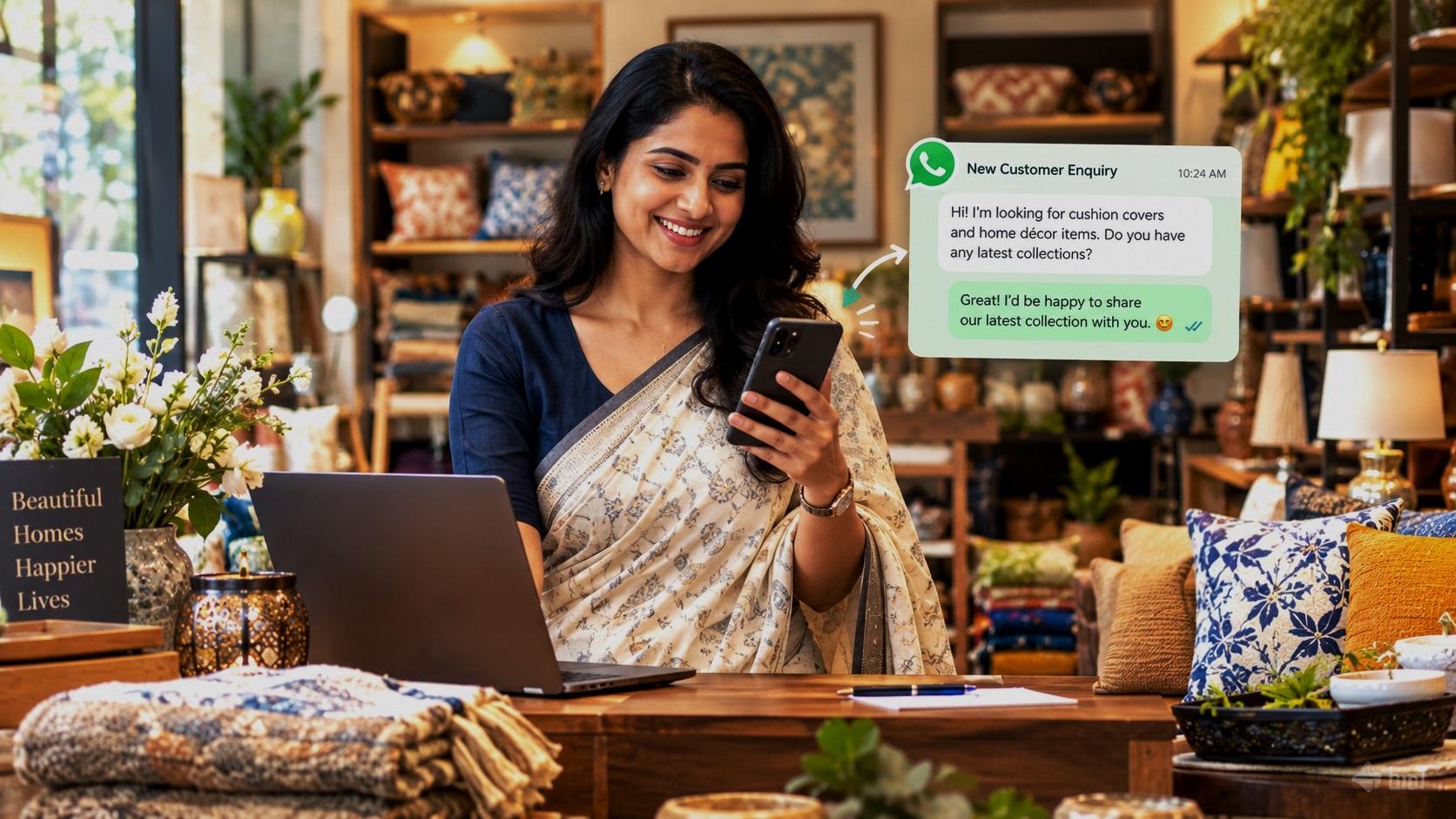
11. Use WhatsApp to Convert Enquiries into Customers
For many Indian businesses, WhatsApp is an important channel for answering questions, sharing information and completing sales.
If your Google Business Profile and other online listings support relevant contact links, make sure those links direct customers to a working business number.
Make It Easy for Customers to Ask Questions
Depending on your business, customers may want to know:
- Product availability
- Service charges
- Appointment timings
- Course fees
- Delivery options
- Booking availability
- Location and directions
Respond clearly and professionally.
Reply Promptly
An enquiry can go cold if the customer waits too long for an answer.
Assign someone to monitor incoming calls and messages during business hours. If you cannot respond immediately, acknowledge the enquiry and provide a realistic response time.
Keep Your Replies Useful
Instead of replying only with “Call us”, answer the customer’s immediate question where possible.
For example, if someone asks about tuition fees, explain the available options or ask which class and subject they need.
Make sure your answers are accurate and avoid making promises you cannot fulfil.
Follow Up Without Spamming
If a customer has requested a quotation or details, a polite follow-up may help move the conversation forward.
Do not repeatedly message people who have not agreed to receive promotional communication. Respect customer preferences and applicable privacy and messaging rules.
12. Use Offers and Promotions to Attract More Customers
A clear, relevant offer can encourage prospective customers to take action, especially when they are comparing similar businesses.
Examples include:
- A restaurant promoting a seasonal menu
- A salon announcing a festive package
- A coaching centre opening registrations for a new session
- A retailer promoting a new product range
- A hotel advertising a special package
- A service provider offering a clearly defined introductory service
Make Your Offer Specific
Explain what the customer receives, who can use the offer, when it expires and any important conditions.
Avoid misleading discounts or offers that are difficult to redeem.
If your Google Business Profile supports a relevant offer or update feature, use it in accordance with Google’s policies.
Promote the Same Offer Across Relevant Channels
You can share a suitable offer on your website, business directory listings, social media and WhatsApp communications where appropriate.
Keep the details consistent so customers are not confused by different prices or expiry dates.
13. Understand What Influences Google Local Rankings
Many business owners assume that frequent posting or adding more keywords will automatically push their business to the top of Google.
That is not how local rankings work.
Google identifies three main factors for local results: relevance, distance and prominence.
Relevance: How Well Your Business Matches the Search
Relevance refers to how closely your business profile matches what someone is looking for.
Accurate categories, complete information and clear descriptions of your actual services help Google understand your business.
Distance: How Near Your Business Is to the Searcher
Distance considers how far your business is from the location associated with a search.
A business cannot legitimately change its physical location simply to appear closer to more customers. Service-area businesses must also follow Google’s address and service-area requirements.
Prominence: How Well-Known Your Business Is
Prominence relates to how established or well-known a business appears to be.
Google may consider information such as reviews, links and other signals from across the web.
A strong reputation and a useful online presence can support visibility, but no single activity guarantees a top position.
What Should You Do?
Focus on the factors you can control:
- Keep your profile accurate and complete.
- Choose the correct business categories.
- Earn genuine customer reviews.
- Maintain a professional website.
- Publish useful information.
- Build a consistent presence on relevant platforms.
- Deliver good customer service and respond to enquiries.
Avoid anyone promising a guaranteed number-one ranking in exchange for a fee.
14. Track Your Results and Identify What Works
Promotion becomes more effective when you measure what happens after people discover your business.
Google Business Profile provides performance information for eligible profiles. The available metrics may vary, but can include how people discover your profile and actions they take.
Monitor Important Metrics
Profile Views and Search Visibility
Check how people discover your business and which search terms or search categories are reported in your profile performance data.
Use these insights to understand whether your profile is reaching relevant audiences.
Calls and Website Clicks
Review the available call-related and website-click metrics.
Compare changes over time, keeping in mind that a click or call attempt is not necessarily a confirmed sale.
Direction Requests
For businesses with physical premises, direction requests may indicate interest from people considering a visit.
However, a direction request does not guarantee that the person arrived or made a purchase.
Actual Leads and Sales
Your own records are essential. Track how many enquiries become paying customers.
You can maintain a simple spreadsheet containing:
- Date of enquiry
- Customer’s requested service
- Enquiry source
- Whether you responded
- Whether the customer purchased
- Sale value, where relevant
Ask customers how they found you, and record their answers consistently.
Calculate the Value of Your Marketing
For example, suppose your business receives 40 enquiries in a month and 10 of those enquiries become customers.
Your enquiry-to-customer conversion rate is:
10 ÷ 40 × 100 = 25%
If the 10 customers generate ₹20,000 in sales, your average sales value per customer is ₹2,000.
These figures help you evaluate your results, although revenue is not the same as profit. Also consider your service costs, operating expenses and the time spent handling enquiries.
15. Common Google Business Profile Mistakes to Avoid
Even a promising business can lose potential customers through avoidable errors.
Using the Wrong Business Name
Do not add extra keywords or promotional claims to your profile name. Use your genuine business name and follow Google’s guidelines.
Keeping Incorrect Contact Details
An old phone number, incorrect address or outdated opening hours can prevent customers from reaching you.
Review your information regularly.
Creating Duplicate Profiles
Multiple profiles for the same business and location can create confusion and may violate Google’s rules.
Follow the appropriate process for existing profiles, relocations and legitimate additional business locations.
Ignoring Reviews
Unanswered complaints can create a poor impression. Respond professionally and use feedback to improve your service.
Buying Fake Reviews
Fake or incentivised reviews can undermine trust and violate Google’s policies.
Focus on genuine customer experiences.
Uploading Misleading Photos
Images should represent your actual business, products and facilities.
Do not use photographs that create false expectations.
Failing to Answer Enquiries
Marketing is wasted when interested customers cannot get a response.
Make sure someone monitors your phone, email, website forms and WhatsApp messages.
Depending on Google Alone
Search visibility can change, and customers use different platforms to find businesses.
Build a broader online presence through your website, relevant business directories, social media and customer referrals.
16. A Practical 30-Day Plan to Get More Customers
You do not need to implement everything in one day. Follow this plan to improve your business’s online presence step by step.
Week 1: Fix the Basics
- Claim and verify your Google Business Profile if needed.
- Check your business name, category, phone number and address.
- Update opening hours, service areas and website details.
- Complete relevant profile sections.
- Check that customers can contact you successfully.
Week 2: Build Trust
- Upload clear, genuine photographs.
- Review your products and services information.
- Create or update important website pages.
- Ask recent customers for honest reviews.
- Respond to existing reviews professionally.
Week 3: Expand Your Online Presence
- Publish useful business updates where supported.
- Share relevant offers or new services.
- List your business on suitable online directories.
- Consider a HotList.in listing as an additional discovery channel.
- Check that your website and contact links work on mobile phones.
Week 4: Measure and Improve
- Review your available Google Business Profile performance data.
- Record calls, WhatsApp enquiries and website leads.
- Identify which services generate the most interest.
- Check how quickly you respond to customers.
- Improve the pages, listings and processes that are not performing well.
At the end of the month, compare your results with the previous period. Continue the activities that produce meaningful enquiries and paying customers.
17. Frequently Asked Questions
Is Google Business Profile free in India?
Yes. Google Business Profile is a free service for eligible businesses. You do not need to pay Google to create or manage a standard profile. Advertising through Google Ads is a separate, optional service.
How long does it take to get customers from Google Business Profile?
There is no fixed timeline. Results depend on your location, competition, business category, profile quality, customer demand and other factors. Some businesses may receive enquiries quickly, while others need sustained improvement over time.
Can I get customers without a website?
Yes. Your Google Business Profile can help customers discover your business even if you do not have a website. Depending on the features available, they may call you, request directions or use other contact options. However, a useful website can provide additional information and support customer enquiries.
How many Google reviews should my business have?
There is no universal target. Focus on earning genuine reviews consistently and delivering good customer experiences. Review quality, relevance and recency can matter to prospective customers, so avoid treating a particular review count as a guarantee of success.
Should I post on Google Business Profile every day?
Daily posting is not essential. Publish accurate, useful updates when you have something relevant to share. Keep your business information current and prioritise customer service, genuine reviews and accurate details.
Does a Google Business Profile guarantee first-page rankings?
No. Google local rankings depend on factors including relevance, distance and prominence. No legitimate service can guarantee a particular position for every search.
Can a business use HotList.in and Google Business Profile together?
Yes. A business can use HotList.in as an additional online listing channel while maintaining its Google Business Profile. Depending on the HotList plan, the listing may include a Google Business Profile link, website link, WhatsApp button and promotional support. Neither listing guarantees leads or a specific Google ranking.
What should I do if my Google Business Profile is suspended?
Review Google’s applicable profile guidelines and the reason given for the suspension. Correct any policy issues and follow the official reinstatement process. Avoid creating replacement profiles to bypass a suspension.
Turn Your Online Visibility into Real Business Growth
Your Google Business Profile can become a valuable source of local enquiries when you manage it properly. Start with accurate business information, choose relevant categories, upload genuine photographs, collect honest reviews and make it easy for customers to contact you.
Then strengthen your online presence with a useful website, relevant business directories, social media and responsive customer service.
Most importantly, measure what happens after people discover your business. Views and clicks are useful indicators, but genuine enquiries, satisfied customers and profitable sales are the results that matter.
You do not need a massive marketing budget to get started. You need accurate information, consistent effort and a clear plan for turning interested visitors into customers.
Give your business more opportunities to be discovered. Alongside your Google Business Profile, explore a business listing on HotList.in to create another online touchpoint, showcase your services and help potential customers connect with you.
Start with the basics, improve one step at a time and build an online presence that works for your business.
Related Posts
How to Get More Customers for Your Small Business in India
How to Rank Higher on Google Maps and Attract More Local Customers
How to Promote Your Business Online for Free in India: 10 Practical Ways
Effective Ways to Generate Online Customer Leads for Your Local Business in India