12 Proven Business Marketing Strategies to Get More Customers Online

12 Proven Business Marketing Strategies to Get More Customers Online

Running a business is one thing. Getting a steady flow of customers is another.

You may offer excellent products, reliable services and competitive prices, but if potential customers cannot find your business online, you are missing valuable opportunities.

Today, people in India search online before choosing a restaurant, booking a hotel, joining a coaching centre, visiting a salon, buying products or hiring a service provider. They use Google Search, Google Maps, social media and online business directories to discover local businesses, compare options and make buying decisions.

This means your next customer could already be searching for a business like yours. The important question is: will they find you?

The good news is that online marketing does not always require a huge advertising budget. Small businesses, local shops, service providers, coaching centres, restaurants and startups can attract customers using affordable and practical digital marketing strategies.

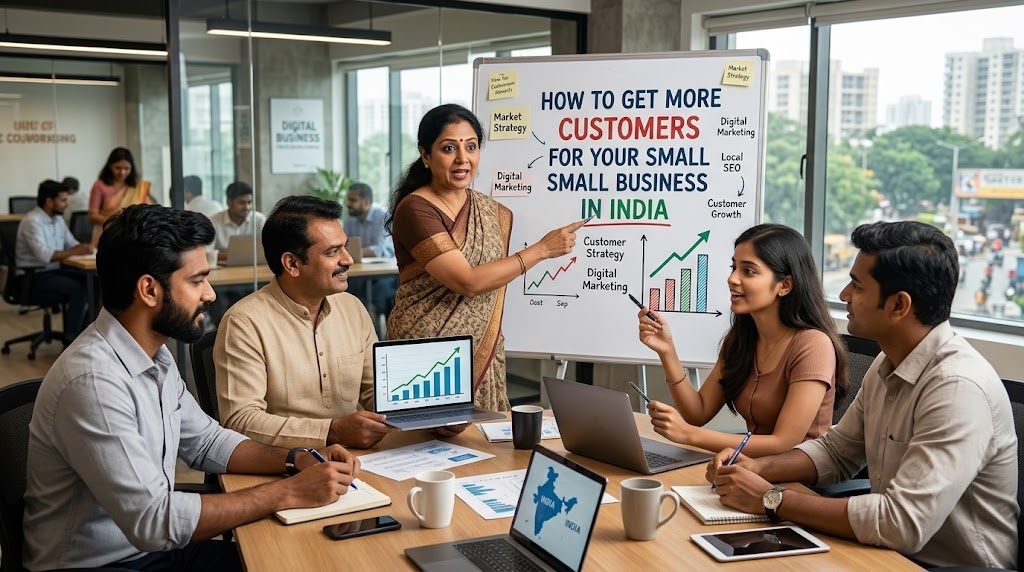
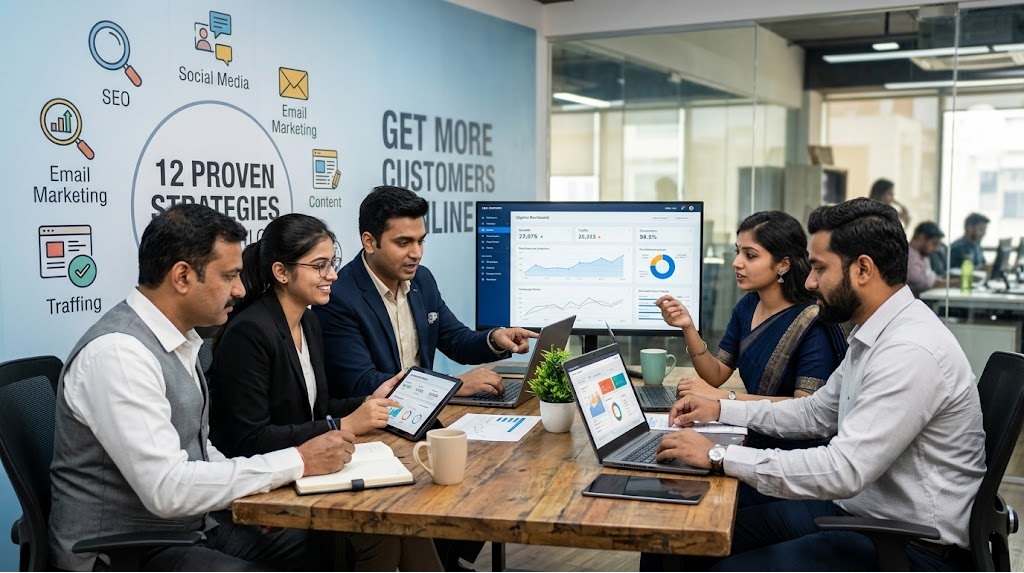
In this ultimate guide, we will explore 12 proven business marketing strategies to get more customers online in India. You will learn how to improve your online visibility, reach local customers, build trust, generate enquiries and turn online visitors into paying customers.

Understanding Online Marketing: Start with the Basics

Online marketing, also known as digital marketing, means promoting your business through the internet to reach people who may be interested in your products or services.

Unlike traditional advertising, online marketing allows customers to discover your business while actively searching for something they need.

For example:

  • Someone searching for a dentist in Noida may discover your dental clinic on Google Maps.
  • A parent looking for Maths tuition in Delhi may find your coaching centre through Google Search.
  • Someone searching for birthday cakes near them may discover your bakery through Instagram.
  • A business owner looking for website development may find your services through an online business directory.

The objective is simple: make it easier for potential customers to discover your business, understand what you offer and contact you.

Why Is Online Marketing Important for Indian Businesses?

India has a large and growing internet audience. Customers increasingly use smartphones to find nearby shops, compare prices, read reviews and contact businesses.

Whether you operate from a small shop in Jaipur, run a coaching institute in Delhi, own a restaurant in Mumbai or provide professional services in Bengaluru, your customers are likely to use online platforms to find businesses.

Here is why online marketing matters:

  1. Reach more potential customers: Your business can become visible to people beyond your existing customer base.
  2. Attract local enquiries: Reach people searching for products and services in your city or neighbourhood.
  3. Build business credibility: A professional online presence, genuine customer reviews and accurate business information help establish trust.
  4. Promote your business affordably: Several online marketing methods are available without spending money on advertisements.
  5. Generate direct enquiries: Customers can contact you through phone calls, WhatsApp, websites and social media.
  6. Compete with larger businesses: Even a small business can attract attention through useful content, strong local visibility and good customer service.

What Do You Need Before Starting Online Marketing?

You do not need to be a digital marketing expert to promote your business online. Start with a few essentials.

  • A clear business name and description.
  • A valid Google Business Profile, if your business is eligible.
  • A working phone number and WhatsApp contact.
  • A professional business email address.
  • Good-quality photographs of your products, premises or services.
  • A website or an online business listing.
  • Accurate business location, opening hours and contact details.

Once these basics are in place, you can start implementing the following strategies.

12 Proven Business Marketing Strategies to Get More Customers Online

The most effective online marketing approach combines several methods. Relying on just one platform can limit your reach. Instead, create a strong online presence across search engines, business directories, social media and direct communication channels.

Here are 12 practical strategies that Indian business owners can use to attract more customers.

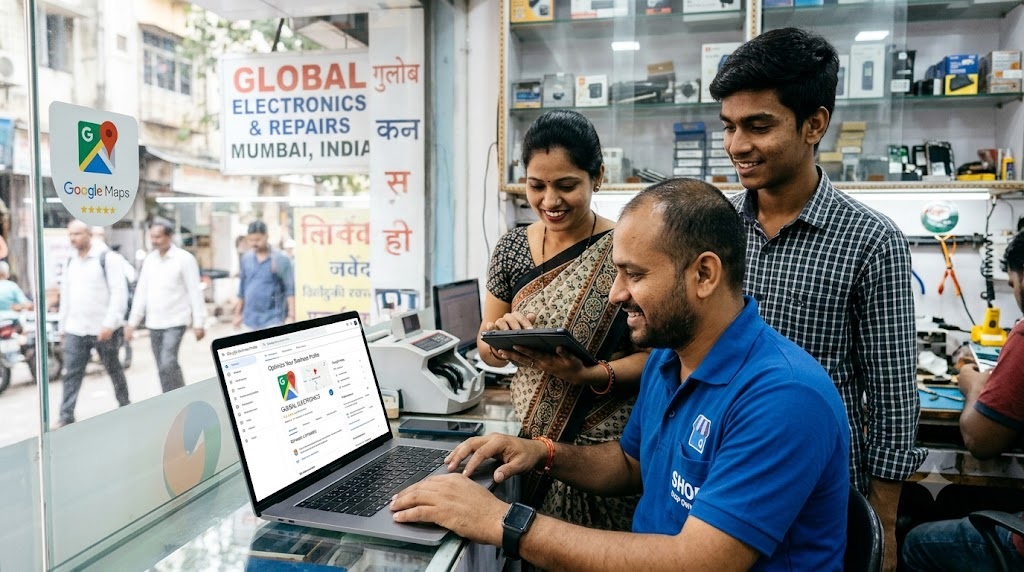
1. Create and Optimise Your Google Business Profile

If you run a local business, your Google Business Profile should be one of your first marketing priorities.

When people search for businesses near them, Google often displays local business listings along with their locations, contact details, reviews, photographs and directions.

For example, when someone searches for “best salon in Karol Bagh” or “coaching centres in Noida”, relevant local businesses may appear in Google Search and Google Maps.

Having a properly maintained Google Business Profile helps potential customers discover your business.

How to Optimise Your Google Business Profile

Add complete business information

Provide your correct business name, address, phone number, website, business category and operating hours. Make sure the information is accurate and consistent.

Choose the right business category

Select the category that best describes your primary business. Add relevant secondary categories where appropriate.

Write a useful business description

Explain what your business offers, who your customers are and what makes your products or services worth considering.

Include relevant keywords naturally, such as your business type, products, services and location.

Upload genuine photographs

Add clear photographs of your shop, office, products, team, interiors and completed work. Keep your images current.

Collect genuine customer reviews

Encourage satisfied customers to share honest feedback about their experience. Respond politely to both positive and negative reviews.

Keep your profile updated

Update opening hours, contact information, services, photographs and other details whenever something changes.

Why This Strategy Works

Google Business Profile helps you reach people who are already looking for products or services like yours.

These potential customers often have a clear requirement and may be ready to contact or visit a business.

Best for: Restaurants, hotels, coaching centres, salons, clinics, retail shops, repair services, fitness centres and other eligible local businesses.

2. List Your Business on Online Business Directories

Online business directories are platforms where customers can discover businesses based on their category, products, services and location.

Think of them as digital marketplaces for business discovery. Instead of visiting different websites to find individual businesses, customers can explore multiple options in one place.

For example, someone searching for a playschool in Gurgaon or a diagnostic centre in Delhi may discover relevant businesses through online directories.

Listing your business on multiple relevant platforms can increase your online visibility and create additional opportunities to receive enquiries.

How to Use Business Directories for Marketing

Choose relevant directories

Look for established business listing platforms that cater to your industry, city or target audience.

Create a complete business listing

Include your business name, description, address, contact details, category, services and photographs.

Add your Google Business Profile link

Connecting your listing with your Google Business Profile gives visitors another way to check your location, reviews and business information.

Include your website and WhatsApp details

Where the directory permits, add your website and WhatsApp contact so interested customers can reach you directly.

Keep your information consistent

Use the same business name, address and phone number across different platforms. Inconsistent information can confuse potential customers.

Monitor enquiries

Check whether your directory listings are generating website visits, phone calls or WhatsApp messages.

Why HotList.in Can Help Your Business Get Discovered

HotList.in is a business listing and local lead generation platform designed to help Indian businesses improve their online visibility.

Businesses can create a listing to showcase their products and services, share their Google Business Profile and provide potential customers with ways to connect.

The objective is to help businesses reach potential customers without paying commissions on the enquiries they receive.

For business owners looking for affordable online promotion, relevant business directories can be a useful addition to their marketing strategy.

Best for: Local shops, restaurants, hotels, coaching centres, service providers, healthcare businesses, travel agencies, boutiques and small businesses.

3. Build a Professional Business Website

A business website gives you a dedicated online space to explain what you offer, showcase your products and services and convert visitors into customers.

Social media platforms and business directories are useful, but your own website gives you greater control over your business information and online presentation.

A customer who discovers your business through Google or social media may visit your website before making a decision.

If your website looks professional, loads quickly and provides useful information, it can help turn that visitor into an enquiry.

Essential Pages Every Business Website Should Have

Homepage

Clearly explain what your business does, who you serve and how customers can contact you.

Your main message should be visible without requiring visitors to scroll through several sections.

About Us

Introduce your business, experience, team and the reasons customers should consider your products or services.

Products or Services

Create separate sections or pages explaining your offerings, features, pricing where appropriate and benefits.

Contact Us

Display your phone number, email address, business location and WhatsApp contact.

Include a simple enquiry form if customers need to submit detailed requirements.

Customer Reviews and Testimonials

Show genuine customer feedback to help new visitors understand the quality of your products or services.

How to Make Your Website Generate More Enquiries

  • Make your phone number easy to find.
  • Add a visible WhatsApp enquiry button.
  • Use clear calls to action such as “Call Now”, “Get a Quote” or “Book an Appointment”.
  • Make the website mobile-friendly.
  • Use clear photographs and readable text.
  • Avoid unnecessary pop-ups and complicated navigation.
  • Ensure your website loads quickly.

You do not need an expensive website to get started. A simple, well-designed website with useful information is better than a complicated website that confuses visitors.

Best for: Almost every business, especially service providers, consultants, manufacturers, retailers, educational institutions and businesses targeting customers across multiple locations.

4. Use Local SEO to Rank Higher on Google

Search Engine Optimisation (SEO) is the process of improving your website and online content so that search engines can understand it and show it for relevant searches.

Local SEO focuses specifically on helping your business appear when people search for products or services in a particular geographical area.

For example:

  • Best bakery in South Delhi
  • AC repair service in Pune
  • English tuition classes in Gurgaon
  • Wedding photographers in Jaipur
  • Diagnostic centres in Noida

These searches indicate that people are looking for specific businesses in specific locations.

How to Improve Local SEO

Use location-based keywords

Include your city, neighbourhood and service areas naturally in your website content.

For example, a salon in Rohini can create useful content around beauty services in Rohini rather than targeting only the broad keyword “beauty salon”.

Create individual service pages

If you offer several services, create separate pages explaining each one.

A dental clinic, for instance, can have individual pages for dental implants, teeth whitening, root canal treatment and orthodontic services.

Create location-specific pages carefully

If you serve multiple areas, create genuinely useful pages for those locations. Avoid publishing dozens of nearly identical pages with only the city name changed.

Optimise page titles and descriptions

Write clear SEO titles and meta descriptions that explain what the page offers and include relevant search terms.

Use descriptive headings

Organise website content using relevant H2, H3 and H4 headings. Make it easy for visitors and search engines to understand the page.

Add internal links

Connect related pages on your website so visitors can discover additional products, services and useful information.

Maintain accurate business information

Keep your website contact details consistent with your Google Business Profile and other business listings.

Understand the Difference Between SEO and Paid Advertising

SEO helps your website earn visibility in unpaid search results over time.

Google Ads allows you to pay for advertising placements and can bring traffic more quickly.

Both can be useful, but SEO is particularly important for businesses that want to build long-term organic visibility.

Remember, SEO is not an overnight process. It requires useful content, a technically sound website, relevant keywords and consistent improvement.

Best for: Businesses that want a steady source of organic traffic and local customer enquiries.

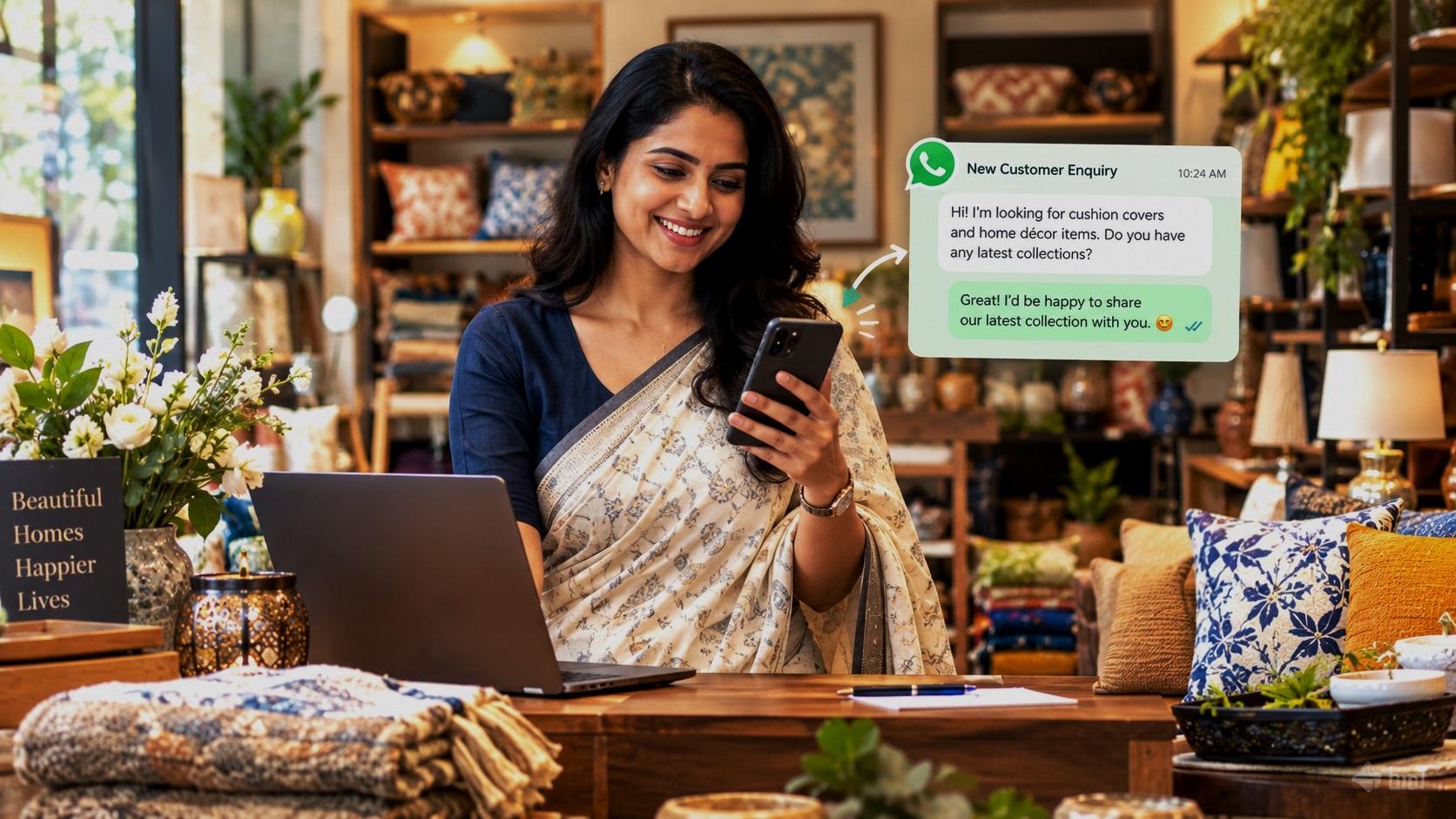
5. Promote Your Business on WhatsApp Business

WhatsApp is one of the most convenient ways for Indian businesses to communicate with customers.

Customers already use it daily, which makes it a familiar and accessible channel for enquiries, product information, appointment bookings and customer support.

WhatsApp Business offers additional features that help small businesses manage customer communication more professionally.

How to Use WhatsApp Business for Marketing

Create a professional business profile

Add your business name, category, description, address, website, opening hours and email address.

Build a product or service catalogue

Upload product photographs, descriptions and prices where applicable. This helps customers understand your offerings without asking for every detail.

Set up automated messages

Use greeting messages to welcome new customers and away messages to inform them when you are unavailable.

Use quick replies

Save frequently used answers about pricing, delivery, appointments, availability and business hours.

Share your WhatsApp link

Place your WhatsApp contact link on your website, Google Business Profile where permitted, social media pages and business directories.

Use WhatsApp Status

Share new products, offers, customer updates, business announcements and useful information.

Send updates responsibly

Only message customers who have agreed to receive your communications. Avoid sending repeated promotional messages that may annoy people.

Turn WhatsApp Enquiries into Customers

A customer who sends a WhatsApp message has already shown interest.

Respond promptly, understand their requirement, provide accurate information and explain the next step.

For example, a coaching centre can ask about the student’s class, subject and preferred learning mode before sharing suitable course details.

A retailer can share product availability, prices and delivery information.

Best for: Retailers, boutiques, restaurants, home businesses, coaching centres, service providers, consultants and appointment-based businesses.

6. Use Instagram and Facebook to Reach More Customers

Social media marketing allows businesses to showcase their products, communicate with potential customers and build a recognisable brand.

Instagram and Facebook are particularly useful for Indian businesses because they support photographs, short videos, Stories, Reels, business pages and direct messages.

However, simply creating an account is not enough. You need to share content that gives people a reason to follow your business and eventually buy from you.

How to Promote Your Business on Instagram

Create a professional business account

Use your actual business name, a recognisable profile picture, a clear description and contact information.

Post product and service photographs

Show what you sell or offer. Use genuine photographs rather than relying entirely on generic stock images.

Create Reels

Short videos can help demonstrate products, show behind-the-scenes activities, introduce your team and explain how your services work.

Use Instagram Stories

Share daily updates, new arrivals, offers, customer feedback and important announcements.

Use relevant hashtags

Include hashtags related to your products, services, industry and location.

For example, a bakery in Delhi might use hashtags related to Delhi bakeries, birthday cakes and custom cakes.

Add your location

Location tags can help people discover your content when searching for businesses in a particular area.

How to Promote Your Business on Facebook

  • Create a dedicated Facebook Business Page.
  • Add complete contact and business information.
  • Publish product updates and service announcements.
  • Share customer testimonials with permission.
  • Join relevant local community groups where business promotion is permitted.
  • Respond to comments and messages.
  • Share useful videos, photographs and informative posts.

What Should You Post on Social Media?

You do not need to create complicated content every day.

Use these content ideas:

  1. New products and services.
  2. Special offers and seasonal promotions.
  3. Frequently asked customer questions.
  4. Customer testimonials.
  5. Before-and-after results, where relevant.
  6. Behind-the-scenes videos.
  7. Tips related to your industry.
  8. Product demonstrations.
  9. Business milestones and achievements.
  10. Answers to common customer problems.

The key is to balance promotional content with useful and engaging information.

Best for: Restaurants, fashion stores, beauty salons, bakeries, boutiques, fitness centres, travel agencies, retailers and visually driven businesses.

7. Create Useful Content That Attracts Potential Customers

Content marketing means creating and sharing useful information that helps people understand your products, services or industry.

Instead of constantly asking people to buy something, you provide information that helps them make better decisions.

This builds credibility and gives potential customers a reason to visit your website or follow your business.

Content Marketing Ideas for Different Businesses

Coaching Centres and Educational Institutions

  • How to choose the right coaching centre.
  • Common mistakes students make while preparing for board exams.
  • Tips to improve Mathematics and Science.
  • How to prepare for competitive examinations.

Restaurants and Cafés

  • Popular dishes on your menu.
  • How your signature dishes are prepared.
  • Food recommendations for families.
  • Special seasonal menus.

Real Estate Businesses

  • Things to check before buying a property.
  • Understanding home loan basics.
  • Tips for first-time homebuyers.
  • Local property market information.

Salons and Beauty Businesses

  • Hair care tips for different seasons.
  • How to choose the right skincare treatment.
  • Common hair care mistakes.
  • Beauty service explanations.

Professional Service Providers

  • Frequently asked questions about your services.
  • Common customer problems and their solutions.
  • Industry updates and practical advice.
  • What customers should know before hiring a professional.

Which Content Formats Should You Use?

You can publish content in several formats:

  • Blog articles on your website.
  • Short social media posts.
  • Instagram Reels.
  • Facebook videos.
  • Informative graphics.
  • Frequently asked questions.
  • Step-by-step guides.
  • Educational videos.

Why Content Marketing Is Effective

Useful content can attract people who are researching a product or service before making a purchase.

For example, someone searching for “how to choose a good interior designer” may discover an article published by an interior design company.

That visitor may eventually contact the company when ready to renovate their home.

Content marketing takes time, but well-written articles and useful resources can continue attracting visitors long after publication.

Best for: Educational institutions, consultants, healthcare businesses, real estate agencies, professional service providers and businesses with expertise to share.

8. Use Google Ads and Social Media Advertising to Get Faster Results

Organic marketing methods such as SEO, social media content and business listings can take time to generate consistent results.

If you want to reach potential customers more quickly, paid online advertising can be useful.

Google Ads and Meta Ads allow businesses to promote their products and services to selected audiences.

However, advertising without a clear objective can waste money.

Google Ads for Local Businesses

Google Ads can help your business appear when people search for relevant products or services.

For example, a customer searching for “AC repair in Noida” may see advertisements from businesses offering AC repair services in that area.

Google Search campaigns are particularly useful when people are actively looking for a service.

How to Run Better Google Ads

  • Choose keywords related to your actual products and services.
  • Target locations where you can serve customers.
  • Write advertisements that clearly explain your offering.
  • Use relevant landing pages.
  • Include phone calls or enquiry forms as conversion options.
  • Track which keywords generate genuine enquiries.

Avoid targeting broad keywords that attract people who are unlikely to become customers.

Facebook and Instagram Ads

Meta advertising allows businesses to reach people based on factors such as location, interests and other available audience settings.

You can use advertisements to:

  • Promote new products.
  • Generate WhatsApp enquiries.
  • Advertise special offers.
  • Promote events and workshops.
  • Increase awareness of your business.
  • Reach people interested in your services.

Start with a Small Advertising Budget

You do not need to spend thousands of rupees immediately.

Start with a manageable budget, test different advertisements and monitor the results.

Do not judge an advertisement only by likes, views or clicks.

Measure how many people actually called, sent enquiries, booked appointments or purchased something.

Best for: Businesses that have a clear target audience, an established offering and the ability to handle additional enquiries.

9. Collect Customer Reviews and Build a Strong Online Reputation

Before spending money on a product or service, many customers check what other people say about the business.

Online reviews can influence whether someone decides to contact you, visit your shop or choose a competitor.

A business with genuine, detailed and recent reviews can make a stronger impression than one with little customer feedback.

How to Get More Genuine Customer Reviews

Ask satisfied customers

After successfully completing a purchase or service, politely request customers to share their experience.

Make reviewing easy

Share your Google review link through WhatsApp, email or a follow-up message.

Respond to every review

Thank customers for positive feedback. Respond professionally to negative feedback and try to resolve genuine concerns.

Learn from customer feedback

If several customers mention the same problem, take it seriously and improve the relevant part of your business.

Encourage honest feedback

Never buy fake reviews, offer rewards in exchange for positive ratings or ask people to post reviews without having genuine experience with your business.

Why Online Reputation Matters

Reviews help potential customers understand what to expect.

For example, someone choosing between two hotels may consider cleanliness, staff behaviour, location and service quality before making a booking.

Similarly, parents looking for a tuition centre may pay attention to feedback about teaching quality and student support.

Your online reputation is not just about ratings. It reflects how customers experience your business.

Best for: Hotels, restaurants, clinics, salons, coaching centres, service providers, retail shops and almost every customer-facing business.

10. Use Email Marketing to Stay Connected with Customers

Email marketing is a cost-effective way to communicate with existing customers and people who have voluntarily subscribed to receive updates from your business.

Unlike social media, where your content competes with countless other posts, email allows you to communicate directly with interested customers.

It is particularly useful for businesses with repeat customers, seasonal offerings or regular updates.

How to Use Email Marketing

Build an email list

Collect email addresses from customers who willingly subscribe through your website, enquiry forms, registrations or purchases.

Send useful updates

Share new product announcements, helpful information, upcoming events, seasonal offers and important business news.

Personalise your communication

Address customers appropriately and send information relevant to their interests.

Write attention-grabbing subject lines

Keep subject lines clear and interesting so recipients understand why they should open your email.

Include a clear call to action

Tell readers what to do next, such as visiting your website, viewing a product, booking an appointment or contacting your business.

Avoid excessive emails

Send messages at reasonable intervals. Always provide an easy way to unsubscribe.

Email Marketing Examples

A coaching centre can send updates about new batches, admission dates and exam preparation sessions.

A fashion boutique can announce new collections and festive offers.

A travel agency can share holiday packages and travel updates.

A service provider can send appointment reminders and maintenance information.

Best for: Coaching centres, educational institutions, e-commerce businesses, travel agencies, professional services and businesses with repeat customers.

11. Create YouTube Videos to Showcase Your Products and Expertise

Video marketing is an effective way to demonstrate what your business offers.

YouTube gives businesses an opportunity to publish useful videos that people can discover through YouTube Search and, in some cases, Google Search.

You do not need a professional camera or an expensive production team to begin.

A smartphone, clear audio and useful information are enough to create your first videos.

Video Marketing Ideas for Indian Businesses

Product-Based Businesses

  • Product demonstrations.
  • Unboxing videos.
  • Product comparisons.
  • New arrivals.
  • How-to-use guides.

Service-Based Businesses

  • Introduce your services.
  • Explain how your process works.
  • Answer common customer questions.
  • Share completed projects.
  • Introduce your team.

Educational Businesses

  • Short concept explanations.
  • Exam preparation tips.
  • Subject tutorials.
  • Common student mistakes.
  • Expert advice for parents and students.

How to Optimise Your YouTube Videos

  • Use descriptive video titles containing relevant keywords.
  • Write useful video descriptions.
  • Include your business name and contact information.
  • Add relevant hashtags.
  • Use attractive, readable thumbnails.
  • Include a clear call to action.
  • Link to your website or relevant business page.
  • Create playlists around different products or services.

You can also repurpose your videos into shorter clips for Instagram Reels and Facebook.

This allows you to reach different audiences without creating entirely new content every time.

Best for: Educational institutions, product manufacturers, retailers, consultants, restaurants, travel businesses and service providers.

12. Use WhatsApp, Social Media and Online Listings Together to Generate More Leads

Getting your business discovered is only the first step.

The next challenge is converting interested visitors into actual enquiries and paying customers.

Many businesses lose potential customers because their contact details are difficult to find, their online information is incomplete or they take too long to respond.

This is where an integrated lead generation strategy becomes important.

Create a Simple Customer Journey

Your marketing channels should work together rather than operate independently.

For example:

  1. A customer searches Google for a coaching centre in their area.
  2. They discover your Google Business Profile or online business listing.
  3. They visit your website to understand your courses.
  4. They check reviews to evaluate your credibility.
  5. They click your WhatsApp button to enquire about fees and admission.
  6. You respond, answer their questions and guide them through the admission process.

This is how online visibility can turn into a genuine business opportunity.

Make It Easy for Customers to Contact You

Provide multiple contact options wherever possible.

  • WhatsApp enquiry button.
  • Click-to-call phone number.
  • Website contact form.
  • Email address.
  • Social media direct messages.
  • Business location and directions.

Do not force customers to search through multiple pages to find your contact information.

Respond to Enquiries Quickly

A customer who contacts your business may also be enquiring with your competitors.

A quick, helpful response can make a positive difference.

Follow these simple practices:

  • Acknowledge enquiries promptly.
  • Understand the customer’s requirement.
  • Share accurate information.
  • Provide clear pricing wherever possible.
  • Explain the next step.
  • Follow up politely when appropriate.

Track Your Leads

Maintain a simple record of enquiries.

You can use a spreadsheet to track:

  • Customer name.
  • Contact details.
  • Date of enquiry.
  • Product or service required.
  • Source of enquiry.
  • Current status.
  • Whether the enquiry converted into a sale.

This helps you identify which marketing channels are actually bringing customers.

Best for: Every business that wants to convert online visibility into phone calls, WhatsApp enquiries, appointments and sales.

Which Online Marketing Strategies Should You Use First?

You do not need to implement all 12 strategies at once.

Your priorities should depend on your business type, marketing budget, available time and target customers.

Here is a practical guide to help you decide where to start.

Business Type Recommended Marketing Strategies
Restaurants and Cafés Google Business Profile, Instagram, Facebook, Reviews, WhatsApp
Coaching Centres Google Business Profile, Local SEO, Business Directories, YouTube, WhatsApp
Retail Shops Google Business Profile, Business Directories, Instagram, Facebook, WhatsApp
Hotels and Guest Houses Google Business Profile, Reviews, SEO, YouTube, Social Media
Salons and Beauty Parlours Google Business Profile, Instagram Reels, Reviews, WhatsApp
Clinics and Diagnostic Centres Local SEO, Google Business Profile, Reviews, Website
Real Estate Agencies Website, Local SEO, Facebook, YouTube, Google Ads
Professional Services Website, SEO, Business Directories, LinkedIn, Email Marketing
Travel Agencies Website, SEO, Instagram, YouTube, WhatsApp
Manufacturers and Wholesalers Website, SEO, Business Directories, YouTube, Email Marketing

The best results generally come from combining search visibility, business discovery, customer trust and easy communication.

Free vs Paid Online Marketing: What Should Small Businesses Choose?

One of the biggest concerns for small business owners is the cost of digital marketing.

Many businesses assume that promoting themselves online requires a large advertising budget.

That is not necessarily true.

You can begin with several free marketing methods and gradually invest in paid promotion when your business is ready.

Free Online Marketing Methods

Marketing Method How It Helps
Google Business Profile Helps eligible local businesses appear in Google Search and Maps
Social Media Pages Allows you to promote products and services
Organic SEO Helps attract unpaid search traffic
WhatsApp Business Makes customer communication easier
YouTube Videos Showcases products, services and expertise
Online Business Directories Creates additional business discovery opportunities
Customer Reviews Builds trust and credibility
Email Marketing Helps maintain customer relationships

Free does not mean effortless. These methods require time, regular updates and useful content.

Paid Online Marketing Methods

Marketing Method How It Helps
Google Ads Reaches people searching for specific products or services
Facebook Ads Promotes your business to selected audiences
Instagram Ads Increases product and brand visibility
Paid Business Listings Provides additional promotional opportunities and listing features
Professional Website Development Creates a dedicated platform for your business
Content Marketing Services Helps produce and distribute useful business content
SEO Services Supports long-term search visibility

How Much Should a Small Business Spend on Online Marketing?

There is no single marketing budget that works for every business.

A local shop may begin with free Google Business Profile optimisation, WhatsApp Business and social media.

A coaching centre may invest in local SEO, business listings and targeted advertising during admission season.

A restaurant may focus on Google Maps visibility, reviews, social media and local promotions.

Start with what you can afford. Measure the results before increasing your spending.

Most importantly, do not pay for marketing activities simply because someone promises thousands of views or followers. Focus on genuine customer enquiries and business growth.

7 Common Online Marketing Mistakes Indian Business Owners Should Avoid

Even businesses that actively promote themselves online sometimes struggle to generate customers.

Often, the problem is not a lack of marketing activity but a lack of direction.

Avoid these common mistakes.

1. Being Present on Every Platform Without a Plan

Creating accounts on multiple platforms does not automatically bring customers.

Choose the channels your target audience actually uses and maintain them properly.

2. Ignoring Google Business Profile Updates

Incorrect phone numbers, outdated timings and missing photographs can create a poor impression.

Keep your business information accurate.

3. Posting Only Promotional Content

Customers do not want to see advertisements all the time.

Share useful tips, demonstrations, answers to common questions and other relevant information.

4. Buying Fake Reviews and Followers

Fake engagement does not build a genuine customer base.

Focus on real reviews, meaningful interactions and actual enquiries.

5. Having No Clear Call to Action

Every marketing message should make the next step obvious.

Tell customers whether they should call, WhatsApp, visit your website or book an appointment.

6. Ignoring Mobile Users

Most local customers discover businesses through smartphones.

If your website is difficult to use on a mobile screen, you may lose potential enquiries.

7. Not Measuring Marketing Results

Without tracking, you cannot identify which activities are working.

Monitor calls, website visits, WhatsApp enquiries, bookings and sales instead of focusing only on likes and views.

How to Measure the Success of Your Online Marketing

Online marketing becomes more effective when you understand what is bringing customers to your business.

You do not need complicated software to get started. Begin by tracking a few important numbers.

Important Digital Marketing Metrics

Website visitors: How many people visit your website?

Google Business Profile interactions: How many people view your profile and interact with available features?

Phone calls: How many customers contact your business by phone?

WhatsApp enquiries: How many people send messages to ask about your products or services?

Social media engagement: Are people commenting, sharing and saving your content?

Lead conversion rate: How many enquiries eventually become paying customers?

Cost per lead: How much are you spending to generate one enquiry through paid marketing?

Return on investment: Is your marketing investment generating enough business revenue to justify the cost?

Create a Monthly Marketing Review

At the end of every month, ask yourself:

  • Which platform brought the most enquiries?
  • Which products or services attracted the most interest?
  • Which advertisements generated genuine leads?
  • Which pages received the most website traffic?
  • How many enquiries converted into sales?
  • What should you improve next month?

Use this information to focus on the marketing activities that produce real business results.

A Practical 30-Day Online Marketing Plan for Small Businesses

If you are new to digital marketing, the best way to start is with a simple action plan.

Rather than trying to do everything immediately, focus on building a strong foundation over the next 30 days.

Week 1: Build Your Online Presence

Day 1–2: Review your business information, phone number, address, email and contact details.

Day 3: Create or optimise your Google Business Profile, if eligible.

Day 4: Set up WhatsApp Business and complete your business profile.

Day 5: Create or update your social media business pages.

Day 6: Register your business on relevant online directories.

Day 7: Collect genuine photographs of your products, services, premises and team.

Week 2: Improve Your Visibility

Day 8–9: Research keywords customers use to find businesses like yours.

Day 10: Update your website content with relevant products, services and location information.

Day 11: Add clear contact details and WhatsApp links.

Day 12: Publish a useful social media post.

Day 13: Share a product demonstration or short business video.

Day 14: Ask satisfied customers for honest online reviews.

Week 3: Start Attracting Customers

Day 15–16: Publish an informative blog post or useful business guide.

Day 17: Share customer testimonials with permission.

Day 18: Create a short video answering a common customer question.

Day 19: Share your business listing and website with your existing network.

Day 20: Publish a product or service promotion.

Day 21: Review enquiries received through your online channels.

Week 4: Improve and Expand

Day 22–23: Check your Google Business Profile and website performance.

Day 24: Identify which social media posts received the best response.

Day 25: Update your business directory listings.

Day 26: Create another useful piece of content.

Day 27: Consider testing a small targeted advertisement if your budget permits.

Day 28: Follow up with interested customers.

Day 29: Review calls, messages, enquiries and sales.

Day 30: Prepare your marketing priorities for the next month.

At the end of 30 days, you should have a stronger online presence and a clearer understanding of which marketing channels deserve more attention.

Consistency is more important than trying to complete everything perfectly.

Frequently Asked Questions About Online Business Marketing

1. How Can I Promote My Small Business Online for Free in India?

You can promote your business for free by creating a Google Business Profile, listing your business on relevant directories, using WhatsApp Business, publishing social media content, collecting genuine customer reviews and improving your website’s SEO.

You can also create useful videos and articles to attract potential customers.

2. Which Is the Best Online Marketing Strategy for Local Businesses?

There is no single strategy that works for every business.

However, Google Business Profile optimisation, local SEO, online business directories, customer reviews and WhatsApp communication are excellent starting points for many local businesses.

3. How Can I Get More Customers from Google?

Start by creating an accurate Google Business Profile if your business is eligible.

Use relevant keywords on your website, publish useful content, maintain consistent business information and collect genuine customer reviews.

These activities can improve your chances of appearing for relevant searches, although Google rankings cannot be guaranteed.

4. Is Social Media Marketing Enough to Grow a Business?

Social media can help you build brand awareness and attract customers, but it should not be your only marketing channel.

Combine it with search engine optimisation, Google Business Profile, online directories and a professional website to create a stronger online presence.

5. How Can I Get More WhatsApp Enquiries for My Business?

Make your WhatsApp contact link easy to find on your website, social media profiles and business listings.

Promote useful products and services, share relevant offers and respond promptly to customer messages.

6. How Long Does Online Marketing Take to Show Results?

It depends on the marketing method.

Paid advertising may generate enquiries quickly, while SEO and content marketing generally take longer to produce consistent results.

Social media growth also requires regular publishing and audience engagement.

7. Do I Need a Website to Promote My Local Business?

A website is highly useful because it gives you control over how your business presents its products, services and contact information.

However, you can start promoting your business through Google Business Profile, WhatsApp Business, social media and online directories while developing your website.

8. Are Online Business Directories Useful for Small Businesses?

Yes. Relevant online directories provide additional opportunities for customers to discover your business.

A complete listing with accurate information, photographs, service details and contact options can help attract potential customers.

Choose directories that are relevant to your business and target audience.

9. Should I Hire a Digital Marketing Agency?

You can manage basic online marketing activities yourself if you have the time and willingness to learn.

However, professional support may be useful when you need advanced SEO, website development, paid advertising, content creation or a more structured marketing strategy.

Before hiring an agency, understand what services are included and how performance will be measured.

10. How Much Does Online Marketing Cost in India?

Online marketing costs vary widely depending on your business requirements.

You can begin with free tools and platforms. Paid advertising, professional SEO, website development and content marketing require additional investment.

The best approach is to start within your budget and increase spending based on measurable results.

Make Your Business Easy to Find Online

Getting more customers online is not about being present on every platform or spending money on every available marketing service.

It is about making your business visible when people need your products or services, giving them useful information, building their confidence and making it easy for them to contact you.

Start with the basics. Optimise your Google Business Profile, create complete online business listings, use WhatsApp Business, build a professional website and share useful content regularly.

Then expand into SEO, social media marketing, email campaigns, video marketing and paid advertising as your business grows.

Most importantly, remember that online visibility is only the beginning. Good products, reliable service, honest communication and satisfied customers are what turn enquiries into long-term business relationships.

Ready to get your business discovered by more customers?

Create your business presence on HotList.in and showcase your products and services to potential customers searching for businesses online.

Give your business another opportunity to be discovered. Let more customers find you online.

Related Posts

How to Get Your Business Featured in Google AI Overviews

How to Use Instagram to Promote Your Small Business in India

How to Promote Your Local Business on LinkedIn

Facebook Marketing for Small Businesses in India

How to Identify Your Target Audience & Reach More Customers

How to Identify Your Target Audience & Reach More Customers

Running a business is one thing. Finding the right customers is another.

You may have a great product, offer excellent service and provide competitive prices, but if the right people do not know about your business, getting regular enquiries and sales can be difficult.

Many small business owners in India spend money on advertising, distribute pamphlets, post on social media or create a website without first understanding who they actually want to reach. The result? Plenty of effort, limited enquiries and disappointing returns.

The secret to effective business promotion is simple: Stop trying to reach everyone. Start reaching the people who are most likely to buy from you.

This is where identifying your target audience becomes important.

Whether you run a restaurant, coaching centre, retail shop, beauty salon, diagnostic centre, playschool, travel agency, fitness studio or any other local business, understanding your target customers can help you attract more relevant enquiries, improve your marketing and increase sales.

This ultimate guide explains how to identify your target audience, understand their needs, find where they spend time online and use practical digital marketing strategies to reach more local customers in India.

1. What Is a Target Audience?

A target audience is a specific group of people who are most likely to need, want or purchase your products or services.

These are the people your business should focus on attracting through advertising, social media, search engines, business listings and other promotional activities.

For example:

  • A playschool targets parents with young children living nearby.
  • A coaching centre targets students preparing for school examinations and competitive exams.
  • A restaurant targets people looking for convenient dining options, takeaway or food delivery in its area.
  • A beauty salon targets people interested in grooming, skincare and beauty services.
  • A diagnostic centre targets individuals and families looking for medical testing facilities.
  • A furniture shop targets homeowners, tenants and people setting up new homes.

Notice that these businesses do not need to reach every person in the city. They need to reach people who are likely to become their customers.

Target Audience vs. General Audience

A general audience includes almost everyone who comes across your business promotion. A target audience consists of people who have a genuine reason to consider your products or services.

For example, promoting a children’s tuition centre to all social media users in India may generate views but very few useful enquiries.

Promoting it to parents of school-going children living within five kilometres of the centre is much more relevant.

The more accurately you identify your audience, the less time and money you waste reaching people who are unlikely to buy.

2. Why Identifying Your Target Audience Is Important

Understanding your target customers is not just a marketing exercise. It influences almost every part of your business, from pricing and product selection to advertising and customer service.

Here is why it matters.

2.1 You Spend Your Marketing Budget More Effectively

Small businesses cannot afford to waste money on advertisements that reach thousands of people but generate no enquiries.

When you know your target audience, you can choose the right location, age group, interests and advertising platforms.

For example, a local gym in Noida should focus its promotional efforts on people living or working nearby rather than targeting fitness enthusiasts across the entire country.

2.2 You Attract More Relevant Enquiries

Not every enquiry is a potential sale.

A business may receive hundreds of general enquiries but struggle to convert them into customers. The problem could be that its marketing is reaching the wrong people.

When your promotions clearly address the needs of your intended customers, the people responding are more likely to be interested in what you offer.

2.3 You Understand What Customers Actually Want

Different customers have different expectations.

Parents looking for a playschool may prioritise safety, cleanliness, qualified teachers and distance from home.

A person looking for a restaurant may care more about food quality, menu choices, location and pricing.

Understanding these differences helps you present the right benefits instead of simply listing your products or services.

2.4 You Create More Effective Advertisements

An advertisement becomes more powerful when it speaks directly to a customer’s needs.

Compare these two messages:

General message: We offer excellent tuition classes at affordable prices.

Targeted message: Looking for experienced Maths tuition for your Class 10 child in Rohini? Explore personalised learning support with our experienced teachers.

The second message tells parents exactly who the service is for, what it offers and where it is available.

2.5 You Build Long-Term Customer Relationships

When customers feel that a business understands their needs, they are more likely to trust it.

This can lead to repeat purchases, positive reviews, personal recommendations and referrals.

For local businesses, these relationships can become an important source of regular income.

3. How to Identify Your Target Audience: 10 Practical Steps

You do not need expensive market research or specialised marketing software to understand your customers.

Start with the information you already have, observe customer behaviour and gradually build a clearer picture of the people most likely to buy from you.

Step 1: Understand What Your Business Actually Offers

Before identifying your audience, be clear about what you are selling and the problem you are solving.

Do not simply describe your business by its category. Think about the specific value customers receive.

For example:

Business What It Offers Customer’s Main Need
Coaching centre School and competitive exam tuition Better academic performance
Restaurant Food and dining services Convenient, enjoyable meals
Beauty salon Grooming and beauty treatments Personal care and appearance
Diagnostic centre Medical tests Convenient and reliable testing
Playschool Early childhood education Safe learning environment
Fitness centre Exercise and fitness programmes Improved fitness and strength
Travel agency Holiday and travel arrangements Convenient trip planning

Ask yourself:

  • What problem does my business solve?
  • Why would someone choose my business?
  • What makes my products or services useful?
  • What do customers gain by purchasing from me?
  • Which people are most likely to need this offering?

Your answers will give you a starting point for identifying your target audience.

Step 2: Identify Your Ideal Customer

An ideal customer is someone who has a genuine need for your offering, can afford it and is reasonably likely to purchase it.

Start by identifying these characteristics.

Age Group

Different products and services appeal to different age groups.

For example:

  • A playschool primarily targets parents of children aged 2–6.
  • A computer training centre may target teenagers, college students and working professionals.
  • A retirement planning service may target middle-aged and older adults.
  • A fashion boutique may target customers within specific age groups depending on its clothing range.

Gender

Gender may matter for certain businesses, but it should not automatically become a marketing restriction.

For example, a women’s beauty salon may primarily target women, while a general fitness centre may serve all genders.

Income and Spending Capacity

Your product or service should match the financial capacity of your intended customers.

A premium interior design company may target homeowners with larger budgets, while an affordable furniture shop may appeal to first-time homebuyers and middle-income families.

Occupation and Lifestyle

Occupation and lifestyle can help you understand purchasing habits.

For example:

  • Working professionals may prefer evening fitness classes.
  • College students may look for affordable food and study facilities.
  • Parents may prefer tuition classes close to home.
  • Business owners may need accounting, website or digital marketing services.

Location

For most local businesses, location is one of the most important factors.

A customer may love your restaurant, salon or coaching centre, but if travelling there is inconvenient, they may choose another business.

Identify the neighbourhoods, residential areas, markets and commercial locations from which you can realistically attract customers.

Step 3: Understand Your Customers’ Problems and Needs

People do not purchase products or services simply because a business advertises them. They purchase because they have a need, want a solution or believe the offering will improve something in their lives.

Try to understand what motivates your customers.

For example:

Business What Customers May Be Looking For
Tuition centre Better marks, individual attention and exam preparation
Restaurant Good food, reasonable prices and convenient location
Beauty salon Skilled professionals, hygiene and quality treatments
Diagnostic centre Accurate tests, convenience and timely reports
Travel agency Affordable packages and reliable arrangements
Furniture shop Quality, durability, design and value for money
Digital marketing agency More visibility, enquiries and customers

Talk to existing customers and ask simple questions:

  • What made you look for this product or service?
  • What was your biggest concern before purchasing?
  • What other businesses did you consider?
  • Why did you choose us?
  • What would make your experience better?

The answers can reveal what matters most to your potential customers.

Step 4: Identify Your Local Market and Service Area

If you operate a physical business, your target audience is often concentrated around your location.

A local restaurant, medical store, salon, tuition centre or grocery shop should first understand the people living, studying and working nearby.

Start by identifying:

  1. Your immediate neighbourhood.
  2. Residential colonies within a convenient travelling distance.
  3. Nearby schools, colleges and offices.
  4. Shopping areas and commercial markets.
  5. Residential societies and apartment complexes.
  6. Nearby localities where customers can easily access your business.

How Far Should You Target?

There is no fixed distance for every business.

A grocery shop may depend heavily on customers living within a short distance. A specialised coaching institute may attract students from several neighbourhoods. A diagnostic centre offering specialised tests may serve customers across an entire city.

Think about your customers’ willingness to travel, competition in nearby areas and the nature of your offering.

Practical tip: Create a list of 5–10 important neighbourhoods around your business. Use these locations in your local marketing strategy wherever they naturally fit.

Step 5: Study Your Existing Customers

Your current customers are one of your best sources of marketing information.

Look at the people who already purchase from you. You may discover that a particular age group, locality, profession or customer category contributes a large share of your business.

For example, a coaching centre may discover that most enquiries come from parents living within three kilometres. A salon may find that working women account for a significant percentage of its regular customers.

Review:

  • Customer enquiries received through phone and WhatsApp.
  • Repeat purchases and bookings.
  • Most popular products and services.
  • Customer locations.
  • Common questions before purchasing.
  • Customer feedback and reviews.
  • Services that generate the most revenue.

Do not rely entirely on assumptions. Actual customer behaviour can tell you much more than what you think people want.

Step 6: Research Your Competitors

Your competitors can help you understand the local market and identify opportunities.

Search Google for businesses offering similar products or services in your area.

For example, if you operate a playschool in Indirapuram, search for playschools in Indirapuram and nearby localities.

Study their online presence and look for useful information.

What Should You Check?

  • Which customer groups do they target?
  • What products or services do they promote?
  • What are their prices and offers?
  • Which locations do they serve?
  • What do customers appreciate in their reviews?
  • What complaints or problems appear repeatedly?
  • Which platforms do they use to promote their business?
  • What makes their offering different?

Google Business Profiles and customer reviews are particularly useful for understanding what local customers expect.

Look for Gaps in the Market

Competitor research is not about copying another business.

It is about finding opportunities to serve customers better.

For example:

  • Nearby coaching centres may not offer individual attention.
  • Local restaurants may have limited vegetarian options.
  • Salons may not provide convenient appointment booking.
  • Retail shops may have poor product information online.
  • Tuition centres may not offer flexible evening batches.

If you can address an unmet customer need, you have an opportunity to differentiate your business.

Step 7: Create a Simple Customer Profile

Once you have collected enough information, create a customer profile.

This is a basic description of the type of person you want to attract.

You do not need complicated marketing terminology. A simple profile is enough.

Example: A Local Coaching Centre

Business: Coaching centre in Rohini, Delhi.

Ideal customer: Parents of students studying in Classes 8–12.

Age group: Parents approximately 30–50 years old.

Location: Rohini and nearby residential areas.

Needs: Better academic performance, experienced teachers, regular tests and individual attention.

Main concerns: Teaching quality, fees, distance and student progress.

Online behaviour: Searches Google for nearby coaching centres, checks reviews and asks questions through WhatsApp.

Marketing message: Looking for experienced tuition teachers in Rohini? Explore personalised coaching for Classes 8–12.

Example: A Local Beauty Salon

Business: Beauty salon in Gurgaon.

Ideal customer: People interested in grooming, skincare and beauty services.

Location: Nearby residential societies and commercial areas.

Needs: Quality treatments, skilled professionals, hygiene and convenient appointments.

Main concerns: Pricing, service quality, cleanliness and customer experience.

Online behaviour: Searches Google Maps, checks photographs and reviews, and explores Instagram promotions.

Marketing message: Looking for professional beauty services in Gurgaon? Explore our salon treatments and book your appointment.

These profiles help you decide what to promote, where to advertise and how to communicate with potential customers.

4. Understand the Different Types of Target Audiences

Not all customers buy for the same reason. Your marketing should consider the different groups that may be interested in your business.

4.1 Demographic Audience

This includes basic customer characteristics such as:

  • Age
  • Gender
  • Income
  • Education
  • Occupation
  • Family status

For example, a premium maternity photography studio may target expecting parents and young families with higher spending capacity.

4.2 Geographic Audience

This refers to customers in a particular location.

Examples include:

  • People living in a specific neighbourhood.
  • Residents of nearby apartment complexes.
  • Customers working in a commercial area.
  • People searching for services within a particular city.

Geographic targeting is particularly important for restaurants, salons, retail shops, coaching centres, gyms and other local businesses.

4.3 Interest-Based Audience

This group consists of people with particular interests and preferences.

Examples:

  • People interested in fitness and healthy living.
  • Parents interested in children’s education.
  • People interested in fashion and beauty.
  • Individuals interested in travel and adventure.
  • Homeowners interested in interior design.

Social media platforms can help businesses reach people based on relevant interests and behaviours, subject to platform targeting options.

4.4 Need-Based Audience

These are people who have a specific problem or requirement.

For example:

  • Someone searching for a Maths tutor.
  • A family looking for a nearby diagnostic centre.
  • A person searching for an emergency plumbing service.
  • A business owner looking for website development.
  • A homeowner searching for pest control services.

Need-based customers are particularly valuable because they may already be looking for a solution.

4.5 Buying-Intent Audience

People can also be divided according to how close they are to making a purchase.

Customers Who Are Just Exploring

They are researching different options and may not be ready to purchase immediately.

Customers Comparing Options

They are checking prices, reviews, features and service quality.

Customers Ready to Buy

They know what they need and are actively looking for a suitable business.

Your marketing should address all three groups.

For example, an interior design business can publish educational content for people planning home renovations, showcase completed projects for customers comparing designers and display a clear enquiry option for people ready to book.

5. How to Find Your Target Audience Online in India

Identifying your audience is only half the job. You also need to know where to find them.

Indian consumers use several online platforms to discover businesses, compare services and make purchasing decisions.

Here are the most useful channels for local business promotion.

5.1 Google Search: Reach Customers Who Are Already Looking

Google is one of the most important platforms for local customer acquisition.

When someone searches for a product or service, they often have a specific requirement.

For example:

  • Best dentist in Lajpat Nagar.
  • Maths tuition classes in Rohini.
  • Restaurants near Karol Bagh.
  • Beauty parlour in Indirapuram.
  • AC repair service in Noida.
  • Best playschool in Gurgaon.

These searches can connect your business with people who are actively looking for what you offer.

How to Improve Your Visibility on Google

  • Create a useful, complete website.
  • Use relevant business and location keywords.
  • Publish separate pages for important services.
  • Clearly mention your business address and contact details.
  • Provide accurate business information.
  • Add useful photographs.
  • Publish helpful articles related to your industry.
  • Make it easy for visitors to contact you.

Do not fill your website with repeated keywords. Write naturally and provide information that helps customers make decisions.

5.2 Google Business Profile: Attract Nearby Customers

A Google Business Profile is essential for businesses serving a local market.

It helps people discover your business through Google Search and Google Maps.

A well-maintained profile can help customers understand what you offer, where you are located and how to contact you.

Optimise Your Google Business Profile

Choose the correct primary category: Select the category that best describes your main business activity.

Add relevant services and products: Describe what customers can purchase from you.

Update business hours: Keep your opening and closing hours accurate.

Upload genuine photographs: Show your shop, office, products, services, staff and business premises.

Add your website: Make it easy for customers to explore your offerings.

Keep contact information updated: Check your phone number, address and other details.

Collect genuine customer reviews: Encourage satisfied customers to share honest feedback.

Respond to reviews: Thank customers for positive feedback and handle complaints professionally.

Publish regular updates: Share offers, new services, announcements and useful business information.

A strong Google Business Profile can improve your chances of appearing in relevant local searches, although rankings are not guaranteed.

5.3 Business Listing Websites: Expand Your Online Visibility

Business listing websites provide another way for potential customers to discover your products and services.

These platforms allow businesses to publish important information such as:

  • Business name and description.
  • Address and service locations.
  • Contact details.
  • Products and services.
  • Website link.
  • Google Business Profile link.
  • Photographs and other business information.

When customers search online for local businesses, relevant business directories can provide another discovery point.

Why Should Indian Businesses Use Online Business Listings?

  1. More online visibility: Your business can be discovered through additional online platforms.
  2. More opportunities to receive enquiries: Customers can explore your business information and contact you.
  3. Better brand awareness: Your business name can reach people beyond your immediate customer base.
  4. Convenient information access: Potential customers can check your services, location and contact details.
  5. Additional website traffic: Listings with website links can direct interested visitors to your website.

However, do not register on every directory without checking its quality.

Choose relevant, trustworthy platforms and keep your business information consistent.

Promote Your Business on HotList.in

HotList.in is a business listing and local lead generation platform that helps Indian businesses improve their online visibility and reach potential customers.

Business owners can create a listing to showcase their business and make important information available to people searching online.

  • Publish your business details.
  • Include your Google Business Profile link.
  • Add your website link.
  • Enable a WhatsApp contact button.
  • Receive promotional and marketing support.
  • Get promotion on HotList.in and its social networks.

If you are a local business owner looking for affordable online promotion, explore the listing options on HotList.in.

The objective is simple: make it easier for potential customers to discover your business and connect with you directly.

5.4 Facebook: Connect With Local Communities

Facebook remains useful for reaching local communities, families and people interested in specific products or services.

It can be particularly helpful for:

  • Restaurants and cafés.
  • Playschools and coaching centres.
  • Beauty salons.
  • Boutiques and clothing stores.
  • Fitness centres.
  • Home-based businesses.
  • Local service providers.

How to Use Facebook for Local Marketing

  • Create a professional business page.
  • Add your location, phone number and website.
  • Share product and service photographs.
  • Publish customer testimonials with permission.
  • Announce offers and seasonal promotions.
  • Share useful tips related to your business.
  • Participate in relevant local community groups where promotion is permitted.
  • Respond promptly to comments and messages.

You can also use Facebook advertising to reach selected audiences based on location, age, interests and other available targeting options.

5.5 Instagram: Show What Your Business Offers

Instagram is particularly useful for businesses where photographs, videos and visual presentation influence purchasing decisions.

Examples include:

  • Restaurants and bakeries.
  • Fashion boutiques.
  • Beauty salons.
  • Interior designers.
  • Jewellery shops.
  • Fitness studios.
  • Travel agencies.
  • Home décor businesses.

Instagram Marketing Ideas

Product photographs: Showcase your products using clear, attractive images.

Short videos: Demonstrate how your products work or how your services are delivered.

Before-and-after posts: Show genuine transformations where appropriate.

Customer experiences: Share customer feedback and testimonials with permission.

Behind-the-scenes content: Introduce your staff, workspace and daily activities.

Local hashtags: Use relevant location and business-category hashtags.

Reels: Create short videos answering common customer questions or demonstrating your products.

Do not focus only on gaining followers. The real objective is to attract interested people, encourage enquiries and generate sales.

5.6 WhatsApp Business: Turn Enquiries Into Customers

WhatsApp is one of the most convenient communication channels for Indian businesses.

Many customers prefer sending a message rather than calling or filling out a lengthy enquiry form.

WhatsApp Business makes it easier to manage these interactions.

Set Up WhatsApp Business Properly

  • Create a business profile.
  • Add your business name and category.
  • Include your address and working hours.
  • Write a clear business description.
  • Add your website and email.
  • Create a product or service catalogue.
  • Set up greeting and away messages.
  • Use quick replies for frequently asked questions.

Use WhatsApp to Generate More Enquiries

Add a WhatsApp button to your website and relevant business listings.

Include a direct WhatsApp contact option in your social media profiles.

Make it easy for customers to ask about prices, availability, appointments and services.

For example, a tuition centre can use a simple enquiry message:

“Hello, I would like to know more about your Maths tuition classes for Class 10.”

Respond professionally and avoid sending unsolicited bulk promotional messages.

5.7 YouTube: Build Trust Through Useful Videos

YouTube is an excellent platform for businesses that can educate, demonstrate or explain their products and services.

For example:

  • Coaching centres can publish educational videos.
  • Fitness trainers can share workout demonstrations.
  • Restaurants can showcase food preparation.
  • Interior designers can explain home design ideas.
  • Financial consultants can explain basic financial concepts.
  • Repair professionals can demonstrate common maintenance tips.

You do not need expensive cameras or professional production equipment to get started.

Create useful videos using a smartphone, clear audio and simple explanations.

Add relevant titles, descriptions and location information wherever appropriate.

5.8 LinkedIn: Reach Professionals and Other Businesses

LinkedIn is particularly useful for businesses selling professional services or targeting other businesses.

Examples include:

  • Digital marketing agencies.
  • Website development companies.
  • Consultants.
  • Accountants.
  • Recruitment agencies.
  • Business service providers.
  • Corporate training companies.

Publish useful articles, share industry insights, explain your services and connect with relevant professionals.

Avoid using LinkedIn only to post advertisements. Give people useful information that demonstrates your knowledge and experience.

6. How to Use Local SEO to Reach Customers in Your Area

Local SEO means improving your online presence so that your business can appear in searches related to your products or services and a particular location.

For example, when someone searches for “best salon in Karol Bagh”, search engines try to identify relevant businesses serving that area.

Local SEO is especially important for businesses that depend on customers from specific neighbourhoods or cities.

6.1 Find the Right Local Keywords

Keywords are the words and phrases people type into search engines.

Your keyword strategy should include three main elements:

  • Your product or service.
  • Your location.
  • Your customer’s specific requirement.

Examples:

Business Type Local Keywords
Restaurant Best restaurant in Karol Bagh
Coaching centre Maths tuition in Rohini
Beauty salon Beauty parlour in Noida
Diagnostic centre Diagnostic centre in Gurgaon
Playschool Playschool in Indirapuram
Furniture shop Furniture shop in Lajpat Nagar
Gym Fitness centre in Dwarka
Dentist Dentist in South Delhi

Use Different Types of Search Phrases

Customers do not always search using the same words.

A person looking for tuition may search for:

  • Maths tutor near me.
  • Online Maths tuition for Class 10.
  • CBSE tuition classes in Rohini.
  • Home tutor for Class 8.
  • Affordable Maths coaching near me.

Create useful website content around the different ways customers search for your services.

6.2 Create Separate Pages for Important Services

If your business offers several services, avoid putting everything on a single page.

For example, a beauty salon may create separate pages for:

  • Haircuts and hairstyling.
  • Bridal makeup.
  • Facial treatments.
  • Hair colouring.
  • Skincare services.

A coaching centre may create separate pages for:

  • Classes 6–8 tuition.
  • Classes 9–10 tuition.
  • Classes 11–12 tuition.
  • JEE preparation.
  • NEET preparation.

Each page should explain the service, who it is suitable for, what customers can expect and how to enquire.

This gives visitors useful information and creates opportunities to appear in more relevant searches.

6.3 Publish Location-Specific Content

If you serve several neighbourhoods, create genuinely useful content for those areas.

For example, a home cleaning company in Delhi may publish helpful pages about its services in Dwarka, Rohini, Pitampura and Janakpuri.

However, do not create dozens of nearly identical pages by changing only the locality name.

Every location page should contain meaningful, accurate and useful information about the service available there.

6.4 Keep Your Business Information Consistent

Your business name, address and phone number should be accurate and consistent across your website, Google Business Profile and business directories.

Incorrect or outdated information can confuse potential customers.

If your business moves, changes its phone number or updates its working hours, revise the information across your online platforms.

7. How to Create Marketing Messages That Attract Your Target Customers

Even if your business reaches the right audience, your marketing may fail if the message does not connect with their needs.

A good promotional message should quickly explain:

  1. Who the product or service is for.
  2. What problem it solves.
  3. Why customers should consider your business.
  4. What they should do next.

7.1 Speak About Customer Benefits, Not Just Business Features

Customers want to know how your product or service will help them.

Consider these examples.

For a coaching centre

Instead of: We provide Maths and Science tuition.

Write: Help your child strengthen Maths and Science concepts with personalised tuition for Classes 9 and 10.

For a restaurant

Instead of: We serve delicious food.

Write: Looking for freshly prepared meals and family dining in South Delhi? Explore our menu and visit us today.

For a beauty salon

Instead of: We offer professional beauty services.

Write: Get ready for your special occasion with professional makeup and beauty services in Gurgaon.

For a diagnostic centre

Instead of: We provide laboratory testing.

Write: Looking for convenient diagnostic testing in Noida? Explore our available tests and contact our centre for appointments.

7.2 Use Clear Calls to Action

A call to action tells customers what they should do next.

Examples include:

  • Call Now.
  • WhatsApp Us.
  • View Our Services.
  • Explore Our Products.
  • Book an Appointment.
  • Request a Quote.
  • Visit Our Store.
  • Enquire About Fees.

Make your contact options easy to find. Do not expect customers to search through several pages to locate your phone number.

7.3 Use Genuine Customer Reviews and Testimonials

Reviews can influence purchasing decisions, particularly when customers are comparing local businesses.

Encourage satisfied customers to leave honest reviews.

You can also feature genuine testimonials on your website and social media pages, with their permission.

Never purchase fake reviews or offer incentives in exchange for positive ratings.

8. How to Reach More Customers Through Paid Advertising

Organic promotion helps businesses build visibility over time. Paid advertising can help them reach selected audiences more quickly.

However, spending money on advertising without a clear target audience can become expensive.

Start with a small, manageable budget and measure the results.

8.1 Google Ads: Reach People Searching for Your Services

Google Ads allows businesses to advertise against relevant search terms.

For example, a dental clinic in Noida may target searches related to dental clinics, dentists and specific dental treatments in its service area.

Useful practices include:

  • Choose keywords related to your services.
  • Target locations you actually serve.
  • Write advertisements that clearly explain your offering.
  • Create relevant landing pages.
  • Include phone and enquiry options.
  • Track calls, forms and other conversions.
  • Review search terms and remove irrelevant traffic.

Avoid bidding on broad keywords that attract people outside your service area or unrelated to your offering.

8.2 Facebook and Instagram Ads: Reach Potential Customers

Meta advertising can help businesses reach people based on location, age, interests and other available targeting options.

For example:

  • A gym can promote membership offers to people nearby.
  • A playschool can reach parents in its local area.
  • A boutique can showcase new collections.
  • A restaurant can promote special menus.
  • A coaching centre can advertise upcoming batches.

Use attractive creatives, simple messages and a clear enquiry option.

Test different advertisements to understand which message and audience generate better results.

8.3 Retarget Interested Visitors

Some people may visit your website, view your products or interact with your advertisements without purchasing immediately.

Retargeting allows eligible businesses to show advertisements to certain previous visitors or people who interacted with their content, subject to platform rules and consent requirements.

For example, someone who viewed a furniture collection may later see an advertisement featuring the same category of products.

This can help bring interested people back to your business.

9. How to Convert Online Visitors Into Actual Customers

Getting website visitors, social media followers and advertisement views is not enough.

Your marketing should encourage potential customers to take action.

A person may discover your business online, but if your website is confusing, your contact information is missing or your services are unclear, they may leave without making an enquiry.

9.1 Create a Professional and Useful Website

Your website should answer the basic questions customers have before contacting you.

Include:

  • Clear business introduction.
  • Products and services.
  • Pricing or starting prices, where appropriate.
  • Business location and service areas.
  • Working hours.
  • Genuine photographs.
  • Customer reviews and testimonials.
  • Contact number and WhatsApp button.
  • Frequently asked questions.

Make sure the website works properly on mobile phones. Many Indian customers access websites through smartphones.

9.2 Make Contacting Your Business Easy

Provide multiple convenient ways to get in touch.

For example:

  • Phone calls.
  • WhatsApp messages.
  • Contact forms.
  • Email enquiries.
  • Online appointment booking.

If someone has to spend several minutes finding your contact details, you risk losing that enquiry.

9.3 Respond to Enquiries Quickly

A potential customer may contact several businesses at the same time.

If your competitor responds first with useful information, you may lose the opportunity.

Set a system for handling incoming enquiries.

  • Check WhatsApp messages regularly.
  • Return missed calls.
  • Respond to website forms.
  • Provide clear pricing information.
  • Answer customer questions patiently.
  • Follow up when appropriate.

Speed matters, but the quality of your response matters too.

9.4 Follow Up Without Being Pushy

Not every customer makes a purchase during the first interaction.

Some may need time to compare prices, discuss the decision with family or understand your services better.

A polite follow-up can help.

For example:

“Hello, we wanted to check whether you had any questions about the services we discussed. Please feel free to contact us if you need any further information.”

Respect the customer’s preferences and avoid repeated unwanted messages.

10. How to Identify Which Marketing Channels Bring You the Most Customers

You may be promoting your business on Google, Facebook, Instagram, WhatsApp and business directories.

But which of these channels is actually generating enquiries and sales?

You need to measure your results.

10.1 Track Where Your Enquiries Come From

Whenever a customer contacts your business, ask a simple question:

“May I know how you found us?”

Record whether the enquiry came from:

  • Google Search.
  • Google Maps.
  • Your website.
  • HotList.in or another business directory.
  • Facebook.
  • Instagram.
  • YouTube.
  • WhatsApp.
  • A customer referral.
  • Paid advertising.

Over time, you will understand which platforms bring the most valuable enquiries.

10.2 Use Google Analytics

Google Analytics 4 can help you understand how people discover and use your website.

You can monitor:

  • Number of website visitors.
  • Traffic sources.
  • Most visited pages.
  • User engagement.
  • Device categories.
  • Enquiry and conversion events, when properly configured.

For example, if most visitors reach your website through Google Search but very few contact you, you may need to improve your service pages, calls to action or contact options.

10.3 Use Google Search Console

Google Search Console provides information about how your website performs in Google Search.

It can help you identify:

  • Search queries bringing visitors to your website.
  • Pages receiving search impressions.
  • Clicks from Google Search.
  • Average search positions.
  • Website indexing issues.

Use this information to understand what potential customers are searching for and improve your website content accordingly.

10.4 Measure Enquiries and Sales, Not Just Traffic

A campaign generating 500 website visitors but only one enquiry may be less useful than a campaign generating 50 visitors and 10 relevant enquiries.

Focus on business results.

Marketing Metric What It Tells You
Website visitors How many people visit your website
Enquiries How many people contact your business
Qualified leads How many enquiries come from potential customers
Conversion rate How many leads become paying customers
Cost per lead How much you spend to generate an enquiry
Customer acquisition cost How much it costs to acquire a paying customer
Repeat customers How many customers return
Revenue by channel Which marketing channels generate sales

You do not need to track every metric from day one. Start with enquiries, sales and marketing expenses.

11. Common Target Audience Mistakes Indian Business Owners Should Avoid

Even businesses with good products and services can struggle when their marketing strategy is poorly focused.

Here are some mistakes to watch out for.

11.1 Trying to Target Everyone

A business that tries to appeal to everyone often struggles to create a clear marketing message.

Identify your most valuable customer groups and focus on them first.

You can expand your audience later.

11.2 Ignoring Local Customers

A local business does not necessarily need nationwide visibility.

A salon in Jaipur may benefit more from attracting customers in nearby neighbourhoods than reaching thousands of people in Mumbai or Chennai.

Focus on the locations that can realistically generate business.

11.3 Copying Competitors Without Understanding Your Own Customers

Just because a competitor advertises on Instagram or offers discounts does not mean the same strategy will work for you.

Understand your customers, budget and business objectives before choosing your marketing approach.

11.4 Focusing Only on Social Media Followers

Having thousands of followers does not guarantee sales.

A smaller, relevant audience that regularly enquires about your products or services can be more valuable.

Focus on genuine customer interest rather than vanity metrics.

11.5 Ignoring Google Business Profile

Many local business owners spend time on social media but neglect their Google Business Profiles.

This can mean missing opportunities to connect with people actively searching for nearby businesses.

Keep your profile updated and respond to customer reviews.

11.6 Using Generic Marketing Messages

Messages such as “Best quality at affordable prices” do not explain why customers should choose your business.

Be specific about your products, services, location and customer benefits.

11.7 Not Following Up With Potential Customers

Some businesses lose enquiries simply because they do not respond or follow up.

Maintain a simple enquiry record and make sure every genuine enquiry receives a timely response.

11.8 Spending Too Much on Advertising Too Soon

Do not invest a large amount in advertising before understanding your target audience and measuring results.

Test small campaigns, identify what works and increase your budget gradually.

11.9 Ignoring Customer Reviews

Customer feedback can influence the decisions of people considering your business.

Pay attention to reviews, respond professionally and use genuine feedback to improve your services.

11.10 Promoting on Too Many Platforms Without a Strategy

You do not need to be active on every social media platform or business directory.

Choose the channels that your target customers actually use and maintain them properly.

12. A Practical 30-Day Plan to Identify Your Target Audience and Reach More Customers

If you are unsure where to begin, follow this simple 30-day action plan.

You do not need a large marketing team. A small business owner can complete most of these activities with a little time and consistency.

Week 1: Understand Your Customers

Day 1–2: Define your offering

List your main products and services. Identify the problems they solve.

Day 3–4: Study existing customers

Review your recent enquiries and sales. Identify common customer characteristics.

Day 5: Identify your service area

List the neighbourhoods and localities from which you want to attract customers.

Day 6: Research competitors

Study five competing businesses. Review their services, online presence and customer feedback.

Day 7: Create your ideal customer profile

Write a simple description of your most important customer group.

Week 2: Improve Your Online Presence

Day 8–9: Update your Google Business Profile

Check your business category, address, phone number, hours, services and photographs.

Day 10–11: Improve your website

Make sure your services, prices, location and contact details are easy to find.

Day 12: Register on relevant business listing platforms

Choose suitable directories, including HotList.in, to expand your business’s online visibility.

Day 13: Set up WhatsApp Business

Create your business profile, catalogue and quick replies.

Day 14: Review your social media profiles

Update your business descriptions, contact details and website links.

Week 3: Start Reaching Your Target Audience

Day 15–16: Create useful social media posts

Share product information, service details, customer questions and helpful tips.

Day 17: Publish a customer-focused article

Write about a common problem your customers face and explain how your business can help.

Day 18: Share customer testimonials

Use genuine feedback with permission.

Day 19–20: Create short videos

Show your products, services, workplace or expertise.

Day 21: Promote your business locally

Share relevant updates in local communities and groups where business promotion is permitted.

Week 4: Measure and Improve

Day 22–23: Test a small advertising campaign

Choose one platform and target a clearly defined audience.

Day 24–25: Review enquiries

Identify where your enquiries are coming from and which customers are most interested.

Day 26: Follow up with potential customers

Respond to pending enquiries and provide any information customers need.

Day 27–28: Review marketing performance

Check website visits, enquiries, calls, WhatsApp messages and sales.

Day 29: Identify what is working

Compare the performance of different promotional channels.

Day 30: Plan your next month

Continue effective activities, improve weak areas and set realistic targets.

Consistency is more important than trying to do everything at once.

13. Target Audience Examples for Different Indian Businesses

To make the process easier, here are practical examples of how different businesses can identify and reach their ideal customers.

Restaurants and Cafés

Target audience: Families, office workers, college students, couples and people living nearby.

What they want: Good food, convenient location, reasonable prices, cleanliness and a pleasant experience.

Best marketing channels: Google Business Profile, Google Search, Instagram, Facebook, business listings and WhatsApp.

Promotion ideas:

  • Share your menu and food photographs.
  • Highlight popular dishes.
  • Promote family meals and special menus.
  • Share genuine customer reviews.
  • Publish location-specific offers.

Coaching Centres and Tuition Classes

Target audience: School students, college students and parents looking for academic support.

What they want: Experienced teachers, subject expertise, convenient timings, reasonable fees and improved academic performance.

Best marketing channels: Google Search, Google Business Profile, Facebook, YouTube, Instagram and education-related business listings.

Promotion ideas:

  • Publish class-wise and subject-wise service pages.
  • Share useful study tips.
  • Introduce teachers and their qualifications.
  • Publish student achievements with permission.
  • Explain teaching methods and available batches.

Beauty Salons and Parlours

Target audience: People interested in grooming, skincare, hairstyling and beauty treatments.

What they want: Professional services, hygiene, experienced staff, reasonable pricing and convenient appointments.

Best marketing channels: Instagram, Facebook, Google Maps, WhatsApp and local business directories.

Promotion ideas:

  • Share photographs of services.
  • Publish seasonal beauty tips.
  • Promote special packages.
  • Share genuine customer feedback.
  • Make appointment booking easy.

Retail Shops and Boutiques

Target audience: Local residents, working professionals, families and customers interested in your product category.

What they want: Product variety, quality, competitive pricing and convenient shopping.

Best marketing channels: Google Business Profile, Instagram, Facebook, WhatsApp and business listings.

Promotion ideas:

  • Showcase new arrivals.
  • Share product photographs and prices.
  • Announce festive collections.
  • Promote limited-period offers.
  • Highlight your store location.

Diagnostic Centres and Medical Stores

Target audience: Individuals, families, patients and healthcare professionals in the service area.

What they want: Convenient access, accurate information, reliable service, transparent pricing and professional support.

Best marketing channels: Google Search, Google Business Profile, local business listings and websites.

Promotion ideas:

  • Clearly list available services and tests.
  • Publish accurate timings and contact details.
  • Explain appointment procedures.
  • Provide location and accessibility information.
  • Share useful general health information without making misleading medical claims.

Gyms and Fitness Centres

Target audience: Students, working professionals, fitness enthusiasts and people interested in improving their health.

What they want: Suitable equipment, qualified trainers, flexible timings and affordable membership options.

Best marketing channels: Instagram, YouTube, Google Maps, Facebook and WhatsApp.

Promotion ideas:

  • Showcase facilities.
  • Introduce trainers.
  • Share workout demonstrations.
  • Publish membership information.
  • Promote trial sessions where available.

Travel Agencies

Target audience: Families, couples, working professionals, groups and people planning holidays.

What they want: Convenient bookings, suitable packages, transparent pricing and reliable travel arrangements.

Best marketing channels: Google Search, Instagram, Facebook, YouTube, WhatsApp and business directories.

Promotion ideas:

  • Showcase destinations.
  • Publish sample itineraries.
  • Explain package inclusions.
  • Share genuine customer experiences.
  • Promote seasonal travel packages.

14. Frequently Asked Questions About Identifying Your Target Audience

What is the easiest way to identify my target audience?

Start by studying your existing customers. Look at their age groups, locations, needs, spending capacity and reasons for purchasing from you. Then identify the common characteristics of people most likely to buy your products or services.

How do I find customers for my local business in India?

Start with Google Business Profile, local SEO, a useful website, relevant business listing platforms, WhatsApp Business and social media. Promote your products and services to people in the locations you serve. Encourage genuine customer reviews and make it easy for potential customers to contact you.

How can I reach local customers without spending money?

You can improve your Google Business Profile, publish useful social media content, create a free business listing, participate in relevant local communities, encourage customer reviews and use WhatsApp Business. These activities require time and consistency rather than a large advertising budget.

Which platform is best for reaching local customers?

There is no single best platform for every business.

Google Search and Google Business Profile are particularly useful for reaching people actively looking for local services. Instagram and Facebook are useful for visual promotion and community engagement. WhatsApp is effective for enquiries and customer communication. Business listing platforms offer additional opportunities for discovery.

Choose platforms based on your target audience and business category.

How do I identify my target audience if I am starting a new business?

If you are starting a new business, begin with your product or service, the problem it solves and the people most likely to need it. Study competing businesses, conduct informal customer interviews and test your offering with a small audience. Use the feedback to refine your customer profile.

Should small businesses target a large audience or a specific audience?

Small businesses should generally start with a clearly defined audience rather than trying to reach everyone. A focused approach helps you use your marketing budget effectively and attract more relevant enquiries. You can expand your target audience as your business grows.

How much should a small business spend on online marketing?

There is no fixed amount. Your budget should depend on your business category, competition, profit margins and marketing objectives. Start with affordable activities such as local SEO, business listings and social media. Test paid advertising with a manageable budget and increase spending only when you can measure positive results.

How long does it take to get customers through online marketing?

It depends on your industry, competition, location, online presence and marketing strategy. Paid advertising can generate enquiries relatively quickly, while organic SEO and content marketing generally require consistent effort over time. Focus on building a reliable system rather than expecting immediate results from every platform.

15. Reach the Right Customers, Grow Your Business

You do not need to reach millions of people to build a successful local business.

You need to reach the people who genuinely need your products or services, understand what they are looking for and make it easy for them to choose your business.

Start by understanding your ideal customers. Identify the areas you want to serve. Study your competitors, improve your Google Business Profile, create a useful website and promote your business on platforms where your potential customers spend time.

Use business listing websites to expand your online presence, social media to build awareness, WhatsApp to handle enquiries and local SEO to improve your chances of being discovered through relevant searches.

Most importantly, measure your results. Find out which activities generate genuine enquiries and paying customers instead of focusing only on views, likes and followers.

The most effective marketing strategy is not about reaching everyone. It is about reaching the right people with the right message at the right time.

If you are an Indian business owner looking to improve your online visibility and attract more local customers, start by creating your business presence on HotList.in.

List your business, showcase what you offer and make it easier for potential customers to discover and contact you.

Your next customer could already be searching online. Make sure your business has a chance to be found.

Related Posts

How to Build a Business Website That Attracts Local Customers and Generates More Enquiries

How to Promote Your Local Business on Social Media and Get More Customers

How to Optimize Your Google Business Listing to Attract More Local Customers

15 Best Free Advertising Sites in India to Promote Your Small Business Online

How to Get More Customers from Your Google Business Profile

How to Get More Customers from Your Google Business Profile

If you run a shop, restaurant, coaching centre, salon, clinic, hotel, bakery or any other local business in India, your next customer could be searching for you on Google right now.

Someone in your area might be searching for “best salon near me”, “CA in Noida”, “restaurants in Karol Bagh”, “best coaching centre in Jaipur” or “dentist near me”. Your business could appear in those search results, giving potential customers a chance to discover your services, check your reviews, call you, get directions or visit your website.

But simply creating a Google Business Profile is not enough. You need to build a complete, accurate and trustworthy profile, keep it updated, encourage genuine customer reviews and make it easy for people to contact you.

This guide explains how to use your Google Business Profile to attract more local customers, increase enquiries and grow your business without spending a fortune on advertising.

1. What Is a Google Business Profile?

A Google Business Profile is a free business listing that allows eligible businesses to manage how they appear on Google Search and Google Maps.

When someone searches for your business name or looks for services you provide in your area, your profile may display important information such as:

  • Business name and category
  • Address or service area
  • Phone number and opening hours
  • Customer reviews and ratings
  • Photos and videos
  • Products and services
  • Website link
  • Directions and other available contact options

For example, a person searching for a playschool in Ghaziabad may compare several nearby businesses before deciding which one to contact. A complete profile with genuine reviews, useful photographs, accurate timings and clear contact details can help your business stand out.

Why Is Google Business Profile Important for Local Businesses in India?

Indian customers frequently use Google to discover nearby businesses, compare options and check whether a business looks reliable before making a purchase.

A well-maintained profile can help you:

  • Reach customers actively searching for your products or services.
  • Appear in relevant local search results and Google Maps.
  • Build trust through genuine reviews and business information.
  • Generate phone calls, direction requests and website visits.
  • Promote your offerings without paying for every click.
  • Compete with larger businesses in your local market.

The biggest advantage: Your business can be discovered by people who already have an interest in what you offer.

However, creating a profile does not guarantee a top ranking or a fixed number of enquiries. Results depend on factors such as relevance, distance, prominence, competition and the quality of your overall online presence.

2. Start with the Basics: Create or Claim Your Google Business Profile

Before working on promotion, make sure you control your business listing.

Step 1: Check Whether Your Business Already Exists on Google

Search for your business name on Google and Google Maps.

If a listing already exists, check whether you can claim and manage it. Avoid creating a duplicate profile for the same business and location.

If you cannot find your business, you can create a new profile through Google’s official Business Profile service.

Step 2: Verify Your Business

Google may require verification to confirm that you are authorised to manage the business. The available verification method depends on Google’s assessment of your business and account.

Complete the verification process and keep your account secure. A verified profile gives you access to the available management features, although verification alone does not guarantee better rankings.

Step 3: Enter Accurate Business Information

Check every detail before publishing it.

Your business name should reflect your real-world business name. Do not add unnecessary keywords, locations or promotional phrases to the name just to improve rankings.

For example, if your actual business name is “Sharma Dental Clinic”, do not rename it “Best Dentist in Noida Cheap Dental Clinic Sharma Dental Clinic” unless that wording genuinely forms part of your established business name.

Such keyword stuffing can violate Google’s guidelines and put your profile at risk.

3. Choose the Right Business Category

Your primary business category tells Google what your business mainly does. It can influence which relevant searches your profile may appear for.

Select the Most Accurate Primary Category

Choose the category that best describes your main business activity, not simply the broadest category available.

Examples include:

  • A restaurant should choose the most suitable restaurant category.
  • A tuition centre should select an appropriate tutoring or coaching category.
  • A diagnostic facility should select the category that accurately represents its services.
  • A beauty salon should choose the relevant salon category.
  • A hotel should choose the appropriate accommodation category.

Add Relevant Secondary Categories

If your business genuinely provides additional services covered by other available categories, add the relevant secondary categories.

For instance, a business that operates as both a hair salon and a beauty salon may qualify for suitable categories covering those activities.

Do not add unrelated categories just because they have high search volume.

Practical tip: Review your categories whenever your business expands or changes its main services. Keep them relevant to what customers can actually buy from you.

4. Complete Every Important Section of Your Profile

An incomplete listing may leave customers with unanswered questions. A complete profile helps people decide whether your business meets their needs.

Business Hours

Enter your normal opening hours and update them for public holidays, festivals and temporary closures.

This is particularly important in India, where operating hours may change during Diwali, Holi, Eid, Christmas, regional festivals or other holidays.

Incorrect timings can lead to wasted visits and disappointed customers.

Phone Number

Use a phone number that customers can reach during business hours.

Test the number periodically. If you use a mobile number, make sure someone answers calls or returns missed calls promptly.

Address and Service Areas

If customers visit your premises, enter your accurate business address.

If you travel to customers, configure your service area appropriately. Businesses that do not serve customers at their address should follow Google’s rules for service-area businesses rather than displaying a misleading address.

Website and Contact Details

Add your official website if you have one. Check that it loads properly on mobile phones and that the contact details are correct.

Where Google offers additional contact or booking features for your business category, use the relevant options if they genuinely help customers.

Business Description

Write a clear description explaining what your business offers, whom you serve and what makes your services useful.

Avoid exaggerated claims, excessive promotional language and repeated keywords.

For example:

“ABC Coaching Centre provides classroom coaching for Classes 9–12 in Mathematics, Science and Commerce. Students receive subject-focused instruction, regular practice and exam preparation support.”

This is more helpful than a description filled with repeated phrases such as “best coaching centre”, “top coaching centre” and “number one coaching classes”.

5. Add High-Quality Photos and Videos

Customers often want to see a business before visiting or contacting it. Genuine photographs can help them understand what to expect.

Which Photos Should You Upload?

Choose images that show the real business and its offerings.

Business type Useful photos
Restaurant or café Food, seating, dining area and menu items
Hotel Guest rooms, reception, facilities and exterior
Coaching centre Classrooms, learning spaces and facilities
Playschool Classrooms, play areas and learning environment
Retail shop Store interior, products and display shelves
Salon or beauty parlour Interior, equipment and services offered
Clinic or diagnostic centre Reception, facilities and premises, with appropriate patient privacy
Bakery Cakes, baked products, counter and shop interior

How to Make Your Photos More Effective

Use Real Photographs

Show your actual premises, staff, products and facilities. Avoid misleading stock photos that create expectations your business cannot meet.

Make Sure Images Are Clear

Use good lighting, clean backgrounds and photographs that accurately represent your business.

You do not need an expensive camera. A modern smartphone is often sufficient.

Add New Photos Regularly

Upload new photographs when you introduce products, renovate your premises, add facilities or change your displays.

Quality and accuracy matter more than uploading a large number of repetitive images.

Follow Privacy Rules

Obtain appropriate permission before publishing identifiable photographs of customers, especially children. Do not reveal private customer information.

Remember: Photos help potential customers make decisions, but they do not guarantee a particular ranking or number of enquiries.

6. Get More Genuine Google Reviews

Reviews are one of the most useful ways to build trust with prospective customers.

When comparing two similar businesses, people may pay attention to the quality, quantity and recency of reviews, along with the actual comments customers leave.

How to Ask Customers for Reviews

The simplest approach is to ask satisfied customers to share honest feedback about their experience.

You can request a review after a completed purchase, service appointment, class or stay.

For example, you could send this WhatsApp message:

“Thank you for choosing our business. We value your feedback. If you have a moment, please share an honest review of your experience on Google. Your feedback helps us improve our services.”

Use Google’s review link or QR code to make the process convenient.

How Can Different Businesses Encourage Reviews?

  • Restaurants: Ask customers to share feedback after their visit.
  • Coaching centres: Invite students or parents to review their genuine experience.
  • Hotels: Request feedback after checkout.
  • Salons: Ask customers for feedback after their appointment.
  • Retail shops: Invite customers to share their experience after a purchase.
  • Service providers: Request a review after completing the work.

Always follow Google’s current review policies.

Never Buy Fake Reviews

Do not purchase reviews, create fake customer accounts, offer discounts in exchange for positive reviews or pressure customers to leave only favourable feedback.

Google prohibits fake engagement and incentivised reviews. Such practices can damage customer trust and lead to review removal or other restrictions.

Respond to Every Review You Can

Thank customers who leave positive reviews. If someone raises a genuine concern, respond calmly and professionally.

For example:

“Thank you for your feedback. We are sorry your experience did not meet expectations. Please contact our team so we can understand the issue and work towards a suitable resolution.”

Avoid arguments, personal information or aggressive replies.

Pro tip: A professional response to criticism can reassure future customers that you take service quality seriously.

7. Keep Your Profile Active and Updated

Your profile should reflect the business as it operates today, not how it operated several months ago.

Publish Updates When Appropriate

If Google Posts or other update features are available for your profile, use them to communicate useful information.

You can share:

  • New products or services
  • Seasonal offers and promotions
  • Upcoming events
  • New facilities
  • Changes in business hours
  • Relevant announcements

For example, a coaching centre might announce admissions for a new academic session, while a restaurant could introduce a seasonal menu.

Keep each update specific, accurate and useful. Include a clear next step where appropriate, such as calling the business or visiting its website.

Do not assume that posting every day will automatically improve your ranking. Focus on useful information rather than posting merely to appear active.

Update Your Products and Services

If your profile supports product or service listings, use them to explain what customers can purchase.

Include accurate names, descriptions, prices where appropriate and relevant photographs.

A salon might list haircuts, styling and beauty services. A coaching centre could explain its available classes and subjects.

This helps prospective customers understand your offering before contacting you.

8. Use Local Keywords Naturally

Local search optimisation helps Google understand what your business offers and where it operates.

A customer might search for “best bakery in Indiranagar”, “Maths tuition in Rohini” or “AC repair in Gurugram”.

Your online presence should clearly communicate your services and relevant location.

Identify the Searches Your Customers Use

Start by writing down the terms real customers might use to find your business.

For example:

  • Dentist in Noida
  • CBSE tuition classes in Jaipur
  • Wedding photographer in Delhi
  • Vegetarian restaurant in Pune
  • Ladies’ boutique in Lucknow
  • Home tutor in Kolkata

Consider variations based on the service, locality, customer need and language.

Use Keywords in the Right Places

Include relevant phrases naturally in:

  • Your website’s page titles and headings
  • Service descriptions on your website
  • Useful articles and local guides
  • Business directory descriptions where permitted
  • Your products and services information
  • Relevant customer-facing content

Keep your actual business name, address, category and other profile information accurate. Do not add search terms to your business name unless they are genuinely part of the real-world name.

Create Separate Website Pages for Important Services

If you have a website, consider creating dedicated pages for your major services and locations you genuinely serve.

For example, a coaching business might have separate pages for Class 10 Maths, Class 12 Physics and entrance exam preparation.

Each page should offer useful information rather than simply repeating a keyword.

A page that explains course details, fees, timings, teaching methods and how to enquire is more valuable to customers than a page created only to rank for a search term.

9. Improve Your Website to Turn Visitors into Customers

Your Google Business Profile may bring people to your website, but your website must help them take the next step.

A visitor who cannot find your phone number, service details or pricing information may leave without contacting you.

Make Your Website Mobile-Friendly

Many Indian customers browse on smartphones. Your website should load quickly, display correctly on smaller screens and make important information easy to find.

Check that buttons, forms, photographs and text work properly on mobile devices.

Put Contact Information Where People Can Find It

Display your phone number, WhatsApp contact option where appropriate, business location and opening hours prominently.

Do not force visitors to navigate several pages just to find your contact details.

Explain Your Services Clearly

For each major service, explain:

  • What you provide
  • Who the service is suitable for
  • How your service works
  • Important pricing or booking information
  • Why customers might choose your business
  • How to enquire or place an order

Avoid vague statements such as “We provide the best services at the best prices” without explaining what customers actually receive.

Add Trust-Building Information

Where appropriate, display genuine testimonials, qualifications, relevant certifications, real business photographs and examples of completed work.

Make sure every claim is accurate and that you have permission to publish customer testimonials or project photographs.

Use Clear Calls to Action

Tell visitors what to do next.

Examples include:

  • Call for an appointment
  • Request a quotation
  • Check course details
  • Book a table
  • Ask about availability
  • Enquire on WhatsApp

A good website does more than provide information. It makes the buying process easier.

10. List Your Business on Relevant Online Directories

Your Google Business Profile is important, but it should not be the only place where customers can discover your business.

Relevant business directories provide additional opportunities to promote your services, strengthen your online presence and reach people who use those platforms.

Why Business Listings Can Help

A useful business listing can give potential customers another way to discover your business and access important information.

Depending on the platform, your listing may include:

  • Business name and description
  • Products or services
  • Contact number
  • Website link
  • Google Business Profile link
  • Location and business photographs
  • WhatsApp contact option

Choose directories that serve your target customers and allow you to maintain accurate information.

Use HotList.in to Promote Your Local Business

Indian business owners can also use HotList.in to create an additional online presence for their business.

HotList.in is a business listings and local lead generation platform designed to help businesses promote their products and services, improve online visibility and make it easier for potential customers to contact them.

A business listing on HotList.in can provide an additional discovery point beyond your Google Business Profile.

Depending on the listing plan, business owners can present their business details and Google Business Profile link, with paid listing features that include website and WhatsApp links and promotional support.

How HotList.in Can Complement Your Google Business Profile

1. Give customers another way to discover your business.

Your HotList business page provides an additional online listing where prospective customers can learn about your business.

2. Connect your online presence.

Including your Google Business Profile link helps interested visitors access your Google listing and find relevant business information.

3. Make enquiries easier.

Eligible paid listings can include website and WhatsApp buttons, helping visitors move from discovering your business to contacting you.

4. Support your promotional efforts.

Paid listings include promotional support through HotList.in and its social networks, offering an additional way to showcase your business.

The key benefit is that you can use multiple relevant online channels to make your business easier to discover and contact.

A directory listing does not guarantee leads or higher Google rankings. Its value depends on its relevance, visibility, the information you provide and whether visitors become genuine enquiries.

11. Use WhatsApp to Convert Enquiries into Customers

For many Indian businesses, WhatsApp is an important channel for answering questions, sharing information and completing sales.

If your Google Business Profile and other online listings support relevant contact links, make sure those links direct customers to a working business number.

Make It Easy for Customers to Ask Questions

Depending on your business, customers may want to know:

  • Product availability
  • Service charges
  • Appointment timings
  • Course fees
  • Delivery options
  • Booking availability
  • Location and directions

Respond clearly and professionally.

Reply Promptly

An enquiry can go cold if the customer waits too long for an answer.

Assign someone to monitor incoming calls and messages during business hours. If you cannot respond immediately, acknowledge the enquiry and provide a realistic response time.

Keep Your Replies Useful

Instead of replying only with “Call us”, answer the customer’s immediate question where possible.

For example, if someone asks about tuition fees, explain the available options or ask which class and subject they need.

Make sure your answers are accurate and avoid making promises you cannot fulfil.

Follow Up Without Spamming

If a customer has requested a quotation or details, a polite follow-up may help move the conversation forward.

Do not repeatedly message people who have not agreed to receive promotional communication. Respect customer preferences and applicable privacy and messaging rules.

12. Use Offers and Promotions to Attract More Customers

A clear, relevant offer can encourage prospective customers to take action, especially when they are comparing similar businesses.

Examples include:

  • A restaurant promoting a seasonal menu
  • A salon announcing a festive package
  • A coaching centre opening registrations for a new session
  • A retailer promoting a new product range
  • A hotel advertising a special package
  • A service provider offering a clearly defined introductory service

Make Your Offer Specific

Explain what the customer receives, who can use the offer, when it expires and any important conditions.

Avoid misleading discounts or offers that are difficult to redeem.

If your Google Business Profile supports a relevant offer or update feature, use it in accordance with Google’s policies.

Promote the Same Offer Across Relevant Channels

You can share a suitable offer on your website, business directory listings, social media and WhatsApp communications where appropriate.

Keep the details consistent so customers are not confused by different prices or expiry dates.

13. Understand What Influences Google Local Rankings

Many business owners assume that frequent posting or adding more keywords will automatically push their business to the top of Google.

That is not how local rankings work.

Google identifies three main factors for local results: relevance, distance and prominence.

Relevance: How Well Your Business Matches the Search

Relevance refers to how closely your business profile matches what someone is looking for.

Accurate categories, complete information and clear descriptions of your actual services help Google understand your business.

Distance: How Near Your Business Is to the Searcher

Distance considers how far your business is from the location associated with a search.

A business cannot legitimately change its physical location simply to appear closer to more customers. Service-area businesses must also follow Google’s address and service-area requirements.

Prominence: How Well-Known Your Business Is

Prominence relates to how established or well-known a business appears to be.

Google may consider information such as reviews, links and other signals from across the web.

A strong reputation and a useful online presence can support visibility, but no single activity guarantees a top position.

What Should You Do?

Focus on the factors you can control:

  • Keep your profile accurate and complete.
  • Choose the correct business categories.
  • Earn genuine customer reviews.
  • Maintain a professional website.
  • Publish useful information.
  • Build a consistent presence on relevant platforms.
  • Deliver good customer service and respond to enquiries.

Avoid anyone promising a guaranteed number-one ranking in exchange for a fee.

14. Track Your Results and Identify What Works

Promotion becomes more effective when you measure what happens after people discover your business.

Google Business Profile provides performance information for eligible profiles. The available metrics may vary, but can include how people discover your profile and actions they take.

Monitor Important Metrics

Profile Views and Search Visibility

Check how people discover your business and which search terms or search categories are reported in your profile performance data.

Use these insights to understand whether your profile is reaching relevant audiences.

Calls and Website Clicks

Review the available call-related and website-click metrics.

Compare changes over time, keeping in mind that a click or call attempt is not necessarily a confirmed sale.

Direction Requests

For businesses with physical premises, direction requests may indicate interest from people considering a visit.

However, a direction request does not guarantee that the person arrived or made a purchase.

Actual Leads and Sales

Your own records are essential. Track how many enquiries become paying customers.

You can maintain a simple spreadsheet containing:

  • Date of enquiry
  • Customer’s requested service
  • Enquiry source
  • Whether you responded
  • Whether the customer purchased
  • Sale value, where relevant

Ask customers how they found you, and record their answers consistently.

Calculate the Value of Your Marketing

For example, suppose your business receives 40 enquiries in a month and 10 of those enquiries become customers.

Your enquiry-to-customer conversion rate is:

10 ÷ 40 × 100 = 25%

If the 10 customers generate ₹20,000 in sales, your average sales value per customer is ₹2,000.

These figures help you evaluate your results, although revenue is not the same as profit. Also consider your service costs, operating expenses and the time spent handling enquiries.

15. Common Google Business Profile Mistakes to Avoid

Even a promising business can lose potential customers through avoidable errors.

Using the Wrong Business Name

Do not add extra keywords or promotional claims to your profile name. Use your genuine business name and follow Google’s guidelines.

Keeping Incorrect Contact Details

An old phone number, incorrect address or outdated opening hours can prevent customers from reaching you.

Review your information regularly.

Creating Duplicate Profiles

Multiple profiles for the same business and location can create confusion and may violate Google’s rules.

Follow the appropriate process for existing profiles, relocations and legitimate additional business locations.

Ignoring Reviews

Unanswered complaints can create a poor impression. Respond professionally and use feedback to improve your service.

Buying Fake Reviews

Fake or incentivised reviews can undermine trust and violate Google’s policies.

Focus on genuine customer experiences.

Uploading Misleading Photos

Images should represent your actual business, products and facilities.

Do not use photographs that create false expectations.

Failing to Answer Enquiries

Marketing is wasted when interested customers cannot get a response.

Make sure someone monitors your phone, email, website forms and WhatsApp messages.

Depending on Google Alone

Search visibility can change, and customers use different platforms to find businesses.

Build a broader online presence through your website, relevant business directories, social media and customer referrals.

16. A Practical 30-Day Plan to Get More Customers

You do not need to implement everything in one day. Follow this plan to improve your business’s online presence step by step.

Week 1: Fix the Basics

  • Claim and verify your Google Business Profile if needed.
  • Check your business name, category, phone number and address.
  • Update opening hours, service areas and website details.
  • Complete relevant profile sections.
  • Check that customers can contact you successfully.

Week 2: Build Trust

  • Upload clear, genuine photographs.
  • Review your products and services information.
  • Create or update important website pages.
  • Ask recent customers for honest reviews.
  • Respond to existing reviews professionally.

Week 3: Expand Your Online Presence

  • Publish useful business updates where supported.
  • Share relevant offers or new services.
  • List your business on suitable online directories.
  • Consider a HotList.in listing as an additional discovery channel.
  • Check that your website and contact links work on mobile phones.

Week 4: Measure and Improve

  • Review your available Google Business Profile performance data.
  • Record calls, WhatsApp enquiries and website leads.
  • Identify which services generate the most interest.
  • Check how quickly you respond to customers.
  • Improve the pages, listings and processes that are not performing well.

At the end of the month, compare your results with the previous period. Continue the activities that produce meaningful enquiries and paying customers.

17. Frequently Asked Questions

Is Google Business Profile free in India?

Yes. Google Business Profile is a free service for eligible businesses. You do not need to pay Google to create or manage a standard profile. Advertising through Google Ads is a separate, optional service.

How long does it take to get customers from Google Business Profile?

There is no fixed timeline. Results depend on your location, competition, business category, profile quality, customer demand and other factors. Some businesses may receive enquiries quickly, while others need sustained improvement over time.

Can I get customers without a website?

Yes. Your Google Business Profile can help customers discover your business even if you do not have a website. Depending on the features available, they may call you, request directions or use other contact options. However, a useful website can provide additional information and support customer enquiries.

How many Google reviews should my business have?

There is no universal target. Focus on earning genuine reviews consistently and delivering good customer experiences. Review quality, relevance and recency can matter to prospective customers, so avoid treating a particular review count as a guarantee of success.

Should I post on Google Business Profile every day?

Daily posting is not essential. Publish accurate, useful updates when you have something relevant to share. Keep your business information current and prioritise customer service, genuine reviews and accurate details.

Does a Google Business Profile guarantee first-page rankings?

No. Google local rankings depend on factors including relevance, distance and prominence. No legitimate service can guarantee a particular position for every search.

Can a business use HotList.in and Google Business Profile together?

Yes. A business can use HotList.in as an additional online listing channel while maintaining its Google Business Profile. Depending on the HotList plan, the listing may include a Google Business Profile link, website link, WhatsApp button and promotional support. Neither listing guarantees leads or a specific Google ranking.

What should I do if my Google Business Profile is suspended?

Review Google’s applicable profile guidelines and the reason given for the suspension. Correct any policy issues and follow the official reinstatement process. Avoid creating replacement profiles to bypass a suspension.

Turn Your Online Visibility into Real Business Growth

Your Google Business Profile can become a valuable source of local enquiries when you manage it properly. Start with accurate business information, choose relevant categories, upload genuine photographs, collect honest reviews and make it easy for customers to contact you.

Then strengthen your online presence with a useful website, relevant business directories, social media and responsive customer service.

Most importantly, measure what happens after people discover your business. Views and clicks are useful indicators, but genuine enquiries, satisfied customers and profitable sales are the results that matter.

You do not need a massive marketing budget to get started. You need accurate information, consistent effort and a clear plan for turning interested visitors into customers.

Give your business more opportunities to be discovered. Alongside your Google Business Profile, explore a business listing on HotList.in to create another online touchpoint, showcase your services and help potential customers connect with you.

Start with the basics, improve one step at a time and build an online presence that works for your business.

Related Posts

How to Get More Customers for Your Small Business in India

How to Rank Higher on Google Maps and Attract More Local Customers

How to Promote Your Business Online for Free in India: 10 Practical Ways

Effective Ways to Generate Online Customer Leads for Your Local Business in India

How to Get More Customers for Your Small Business in India

How to Get More Customers for Your Small Business in India

Running a small business in India takes hard work. You may offer excellent products, provide reliable service and treat every customer well, yet still struggle to attract enough new customers. The problem is not always your product or pricing. Sometimes, people simply do not know your business exists.

Today, customers search online before choosing a nearby shop, restaurant, coaching centre, salon, clinic, hotel, repair service or other local business. They compare options on Google, check reviews, look at photos, visit websites and contact businesses on WhatsApp.

This creates a huge opportunity for small business owners. You do not need a massive advertising budget to get noticed. With the right online presence, clear business information and consistent promotion, you can help more people discover your business and turn their interest into enquiries and sales.

This guide explains how to get more customers for your small business in India, starting with the basics and moving towards practical online marketing strategies you can implement step by step.

1. Start With the Basics: Make It Easy for Customers to Find You

Before spending money on advertising, make sure customers can discover your business and contact you without difficulty.

Identify Your Ideal Customers

You cannot effectively market your business if you try to appeal to everyone. Start by understanding who is most likely to buy from you.

Ask yourself:

  • Who needs my products or services?
  • Where do these customers live or work?
  • What problem does my business solve for them?
  • What matters most to them: price, quality, convenience, trust or speed?
  • Where do they usually look for businesses like mine?

For example, a playschool in Noida needs to reach parents living nearby. A coaching centre may target students and parents searching for exam preparation. A hotel in Karol Bagh should attract travellers looking for accommodation in that area.

The more clearly you understand your customers, the easier it becomes to choose the right marketing methods.

Focus on Your Local Area First

For most neighbourhood businesses, customers within a practical travelling distance are the most valuable.

A local restaurant needs people who can visit. A salon needs customers who can reach its location. A home tutor may serve a particular neighbourhood or city, while an online tutor can target students across India or abroad.

Start by identifying your main service area. Include your city, locality and nearby areas wherever they naturally fit into your online business information.

For example, instead of promoting a business only as a “Beauty Parlour”, describe it as a “Beauty Parlour in Rohini, Delhi” when that accurately reflects its location.

This helps potential customers understand immediately whether your business is relevant to them.

Make Your Business Information Consistent

Your business name, address, phone number, opening hours and services should be accurate wherever your business appears online.

Check your Google Business Profile, website, business directories and social media pages.

Incorrect phone numbers, outdated timings and conflicting addresses can cost you customers. Someone who cannot confirm your location or reach you may simply choose another business.

2. Create and Optimise Your Google Business Profile

For a local business in India, a Google Business Profile is one of the most important starting points for online promotion.

It can help your business appear in Google Search and Google Maps when people look for relevant products or services nearby.

Set Up Your Profile Properly

Claim or create your Google Business Profile and complete all the details relevant to your business.

Include:

  • Your correct business name and address, where applicable.
  • A working phone number.
  • Accurate opening hours and holiday timings.
  • The most relevant primary and additional categories.
  • A clear description of your business.
  • Products and services you actually offer.
  • Your website link, if available.
  • Good-quality photographs of your premises, products, team or work.

Follow Google’s eligibility and verification requirements. Do not create fake locations, add misleading keywords to your business name or use an address that does not comply with Google’s rules.

Choose the Right Business Category

Your primary category helps Google understand what your business does.

A restaurant should select the appropriate restaurant category rather than a broad category that does not describe its main activity. Similarly, a diagnostic centre, tuition centre, hotel and clothing shop should choose categories that accurately reflect their services.

Add other relevant categories only when they genuinely apply.

Add Fresh Photos Regularly

Photos help potential customers understand what they can expect before visiting or contacting you.

A restaurant can share pictures of its dishes and dining area. A boutique can showcase its designs. A hotel can display rooms and facilities. A coaching centre can show its classrooms and learning environment.

Use genuine, clear photographs. Keep them current and relevant to the services you offer.

Collect Genuine Customer Reviews

Reviews help people judge whether your business is worth considering.

After completing a successful transaction or service, politely ask the customer to share an honest review on Google. You can send a direct review link through WhatsApp or display a QR code at your premises.

Never buy fake reviews, offer rewards in exchange for positive reviews or pressure customers to change their feedback.

How to Respond to Reviews

Thank customers who leave positive feedback. If someone complains, respond calmly, acknowledge the concern and explain how you will address it.

Your response is also visible to future customers. A thoughtful reply can demonstrate that you take customer service seriously.

Keep Your Profile Active

Update your hours, add new photos, publish relevant offers where available and respond to customer questions.

An accurate, complete profile gives people more reasons to consider your business. However, no single update guarantees a higher Google ranking. Local visibility depends on several factors, including relevance, distance and prominence.

3. Build a Simple Website That Turns Visitors Into Customers

A website gives your business a place to explain what you offer, demonstrate credibility and guide potential customers towards taking action.

You do not need a complicated website to begin. A small business can start with a clear, mobile-friendly website containing the essential information.

What Should Your Business Website Include?

At a minimum, include:

  • A clear homepage: Explain what your business does and whom it serves.
  • Products or services: Describe your offerings, prices or starting prices where appropriate.
  • Location and service area: Tell visitors where you operate.
  • Contact details: Display your phone number, email and address where relevant.
  • WhatsApp contact: Make it easy for visitors to enquire.
  • Customer reviews: Feature genuine testimonials with permission.
  • Business photographs: Show your products, premises, team or completed work.
  • A clear call to action: Tell visitors what to do next, such as call, enquire, book or visit.

Put your most important information near the top of the page. Visitors should not have to search through several sections just to understand your services or find your contact details.

Make Your Website Mobile-Friendly

Many Indian customers browse and contact businesses using smartphones. Your website should load quickly, display properly on smaller screens and make phone numbers easy to tap.

Test it on your own mobile phone. Check whether visitors can read the text, view the photographs, navigate the pages and contact you without frustration.

Create Separate Pages for Important Services

If you offer several services, give each major service its own useful page.

For example, a coaching centre might create separate pages for NEET coaching, JEE preparation and foundation classes. A digital marketing agency might create pages for SEO, website development and social media marketing.

Each page should explain the specific service, its benefits, who it is for and how to enquire.

This approach can help search engines understand your offerings and connect relevant pages with relevant searches.

Do Not Have a Website Yet?

You can still begin promoting your business through your Google Business Profile, relevant business directories and social media. However, a website can provide greater control over your information, content and customer journey.

Start with the channels you can maintain consistently, then expand as your business grows.

4. List Your Business on Online Business Directories

Many business owners overlook directories because they assume customers only use Google or social media. In reality, relevant online directories can provide another way for people to discover local businesses.

A directory listing can display your business name, location, services, contact information, photographs and links to your other online properties, depending on the platform.

Choose Directories That Suit Your Business

Look for directories that:

  • Accept genuine businesses in your category.
  • Have useful business profile pages.
  • Allow accurate contact and location information.
  • Provide a clear way for customers to enquire.
  • Offer reasonable terms and transparent pricing.
  • Let you link to your website or Google Business Profile where permitted.

Avoid submitting your details to every directory you find. A smaller number of relevant, trustworthy listings is more useful than a large number of poor-quality listings.

Use HotList.in to Promote Your Local Business

HotList.in is a business listings and local lead generation platform designed to help Indian businesses improve their online visibility and connect with potential customers.

You can explore a business listing as another way to present your business online. Depending on the listing option, your profile can help people discover your services and access links such as your Google Business Profile, website and WhatsApp contact.

For business owners, the objective is simple: give potential customers another opportunity to find your business and take the next step.

A listing is most useful when its details are accurate, its description explains your services clearly and its contact options work properly.

How to Make Your Business Listing More Effective

Write a specific business description rather than a generic introduction. Mention your main services, location and the customers you serve.

For example, “We provide family accommodation near Karol Bagh Metro Station in Delhi” is more informative than “We provide the best services to our customers.”

Use genuine photographs, check your contact details and link to your existing online presence wherever the platform permits.

Once your listing is published, share it with customers and on your social media profiles. You can also include the link in appropriate business communications.

Important: Online listings increase your opportunities to be discovered, but they do not guarantee enquiries or sales. The results depend on your business category, location, profile quality, customer demand and the promotion you do.

5. Use WhatsApp to Turn Interest Into Enquiries

WhatsApp is a familiar communication channel for customers across India. It allows small businesses to answer questions, share product details and follow up with people who are interested in buying.

Set Up WhatsApp Business

If you regularly communicate with customers, consider using the WhatsApp Business app.

Set up your business profile with your name, description, category, address where applicable, business hours and website.

Use the available features that suit your business, such as:

  • A product or service catalogue.
  • Quick replies to common questions.
  • Greeting and away messages.
  • Labels to organise customer conversations.
  • A direct click-to-chat link.

These tools can help you respond more efficiently and avoid losing enquiries in a crowded inbox.

Make It Easy for Customers to Message You

Add your WhatsApp link to your website, business listings, social profiles and appropriate promotional material.

Use a clear invitation such as:

“Message us on WhatsApp for prices, availability and details.”

If a potential customer asks about a product, reply with the relevant information rather than sending a long, generic sales pitch.

Respond Quickly and Professionally

Customers often contact several businesses before making a decision. A timely, helpful response can give you an advantage.

Try to answer these questions in your first reply:

  1. Is the requested product or service available?
  2. What does it cost?
  3. What is included?
  4. Where is the business located or which areas does it serve?
  5. What should the customer do next?

If you cannot respond immediately, use an appropriate away message and follow up when you are available.

Use Broadcasts Carefully

You can share new products, seasonal offers and useful updates with customers who have agreed to receive them.

Do not send repeated promotional messages to people who have not consented to receive them. Respect requests to stop receiving messages and follow applicable privacy and messaging rules.

The goal is to build customer relationships, not annoy people into blocking your business.

6. Promote Your Business on Social Media

Social media can help people discover your business, understand what you offer and develop confidence in your products or services.

You do not need to be active on every platform. Choose the channels your customers actually use and that you can manage consistently.

Choose the Right Platforms

Instagram: Useful for boutiques, restaurants, salons, cafés, bakeries, fitness centres and businesses with visually appealing products or services.

Facebook: Can help local businesses reach community groups, neighbourhood audiences and people interested in local services.

YouTube: Useful for tutorials, demonstrations, educational content, product explanations and videos that answer customer questions.

LinkedIn: Suitable for professional services, consultants, B2B companies, training providers and businesses targeting other professionals.

WhatsApp: Useful for direct enquiries, customer communication and sharing updates with an appropriate audience.

Choose one or two platforms to start. Build a consistent presence before adding more.

What Should You Post?

Avoid making every post a sales advertisement. Give people reasons to follow your business even when they are not ready to buy.

Useful content ideas include:

  • Product demonstrations and service explanations.
  • Before-and-after examples where appropriate and truthful.
  • Answers to frequently asked questions.
  • Customer testimonials shared with permission.
  • Behind-the-scenes photographs and videos.
  • New arrivals, seasonal products and genuine offers.
  • Tips related to your industry.
  • Short videos showing how your product or service solves a problem.

For example, a bakery can share cake designs and decorating videos. A tutor can explain a difficult concept. A salon can demonstrate hair-care techniques. A furniture shop can show how to choose furniture for a small home.

Follow a Simple Posting Routine

You do not need to publish several times a day.

Start with a manageable schedule, such as three useful posts each week. Mix educational content, product showcases, customer proof and promotional posts.

Use clear captions, relevant local terms and a simple call to action. When appropriate, direct people to your website, WhatsApp or business listing.

Consistency is more sustainable than posting heavily for one week and disappearing for the next month.

7. Improve Your Local SEO to Attract Customers From Google

Local SEO means improving your online presence so that people searching for relevant products or services in your area have a better chance of discovering your business.

For example, potential customers may search for:

  • Best bakery in Indiranagar, Bengaluru.
  • Affordable coaching centre in Jaipur.
  • Diagnostic centre near me.
  • Bridal makeup artist in South Delhi.
  • AC repair service in Gurugram.

Your business information and website should make it clear which services you offer and where you operate.

Find the Search Terms Your Customers Use

Think about what a real customer would type into Google.

Combine your service with relevant locations, products or customer needs.

For example:

  • “Ladies tailor in Lajpat Nagar”
  • “Class 10 Maths tuition in Pune”
  • “Family hotel in Karol Bagh”
  • “Dentist in Sector 15 Noida”

You can use Google Search suggestions, related searches and keyword research tools to discover additional phrases.

Do not simply repeat keywords everywhere. Use them naturally where they help customers understand your business.

Optimise Your Website Pages

For important pages, write a clear page title, a useful description and a heading that identifies the service.

For example:

Page title: Home Tuition in Dwarka, Delhi | ABC Tutors

Main heading: Home Tuition for School Students in Dwarka

The page should then explain the classes covered, subjects offered, service area, teaching approach and enquiry process.

Only use locations and services that genuinely apply to your business.

Create Useful Local Content

Answer questions that your potential customers commonly ask.

A furniture shop could publish a guide to choosing furniture for small apartments. A coaching centre could explain how students can prepare for board exams. A restaurant could describe its menu and options for family gatherings.

Useful content can attract people who are researching a purchase before contacting a business.

Build Trustworthy Local Mentions

Keep your business information consistent on reputable directories and relevant industry websites. Genuine mentions, links and recommendations from local organisations may also support your online presence.

Avoid buying spammy backlinks, creating fake business locations or publishing dozens of nearly identical pages for different localities.

Local SEO takes time. Focus on making your business useful, relevant and easy to understand rather than chasing shortcuts.

8. Use Online Advertising Without Wasting Your Budget

Free promotion is valuable, but paid advertising can help you reach potential customers more quickly when your targeting and offer are appropriate.

The key is to start small, measure results and invest more only when you understand what works.

Google Ads for Customers With Strong Buying Intent

Google Ads can display your business when people search for specific services or products.

For example, a plumber might target searches related to plumbing services in a particular city. A coaching centre could target relevant course searches in its service area.

To control spending:

  • Target locations you can actually serve.
  • Choose keywords closely related to your services.
  • Write clear, relevant advertisements.
  • Direct visitors to a matching landing page.
  • Track calls, enquiries, bookings and sales.
  • Review irrelevant searches and exclude them where appropriate.

Do not pay for large volumes of clicks if those visitors are unlikely to become customers.

Facebook and Instagram Ads

These platforms can help you introduce your products or services to selected audiences and promote offers, events or new launches.

Use clear photographs or short videos, explain the benefit and give viewers one obvious next step.

For example, a local gym might promote a trial session, while a boutique could showcase its latest collection and invite customers to enquire.

Start With a Small Test Budget

Decide how much you can afford to spend without putting pressure on your cash flow.

Test one campaign, one audience and a clear offer. Track how many genuine enquiries it generates and how many of those enquiries become paying customers.

Do not judge a campaign only by likes, impressions or clicks. A campaign that attracts fewer people but generates profitable sales may be more valuable.

9. Turn More Enquiries Into Paying Customers

Getting people to notice your business is only the first step. You must also help interested customers make a decision.

Many small businesses lose potential sales because they respond slowly, provide unclear prices or fail to follow up.

Make Your Offer Clear

Explain what the customer receives, how much it costs and why it is useful.

Avoid vague claims such as “best quality at best prices” unless you provide specific information to support the value you offer.

A more useful offer might explain the service included, the delivery time, the warranty where applicable or the exact items included in a package.

Display Prices or Explain How to Get a Quote

If your prices are fixed, displaying them can reduce unnecessary questions and help customers make quicker decisions.

If prices depend on the customer’s requirements, explain the factors that affect the cost and offer a straightforward way to request a quote.

Be transparent about additional charges and terms.

Follow Up With Interested Customers

Some customers need time to compare options, consult family members or arrange their budget.

If someone has asked for a quote but has not responded, a polite follow-up may help.

For example:

“Hello, I am following up on the quotation we shared for your requirement. Please let us know if you have any questions or would like to discuss the options.”

Follow up appropriately and respect the customer’s decision if they are no longer interested.

Remove Unnecessary Steps

Make the buying process as simple as possible.

If customers can enquire on WhatsApp, avoid forcing them to complete a long form first. If they need to visit your shop, provide clear directions and opening hours. If you accept bookings, explain how to confirm an appointment.

Every unnecessary obstacle can reduce the chance of completing a sale.

10. Build Customer Trust Before Asking for a Sale

People are more likely to contact a business when they feel confident that it is genuine and capable of meeting their needs.

This is particularly important when customers are comparing unfamiliar businesses online.

Show Real Evidence of Your Work

Use genuine photographs, actual products, completed projects and customer feedback shared with permission.

A contractor can show completed renovation projects. A tutor can describe their teaching approach and qualifications accurately. A restaurant can showcase its real menu and dining area.

Avoid misleading photographs, exaggerated claims and promises you cannot fulfil.

Make Contact Details Easy to Verify

Display a working phone number and accurate business information. If you have a physical location, make the address and directions clear.

For service businesses that operate at customers’ locations, explain the areas you cover and how appointments are arranged.

Explain Your Policies Clearly

Tell customers about delivery, cancellations, warranties, returns, payments or appointment changes where relevant.

Clear policies reduce confusion and demonstrate professionalism.

Deliver What You Promise

Online promotion may attract the first purchase, but the actual customer experience determines whether people return and recommend you.

Provide the agreed service, communicate delays honestly and resolve problems fairly.

A satisfied customer can become a repeat buyer and recommend your business to friends, family and colleagues.

11. Use Customer Referrals to Generate More Business

Word-of-mouth recommendations remain valuable for small businesses. Online marketing can make those recommendations easier to share.

Ask Satisfied Customers for Referrals

After a successful transaction, ask customers whether they know someone who might benefit from your products or services.

Make it easy for them to share your website, business listing, social media page or WhatsApp contact.

For example, a tuition centre can provide its course information page to parents who want to recommend the centre to other families.

Create a Customer Referral Programme

Depending on your business model, you may offer a clearly explained referral benefit, subject to applicable rules and platform policies.

Keep the programme simple. Explain who qualifies, what the benefit is and when it applies.

Do not make referral incentives conditional on customers leaving positive reviews. Referrals and honest reviews should remain separate.

Stay Connected With Existing Customers

Use appropriate follow-ups to inform previous customers about relevant new products, seasonal services or upcoming offers.

For example, a car service centre can remind customers when routine maintenance is due. A clothing shop can inform interested customers about a new collection.

Keep messages useful and respectful. Repeated, irrelevant promotions can damage relationships.

12. Use Offers and Promotions to Attract New Customers

A well-designed offer can encourage customers to try your business, but discounts are not the only way to attract attention.

Choose Offers That Make Business Sense

Depending on your industry, consider:

  • A first-visit offer for new customers.
  • A seasonal package.
  • A product bundle that provides useful value.
  • A free consultation where appropriate.
  • A trial class or demonstration.
  • A limited-time offer with genuine dates and conditions.

For example, a fitness centre might offer a trial session, while a bakery could promote a festive gift box.

Avoid Competing Only on Price

If you constantly lower prices, customers may begin to choose you only when you are the cheapest.

Instead, highlight the value you provide through quality, convenience, expertise, service, location or a specialised offering.

Your goal should be to attract the right customers at a price that supports a sustainable business.

Promote Offers Across Your Online Channels

Share relevant offers through your website, Google Business Profile features where available, social media, WhatsApp communications with consenting recipients and business listings that permit promotional content.

Keep the terms clear, use accurate dates and remove expired offers promptly.

13. Create a Simple Online Marketing Plan for Your Business

You do not need to implement every strategy at once. A practical plan helps you make steady progress without becoming overwhelmed.

Week 1: Fix the Essentials

  • Review your Google Business Profile and correct any errors.
  • Check your phone number, opening hours, location and services.
  • Prepare clear business photographs.
  • Set up or improve your WhatsApp Business profile.
  • Identify your ideal customers and primary service areas.

Week 2: Improve Your Online Presence

  • Create or update a simple mobile-friendly website.
  • Add clear service descriptions and contact options.
  • List your business on relevant, reputable directories.
  • Ensure your online business information is consistent.
  • Ask recent satisfied customers for honest reviews.

Week 3: Start Promoting Consistently

  • Choose one or two suitable social media platforms.
  • Publish useful content about your products or services.
  • Share your website and business listing.
  • Answer common customer questions in posts or short videos.
  • Make it easy for interested people to contact you.

Week 4: Measure and Improve

  • Review calls, WhatsApp messages and website enquiries.
  • Identify which promotional channels generated genuine leads.
  • Follow up on outstanding quotations.
  • Ask customers how they discovered your business.
  • Improve weak pages, offers or response processes.
  • Consider a small advertising test if your budget permits.

After the first month, repeat the process. Keep the activities that generate worthwhile results and improve those that do not.

14. Measure Results Instead of Guessing

Online marketing should help your business achieve real commercial goals. Track the numbers that show whether your efforts are bringing you closer to those goals.

Track These Five Numbers

1. Enquiries: How many calls, WhatsApp messages, forms and booking requests did you receive?

2. Qualified leads: How many enquiries came from people who genuinely needed your products or services?

3. Sales: How many enquiries became paying customers?

4. Customer acquisition cost: How much did you spend on marketing to acquire each new customer?

5. Repeat business: How many customers returned or referred someone else?

You can start with a simple spreadsheet. Record the date, enquiry source, customer requirement, outcome and sale value where appropriate.

Use Google Business Profile performance data, website analytics and advertising reports where available. Ask customers how they found you when the source is unclear.

Understand Your Marketing Numbers

Suppose you spend ₹3,000 on a campaign and receive 30 enquiries. Ten become paying customers.

Your cost per enquiry is ₹100, and your marketing cost per acquired customer is ₹300.

These figures help you evaluate the campaign, but they do not tell the whole story. You must also consider the revenue, profit margin, repeat purchases and other costs associated with those customers.

A channel that generates fewer enquiries may still be more profitable if it attracts customers who spend more or return regularly.

15. Common Online Marketing Mistakes Small Businesses Should Avoid

Even good businesses can waste time and money when their online promotion lacks direction.

Creating Profiles and Then Abandoning Them

An incomplete social media page or outdated business listing may give customers the wrong impression. Choose channels you can maintain and keep essential information current.

Using the Same Generic Message Everywhere

Different customers have different needs. A restaurant, tuition centre and diagnostic clinic should not use identical marketing messages.

Explain the specific problem your business solves and why your intended customers should consider it.

Buying Fake Reviews or Followers

Fake engagement can damage trust and may violate platform rules. Focus on real customers, useful content and genuine recommendations.

Spending on Ads Before Fixing the Basics

If your contact details are wrong, your website is confusing or your response time is poor, advertising may simply send more potential customers into a broken process.

Fix the customer journey before increasing your advertising spend.

Expecting Instant Results From SEO

Search visibility generally requires time, useful content, accurate information and ongoing improvement. Do not abandon a sensible strategy simply because it has not produced immediate results.

At the same time, review the evidence regularly and adjust your approach if the results remain weak.

Ignoring Existing Customers

Acquiring a new customer can require considerable effort. Good service, relevant follow-ups and consistent communication can help you earn repeat business without relying entirely on new leads.

16. A Practical Checklist for Indian Small Business Owners

Use this checklist to assess whether your business is ready to attract more customers online.

  • My ideal customers and service area are clearly defined.

  • My Google Business Profile is accurate and complete, if eligible.

  • My phone number and contact details work.

  • My business has clear photographs and service descriptions.

  • My website works properly on mobile phones, if I have one.

  • My WhatsApp contact is easy to find.

  • My business appears on relevant online directories.

  • I publish useful content on suitable social media platforms.

  • I request genuine customer reviews without pressure.

  • I respond to enquiries promptly.

  • I follow up appropriately on quotations and interested leads.

  • I track enquiries, sales and marketing costs.

  • I review my results and improve my marketing regularly.

You do not have to complete everything in one day. Start with the areas that are most important to your customers and work through the checklist steadily.

17. Make Your Small Business Easier to Discover Online

Getting more customers does not always require expensive advertising, a large marketing team or complicated technology. It requires a clear understanding of your customers, a trustworthy online presence and a reliable process for turning interest into sales.

Start with your Google Business Profile, accurate business information and easy contact options. Build a website when you can, promote your services on suitable platforms, use reputable business directories and share useful content consistently.

Most importantly, measure what happens after someone discovers your business. More visibility is valuable when it leads to genuine enquiries, paying customers and long-term relationships.

For Indian small business owners, the opportunity is to make every online channel work together. Your Google Business Profile helps people find you, your website explains your offering, your business listings expand your discovery opportunities, your social media content builds familiarity and your WhatsApp contact makes it easy to enquire.

Start small, stay consistent and improve based on real results. Your business does not need to be the biggest in your city to win more customers. It needs to be visible to the right people, trustworthy when they find it and easy to contact when they are ready to buy.

Frequently Asked Questions

How can I get more customers for my small business in India?

Start by improving your Google Business Profile, keeping your contact details accurate, collecting genuine reviews and making it easy for customers to contact you. Then use a suitable mix of a website, online business directories, social media, WhatsApp and paid advertising where appropriate.

How can I promote my local business online for free?

You can improve your Google Business Profile, publish useful social media content, request genuine customer reviews, share your business information with interested customers and explore free business listing options. Results depend on your market, competition, business profile and consistency.

Is a website necessary for a small business?

A website is not essential for every business to begin online promotion, but it can help you explain your services, establish credibility and generate enquiries. Businesses without a website can start with suitable Google, directory and social media profiles.

How does Google help local businesses get customers?

Google Search and Google Maps can help people discover relevant businesses when they search for products and services. An accurate, complete Google Business Profile can improve the information available to potential customers, although placement and visibility are not guaranteed.

Are online business directories useful for local businesses?

Relevant directories can provide another discovery channel and may direct potential customers to your contact details, website or other business profiles. Choose reputable platforms, maintain accurate information and evaluate whether each listing generates useful traffic or enquiries.

How much should a small business spend on online marketing?

There is no single budget that suits every business. Start with affordable activities you can maintain, set a spending limit for paid promotion and measure the cost of acquiring customers. Increase your budget only when you have evidence that your marketing generates worthwhile business.

How long does it take to get customers through online marketing?

You may receive enquiries quickly through referrals, direct sharing or paid advertising, while SEO and organic visibility often take longer to develop. The timing depends on your industry, location, competition, offer and how effectively you manage enquiries.

What is the most important online marketing strategy for a local business?

Begin with accurate business information, a well-maintained Google Business Profile where eligible and an easy way for customers to contact you. Then build a consistent combination of local SEO, relevant business listings, useful content and customer follow-up based on your business needs.

Related Posts

How to Rank Higher on Google Maps and Attract More Local Customers

How to Promote Your Business Online for Free in India: 10 Practical Ways

How to Get More Customers from Your Google Business Profile

Effective Ways to Generate Online Customer Leads for Your Local Business in India

error: Content is protected !!