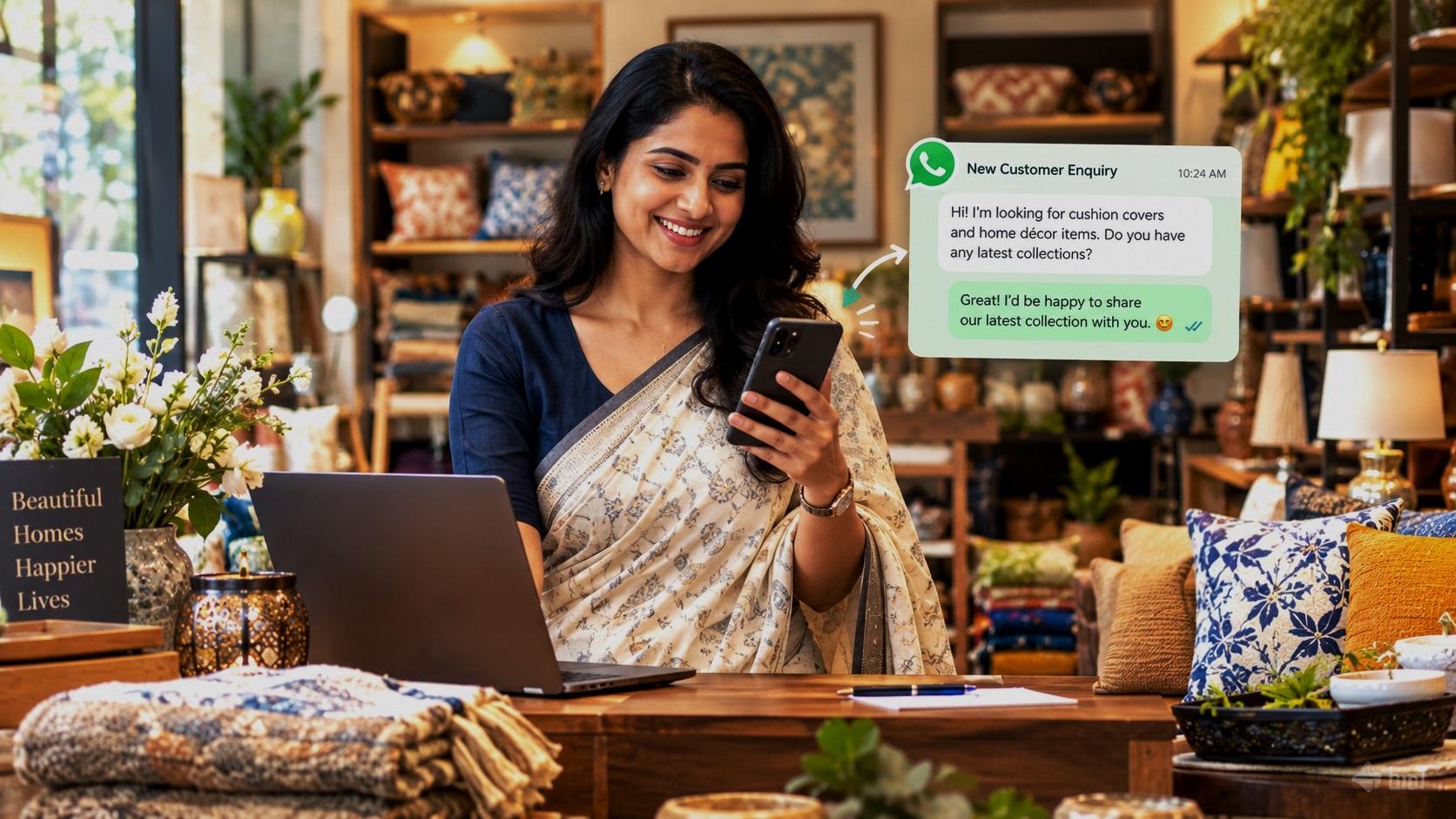
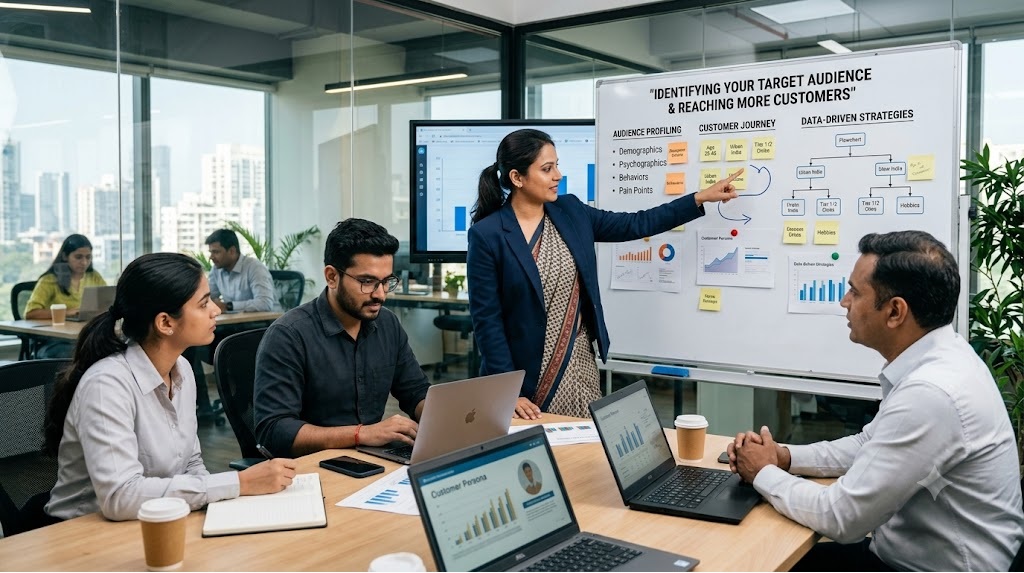
Running a business is one thing. Finding the right customers is another.
You may have a great product, offer excellent service and provide competitive prices, but if the right people do not know about your business, getting regular enquiries and sales can be difficult.
Many small business owners in India spend money on advertising, distribute pamphlets, post on social media or create a website without first understanding who they actually want to reach. The result? Plenty of effort, limited enquiries and disappointing returns.
The secret to effective business promotion is simple: Stop trying to reach everyone. Start reaching the people who are most likely to buy from you.
This is where identifying your target audience becomes important.
Whether you run a restaurant, coaching centre, retail shop, beauty salon, diagnostic centre, playschool, travel agency, fitness studio or any other local business, understanding your target customers can help you attract more relevant enquiries, improve your marketing and increase sales.
This ultimate guide explains how to identify your target audience, understand their needs, find where they spend time online and use practical digital marketing strategies to reach more local customers in India.
1. What Is a Target Audience?
A target audience is a specific group of people who are most likely to need, want or purchase your products or services.
These are the people your business should focus on attracting through advertising, social media, search engines, business listings and other promotional activities.
For example:
- A playschool targets parents with young children living nearby.
- A coaching centre targets students preparing for school examinations and competitive exams.
- A restaurant targets people looking for convenient dining options, takeaway or food delivery in its area.
- A beauty salon targets people interested in grooming, skincare and beauty services.
- A diagnostic centre targets individuals and families looking for medical testing facilities.
- A furniture shop targets homeowners, tenants and people setting up new homes.
Notice that these businesses do not need to reach every person in the city. They need to reach people who are likely to become their customers.
Target Audience vs. General Audience
A general audience includes almost everyone who comes across your business promotion. A target audience consists of people who have a genuine reason to consider your products or services.
For example, promoting a children’s tuition centre to all social media users in India may generate views but very few useful enquiries.
Promoting it to parents of school-going children living within five kilometres of the centre is much more relevant.
The more accurately you identify your audience, the less time and money you waste reaching people who are unlikely to buy.
2. Why Identifying Your Target Audience Is Important
Understanding your target customers is not just a marketing exercise. It influences almost every part of your business, from pricing and product selection to advertising and customer service.
Here is why it matters.
2.1 You Spend Your Marketing Budget More Effectively
Small businesses cannot afford to waste money on advertisements that reach thousands of people but generate no enquiries.
When you know your target audience, you can choose the right location, age group, interests and advertising platforms.
For example, a local gym in Noida should focus its promotional efforts on people living or working nearby rather than targeting fitness enthusiasts across the entire country.
2.2 You Attract More Relevant Enquiries
Not every enquiry is a potential sale.
A business may receive hundreds of general enquiries but struggle to convert them into customers. The problem could be that its marketing is reaching the wrong people.
When your promotions clearly address the needs of your intended customers, the people responding are more likely to be interested in what you offer.
2.3 You Understand What Customers Actually Want
Different customers have different expectations.
Parents looking for a playschool may prioritise safety, cleanliness, qualified teachers and distance from home.
A person looking for a restaurant may care more about food quality, menu choices, location and pricing.
Understanding these differences helps you present the right benefits instead of simply listing your products or services.
2.4 You Create More Effective Advertisements
An advertisement becomes more powerful when it speaks directly to a customer’s needs.
Compare these two messages:
General message: We offer excellent tuition classes at affordable prices.
Targeted message: Looking for experienced Maths tuition for your Class 10 child in Rohini? Explore personalised learning support with our experienced teachers.
The second message tells parents exactly who the service is for, what it offers and where it is available.
2.5 You Build Long-Term Customer Relationships
When customers feel that a business understands their needs, they are more likely to trust it.
This can lead to repeat purchases, positive reviews, personal recommendations and referrals.
For local businesses, these relationships can become an important source of regular income.
3. How to Identify Your Target Audience: 10 Practical Steps
You do not need expensive market research or specialised marketing software to understand your customers.
Start with the information you already have, observe customer behaviour and gradually build a clearer picture of the people most likely to buy from you.
Step 1: Understand What Your Business Actually Offers
Before identifying your audience, be clear about what you are selling and the problem you are solving.
Do not simply describe your business by its category. Think about the specific value customers receive.
For example:
| Business | What It Offers | Customer’s Main Need |
|---|---|---|
| Coaching centre | School and competitive exam tuition | Better academic performance |
| Restaurant | Food and dining services | Convenient, enjoyable meals |
| Beauty salon | Grooming and beauty treatments | Personal care and appearance |
| Diagnostic centre | Medical tests | Convenient and reliable testing |
| Playschool | Early childhood education | Safe learning environment |
| Fitness centre | Exercise and fitness programmes | Improved fitness and strength |
| Travel agency | Holiday and travel arrangements | Convenient trip planning |
Ask yourself:
- What problem does my business solve?
- Why would someone choose my business?
- What makes my products or services useful?
- What do customers gain by purchasing from me?
- Which people are most likely to need this offering?
Your answers will give you a starting point for identifying your target audience.
Step 2: Identify Your Ideal Customer
An ideal customer is someone who has a genuine need for your offering, can afford it and is reasonably likely to purchase it.
Start by identifying these characteristics.
Age Group
Different products and services appeal to different age groups.
For example:
- A playschool primarily targets parents of children aged 2–6.
- A computer training centre may target teenagers, college students and working professionals.
- A retirement planning service may target middle-aged and older adults.
- A fashion boutique may target customers within specific age groups depending on its clothing range.
Gender
Gender may matter for certain businesses, but it should not automatically become a marketing restriction.
For example, a women’s beauty salon may primarily target women, while a general fitness centre may serve all genders.
Income and Spending Capacity
Your product or service should match the financial capacity of your intended customers.
A premium interior design company may target homeowners with larger budgets, while an affordable furniture shop may appeal to first-time homebuyers and middle-income families.
Occupation and Lifestyle
Occupation and lifestyle can help you understand purchasing habits.
For example:
- Working professionals may prefer evening fitness classes.
- College students may look for affordable food and study facilities.
- Parents may prefer tuition classes close to home.
- Business owners may need accounting, website or digital marketing services.
Location
For most local businesses, location is one of the most important factors.
A customer may love your restaurant, salon or coaching centre, but if travelling there is inconvenient, they may choose another business.
Identify the neighbourhoods, residential areas, markets and commercial locations from which you can realistically attract customers.
Step 3: Understand Your Customers’ Problems and Needs
People do not purchase products or services simply because a business advertises them. They purchase because they have a need, want a solution or believe the offering will improve something in their lives.
Try to understand what motivates your customers.
For example:
| Business | What Customers May Be Looking For |
|---|---|
| Tuition centre | Better marks, individual attention and exam preparation |
| Restaurant | Good food, reasonable prices and convenient location |
| Beauty salon | Skilled professionals, hygiene and quality treatments |
| Diagnostic centre | Accurate tests, convenience and timely reports |
| Travel agency | Affordable packages and reliable arrangements |
| Furniture shop | Quality, durability, design and value for money |
| Digital marketing agency | More visibility, enquiries and customers |
Talk to existing customers and ask simple questions:
- What made you look for this product or service?
- What was your biggest concern before purchasing?
- What other businesses did you consider?
- Why did you choose us?
- What would make your experience better?
The answers can reveal what matters most to your potential customers.
Step 4: Identify Your Local Market and Service Area
If you operate a physical business, your target audience is often concentrated around your location.
A local restaurant, medical store, salon, tuition centre or grocery shop should first understand the people living, studying and working nearby.
Start by identifying:
- Your immediate neighbourhood.
- Residential colonies within a convenient travelling distance.
- Nearby schools, colleges and offices.
- Shopping areas and commercial markets.
- Residential societies and apartment complexes.
- Nearby localities where customers can easily access your business.
How Far Should You Target?
There is no fixed distance for every business.
A grocery shop may depend heavily on customers living within a short distance. A specialised coaching institute may attract students from several neighbourhoods. A diagnostic centre offering specialised tests may serve customers across an entire city.
Think about your customers’ willingness to travel, competition in nearby areas and the nature of your offering.
Practical tip: Create a list of 5–10 important neighbourhoods around your business. Use these locations in your local marketing strategy wherever they naturally fit.
Step 5: Study Your Existing Customers
Your current customers are one of your best sources of marketing information.
Look at the people who already purchase from you. You may discover that a particular age group, locality, profession or customer category contributes a large share of your business.
For example, a coaching centre may discover that most enquiries come from parents living within three kilometres. A salon may find that working women account for a significant percentage of its regular customers.
Review:
- Customer enquiries received through phone and WhatsApp.
- Repeat purchases and bookings.
- Most popular products and services.
- Customer locations.
- Common questions before purchasing.
- Customer feedback and reviews.
- Services that generate the most revenue.
Do not rely entirely on assumptions. Actual customer behaviour can tell you much more than what you think people want.
Step 6: Research Your Competitors
Your competitors can help you understand the local market and identify opportunities.
Search Google for businesses offering similar products or services in your area.
For example, if you operate a playschool in Indirapuram, search for playschools in Indirapuram and nearby localities.
Study their online presence and look for useful information.
What Should You Check?
- Which customer groups do they target?
- What products or services do they promote?
- What are their prices and offers?
- Which locations do they serve?
- What do customers appreciate in their reviews?
- What complaints or problems appear repeatedly?
- Which platforms do they use to promote their business?
- What makes their offering different?
Google Business Profiles and customer reviews are particularly useful for understanding what local customers expect.
Look for Gaps in the Market
Competitor research is not about copying another business.
It is about finding opportunities to serve customers better.
For example:
- Nearby coaching centres may not offer individual attention.
- Local restaurants may have limited vegetarian options.
- Salons may not provide convenient appointment booking.
- Retail shops may have poor product information online.
- Tuition centres may not offer flexible evening batches.
If you can address an unmet customer need, you have an opportunity to differentiate your business.
Step 7: Create a Simple Customer Profile
Once you have collected enough information, create a customer profile.
This is a basic description of the type of person you want to attract.
You do not need complicated marketing terminology. A simple profile is enough.
Example: A Local Coaching Centre
Business: Coaching centre in Rohini, Delhi.
Ideal customer: Parents of students studying in Classes 8–12.
Age group: Parents approximately 30–50 years old.
Location: Rohini and nearby residential areas.
Needs: Better academic performance, experienced teachers, regular tests and individual attention.
Main concerns: Teaching quality, fees, distance and student progress.
Online behaviour: Searches Google for nearby coaching centres, checks reviews and asks questions through WhatsApp.
Marketing message: Looking for experienced tuition teachers in Rohini? Explore personalised coaching for Classes 8–12.
Example: A Local Beauty Salon
Business: Beauty salon in Gurgaon.
Ideal customer: People interested in grooming, skincare and beauty services.
Location: Nearby residential societies and commercial areas.
Needs: Quality treatments, skilled professionals, hygiene and convenient appointments.
Main concerns: Pricing, service quality, cleanliness and customer experience.
Online behaviour: Searches Google Maps, checks photographs and reviews, and explores Instagram promotions.
Marketing message: Looking for professional beauty services in Gurgaon? Explore our salon treatments and book your appointment.
These profiles help you decide what to promote, where to advertise and how to communicate with potential customers.
4. Understand the Different Types of Target Audiences
Not all customers buy for the same reason. Your marketing should consider the different groups that may be interested in your business.
4.1 Demographic Audience
This includes basic customer characteristics such as:
- Age
- Gender
- Income
- Education
- Occupation
- Family status
For example, a premium maternity photography studio may target expecting parents and young families with higher spending capacity.
4.2 Geographic Audience
This refers to customers in a particular location.
Examples include:
- People living in a specific neighbourhood.
- Residents of nearby apartment complexes.
- Customers working in a commercial area.
- People searching for services within a particular city.
Geographic targeting is particularly important for restaurants, salons, retail shops, coaching centres, gyms and other local businesses.
4.3 Interest-Based Audience
This group consists of people with particular interests and preferences.
Examples:
- People interested in fitness and healthy living.
- Parents interested in children’s education.
- People interested in fashion and beauty.
- Individuals interested in travel and adventure.
- Homeowners interested in interior design.
Social media platforms can help businesses reach people based on relevant interests and behaviours, subject to platform targeting options.
4.4 Need-Based Audience
These are people who have a specific problem or requirement.
For example:
- Someone searching for a Maths tutor.
- A family looking for a nearby diagnostic centre.
- A person searching for an emergency plumbing service.
- A business owner looking for website development.
- A homeowner searching for pest control services.
Need-based customers are particularly valuable because they may already be looking for a solution.
4.5 Buying-Intent Audience
People can also be divided according to how close they are to making a purchase.
Customers Who Are Just Exploring
They are researching different options and may not be ready to purchase immediately.
Customers Comparing Options
They are checking prices, reviews, features and service quality.
Customers Ready to Buy
They know what they need and are actively looking for a suitable business.
Your marketing should address all three groups.
For example, an interior design business can publish educational content for people planning home renovations, showcase completed projects for customers comparing designers and display a clear enquiry option for people ready to book.
5. How to Find Your Target Audience Online in India
Identifying your audience is only half the job. You also need to know where to find them.
Indian consumers use several online platforms to discover businesses, compare services and make purchasing decisions.
Here are the most useful channels for local business promotion.
5.1 Google Search: Reach Customers Who Are Already Looking
Google is one of the most important platforms for local customer acquisition.
When someone searches for a product or service, they often have a specific requirement.
For example:
- Best dentist in Lajpat Nagar.
- Maths tuition classes in Rohini.
- Restaurants near Karol Bagh.
- Beauty parlour in Indirapuram.
- AC repair service in Noida.
- Best playschool in Gurgaon.
These searches can connect your business with people who are actively looking for what you offer.
How to Improve Your Visibility on Google
- Create a useful, complete website.
- Use relevant business and location keywords.
- Publish separate pages for important services.
- Clearly mention your business address and contact details.
- Provide accurate business information.
- Add useful photographs.
- Publish helpful articles related to your industry.
- Make it easy for visitors to contact you.
Do not fill your website with repeated keywords. Write naturally and provide information that helps customers make decisions.
5.2 Google Business Profile: Attract Nearby Customers
A Google Business Profile is essential for businesses serving a local market.
It helps people discover your business through Google Search and Google Maps.
A well-maintained profile can help customers understand what you offer, where you are located and how to contact you.
Optimise Your Google Business Profile
Choose the correct primary category: Select the category that best describes your main business activity.
Add relevant services and products: Describe what customers can purchase from you.
Update business hours: Keep your opening and closing hours accurate.
Upload genuine photographs: Show your shop, office, products, services, staff and business premises.
Add your website: Make it easy for customers to explore your offerings.
Keep contact information updated: Check your phone number, address and other details.
Collect genuine customer reviews: Encourage satisfied customers to share honest feedback.
Respond to reviews: Thank customers for positive feedback and handle complaints professionally.
Publish regular updates: Share offers, new services, announcements and useful business information.
A strong Google Business Profile can improve your chances of appearing in relevant local searches, although rankings are not guaranteed.
5.3 Business Listing Websites: Expand Your Online Visibility
Business listing websites provide another way for potential customers to discover your products and services.
These platforms allow businesses to publish important information such as:
- Business name and description.
- Address and service locations.
- Contact details.
- Products and services.
- Website link.
- Google Business Profile link.
- Photographs and other business information.
When customers search online for local businesses, relevant business directories can provide another discovery point.
Why Should Indian Businesses Use Online Business Listings?
- More online visibility: Your business can be discovered through additional online platforms.
- More opportunities to receive enquiries: Customers can explore your business information and contact you.
- Better brand awareness: Your business name can reach people beyond your immediate customer base.
- Convenient information access: Potential customers can check your services, location and contact details.
- Additional website traffic: Listings with website links can direct interested visitors to your website.
However, do not register on every directory without checking its quality.
Choose relevant, trustworthy platforms and keep your business information consistent.
Promote Your Business on HotList.in
HotList.in is a business listing and local lead generation platform that helps Indian businesses improve their online visibility and reach potential customers.
Business owners can create a listing to showcase their business and make important information available to people searching online.
- Publish your business details.
- Include your Google Business Profile link.
- Add your website link.
- Enable a WhatsApp contact button.
- Receive promotional and marketing support.
- Get promotion on HotList.in and its social networks.
If you are a local business owner looking for affordable online promotion, explore the listing options on HotList.in.
The objective is simple: make it easier for potential customers to discover your business and connect with you directly.
5.4 Facebook: Connect With Local Communities
Facebook remains useful for reaching local communities, families and people interested in specific products or services.
It can be particularly helpful for:
- Restaurants and cafés.
- Playschools and coaching centres.
- Beauty salons.
- Boutiques and clothing stores.
- Fitness centres.
- Home-based businesses.
- Local service providers.
How to Use Facebook for Local Marketing
- Create a professional business page.
- Add your location, phone number and website.
- Share product and service photographs.
- Publish customer testimonials with permission.
- Announce offers and seasonal promotions.
- Share useful tips related to your business.
- Participate in relevant local community groups where promotion is permitted.
- Respond promptly to comments and messages.
You can also use Facebook advertising to reach selected audiences based on location, age, interests and other available targeting options.
5.5 Instagram: Show What Your Business Offers
Instagram is particularly useful for businesses where photographs, videos and visual presentation influence purchasing decisions.
Examples include:
- Restaurants and bakeries.
- Fashion boutiques.
- Beauty salons.
- Interior designers.
- Jewellery shops.
- Fitness studios.
- Travel agencies.
- Home décor businesses.
Instagram Marketing Ideas
Product photographs: Showcase your products using clear, attractive images.
Short videos: Demonstrate how your products work or how your services are delivered.
Before-and-after posts: Show genuine transformations where appropriate.
Customer experiences: Share customer feedback and testimonials with permission.
Behind-the-scenes content: Introduce your staff, workspace and daily activities.
Local hashtags: Use relevant location and business-category hashtags.
Reels: Create short videos answering common customer questions or demonstrating your products.
Do not focus only on gaining followers. The real objective is to attract interested people, encourage enquiries and generate sales.
5.6 WhatsApp Business: Turn Enquiries Into Customers
WhatsApp is one of the most convenient communication channels for Indian businesses.
Many customers prefer sending a message rather than calling or filling out a lengthy enquiry form.
WhatsApp Business makes it easier to manage these interactions.
Set Up WhatsApp Business Properly
- Create a business profile.
- Add your business name and category.
- Include your address and working hours.
- Write a clear business description.
- Add your website and email.
- Create a product or service catalogue.
- Set up greeting and away messages.
- Use quick replies for frequently asked questions.
Use WhatsApp to Generate More Enquiries
Add a WhatsApp button to your website and relevant business listings.
Include a direct WhatsApp contact option in your social media profiles.
Make it easy for customers to ask about prices, availability, appointments and services.
For example, a tuition centre can use a simple enquiry message:
“Hello, I would like to know more about your Maths tuition classes for Class 10.”
Respond professionally and avoid sending unsolicited bulk promotional messages.
5.7 YouTube: Build Trust Through Useful Videos
YouTube is an excellent platform for businesses that can educate, demonstrate or explain their products and services.
For example:
- Coaching centres can publish educational videos.
- Fitness trainers can share workout demonstrations.
- Restaurants can showcase food preparation.
- Interior designers can explain home design ideas.
- Financial consultants can explain basic financial concepts.
- Repair professionals can demonstrate common maintenance tips.
You do not need expensive cameras or professional production equipment to get started.
Create useful videos using a smartphone, clear audio and simple explanations.
Add relevant titles, descriptions and location information wherever appropriate.
5.8 LinkedIn: Reach Professionals and Other Businesses
LinkedIn is particularly useful for businesses selling professional services or targeting other businesses.
Examples include:
- Digital marketing agencies.
- Website development companies.
- Consultants.
- Accountants.
- Recruitment agencies.
- Business service providers.
- Corporate training companies.
Publish useful articles, share industry insights, explain your services and connect with relevant professionals.
Avoid using LinkedIn only to post advertisements. Give people useful information that demonstrates your knowledge and experience.
6. How to Use Local SEO to Reach Customers in Your Area
Local SEO means improving your online presence so that your business can appear in searches related to your products or services and a particular location.
For example, when someone searches for “best salon in Karol Bagh”, search engines try to identify relevant businesses serving that area.
Local SEO is especially important for businesses that depend on customers from specific neighbourhoods or cities.
6.1 Find the Right Local Keywords
Keywords are the words and phrases people type into search engines.
Your keyword strategy should include three main elements:
- Your product or service.
- Your location.
- Your customer’s specific requirement.
Examples:
| Business Type | Local Keywords |
|---|---|
| Restaurant | Best restaurant in Karol Bagh |
| Coaching centre | Maths tuition in Rohini |
| Beauty salon | Beauty parlour in Noida |
| Diagnostic centre | Diagnostic centre in Gurgaon |
| Playschool | Playschool in Indirapuram |
| Furniture shop | Furniture shop in Lajpat Nagar |
| Gym | Fitness centre in Dwarka |
| Dentist | Dentist in South Delhi |
Use Different Types of Search Phrases
Customers do not always search using the same words.
A person looking for tuition may search for:
- Maths tutor near me.
- Online Maths tuition for Class 10.
- CBSE tuition classes in Rohini.
- Home tutor for Class 8.
- Affordable Maths coaching near me.
Create useful website content around the different ways customers search for your services.
6.2 Create Separate Pages for Important Services
If your business offers several services, avoid putting everything on a single page.
For example, a beauty salon may create separate pages for:
- Haircuts and hairstyling.
- Bridal makeup.
- Facial treatments.
- Hair colouring.
- Skincare services.
A coaching centre may create separate pages for:
- Classes 6–8 tuition.
- Classes 9–10 tuition.
- Classes 11–12 tuition.
- JEE preparation.
- NEET preparation.
Each page should explain the service, who it is suitable for, what customers can expect and how to enquire.
This gives visitors useful information and creates opportunities to appear in more relevant searches.
6.3 Publish Location-Specific Content
If you serve several neighbourhoods, create genuinely useful content for those areas.
For example, a home cleaning company in Delhi may publish helpful pages about its services in Dwarka, Rohini, Pitampura and Janakpuri.
However, do not create dozens of nearly identical pages by changing only the locality name.
Every location page should contain meaningful, accurate and useful information about the service available there.
6.4 Keep Your Business Information Consistent
Your business name, address and phone number should be accurate and consistent across your website, Google Business Profile and business directories.
Incorrect or outdated information can confuse potential customers.
If your business moves, changes its phone number or updates its working hours, revise the information across your online platforms.
7. How to Create Marketing Messages That Attract Your Target Customers
Even if your business reaches the right audience, your marketing may fail if the message does not connect with their needs.
A good promotional message should quickly explain:
- Who the product or service is for.
- What problem it solves.
- Why customers should consider your business.
- What they should do next.
7.1 Speak About Customer Benefits, Not Just Business Features
Customers want to know how your product or service will help them.
Consider these examples.
For a coaching centre
Instead of: We provide Maths and Science tuition.
Write: Help your child strengthen Maths and Science concepts with personalised tuition for Classes 9 and 10.
For a restaurant
Instead of: We serve delicious food.
Write: Looking for freshly prepared meals and family dining in South Delhi? Explore our menu and visit us today.
For a beauty salon
Instead of: We offer professional beauty services.
Write: Get ready for your special occasion with professional makeup and beauty services in Gurgaon.
For a diagnostic centre
Instead of: We provide laboratory testing.
Write: Looking for convenient diagnostic testing in Noida? Explore our available tests and contact our centre for appointments.
7.2 Use Clear Calls to Action
A call to action tells customers what they should do next.
Examples include:
- Call Now.
- WhatsApp Us.
- View Our Services.
- Explore Our Products.
- Book an Appointment.
- Request a Quote.
- Visit Our Store.
- Enquire About Fees.
Make your contact options easy to find. Do not expect customers to search through several pages to locate your phone number.
7.3 Use Genuine Customer Reviews and Testimonials
Reviews can influence purchasing decisions, particularly when customers are comparing local businesses.
Encourage satisfied customers to leave honest reviews.
You can also feature genuine testimonials on your website and social media pages, with their permission.
Never purchase fake reviews or offer incentives in exchange for positive ratings.
8. How to Reach More Customers Through Paid Advertising
Organic promotion helps businesses build visibility over time. Paid advertising can help them reach selected audiences more quickly.
However, spending money on advertising without a clear target audience can become expensive.
Start with a small, manageable budget and measure the results.
8.1 Google Ads: Reach People Searching for Your Services
Google Ads allows businesses to advertise against relevant search terms.
For example, a dental clinic in Noida may target searches related to dental clinics, dentists and specific dental treatments in its service area.
Useful practices include:
- Choose keywords related to your services.
- Target locations you actually serve.
- Write advertisements that clearly explain your offering.
- Create relevant landing pages.
- Include phone and enquiry options.
- Track calls, forms and other conversions.
- Review search terms and remove irrelevant traffic.
Avoid bidding on broad keywords that attract people outside your service area or unrelated to your offering.
8.2 Facebook and Instagram Ads: Reach Potential Customers
Meta advertising can help businesses reach people based on location, age, interests and other available targeting options.
For example:
- A gym can promote membership offers to people nearby.
- A playschool can reach parents in its local area.
- A boutique can showcase new collections.
- A restaurant can promote special menus.
- A coaching centre can advertise upcoming batches.
Use attractive creatives, simple messages and a clear enquiry option.
Test different advertisements to understand which message and audience generate better results.
8.3 Retarget Interested Visitors
Some people may visit your website, view your products or interact with your advertisements without purchasing immediately.
Retargeting allows eligible businesses to show advertisements to certain previous visitors or people who interacted with their content, subject to platform rules and consent requirements.
For example, someone who viewed a furniture collection may later see an advertisement featuring the same category of products.
This can help bring interested people back to your business.
9. How to Convert Online Visitors Into Actual Customers
Getting website visitors, social media followers and advertisement views is not enough.
Your marketing should encourage potential customers to take action.
A person may discover your business online, but if your website is confusing, your contact information is missing or your services are unclear, they may leave without making an enquiry.
9.1 Create a Professional and Useful Website
Your website should answer the basic questions customers have before contacting you.
Include:
- Clear business introduction.
- Products and services.
- Pricing or starting prices, where appropriate.
- Business location and service areas.
- Working hours.
- Genuine photographs.
- Customer reviews and testimonials.
- Contact number and WhatsApp button.
- Frequently asked questions.
Make sure the website works properly on mobile phones. Many Indian customers access websites through smartphones.
9.2 Make Contacting Your Business Easy
Provide multiple convenient ways to get in touch.
For example:
- Phone calls.
- WhatsApp messages.
- Contact forms.
- Email enquiries.
- Online appointment booking.
If someone has to spend several minutes finding your contact details, you risk losing that enquiry.
9.3 Respond to Enquiries Quickly
A potential customer may contact several businesses at the same time.
If your competitor responds first with useful information, you may lose the opportunity.
Set a system for handling incoming enquiries.
- Check WhatsApp messages regularly.
- Return missed calls.
- Respond to website forms.
- Provide clear pricing information.
- Answer customer questions patiently.
- Follow up when appropriate.
Speed matters, but the quality of your response matters too.
9.4 Follow Up Without Being Pushy
Not every customer makes a purchase during the first interaction.
Some may need time to compare prices, discuss the decision with family or understand your services better.
A polite follow-up can help.
For example:
“Hello, we wanted to check whether you had any questions about the services we discussed. Please feel free to contact us if you need any further information.”
Respect the customer’s preferences and avoid repeated unwanted messages.
10. How to Identify Which Marketing Channels Bring You the Most Customers
You may be promoting your business on Google, Facebook, Instagram, WhatsApp and business directories.
But which of these channels is actually generating enquiries and sales?
You need to measure your results.
10.1 Track Where Your Enquiries Come From
Whenever a customer contacts your business, ask a simple question:
“May I know how you found us?”
Record whether the enquiry came from:
- Google Search.
- Google Maps.
- Your website.
- HotList.in or another business directory.
- Facebook.
- Instagram.
- YouTube.
- WhatsApp.
- A customer referral.
- Paid advertising.
Over time, you will understand which platforms bring the most valuable enquiries.
10.2 Use Google Analytics
Google Analytics 4 can help you understand how people discover and use your website.
You can monitor:
- Number of website visitors.
- Traffic sources.
- Most visited pages.
- User engagement.
- Device categories.
- Enquiry and conversion events, when properly configured.
For example, if most visitors reach your website through Google Search but very few contact you, you may need to improve your service pages, calls to action or contact options.
10.3 Use Google Search Console
Google Search Console provides information about how your website performs in Google Search.
It can help you identify:
- Search queries bringing visitors to your website.
- Pages receiving search impressions.
- Clicks from Google Search.
- Average search positions.
- Website indexing issues.
Use this information to understand what potential customers are searching for and improve your website content accordingly.
10.4 Measure Enquiries and Sales, Not Just Traffic
A campaign generating 500 website visitors but only one enquiry may be less useful than a campaign generating 50 visitors and 10 relevant enquiries.
Focus on business results.
| Marketing Metric | What It Tells You |
|---|---|
| Website visitors | How many people visit your website |
| Enquiries | How many people contact your business |
| Qualified leads | How many enquiries come from potential customers |
| Conversion rate | How many leads become paying customers |
| Cost per lead | How much you spend to generate an enquiry |
| Customer acquisition cost | How much it costs to acquire a paying customer |
| Repeat customers | How many customers return |
| Revenue by channel | Which marketing channels generate sales |
You do not need to track every metric from day one. Start with enquiries, sales and marketing expenses.
11. Common Target Audience Mistakes Indian Business Owners Should Avoid
Even businesses with good products and services can struggle when their marketing strategy is poorly focused.
Here are some mistakes to watch out for.
11.1 Trying to Target Everyone
A business that tries to appeal to everyone often struggles to create a clear marketing message.
Identify your most valuable customer groups and focus on them first.
You can expand your audience later.
11.2 Ignoring Local Customers
A local business does not necessarily need nationwide visibility.
A salon in Jaipur may benefit more from attracting customers in nearby neighbourhoods than reaching thousands of people in Mumbai or Chennai.
Focus on the locations that can realistically generate business.
11.3 Copying Competitors Without Understanding Your Own Customers
Just because a competitor advertises on Instagram or offers discounts does not mean the same strategy will work for you.
Understand your customers, budget and business objectives before choosing your marketing approach.
11.4 Focusing Only on Social Media Followers
Having thousands of followers does not guarantee sales.
A smaller, relevant audience that regularly enquires about your products or services can be more valuable.
Focus on genuine customer interest rather than vanity metrics.
11.5 Ignoring Google Business Profile
Many local business owners spend time on social media but neglect their Google Business Profiles.
This can mean missing opportunities to connect with people actively searching for nearby businesses.
Keep your profile updated and respond to customer reviews.
11.6 Using Generic Marketing Messages
Messages such as “Best quality at affordable prices” do not explain why customers should choose your business.
Be specific about your products, services, location and customer benefits.
11.7 Not Following Up With Potential Customers
Some businesses lose enquiries simply because they do not respond or follow up.
Maintain a simple enquiry record and make sure every genuine enquiry receives a timely response.
11.8 Spending Too Much on Advertising Too Soon
Do not invest a large amount in advertising before understanding your target audience and measuring results.
Test small campaigns, identify what works and increase your budget gradually.
11.9 Ignoring Customer Reviews
Customer feedback can influence the decisions of people considering your business.
Pay attention to reviews, respond professionally and use genuine feedback to improve your services.
11.10 Promoting on Too Many Platforms Without a Strategy
You do not need to be active on every social media platform or business directory.
Choose the channels that your target customers actually use and maintain them properly.
12. A Practical 30-Day Plan to Identify Your Target Audience and Reach More Customers
If you are unsure where to begin, follow this simple 30-day action plan.
You do not need a large marketing team. A small business owner can complete most of these activities with a little time and consistency.
Week 1: Understand Your Customers
Day 1–2: Define your offering
List your main products and services. Identify the problems they solve.
Day 3–4: Study existing customers
Review your recent enquiries and sales. Identify common customer characteristics.
Day 5: Identify your service area
List the neighbourhoods and localities from which you want to attract customers.
Day 6: Research competitors
Study five competing businesses. Review their services, online presence and customer feedback.
Day 7: Create your ideal customer profile
Write a simple description of your most important customer group.
Week 2: Improve Your Online Presence
Day 8–9: Update your Google Business Profile
Check your business category, address, phone number, hours, services and photographs.
Day 10–11: Improve your website
Make sure your services, prices, location and contact details are easy to find.
Day 12: Register on relevant business listing platforms
Choose suitable directories, including HotList.in, to expand your business’s online visibility.
Day 13: Set up WhatsApp Business
Create your business profile, catalogue and quick replies.
Day 14: Review your social media profiles
Update your business descriptions, contact details and website links.
Week 3: Start Reaching Your Target Audience
Day 15–16: Create useful social media posts
Share product information, service details, customer questions and helpful tips.
Day 17: Publish a customer-focused article
Write about a common problem your customers face and explain how your business can help.
Day 18: Share customer testimonials
Use genuine feedback with permission.
Day 19–20: Create short videos
Show your products, services, workplace or expertise.
Day 21: Promote your business locally
Share relevant updates in local communities and groups where business promotion is permitted.
Week 4: Measure and Improve
Day 22–23: Test a small advertising campaign
Choose one platform and target a clearly defined audience.
Day 24–25: Review enquiries
Identify where your enquiries are coming from and which customers are most interested.
Day 26: Follow up with potential customers
Respond to pending enquiries and provide any information customers need.
Day 27–28: Review marketing performance
Check website visits, enquiries, calls, WhatsApp messages and sales.
Day 29: Identify what is working
Compare the performance of different promotional channels.
Day 30: Plan your next month
Continue effective activities, improve weak areas and set realistic targets.
Consistency is more important than trying to do everything at once.
13. Target Audience Examples for Different Indian Businesses
To make the process easier, here are practical examples of how different businesses can identify and reach their ideal customers.
Restaurants and Cafés
Target audience: Families, office workers, college students, couples and people living nearby.
What they want: Good food, convenient location, reasonable prices, cleanliness and a pleasant experience.
Best marketing channels: Google Business Profile, Google Search, Instagram, Facebook, business listings and WhatsApp.
Promotion ideas:
- Share your menu and food photographs.
- Highlight popular dishes.
- Promote family meals and special menus.
- Share genuine customer reviews.
- Publish location-specific offers.
Coaching Centres and Tuition Classes
Target audience: School students, college students and parents looking for academic support.
What they want: Experienced teachers, subject expertise, convenient timings, reasonable fees and improved academic performance.
Best marketing channels: Google Search, Google Business Profile, Facebook, YouTube, Instagram and education-related business listings.
Promotion ideas:
- Publish class-wise and subject-wise service pages.
- Share useful study tips.
- Introduce teachers and their qualifications.
- Publish student achievements with permission.
- Explain teaching methods and available batches.
Beauty Salons and Parlours
Target audience: People interested in grooming, skincare, hairstyling and beauty treatments.
What they want: Professional services, hygiene, experienced staff, reasonable pricing and convenient appointments.
Best marketing channels: Instagram, Facebook, Google Maps, WhatsApp and local business directories.
Promotion ideas:
- Share photographs of services.
- Publish seasonal beauty tips.
- Promote special packages.
- Share genuine customer feedback.
- Make appointment booking easy.
Retail Shops and Boutiques
Target audience: Local residents, working professionals, families and customers interested in your product category.
What they want: Product variety, quality, competitive pricing and convenient shopping.
Best marketing channels: Google Business Profile, Instagram, Facebook, WhatsApp and business listings.
Promotion ideas:
- Showcase new arrivals.
- Share product photographs and prices.
- Announce festive collections.
- Promote limited-period offers.
- Highlight your store location.
Diagnostic Centres and Medical Stores
Target audience: Individuals, families, patients and healthcare professionals in the service area.
What they want: Convenient access, accurate information, reliable service, transparent pricing and professional support.
Best marketing channels: Google Search, Google Business Profile, local business listings and websites.
Promotion ideas:
- Clearly list available services and tests.
- Publish accurate timings and contact details.
- Explain appointment procedures.
- Provide location and accessibility information.
- Share useful general health information without making misleading medical claims.
Gyms and Fitness Centres
Target audience: Students, working professionals, fitness enthusiasts and people interested in improving their health.
What they want: Suitable equipment, qualified trainers, flexible timings and affordable membership options.
Best marketing channels: Instagram, YouTube, Google Maps, Facebook and WhatsApp.
Promotion ideas:
- Showcase facilities.
- Introduce trainers.
- Share workout demonstrations.
- Publish membership information.
- Promote trial sessions where available.
Travel Agencies
Target audience: Families, couples, working professionals, groups and people planning holidays.
What they want: Convenient bookings, suitable packages, transparent pricing and reliable travel arrangements.
Best marketing channels: Google Search, Instagram, Facebook, YouTube, WhatsApp and business directories.
Promotion ideas:
- Showcase destinations.
- Publish sample itineraries.
- Explain package inclusions.
- Share genuine customer experiences.
- Promote seasonal travel packages.
14. Frequently Asked Questions About Identifying Your Target Audience
What is the easiest way to identify my target audience?
Start by studying your existing customers. Look at their age groups, locations, needs, spending capacity and reasons for purchasing from you. Then identify the common characteristics of people most likely to buy your products or services.
How do I find customers for my local business in India?
Start with Google Business Profile, local SEO, a useful website, relevant business listing platforms, WhatsApp Business and social media. Promote your products and services to people in the locations you serve. Encourage genuine customer reviews and make it easy for potential customers to contact you.
How can I reach local customers without spending money?
You can improve your Google Business Profile, publish useful social media content, create a free business listing, participate in relevant local communities, encourage customer reviews and use WhatsApp Business. These activities require time and consistency rather than a large advertising budget.
Which platform is best for reaching local customers?
There is no single best platform for every business.
Google Search and Google Business Profile are particularly useful for reaching people actively looking for local services. Instagram and Facebook are useful for visual promotion and community engagement. WhatsApp is effective for enquiries and customer communication. Business listing platforms offer additional opportunities for discovery.
Choose platforms based on your target audience and business category.
How do I identify my target audience if I am starting a new business?
If you are starting a new business, begin with your product or service, the problem it solves and the people most likely to need it. Study competing businesses, conduct informal customer interviews and test your offering with a small audience. Use the feedback to refine your customer profile.
Should small businesses target a large audience or a specific audience?
Small businesses should generally start with a clearly defined audience rather than trying to reach everyone. A focused approach helps you use your marketing budget effectively and attract more relevant enquiries. You can expand your target audience as your business grows.
How much should a small business spend on online marketing?
There is no fixed amount. Your budget should depend on your business category, competition, profit margins and marketing objectives. Start with affordable activities such as local SEO, business listings and social media. Test paid advertising with a manageable budget and increase spending only when you can measure positive results.
How long does it take to get customers through online marketing?
It depends on your industry, competition, location, online presence and marketing strategy. Paid advertising can generate enquiries relatively quickly, while organic SEO and content marketing generally require consistent effort over time. Focus on building a reliable system rather than expecting immediate results from every platform.
15. Reach the Right Customers, Grow Your Business
You do not need to reach millions of people to build a successful local business.
You need to reach the people who genuinely need your products or services, understand what they are looking for and make it easy for them to choose your business.
Start by understanding your ideal customers. Identify the areas you want to serve. Study your competitors, improve your Google Business Profile, create a useful website and promote your business on platforms where your potential customers spend time.
Use business listing websites to expand your online presence, social media to build awareness, WhatsApp to handle enquiries and local SEO to improve your chances of being discovered through relevant searches.
Most importantly, measure your results. Find out which activities generate genuine enquiries and paying customers instead of focusing only on views, likes and followers.
The most effective marketing strategy is not about reaching everyone. It is about reaching the right people with the right message at the right time.
If you are an Indian business owner looking to improve your online visibility and attract more local customers, start by creating your business presence on HotList.in.
List your business, showcase what you offer and make it easier for potential customers to discover and contact you.
Your next customer could already be searching online. Make sure your business has a chance to be found.
Related Posts
How to Build a Business Website That Attracts Local Customers and Generates More Enquiries
How to Promote Your Local Business on Social Media and Get More Customers
How to Optimize Your Google Business Listing to Attract More Local Customers
15 Best Free Advertising Sites in India to Promote Your Small Business Online