Running a local business in India is not easy. Whether you own a restaurant, coaching centre, clothing store, salon, bakery, diagnostic centre, gym, hotel or any other local business, finding new customers is one of your biggest challenges.
You may have a great product, offer excellent service and have happy customers, but how many people in your area actually know about your business?
This is where social media can make a real difference.
Today, people use Instagram, Facebook, YouTube and WhatsApp not just to connect with friends but also to discover local businesses, compare products, read customer reviews, find offers and decide where to spend their money.
The good news is that you do not need a huge marketing budget to get noticed. Even a small business can use social media to reach nearby customers, build trust, generate enquiries and increase sales.
However, simply creating social media accounts and posting pictures occasionally will not bring customers.
You need a clear strategy.
In this ultimate guide, we will explain how to promote your local business on social media, which platforms to use, what to post, how often to post, how to attract customers in your area and how to turn social media followers into actual paying customers.
Let’s start with the basics.
1. Understand How Social Media Marketing Works for Local Businesses
Before spending time creating posts, videos and advertisements, understand what social media marketing actually does for your business.
Social media marketing means using platforms such as Instagram, Facebook, YouTube and WhatsApp to:
-
Make more people aware of your business.
-
Reach potential customers in your city and neighbourhood.
-
Showcase your products and services.
-
Build relationships with existing and potential customers.
-
Share offers, discounts and business updates.
-
Answer questions and generate enquiries.
-
Encourage customers to visit your shop or book your services.
For example:
-
A restaurant can post food pictures, daily specials and customer experiences.
-
A coaching centre can share student achievements, classroom activities and admission updates.
-
A beauty salon can showcase its services, makeover results and special packages.
-
A clothing store can display new arrivals, seasonal collections and festive offers.
-
A diagnostic centre can share information about available tests, facilities and appointment booking.
-
A real estate agent can post property videos, location details and available listings.
The objective is not simply to get likes and followers. It is to make potential customers aware of your business and give them a reason to contact you.
The difference between social media followers and actual customers
Having 10,000 followers does not necessarily mean you will get 10,000 customers.
For a local business, reaching 500 people who live near your shop and are interested in your products may be more valuable than reaching 20,000 people from different parts of the country.
Focus on attracting the right audience rather than chasing large follower numbers.
Your social media strategy should ultimately help people:
-
Discover your business.
-
Understand what you offer.
-
Trust your products or services.
-
Contact you or visit your business.
-
Make a purchase or book a service.
2. Choose the Right Social Media Platforms for Your Business
One common mistake business owners make is trying to be active on every social media platform.
You do not need to do that.
Different platforms attract different audiences and serve different purposes. Choose platforms based on your business type, target customers and the kind of content you can create regularly.
Instagram: Best for Visual Promotion and Local Discovery
Ideal for restaurants, cafés, salons, boutiques, bakeries, fitness centres, hotels and retail shops.
Instagram is particularly useful for businesses that can showcase their products, services, locations and customer experiences through pictures and videos.
You can use Instagram to:
-
Showcase products through attractive photographs.
-
Publish short videos using Instagram Reels.
-
Share daily offers through Stories.
-
Introduce new products and services.
-
Display customer feedback.
-
Answer customer questions through direct messages.
-
Collaborate with local creators and influencers.
For example, if you own a bakery in Delhi, post short videos of cakes being decorated, freshly baked products, birthday orders and customer favourites.
People are more likely to remember a business when they can see what it offers.
Practical tip: Use your business location in posts, mention your neighbourhood in captions and include relevant local keywords such as “Best Bakery in Rohini” or “Beauty Salon in Karol Bagh”.
Facebook: Build a Local Community and Reach More Customers
Ideal for almost every type of local business, particularly restaurants, coaching centres, service providers, retailers and community-focused businesses.
Facebook remains useful for local business promotion because of its business pages, local groups, community discussions and advertising options.
You can use Facebook to:
-
Create a professional business page.
-
Share product photographs and videos.
-
Publish offers and announcements.
-
Join relevant local community groups.
-
Share useful information with residents.
-
Collect customer recommendations and feedback.
-
Run advertisements targeting specific locations.
For example, a tuition centre in Noida can share admission announcements, subject-wise class details, student achievements and educational tips in relevant local communities.
Practical tip: Find active Facebook groups related to your city, neighbourhood or target audience. Participate in discussions and share helpful information instead of posting advertisements repeatedly.
Always follow group rules and avoid unsolicited promotional messages.
WhatsApp Business: Turn Enquiries into Customers
Ideal for almost every local business.
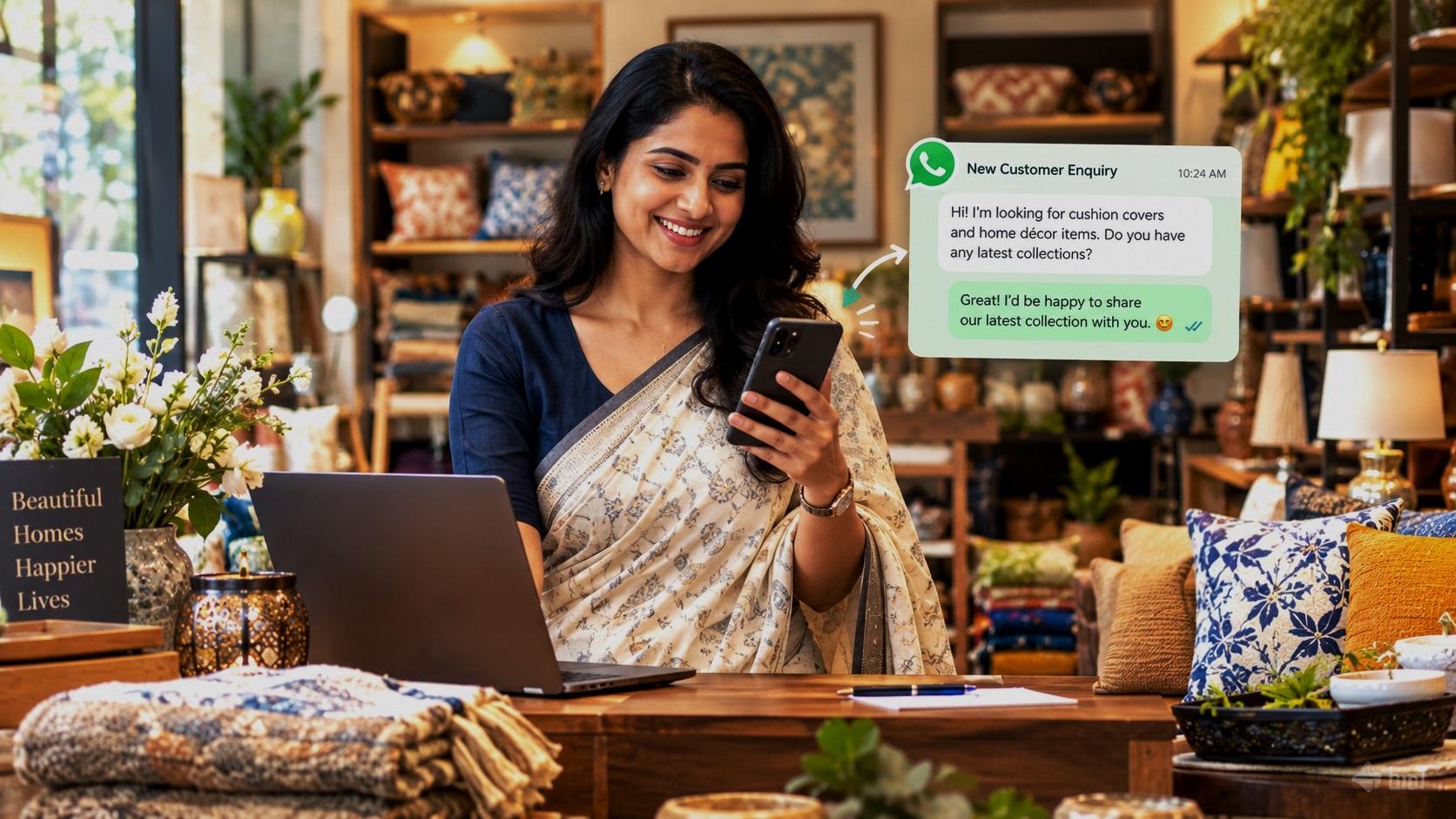
WhatsApp is one of the most useful tools for Indian businesses because customers are already comfortable using it.
WhatsApp Business allows you to create a business profile, display products and services, respond to enquiries and communicate with customers.
Important features include:
-
Business profile with address and working hours.
-
Product and service catalogue.
-
Automated greeting messages.
-
Quick replies to common questions.
-
Labels to organise customer conversations.
-
Status updates for offers and new arrivals.
-
Click-to-chat links for direct enquiries.
For example, a clothing boutique can upload its latest collection to the catalogue and share new arrivals through WhatsApp Status.
Customers can view products and enquire without visiting the store first.
Practical tip: Create a WhatsApp link that customers can click to start a conversation with your business. Add it to your social media profiles, website and online business listings.
YouTube: Build Visibility Through Videos
Ideal for coaching centres, educational institutes, restaurants, fitness trainers, real estate agents, travel agencies and service professionals.
YouTube is not just for entertainment. It can help local businesses demonstrate their expertise, explain services and attract customers searching for specific information.
You can publish:
-
Product demonstration videos.
-
Tutorials and educational videos.
-
Customer testimonials.
-
Business introductions.
-
Behind-the-scenes videos.
-
Frequently asked questions.
-
Short videos using YouTube Shorts.
For example, a fitness centre can publish short workout demonstrations, nutrition tips, trainer introductions and videos showing its facilities.
A coaching centre can share subject explanations, sample lessons and exam preparation tips.
Practical tip: Include your business name, city, location and relevant service keywords in video titles and descriptions.
LinkedIn: Useful for Professional and B2B Businesses
Ideal for consultants, IT companies, digital marketing agencies, business service providers, training institutes and professional firms.
LinkedIn is particularly useful when your customers are other businesses or working professionals.
You can use it to:
-
Share industry knowledge.
-
Publish informative articles.
-
Showcase your expertise.
-
Share case studies and business achievements.
-
Connect with potential clients.
-
Build professional credibility.
For example, an accounting firm can publish posts explaining GST compliance, business taxation and financial planning for small businesses.
Practical tip: Focus on useful information rather than constant promotional posts. Businesses are more likely to contact you when they recognise your expertise.
Which social media platforms should you choose?
| Platform | Best use |
|---|---|
| Product promotion, Reels and visual discovery | |
| Local communities, business updates and promotions | |
| WhatsApp Business | Customer enquiries and repeat sales |
| YouTube | Video marketing and building expertise |
| Professional networking and B2B marketing |
Our recommendation: Start with Instagram, Facebook and WhatsApp Business if you are a typical local retailer or service provider. Add YouTube or LinkedIn when you have the time and resources to create content consistently.
It is better to manage three platforms properly than maintain five inactive accounts.
3. Create a Professional Social Media Business Profile
Your social media profile is often the first interaction a potential customer has with your business.
Imagine someone discovers your Instagram page after searching for a restaurant in their neighbourhood.
They visit your profile but cannot find your address, contact number, menu or working hours.
What happens next?
They may simply move on to another restaurant.
Your profile should make it easy for customers to understand your business and contact you.
Essential information every business profile should include
1. Use your actual business name
Keep your business name consistent across Instagram, Facebook, YouTube and WhatsApp.
Avoid unnecessary keywords, symbols or confusing variations.
2. Upload a clear business logo
Your logo helps customers recognise your business.
Use a high-quality image that remains readable even when displayed as a small profile picture.
3. Write a useful business description
Explain what you offer, who you serve and where you operate.
For example:
“Family Restaurant in Karol Bagh, Delhi | North Indian, Chinese & Fast Food | Dine-in and Takeaway | Contact Us for Reservations.”
A customer should understand your business within a few seconds.
4. Add your location and contact details
Include:
-
Business address.
-
City and neighbourhood.
-
Contact number.
-
WhatsApp link.
-
Website link.
-
Working hours.
If customers visit your physical location, make sure they can easily find directions.
5. Use a professional cover image
For platforms that support cover images, use photographs that showcase your shop, products, services or business environment.
6. Add important information to Instagram Highlights
Instagram Highlights allow you to keep important Stories visible on your profile.
Create useful categories such as:
-
About Us
-
Products
-
Services
-
Pricing
-
Offers
-
Customer Reviews
-
Contact Us
This makes it easier for potential customers to explore your business.
Remember: Your social media profile should work like a small digital storefront. A visitor should be able to understand your business, see what you offer and contact you without unnecessary effort.
4. Optimise Your Social Media Profiles for Local Searches
Many business owners focus on hashtags but overlook the importance of local keywords.
If you operate a restaurant in Lajpat Nagar, Delhi, you want people searching for restaurants in Lajpat Nagar to discover your business.
The same applies to salons, coaching centres, boutiques, gyms and other local businesses.
Use location-specific keywords
Include your city, neighbourhood and service wherever relevant.
Examples:
-
Best Salon in Rohini, Delhi.
-
Maths Tuition Classes in Noida.
-
Wedding Photographer in Gurgaon.
-
Bakery in Indiranagar, Bengaluru.
-
Dental Clinic in Salt Lake, Kolkata.
-
Fitness Centre in Baner, Pune.
Use these keywords naturally in:
-
Business descriptions.
-
Instagram captions.
-
Facebook posts.
-
YouTube titles.
-
Video descriptions.
-
Relevant hashtags.
Do not stuff the same keywords repeatedly. Write naturally so customers can understand your content.
Add your business location to posts
Whenever appropriate, use the location feature on Instagram and Facebook.
For example, a café in Connaught Place can tag its location when posting pictures of its food, interiors or special offers.
This helps associate your content with a specific place.
Use local hashtags
Hashtags can help categorise your content and make it easier for people to discover relevant posts.
Examples:
For a restaurant in Delhi:
#DelhiRestaurants #KarolBaghFood #DelhiFoodies #FoodInDelhi
For a salon in Mumbai:
#MumbaiSalon #AndheriSalon #MumbaiBeauty #BeautyServices
For a coaching centre in Jaipur:
#JaipurCoaching #JaipurStudents #RajasthanEducation #CoachingClasses
Use a small number of relevant hashtags rather than adding dozens of unrelated ones.
Mention nearby areas where relevant
Your customers may not live in the exact neighbourhood where your business is located.
A salon in Rohini may attract customers from Pitampura, Shalimar Bagh and Prashant Vihar.
Mention nearby locations naturally when they are part of your actual service area.
5. Decide What to Post on Social Media
This is where many small business owners get stuck.
They create social media accounts, post a few photographs and then run out of ideas.
The solution is to stop thinking that every post needs to be an advertisement.
Your content should educate, inform, entertain, demonstrate and promote.
People do not want to see promotional messages all the time. They want information that helps them make decisions.
Here are some of the most effective content ideas for local businesses.
1. Showcase Your Products and Services
This is the most basic and important type of content.
People need to know what you sell and what makes your business worth visiting.
Examples:
-
A restaurant can showcase its most popular dishes.
-
A boutique can display new clothing collections.
-
A salon can demonstrate different beauty treatments.
-
A furniture store can showcase its latest designs.
-
A diagnostic centre can explain available health tests.
-
A coaching centre can introduce its courses and subjects.
Use clear photographs and short videos.
Instead of simply writing “Visit Our Shop”, show customers what they can find there.
2. Create Short Videos and Reels
Short-form videos are an effective way to capture attention.
You do not need expensive cameras or professional editing equipment.
A smartphone is enough to create useful videos.
Some ideas include:
-
A quick tour of your business.
-
How a product is made.
-
A new product arrival.
-
A popular service demonstration.
-
Before-and-after transformations.
-
A behind-the-scenes look.
-
A short introduction by the business owner.
-
A customer experience.
-
A quick answer to a common question.
For example, a bakery can create a 20-second video showing how a cake is decorated.
A restaurant can record a short video of its most popular dish being prepared.
A coaching centre can share a one-minute explanation of an important topic.
A simple formula for creating effective Reels
Use this structure:
First 3 seconds: Capture attention.
Next 10–20 seconds: Show the product, service or useful information.
Final few seconds: Tell viewers what to do next.
For example:
“Looking for freshly baked cakes in Rohini?”
Show the cake preparation, different designs and available flavours.
Finish with:
“WhatsApp us to place your order.”
Keep videos focused. Avoid long introductions and unnecessary details.
3. Share Customer Reviews and Testimonials
People trust the experiences of other customers.
Positive reviews can help reduce hesitation and encourage new customers to contact your business.
Share genuine customer feedback with permission.
You can create posts featuring:
-
Customer testimonials.
-
Positive Google reviews.
-
Customer photographs.
-
Video feedback.
-
Successful project stories.
-
Repeat customer experiences.
For example, a coaching centre can share a student’s genuine feedback about their learning experience.
A restaurant can share a customer’s photograph and review of a special meal.
A beauty salon can publish customer feedback about a particular service.
Important: Never create fake reviews or misleading testimonials. Authentic customer experiences are far more valuable for building long-term trust.
4. Introduce Your Team and Business
Customers often feel more comfortable dealing with businesses they know.
Introduce the people behind your business.
Share photographs or short videos of:
-
The business owner.
-
Employees and team members.
-
Chefs and kitchen staff.
-
Teachers and trainers.
-
Designers and technicians.
-
Customer service representatives.
Explain their roles and experience.
A personal connection can make your business more approachable.
For example, a tuition centre can introduce its teachers and explain the subjects they teach.
A restaurant can introduce its chef and showcase the preparation of popular dishes.
5. Share Useful Tips and Information
Educational content helps establish your business as a knowledgeable and reliable source.
Think about the questions customers frequently ask.
Create content that answers those questions.
Examples:
| Business type | Useful content ideas |
|---|---|
| Restaurant | Food combinations, popular dishes and menu recommendations |
| Salon | Hair care, skincare and grooming tips |
| Coaching centre | Study techniques, exam preparation and subject explanations |
| Gym | Workout routines, fitness tips and exercise demonstrations |
| Clothing store | Styling ideas, fabric guides and seasonal fashion trends |
| Travel agency | Destination guides, travel planning and packing tips |
| Diagnostic centre | Test preparation instructions and service information |
| Real estate agent | Property buying tips and home loan basics |
| Bakery | Cake selection, storage and celebration ideas |
| Digital marketing agency | SEO, website and online marketing tips |
Useful content attracts people who may eventually become your customers.
6. Promote Special Offers and Discounts
Offers can encourage people to try your products or services.
Examples:
-
10% off on selected products.
-
Special weekday restaurant offers.
-
Festival discounts.
-
Free consultation for new customers.
-
Discounted trial classes.
-
Gym membership offers.
-
Salon packages.
-
Seasonal product collections.
Make your offers clear.
Mention:
-
What the offer includes.
-
Who can use it.
-
The validity period.
-
Any applicable conditions.
-
How customers can claim it.
Avoid running discounts continuously. If customers expect discounts all the time, they may hesitate to purchase at regular prices.
7. Show Behind-the-Scenes Activities
People enjoy seeing what happens behind the scenes.
This type of content makes your business feel more personal and authentic.
Examples:
-
A restaurant preparing its kitchen before opening.
-
A bakery decorating a birthday cake.
-
A boutique arranging a new collection.
-
A florist preparing a wedding order.
-
A gym trainer preparing a workout session.
-
A manufacturer showcasing the production process.
Behind-the-scenes content helps customers understand the effort and care that goes into your products and services.
8. Answer Frequently Asked Questions
Think about the questions customers ask before making a purchase.
For example:
-
What are your prices?
-
Where is your shop located?
-
Do you offer home delivery?
-
What are your working hours?
-
Do you provide online classes?
-
Can customers book appointments?
-
Do you accept online payments?
-
What is the delivery time?
Turn these questions into individual posts, short videos or Instagram Stories.
This saves time, improves customer understanding and reduces repeated enquiries.
6. Use a Social Media Content Calendar
Posting randomly is not a good marketing strategy.
You need a simple content calendar that helps you plan what to publish and when.
You do not need to post several times every day.
Consistency is more important than quantity.
For a small business, start with three to four quality posts per week, supported by Stories and regular customer interactions.
Sample weekly social media calendar for local businesses
| Day | Content | Objective |
|---|---|---|
| Monday | Product or service showcase | Create awareness |
| Tuesday | Helpful tip or educational post | Build credibility |
| Wednesday | Customer review or testimonial | Build trust |
| Thursday | Reel or behind-the-scenes video | Increase engagement |
| Friday | Special offer or promotion | Generate enquiries |
| Saturday | New arrival or popular product | Encourage purchases |
| Sunday | Business story or weekly highlights | Build relationships |
You can adjust this schedule based on your business type.
For example, a restaurant may need to share daily food specials, while a coaching centre may focus more on educational content and admission announcements.
How often should you post?
A practical starting schedule:
-
Instagram: 3–4 feed posts or Reels per week.
-
Facebook: 3–4 posts per week.
-
WhatsApp Status: 4–6 updates per week.
-
YouTube: 1–2 videos or Shorts per week.
-
LinkedIn: 2–3 posts per week for B2B businesses.
These are suggested starting points, not fixed rules. Review your results and adjust your schedule according to customer response and your available time.
Plan your content in advance
Set aside one day every week to:
-
Decide what you will post.
-
Take product and business photographs.
-
Record short videos.
-
Write captions.
-
Prepare promotional offers.
-
Schedule posts where possible.
This makes social media management easier and prevents last-minute posting.
7. Write Social Media Captions That Make People Take Action
A good photograph may attract attention, but your caption helps customers understand why they should care.
Avoid writing captions that simply describe what is visible in the photograph.
Give people a reason to engage with your business.
Use this simple caption formula
1. Start with an attention-grabbing opening.
Ask a question, highlight a problem or introduce something interesting.
2. Explain the benefit.
Tell customers how your product or service can help them.
3. Add important details.
Include location, price, features, availability or other relevant information.
4. End with a clear call to action.
Tell people what to do next.
Example 1: Restaurant
Looking for delicious food in Karol Bagh?
Enjoy freshly prepared meals, popular snacks and a welcoming dining experience.
Visit us in Karol Bagh, Delhi, or WhatsApp us to know more about our menu.
Example 2: Coaching Centre
Want to improve your child’s Maths performance?
Our experienced teachers offer structured tuition classes with individual attention and regular practice.
Contact our coaching centre in Noida to enquire about admissions.
Example 3: Beauty Salon
Ready for a fresh new look?
Explore our professional hair styling, skincare and beauty services.
Visit our salon in Rohini or contact us to book your appointment.
Example 4: Clothing Store
Looking for stylish outfits for the festive season?
Explore our latest collection of traditional and contemporary clothing.
Visit our store in Jaipur to discover new arrivals.
Important: Keep your captions simple. Use natural language and avoid unnecessary promotional words such as “number one”, “best in India” or “guaranteed results” unless you can substantiate such claims.
8. Use Local Influencer Marketing to Reach Nearby Customers
Influencer marketing is not just for large brands.
Local influencers can help small businesses reach people in a particular city or neighbourhood.
You do not need to approach celebrities with millions of followers.
In fact, smaller creators with an engaged local audience may be more useful for your business.
How to find local influencers
Look for Instagram and YouTube creators who regularly publish content about:
-
Food and restaurants.
-
Shopping and fashion.
-
Beauty and lifestyle.
-
Fitness and wellness.
-
Education.
-
Travel and local attractions.
-
Your city and neighbourhood.
For example, a restaurant in Delhi can collaborate with a Delhi food blogger who regularly reviews restaurants and cafés.
A boutique in Gurgaon can invite a local fashion creator to showcase its latest collection.
What kind of collaboration should you offer?
Depending on your business and budget, you can consider:
-
Complimentary product samples.
-
A free meal or service.
-
Paid promotional videos.
-
Store visits and business reviews.
-
Product demonstrations.
-
Special discount codes for followers.
Before collaborating, check the creator’s audience location, engagement quality and previous promotional content.
Do not judge an influencer only by follower count.
A creator with 5,000 genuine local followers may bring more relevant customers than someone with 100,000 followers spread across different cities.
9. Run Local Social Media Advertisements to Reach More Customers
Organic social media promotion can help you build visibility without spending money.
However, it may take time to reach a large number of potential customers.
If you want to increase visibility faster, consider paid advertising.
Facebook and Instagram advertisements through Meta Ads Manager allow businesses to reach selected audiences based on available targeting options.
You can create advertisements for people in and around your business location.
How local social media advertising works
Suppose you own a beauty salon in Pitampura, Delhi.
You can create an advertisement showcasing your services and target a relevant local audience in your service area.
Similarly:
-
A restaurant can advertise its weekend offers.
-
A coaching centre can promote new admissions.
-
A gym can advertise membership packages.
-
A boutique can showcase its festive collection.
-
A real estate agent can promote available properties.
-
A diagnostic centre can advertise its services and appointment facilities.
Step-by-step guide to creating a local advertisement
Step 1: Decide what you want to promote
Do not advertise your entire business in one advertisement.
Choose one specific objective:
-
Promote a particular product.
-
Generate WhatsApp enquiries.
-
Get appointment bookings.
-
Increase restaurant visits.
-
Promote new admissions.
-
Announce a special offer.
Step 2: Create an attractive advertisement
Use a clear photograph or short video.
Include:
-
Business name.
-
Main product or service.
-
Location.
-
Important offer or benefit.
-
Contact details or call to action.
Step 3: Select your target location
Choose the areas where your potential customers are likely to live or work.
For example, a salon in Lajpat Nagar may target nearby neighbourhoods within its practical customer catchment area.
Do not select an unnecessarily large geographical area.
Step 4: Choose the right audience
Consider the type of people who are most likely to need your product or service.
For example:
-
A playschool should reach parents of young children.
-
A gym should target people interested in fitness.
-
A coaching centre should reach students and parents.
-
A wedding photographer should reach people planning weddings.
Use only relevant targeting options available in the advertising platform.
Step 5: Set a manageable budget
You do not need to start with a large advertising budget.
Test a small amount, monitor the results and increase spending only when you understand which advertisements generate useful enquiries.
Step 6: Track enquiries and sales
Do not judge an advertisement only by likes, views or impressions.
Check:
-
How many people contacted you?
-
How many enquiries were relevant?
-
How many appointments were booked?
-
How many customers visited your business?
-
How many actual sales resulted?
This tells you whether your advertising money is being spent effectively.
How much should a local business spend on social media advertising?
There is no single budget that works for every business.
Your spending depends on your industry, competition, location, average customer value and marketing objectives.
A sensible approach is to test small campaigns, understand your cost per enquiry and calculate how many enquiries convert into paying customers.
Never spend more simply because an advertisement is receiving likes.
10. Use WhatsApp Marketing to Generate More Business
Social media helps people discover your business. WhatsApp helps you communicate with them directly.
For many Indian businesses, this is where potential customers become actual customers.
Create a WhatsApp Business catalogue
Add your products and services with:
-
Product photographs.
-
Names and descriptions.
-
Prices, where applicable.
-
Important details.
-
Relevant product information.
For example, a bakery can display cakes, pastries, cookies and customised birthday cakes.
A boutique can showcase dresses, suits and accessories.
A service provider can list available services and packages.
Use WhatsApp Status regularly
WhatsApp Status is a simple way to stay visible among existing contacts and customers.
You can share:
-
New product arrivals.
-
Daily offers.
-
Customer reviews.
-
Business updates.
-
Limited-period discounts.
-
New service announcements.
-
Short demonstration videos.
Keep your updates useful and interesting.
Build a genuine customer contact list
Collect customer contact details with their permission.
You can invite customers to receive occasional updates about new products, special offers and useful information.
Do not add people to groups or send repeated promotional messages without consent.
Respect customer preferences and provide an easy way to stop receiving promotional updates.
Respond quickly to enquiries
A potential customer may contact several businesses before making a decision.
If you respond quickly with clear information, you improve the chances of converting that enquiry.
Prepare quick replies for common questions about:
-
Prices.
-
Business location.
-
Working hours.
-
Available products.
-
Appointment bookings.
-
Payment options.
-
Delivery information.
A fast and helpful response can make a positive difference.
11. Connect Social Media Marketing with Your Google Business Profile
If you operate a local business with a physical location or serve customers in a specific geographical area, your Google Business Profile is an important part of your online marketing strategy.
When people search for businesses such as restaurants, salons, coaching centres, hotels or diagnostic centres, Google may display relevant business profiles in Search and Maps.
Your social media presence and Google Business Profile should support each other.
What should you do?
1. Keep your business information updated
Make sure your business name, address, phone number, website and working hours are accurate.
Incorrect information can confuse customers and result in missed enquiries.
2. Upload quality business photographs
Show customers what your business actually looks like.
Upload relevant photographs of:
-
Your shop or office.
-
Products.
-
Services.
-
Interiors.
-
Staff.
-
Facilities.
-
Business activities.
3. Publish regular Google Business Profile updates
Use available profile features to share offers, events, announcements and important business updates.
4. Encourage genuine customer reviews
Ask satisfied customers to share their honest experiences.
Respond professionally to both positive and negative reviews.
5. Link your website and social media presence
Where supported, add your website and relevant social media links to your business information.
Make sure the information is consistent across platforms.
Why is this important?
A customer may discover your business on Instagram, check your location on Google Maps, read your reviews and then contact you through WhatsApp.
This is how different online marketing channels work together.
Do not treat social media, Google Search and your business listing as separate activities. Build a connected online presence that makes it easier for customers to find and trust you.
12. Get Your Business Listed on Online Business Directories
Social media is an important part of local marketing, but it should not be your only source of online visibility.
Many customers search online for specific businesses and services in their area.
For example:
-
Restaurants in Karol Bagh.
-
Coaching centres in Noida.
-
Hotels in Paharganj.
-
Beauty salons in Rohini.
-
Diagnostic centres in Gurgaon.
-
Tuition classes in South Delhi.
Online business directories allow businesses to create listings containing their name, location, contact information, services and other important details.
These listings can help potential customers discover your business outside social media platforms.
Why should local businesses use online directories?
-
Reach people actively searching for products and services.
-
Create additional online visibility.
-
Showcase business information.
-
Share website and contact details.
-
Generate direct customer enquiries.
-
Build a wider online presence.
Get your business listed on HotList.in
HotList.in – Business Listings & Local Lead Generation Platform
HotList.in helps Indian businesses improve their online visibility and reach potential customers looking for local products and services.
You can create a business listing to showcase your business information and make it easier for customers to discover and contact you.
The objective is simple: give local businesses another opportunity to reach potential customers online and generate direct enquiries without middlemen or commissions.
If you own a restaurant, hotel, coaching centre, retail shop, salon, gym, diagnostic centre, bakery or any other local business, consider creating your business listing on HotList.
Get your business listed on HotList.in and make it easier for potential customers to discover your business.
13. Use Customer-Generated Content to Build Trust
Customer-generated content is any content created by your customers that showcases their experience with your business.
It can include photographs, videos, testimonials, product reviews and social media posts.
This is valuable because potential customers often want to know what other people think before making a purchase.
How to encourage customers to create content
-
Ask satisfied customers to share photographs of their purchases.
-
Encourage customers to tag your business when posting about their experience.
-
Invite customers to share short video testimonials.
-
Ask permission to repost their content.
-
Feature genuine customer experiences on your social media profiles.
For example:
A restaurant can encourage customers to share photographs of their favourite dishes.
A clothing store can invite customers to tag the business when sharing photographs wearing its products.
A hotel can feature guest experiences and photographs, with permission.
A gym can showcase genuine member experiences and fitness progress, with consent.
Never publish customer photographs, names or personal information without permission.
Why does customer-generated content work?
It gives potential customers a more realistic picture of your business.
It also makes existing customers feel valued and encourages them to engage with your brand.
14. Collaborate with Other Local Businesses
You do not always need to promote your business alone.
Other businesses in your neighbourhood may serve the same audience without directly competing with you.
You can work together to reach more potential customers.
Examples of local business collaborations
| Your business | Potential collaboration |
|---|---|
| Bakery | Event planners and party decorators |
| Beauty salon | Boutiques and wedding photographers |
| Gym | Sports stores and fitness trainers |
| Restaurant | Local food bloggers and event organisers |
| Coaching centre | Bookshops and educational service providers |
| Hotel | Travel agencies and local tour operators |
| Wedding photographer | Makeup artists and wedding planners |
| Children’s clothing store | Playschools and toy shops |
How to collaborate
You can:
-
Share each other’s social media posts.
-
Create joint promotional offers.
-
Organise small local events.
-
Produce collaborative videos.
-
Recommend complementary businesses.
-
Run joint competitions with clear participation rules.
For example, a bakery and a party decorator can create a joint birthday celebration package.
Both businesses can promote the offer to their respective audiences.
This can introduce your business to potential customers who may not have discovered you otherwise.
15. Use Contests and Giveaways to Increase Engagement
Contests and giveaways can create excitement around your business and encourage people to interact with your social media pages.
However, the prize should be relevant to your products or services.
Examples:
-
A restaurant can offer a complimentary meal.
-
A salon can offer a beauty service.
-
A boutique can give away a shopping voucher.
-
A bakery can offer a customised cake.
-
A gym can offer a short membership.
-
A bookshop can offer a collection of books.
How to organise a simple giveaway
-
Announce the giveaway on Instagram or Facebook.
-
Clearly explain the prize.
-
Mention the eligibility conditions.
-
Set a closing date.
-
Explain how the winner will be selected.
-
Announce the winner transparently.
Avoid complicated participation conditions.
Do not make misleading claims about prizes or guaranteed results.
Important: Follow the relevant platform’s promotion rules and applicable advertising requirements. Do not assume that gaining followers through a giveaway automatically translates into paying customers.
The purpose should be to attract people who are genuinely interested in your business.
16. Turn Social Media Followers into Paying Customers
Getting followers, likes and comments is only one part of social media marketing.
The real objective is to generate business.
You need to make it easy for interested people to take the next step.
Add clear calls to action to your posts
A call to action tells customers what to do next.
Examples:
-
WhatsApp us for prices.
-
Call now to book an appointment.
-
Visit our store in Karol Bagh.
-
Contact us for admission details.
-
Explore our latest collection.
-
Book your table today.
-
Enquire about available packages.
-
Visit our website to know more.
Do not leave potential customers wondering how to contact you.
Make contacting your business easy
Your social media profiles should include working contact details.
Use:
-
WhatsApp click-to-chat links.
-
Direct phone numbers.
-
Website links.
-
Appointment booking links.
-
Business location and directions.
If you use a website, create dedicated pages for your important products and services.
For example, a coaching centre should ideally have separate pages explaining its courses, subjects, classes, teachers and admission process.
Give customers enough information to make a decision
Do not force people to send multiple messages just to understand your basic offering.
Where appropriate, clearly display:
-
Prices.
-
Product specifications.
-
Service details.
-
Available packages.
-
Business location.
-
Working hours.
-
Booking procedure.
-
Payment methods.
The easier you make the buying process, the less likely customers are to abandon an enquiry.
Follow up with interested customers
Not every enquiry results in an immediate purchase.
Some people need time to compare prices, discuss with family members or understand your services.
A polite follow-up can help.
For example:
“Hello, thank you for enquiring about our services. Please let us know if you need any further information. We would be happy to help.”
Avoid repeatedly messaging people who have not shown interest.
17. Measure Your Social Media Marketing Results
If you are spending time and money on social media, you need to understand whether your efforts are working.
Do not measure success only through followers, likes or views.
Focus on numbers that have a direct connection with business growth.
Important social media metrics to track
| Metric | What it tells you |
|---|---|
| Reach | How many unique people saw your content |
| Impressions | How many times your content was displayed |
| Engagement | Likes, comments, shares and saves |
| Profile visits | How many people explored your business profile |
| Link clicks | How many people clicked your website or contact links |
| WhatsApp enquiries | How many people contacted your business |
| Phone calls | How many potential customers called |
| Bookings | How many appointments or reservations were made |
| Sales | How many enquiries converted into paying customers |
Track enquiries from different platforms
Ask customers how they discovered your business.
For example:
-
Instagram.
-
Facebook.
-
WhatsApp.
-
YouTube.
-
Google Search.
-
Google Maps.
-
HotList.in.
-
Customer referral.
You can also use different enquiry links or campaign-specific codes to identify where customers are coming from.
Calculate your cost per customer
Suppose you spend ₹3,000 on social media advertising.
The campaign generates 30 genuine enquiries, out of which 6 become paying customers.
Your results are:
-
Advertising spend: ₹3,000.
-
Genuine enquiries: 30.
-
Paying customers: 6.
-
Cost per enquiry: ₹100.
-
Cost per acquired customer: ₹500.
Now compare the ₹500 acquisition cost with the average profit you earn from each customer.
If the profit comfortably exceeds your acquisition cost, the campaign may be worth expanding.
Remember to include other relevant marketing expenses when calculating your actual profitability.
Review your performance every month
At the end of each month, identify:
-
Which posts received the most attention?
-
Which videos attracted relevant local audiences?
-
Which offers generated enquiries?
-
Which platform brought paying customers?
-
Which advertisements performed best?
-
What questions did customers ask most frequently?
Use these insights to improve your next month’s marketing plan.
18. Common Social Media Marketing Mistakes Local Businesses Should Avoid
Many businesses are active on social media but fail to generate meaningful results because they make avoidable mistakes.
Here are some of the most common ones.
1. Posting Only Promotional Content
If every post says “Buy Now”, “Visit Us” or “Contact Us”, people may lose interest.
Mix promotional posts with useful information, demonstrations, customer experiences and educational content.
2. Ignoring Comments and Messages
Social media is a communication platform.
If someone asks about your prices, location or services, respond promptly.
Ignoring enquiries can mean losing potential customers.
3. Using Poor-Quality Photographs
Blurry, dark or confusing photographs can make your business look unprofessional.
Use natural lighting, clean backgrounds and clear photographs.
Your content does not need to look expensive, but it should look genuine and presentable.
4. Copying Competitors Without a Strategy
Observe what successful businesses are doing, but do not blindly copy their content.
Understand your own customers, products and strengths.
Your business needs a recognisable identity.
5. Buying Fake Followers and Engagement
Fake followers may increase your follower count, but they will not bring genuine customers.
They can also distort your engagement data and make it difficult to understand your actual audience.
Build a real audience through useful content, local engagement and genuine customer relationships.
6. Ignoring Location-Based Marketing
A local business needs local customers.
If your posts reach people who live hundreds of kilometres away, they may generate views but not sales.
Use relevant location references, local keywords and appropriate geographical targeting.
7. Posting Inconsistently
Posting five times in one week and disappearing for the next month is not a good strategy.
Create a manageable content schedule and follow it consistently.
8. Not Showing Prices or Important Details
When customers cannot find basic information, they may contact another business.
Share relevant pricing, service details, location and availability wherever appropriate.
9. Not Having a Clear Call to Action
Every promotional post should tell people what to do next.
Make it easy to call, WhatsApp, book, enquire or visit.
10. Depending Entirely on One Social Media Platform
Social media platforms control their own algorithms, features and account policies.
Do not build your entire online presence on one platform.
Maintain your Google Business Profile, website and relevant business directory listings as well.
19. A Practical 30-Day Social Media Marketing Plan for Local Businesses
If you are new to social media marketing, trying to implement everything at once can become overwhelming.
Start with a simple 30-day plan.
The following schedule is designed for small Indian businesses with limited time and marketing budgets.
Week 1: Build Your Online Presence
Goal: Make your business easy to discover and contact.
Tasks:
-
Create or improve your Instagram business account.
-
Set up your Facebook business page.
-
Create a WhatsApp Business profile.
-
Upload your logo and business photographs.
-
Write clear business descriptions.
-
Add your location, phone number and website.
-
Create a product or service catalogue.
-
Check and update your Google Business Profile.
-
Create or update your HotList business listing.
By the end of the first week, your business should have a professional and consistent online presence.
Week 2: Start Publishing Useful Content
Goal: Introduce your business and showcase what you offer.
Tasks:
-
Publish a business introduction.
-
Share your main products or services.
-
Create two or three short videos.
-
Introduce your team or business owner.
-
Share a customer testimonial.
-
Publish a useful tip related to your industry.
-
Start posting WhatsApp Status updates.
Focus on showing potential customers why your business is worth considering.
Week 3: Increase Local Reach and Engagement
Goal: Reach more people in your area.
Tasks:
-
Use relevant local keywords.
-
Add location tags to suitable posts.
-
Join relevant local Facebook groups.
-
Engage with nearby businesses.
-
Explore local influencer collaborations.
-
Encourage genuine customer reviews.
-
Respond to all relevant comments and enquiries.
-
Share customer-generated content with permission.
If your budget allows, test a small local advertising campaign.
Week 4: Generate Enquiries and Measure Results
Goal: Turn online visibility into business opportunities.
Tasks:
-
Promote your best-selling product or service.
-
Share a special offer.
-
Run a WhatsApp enquiry campaign.
-
Publish customer testimonials.
-
Follow up politely with interested customers.
-
Review your social media insights.
-
Identify your best-performing content.
-
Track enquiries and actual sales.
At the end of 30 days, you should have a clearer understanding of which activities are bringing potential customers to your business.
Continue with the activities that produce meaningful results.
20. How Different Local Businesses Can Use Social Media to Get More Customers
Every business has different customers and marketing requirements.
A strategy that works for a restaurant may not work for a diagnostic centre or a coaching institute.
Here are practical examples for different business categories.
Restaurants, Cafés and Food Businesses
Focus on visual content that makes people interested in your food.
Content ideas:
-
Popular dishes.
-
Food preparation videos.
-
Menu highlights.
-
Restaurant interiors.
-
Customer experiences.
-
Daily specials.
-
Weekend and festival offers.
Use Instagram Reels, Facebook and WhatsApp Status regularly.
Mention your location and make reservations or takeaway enquiries easy.
Coaching Centres and Tuition Institutes
Parents and students want to know about the quality of education, teachers and learning environment.
Content ideas:
-
Teacher introductions.
-
Subject-wise learning tips.
-
Sample lessons.
-
Exam preparation guidance.
-
Student achievements, with permission.
-
Admission announcements.
-
Classroom activities.
Use Facebook, Instagram, YouTube and WhatsApp to reach students and parents.
Share useful educational content rather than publishing admission advertisements every day.
Salons and Beauty Parlours
Visual content can help customers understand your services and results.
Content ideas:
-
Hairstyling demonstrations.
-
Makeup transformations.
-
Skincare tips.
-
Service packages.
-
Customer testimonials.
-
Festival and wedding offers.
-
Salon tours.
Use Instagram Reels and WhatsApp Status to showcase your work.
Always obtain customer permission before sharing photographs or videos.
Clothing Stores and Designer Boutiques
Show customers what they can find in your store.
Content ideas:
-
New arrivals.
-
Festive collections.
-
Styling suggestions.
-
Fabric details.
-
Outfit combinations.
-
Product demonstrations.
-
Seasonal discounts.
Instagram, Facebook and WhatsApp Business are particularly useful for these businesses.
Make it easy for customers to enquire about sizes, prices and availability.
Hotels and Travel Agencies
Help potential customers visualise their experience.
Content ideas:
-
Room photographs.
-
Property tours.
-
Hotel facilities.
-
Guest experiences.
-
Travel destination guides.
-
Holiday packages.
-
Seasonal travel offers.
Use Instagram, Facebook and YouTube to showcase your facilities and services.
Make booking and enquiry details clearly visible.
Gyms and Fitness Centres
Demonstrate the value of your facilities and training services.
Content ideas:
-
Workout demonstrations.
-
Trainer introductions.
-
Exercise guidance.
-
Gym tours.
-
Membership information.
-
Fitness challenges.
-
Member testimonials, with consent.
Instagram and YouTube can be useful for fitness-related videos, while WhatsApp can help manage enquiries and trial bookings.
Diagnostic Centres and Healthcare Services
People want accurate information and confidence in the services they choose.
Content ideas:
-
Available diagnostic services.
-
Facility and equipment information.
-
Appointment procedures.
-
Test preparation instructions.
-
Working hours.
-
Location and contact details.
-
General health awareness information reviewed by qualified professionals.
Use Facebook, Instagram and Google Business Profile to share accurate information.
Avoid misleading medical claims, guaranteed outcomes or sharing patient information without proper consent.
Retail Shops and Local Service Providers
Showcase your products, availability and convenience.
Content ideas:
-
New stock.
-
Product demonstrations.
-
Customer feedback.
-
Price and offer updates.
-
Seasonal collections.
-
How-to guides.
-
Business announcements.
Use Facebook, Instagram and WhatsApp to stay connected with nearby customers.
21. How Much Time Does Social Media Marketing Require?
One concern among small business owners is that social media marketing takes too much time.
You may already be managing staff, customers, suppliers, accounts and daily business operations.
You do not need to spend several hours every day creating content.
Start with a simple routine.
A manageable daily social media routine
| Activity | Suggested time |
|---|---|
| Check and respond to enquiries | 10 minutes |
| Reply to comments and messages | 5 minutes |
| Share a WhatsApp Status update | 5 minutes |
| Engage with relevant local accounts | 5 minutes |
| Review post performance | 5 minutes |
You can batch-create photographs, videos and captions once or twice a week.
If you have employees, assign someone to help manage social media enquiries and updates.
The important thing is to make social media marketing part of your regular business routine rather than treating it as an occasional activity.
22. Frequently Asked Questions About Social Media Marketing for Local Businesses
1. Which social media platform is best for promoting a local business in India?
It depends on your business and target audience. Instagram is useful for visual promotion, Facebook helps reach local communities, WhatsApp Business is excellent for direct enquiries, and YouTube helps businesses demonstrate expertise through videos.
Most small businesses can start with Instagram, Facebook and WhatsApp Business.
2. How can I promote my local business on social media for free?
You can create free business profiles, publish photographs and videos, share customer reviews, post helpful information, participate in local Facebook groups, use location tags and share updates through WhatsApp Status.
You can also encourage satisfied customers to recommend your business and share their experiences.
3. How often should a small business post on social media?
Start with three to four quality posts per week. Share additional Stories or WhatsApp Status updates when you have useful information, new products or business announcements.
Consistency and content quality matter more than posting several times every day.
4. How can I get more local followers on Instagram?
Use relevant location keywords, publish useful Reels, tag your business location, engage with local accounts, collaborate with nearby creators and encourage genuine customers to follow your page.
Focus on attracting people who are likely to become customers.
5. Can social media marketing increase sales?
Yes. Social media can increase awareness, generate enquiries, build customer trust and encourage purchases.
However, sales depend on several factors, including product quality, pricing, customer service, competition and how effectively you convert enquiries into orders.
6. Do I need a website to promote my local business on social media?
A website is not compulsory to start social media marketing.
You can use your social media profiles, WhatsApp Business and Google Business Profile to communicate with customers.
However, a website can provide more information about your business, showcase your products and services, and create additional opportunities to attract customers through Google Search.
7. Should I hire a social media marketing agency?
Not necessarily.
If you have a small business and limited resources, you can start by managing basic social media activities yourself.
Consider professional help when you need regular content creation, video production, paid advertising, campaign management or a more advanced marketing strategy.
8. How much does social media marketing cost in India?
Basic organic promotion can be done without paying for advertisements. Your costs may include content creation, photography, video production or professional support.
Paid advertising budgets vary depending on your location, industry, audience and objectives.
Start small, measure results and increase spending when campaigns generate profitable business.
9. How long does it take to get customers through social media?
There is no fixed timeline.
Some businesses may receive enquiries soon after launching a promotion, while others may need several weeks or months to build visibility and trust.
Your results depend on the quality of your content, audience relevance, competition and customer response.
10. Is social media enough for local business marketing?
No. Social media should be one part of your overall online marketing strategy.
Combine it with Google Business Profile optimisation, a business website, online business directories, customer reviews, WhatsApp marketing and local SEO.
This gives customers more opportunities to discover your business.
Conclusion: Make Social Media Work for Your Local Business
Promoting your local business on social media does not have to be complicated or expensive.
You do not need thousands of followers, professional cameras or a large advertising budget to get started.
You need to understand your customers, choose the right platforms, showcase your products and services, share useful content and make it easy for people to contact you.
Start with the basics:
-
Create professional social media business profiles.
-
Publish attractive photographs and useful videos.
-
Use local keywords and location tags.
-
Share genuine customer reviews.
-
Build relationships with nearby customers and businesses.
-
Use WhatsApp Business to handle enquiries.
-
Connect your social media presence with Google Business Profile.
-
Get your business listed on relevant online directories.
-
Track enquiries, bookings and sales.
-
Improve your strategy based on actual results.
Most importantly, remember that social media marketing is not about becoming popular online. It is about making your business visible to the right people and giving them a reason to choose you.
A small restaurant, neighbourhood salon, independent coaching centre, retail shop or local service provider can all benefit from a consistent online marketing strategy.
Start today. Help more people discover your business, build trust with potential customers and turn online visibility into real business growth.
Related Posts
How to Identify Your Target Audience & Reach More Customers
How to Build a Business Website That Attracts Local Customers and Generates More Enquiries
How to Optimize Your Google Business Listing to Attract More Local Customers
15 Best Free Advertising Sites in India to Promote Your Small Business Online