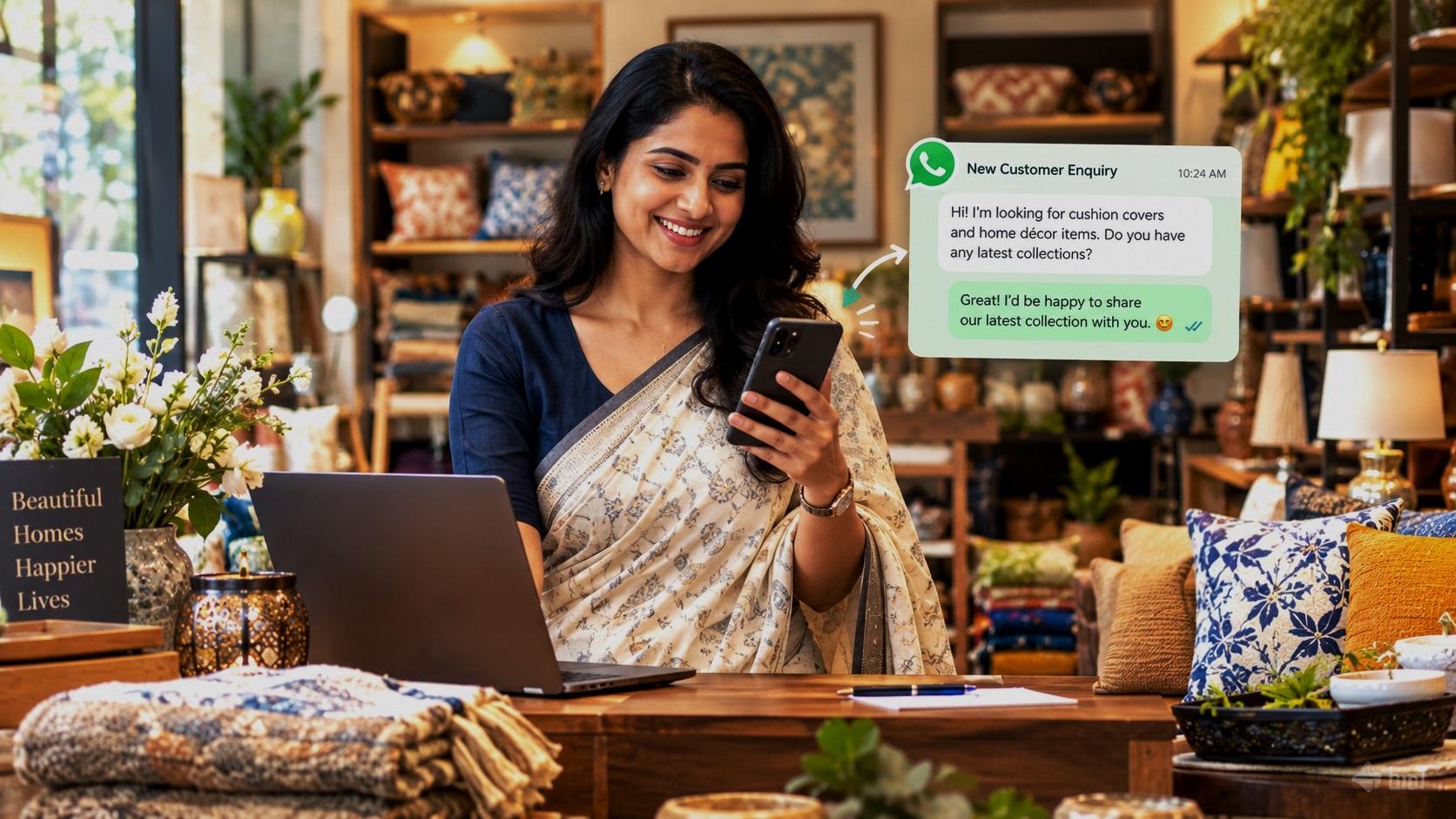
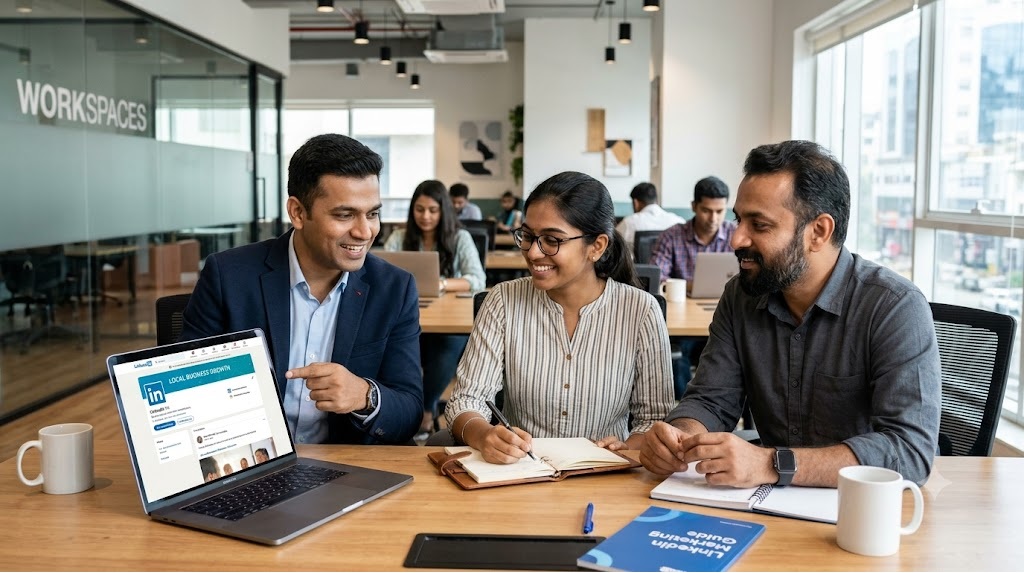
LinkedIn is no longer just a platform for finding jobs or connecting with professionals. It has become a powerful place to promote businesses, build trust, connect with potential customers and generate new business opportunities.
Whether you run a coaching centre, restaurant, hotel, retail shop, digital marketing agency, consultancy, playschool, fitness centre or any other local business, LinkedIn can help you reach people who may need your products or services.
The best part? You don’t need a big marketing budget to get started.
With a well-maintained LinkedIn presence, useful content and consistent activity, you can promote your local business online, attract potential customers and build valuable business connections.
This guide explains how to use LinkedIn for local business marketing in India, starting with the basics and moving towards practical strategies that you can implement yourself.
1. Why Should Local Businesses Use LinkedIn for Marketing?
Many small business owners in India focus their online marketing efforts on Instagram, Facebook and WhatsApp. These platforms are useful, but LinkedIn offers something different.
LinkedIn connects businesses with professionals, company owners, decision-makers, entrepreneurs, employees and people looking for specific products and services.
This makes it particularly useful for businesses that want to attract professional customers, corporate clients, institutional buyers and local business enquiries.
Key Benefits of LinkedIn Marketing for Small Businesses
1. Reach potential customers
Your LinkedIn content can introduce your business to people who may not have discovered you through traditional advertising.
2. Build business credibility
A professional LinkedIn presence helps customers understand what your business offers, how it operates and why they should consider choosing you.
3. Generate business enquiries
You can use your profile, company page, posts and direct conversations to encourage interested people to contact you.
4. Connect with other local businesses
LinkedIn gives you opportunities to connect with suppliers, service providers, business owners, consultants and potential partners.
5. Promote your products and services
You can showcase your products, explain your services, share customer success stories and announce special offers.
6. Market your business without spending heavily
Creating a LinkedIn profile, setting up a company page and publishing regular posts are free. You can start building your presence without paying for advertisements.
7. Build long-term relationships
Unlike one-time advertising, LinkedIn allows you to maintain professional relationships and stay connected with potential customers over time.
2. Start with the Basics: Create a Professional LinkedIn Presence
Before promoting your business, make sure people can easily understand what you do when they find you on LinkedIn.
You should ideally have two things:
- A personal LinkedIn profile representing you as the business owner.
- A LinkedIn Company Page representing your business.
Both serve different purposes and should work together.
A. Optimise Your Personal LinkedIn Profile
Your personal profile is often the first place people visit when they see your business-related posts or receive a connection request from you.
Don’t treat it like a job-seeking profile. Use it to establish your identity as a business owner and explain what your company offers.
Important Sections to Update
Profile photograph: Use a clear, professional photograph. People are more comfortable connecting with a real person than an incomplete profile.
Headline: Don’t simply write “Business Owner” or “Founder”. Explain what you do and whom you help.
For example:
Founder at ABC Coaching Centre | Helping Students Prepare for Competitive Exams | Online and Classroom Coaching in Delhi
About section: Write a short introduction explaining:
- What your business does.
- Which products or services you offer.
- Who your customers are.
- Which locations you serve.
- How people can contact you.
Experience: Add your current business under the Experience section. Include a clear description of your responsibilities and services.
Featured section: Use this space to showcase your business website, important articles, service information, product presentations or useful posts.
Contact information: Include your business website and professional contact details where appropriate.
B. Create a LinkedIn Company Page
A LinkedIn Company Page gives your business a dedicated professional identity.
It allows people to discover your business, understand your offerings, follow your updates and learn more about your brand.
How to Create a LinkedIn Company Page
- Log in to your personal LinkedIn account.
- Open the For Business menu.
- Select Create a Company Page.
- Choose the appropriate page type.
- Enter your business name and website.
- Select your industry and company size.
- Add your business logo and cover image.
- Write a clear company description.
- Add your location and contact information.
- Complete the setup and publish your page.
What Should Your Company Description Include?
Your description should answer four basic questions:
- What does your business offer?
- Who are your customers?
- Where do you operate?
- Why should customers choose you?
For example:
“ABC Digital Solutions is a digital marketing company helping small businesses in Delhi improve their online visibility. We offer website development, local SEO, Google Business Profile optimisation and social media marketing services to help businesses attract more customers.”
Keep the description simple, specific and customer-focused.
C. Add Your Business Location
This is particularly important for local businesses.
If you operate from a physical location, mention your city and service area clearly in your company information.
For example:
- Coaching Centre in Rohini, Delhi
- Restaurant in Karol Bagh, Delhi
- Digital Marketing Agency in Noida
- Playschool in Gurgaon
- Fitness Centre in Baner, Pune
People should immediately understand where your business operates.
If you serve multiple cities, mention your main operating locations and service areas.
3. Make Your LinkedIn Page Search-Friendly
Creating a company page is only the beginning. You also need to make it easier for people to discover your business.
LinkedIn search can help people find businesses, professionals, products and services.
Use Relevant Keywords
Include the words your potential customers are likely to search for.
For example, if you run a coaching centre in Delhi, relevant keywords might include:
- Coaching centre in Delhi
- Competitive exam coaching
- Online coaching classes
- UPSC preparation
- SSC coaching
- Classroom coaching in Delhi
A restaurant might use:
- Restaurant in Karol Bagh
- Family restaurant in Delhi
- North Indian food
- Vegetarian restaurant
- Catering services
Where Should You Add Keywords?
Include relevant keywords naturally in:
- Company name, where appropriate.
- Company description.
- Personal profile headline.
- About section.
- Experience description.
- LinkedIn posts.
- Article titles and content.
Avoid stuffing the same keywords repeatedly. Write for people first.
Choose the Right Industry and Business Category
Select the industry that most accurately describes your business.
A correct industry selection helps visitors understand your business and makes your company page more relevant to its intended audience.
4. Create Content That Attracts Potential Customers
This is where most of your LinkedIn marketing effort should go.
Simply creating a company page and waiting for customers to find you is unlikely to produce meaningful results.
You need to publish content that makes people notice your business, understand your expertise and become interested in what you offer.
The key is to avoid turning every post into an advertisement.
Instead, share information that is useful, interesting or relevant to your potential customers.
10 Types of LinkedIn Content Local Businesses Should Publish
1. Introduce Your Business
Start by telling people who you are, what you do and what makes your business useful.
For example:
A coaching centre can introduce its courses, teaching approach and subjects offered.
A restaurant can introduce its cuisine, speciality dishes and dining experience.
A digital marketing agency can explain the services it provides to local businesses.
2. Showcase Your Products and Services
People need to know what you sell.
Publish posts explaining your products, services, features, benefits and pricing wherever appropriate.
For example:
- A furniture shop can showcase its latest collection.
- A bakery can introduce its speciality cakes.
- A beauty salon can highlight its services.
- A diagnostic centre can explain the tests it offers.
Make your posts informative rather than simply writing “Contact us today”.
3. Share Helpful Tips and Advice
Useful content attracts attention because it solves real problems.
Examples:
| Business type | Useful LinkedIn content |
|---|---|
| Coaching centre | Exam preparation tips |
| Restaurant | Food storage and cooking tips |
| Digital marketing agency | Local SEO advice |
| Fitness centre | Beginner workout tips |
| Playschool | Early learning activities |
| Travel agency | Travel planning tips |
| Retail shop | Product selection advice |
| Consultancy | Business improvement tips |
Think about the questions your customers regularly ask. Turn those questions into posts.
4. Share Customer Reviews and Testimonials
Customer feedback helps establish trust.
Share genuine customer experiences, positive reviews and testimonials, with permission where required.
For example:
“Thank you to our customers for trusting us with their learning journey. Your feedback motivates our team to keep improving.”
You can also explain how your product or service helped solve a customer’s problem.
Never publish fabricated reviews or misleading customer claims.
5. Publish Before-and-After Results
If your business produces visible results, showcase them.
Examples include:
- Interior design transformations.
- Website redesigns.
- Fitness progress, with customer permission.
- Home renovation projects.
- Beauty and salon transformations.
- Business branding projects.
Explain the work involved and the value delivered.
6. Introduce Your Team
People like knowing who is behind a business.
Introduce your employees, teachers, chefs, designers, consultants and other team members.
You can share their experience, expertise and contribution to the business.
This gives your brand a more personal identity.
7. Announce New Products and Services
Whenever you launch something new, share it on LinkedIn.
You can announce:
- New product collections.
- New courses and batches.
- New service packages.
- New business locations.
- Seasonal products.
- Special events.
- New partnerships.
Explain what is new and how interested customers can enquire.
8. Share Business Milestones
Celebrate genuine achievements.
For example:
- Completing five years in business.
- Opening a new branch.
- Serving your 1,000th customer.
- Launching a new product.
- Receiving an industry award.
- Expanding into a new city.
Milestone posts help people understand your business journey and build familiarity with your brand.
9. Publish Educational Carousels
LinkedIn document posts can be useful for presenting information in a series of slides.
For example, a coaching centre could publish:
“7 Mistakes Students Should Avoid Before Board Exams”
A digital marketing agency could publish:
“10 Ways to Get More Local Customers Through Google”
A restaurant could publish:
“5 Things to Check Before Choosing a Caterer”
Keep the slides simple, readable and useful. Avoid filling them with too much text.
10. Share Links to Your Website and Blog Articles
If your business has a website, use LinkedIn to bring visitors to it.
Share links to:
- Product pages.
- Service pages.
- Business listings.
- Blog articles.
- Customer case studies.
- Event registration pages.
- Contact pages.
Don’t simply paste a link without context.
Explain what readers will learn or why they should visit the page.
For example:
“Want to attract more customers to your local business? Here are practical ways to improve your online visibility and reach people searching for your products and services.”
Then include the relevant article link.
5. How Often Should You Post on LinkedIn?
Consistency is more important than publishing a large number of posts in a short period.
If you are a small business owner managing marketing yourself, start with three to five quality posts per week.
You can increase or reduce the frequency depending on your time and results.
A Simple Weekly LinkedIn Content Plan
| Day | What to post |
|---|---|
| Monday | Business introduction or service highlight |
| Tuesday | Helpful tips or educational content |
| Wednesday | Product or service showcase |
| Thursday | Customer testimonial or success story |
| Friday | Blog article, business update or offer |
| Saturday | Behind-the-scenes or team post |
| Sunday | Optional industry-related content |
You don’t need to publish every day.
A consistent schedule that you can maintain is better than posting frequently for a week and then disappearing.
Best Time to Post on LinkedIn
There is no single posting time that works for every business.
Professional audiences may be more active during working hours, while some local customer groups may engage at different times.
Start by testing:
- Morning: 8 AM to 10 AM.
- Lunchtime: 12 PM to 2 PM.
- Evening: 5 PM to 7 PM.
These are starting points, not guaranteed peak times.
Use LinkedIn analytics to understand when your audience is most responsive. Compare the results over several weeks and adjust your schedule.
6. Use LinkedIn Hashtags Strategically
Hashtags can help categorise your content and make it easier for people to understand the subject of your posts.
However, adding dozens of unrelated hashtags does not make a post more effective.
Use a small number of relevant hashtags.
Examples of Hashtags for Different Businesses
Restaurants and Food Businesses
#RestaurantBusiness #FoodIndustry #RestaurantMarketing #DelhiRestaurants
Coaching Centres
#Education #OnlineEducation #CoachingClasses #ExamPreparation
Digital Marketing Agencies
#DigitalMarketing #LocalSEO #SmallBusinessMarketing #BusinessGrowth
Retail Businesses
#RetailBusiness #RetailMarketing #SmallBusiness #IndianBusinesses
Fitness Centres
#FitnessBusiness #HealthAndFitness #FitnessMarketing #GymBusiness
Travel Agencies
#TravelBusiness #TravelIndustry #Tourism #TravelPlanning
Use hashtags that genuinely relate to your content. A local keyword such as #DelhiBusiness or #PuneBusiness may also be useful when relevant.
7. Build Your LinkedIn Network to Reach More People
Publishing content is only one part of LinkedIn marketing.
You also need to build connections with people who may be interested in your business.
Who Should You Connect With?
Depending on your business, consider connecting with:
- Local business owners.
- Entrepreneurs.
- Professionals in your industry.
- Potential customers.
- Suppliers and distributors.
- Business consultants.
- Industry associations.
- Event organisers.
- Local community leaders.
- Potential business partners.
Don’t send random connection requests to everyone.
Focus on people who are relevant to your business goals.
How to Send a Good LinkedIn Connection Request
Personalise your message instead of sending a generic sales pitch.
For example:
“Hello, I run a business in the digital marketing industry and enjoy connecting with fellow entrepreneurs. I would be happy to connect and exchange ideas.”
For a local business owner:
“Hello, I noticed your work in the retail industry. I run a local business and would be glad to connect with other business owners in the area.”
Keep it natural and professional.
Engage With Other People’s Posts
Don’t limit your LinkedIn activity to publishing your own content.
Make time to:
- Like relevant posts.
- Write meaningful comments.
- Congratulate people on achievements.
- Participate in industry discussions.
- Share useful insights.
- Respond to questions.
A thoughtful comment can introduce your profile to people outside your existing network.
Avoid comments such as “Nice post” or “Great information” on every update. Add something useful to the discussion.
8. Use LinkedIn to Promote Your Business Locally
If your goal is to attract customers from a particular city or neighbourhood, your marketing should reflect your local presence.
A business serving customers in Delhi should not create every post as though it operates across India.
Make your location and service area clear.
A. Mention Your City and Locality in Posts
Use natural location references in your content.
Examples:
- Looking for a reliable coaching centre in Rohini?
- Searching for a family restaurant in Karol Bagh?
- Need a digital marketing agency in Noida?
- Looking for a playschool in Gurgaon?
- Searching for home tuition in South Delhi?
These phrases make your content more relevant to local audiences.
B. Connect With Local Professionals and Business Owners
Build a network around your operating area.
For example, a restaurant owner in Delhi could connect with:
- Event planners.
- Corporate office managers.
- Local travel agencies.
- Wedding planners.
- Food bloggers.
- Nearby business owners.
These relationships may lead to referrals, partnerships and new enquiries.
C. Participate in Local Business Discussions
Join relevant professional conversations about your city, industry and local business environment.
Share practical observations and helpful information.
For example, a retailer could discuss changing customer preferences, while a coaching centre could share insights about student learning needs.
Your objective should be to become a recognisable and helpful business voice in your local network.
D. Promote Local Events and Activities
LinkedIn can help you publicise business-related activities such as:
- Workshops.
- Training sessions.
- Business exhibitions.
- Product demonstrations.
- Seminars.
- Networking events.
- Educational programmes.
Mention the venue, date, target audience and registration details.
9. Use LinkedIn Articles to Establish Your Expertise
LinkedIn articles offer an opportunity to publish longer educational content.
If you have knowledge or experience in your industry, use it to create useful articles that answer customer questions.
For example:
A coaching centre could publish “How to Choose the Right Coaching Centre for Competitive Exam Preparation”.
A digital marketing agency could write “Why Local SEO Matters for Small Businesses in India”.
A restaurant consultant could publish “How Restaurants Can Improve Their Online Reputation”.
Topics That Work Well for Business Articles
- Common problems customers face.
- Industry trends.
- Product comparisons.
- Practical how-to guides.
- Frequently asked questions.
- Expert advice.
- Customer education.
- Business case studies.
Use clear titles, short paragraphs and descriptive headings.
Include relevant keywords naturally and add a link to your website when it provides additional value.
You can also repurpose your existing website articles into shorter LinkedIn posts, key takeaways and document posts.
This allows you to get more value from content you have already created.
10. Drive Traffic From LinkedIn to Your Business Website
Your LinkedIn presence should support your main business objectives.
If you have a website, use LinkedIn to bring relevant visitors to it.
Your website can provide detailed information that may be difficult to communicate in a short social media post.
What Should You Promote?
Depending on your business, share links to:
Homepage: Introduce your business and its main offerings.
Service pages: Help potential customers understand your services.
Product pages: Showcase products, specifications and prices.
Business listing pages: Give customers access to your business information and contact details.
Blog articles: Provide useful information and establish industry expertise.
Contact page: Make it easy for interested visitors to reach you.
Write Click-Worthy Introductions
Don’t use the same introduction every time you share a website link.
Instead, create a specific reason for people to click.
Examples:
- “Want to know how to improve your Google visibility? Read our practical guide.”
- “Looking for reliable home tuition? Explore our available tutors and subjects.”
- “Planning an event? Discover our catering services and menu options.”
- “Need help promoting your business online? Explore our digital marketing solutions.”
Make sure the page you link to delivers what your post promises.
Make Your Website Easy to Contact
Once visitors reach your website, don’t make them search for ways to contact you.
Include:
- A visible phone number.
- A WhatsApp enquiry button.
- A clear contact form.
- Your business address, where applicable.
- Google Maps location, if you have a physical establishment.
- Clear information about products and services.
The easier it is to contact you, the fewer potential enquiries you may lose.
11. Use LinkedIn to Generate Business Leads
LinkedIn can help you identify people and organisations that may need your products or services.
However, generating leads requires more than collecting names and sending sales messages.
You need to understand your potential customers and offer something relevant.
A. Identify Your Ideal Customer
Start by defining who is most likely to buy from you.
For example:
| Business | Potential customers |
|---|---|
| Coaching centre | Students and parents |
| Restaurant | Local residents and office teams |
| Web design agency | Small business owners |
| Corporate catering | HR managers and event organisers |
| Playschool | Parents with young children |
| Interior designer | Homeowners and property developers |
| Recruitment agency | HR professionals and companies |
| Accounting firm | Business owners and startups |
The more clearly you define your audience, the easier it becomes to create relevant content and build connections.
B. Use LinkedIn Search
LinkedIn search can help you find professionals, companies and potential business contacts.
Try searching for relevant job titles, industries, company names and locations.
Examples:
- Business owners in Delhi.
- HR managers in Noida.
- Restaurant owners in Mumbai.
- School administrators in Gurgaon.
- Startup founders in Bengaluru.
Use available search filters to narrow your results.
Some advanced search and prospecting features require a paid LinkedIn subscription.
C. Start Conversations Before Selling
Don’t approach every new connection with a sales message.
First, understand their work and interests.
Engage with their posts and look for genuine opportunities to start a conversation.
When appropriate, introduce your product or service and explain how it may help them.
D. Make Your Call to Action Clear
Every promotional post should tell people what to do next.
Examples:
- Visit our website to explore our services.
- WhatsApp us for product details.
- Contact our team for a quotation.
- Book a consultation.
- Visit our store in Delhi.
- Enquire about our latest course.
Avoid vague calls to action such as “Stay connected” when your actual objective is to generate enquiries.
12. Promote Your Business Through LinkedIn Groups and Communities
LinkedIn groups can provide opportunities to interact with people who share professional or industry interests.
Look for relevant communities related to:
- Small businesses.
- Entrepreneurs.
- Digital marketing.
- Education.
- Retail.
- Hospitality.
- Startups.
- Local business networking.
How to Participate Effectively
- Find groups relevant to your business.
- Read the group rules.
- Participate in discussions.
- Answer questions where you have useful knowledge.
- Share relevant information.
- Build relationships with members.
Don’t join groups simply to post advertisements.
A helpful contribution is more likely to build trust than repeated promotional messages.
13. Use LinkedIn Video to Showcase Your Business
Video content can make your business more personal and easier to understand.
You don’t need expensive equipment or a professional production team.
A smartphone and a clear message are enough to get started.
Video Ideas for Local Businesses
Restaurants: Show food preparation, signature dishes and the dining experience.
Coaching centres: Share short lessons, study tips and teacher introductions.
Retail shops: Demonstrate products and explain their features.
Fitness centres: Share exercise demonstrations and trainer introductions.
Beauty salons: Showcase services and explain common beauty and hair-care concerns.
Travel agencies: Present destinations, travel packages and planning tips.
Professional services: Explain common customer problems and how your services help.
Keep your videos focused on one subject. Add captions where possible so viewers can follow along even when watching without sound.
14. Should You Use LinkedIn Advertising?
LinkedIn offers paid advertising options that allow businesses to promote content and reach selected professional audiences.
However, advertising on LinkedIn is not necessary for every local business.
It is generally more useful when your target customers include:
- Corporate decision-makers.
- Business owners.
- HR professionals.
- Senior executives.
- Institutional buyers.
- Professionals in specific industries.
For example, a company selling corporate software or business consulting services may find LinkedIn advertising useful.
A neighbourhood bakery or small retail shop may get better value initially from organic content, local SEO, Google Business Profile and other local marketing channels.
Types of LinkedIn Advertising
Some commonly available advertising formats include:
Sponsored Content: Promote posts to reach a wider targeted audience.
Message Ads: Deliver promotional messages to selected LinkedIn members, subject to platform availability and restrictions.
Lead Gen Forms: Collect potential customer details through forms within LinkedIn.
Text and Image Ads: Display advertisements to selected professional audiences.
Before Spending Money on LinkedIn Ads
Make sure you:
- Have a complete company page.
- Know your target audience.
- Have a clear advertising objective.
- Use a strong offer or message.
- Have a landing page or enquiry process.
- Set a manageable test budget.
- Track leads and actual business results.
Don’t judge an advertising campaign only by likes and impressions. Focus on relevant enquiries, qualified leads and paying customers.
15. Common LinkedIn Marketing Mistakes Local Businesses Should Avoid
Many businesses create a LinkedIn account but fail to use it effectively.
Here are some mistakes to avoid.
1. Treating LinkedIn Like an Advertising Noticeboard
If every post says “Buy Now”, “Contact Us” or “Best Service Available”, people may lose interest.
Mix promotional posts with useful educational content.
2. Having an Incomplete Company Page
Missing business information, an unclear description or no contact details can make your business appear less credible.
Complete your page before starting regular promotion.
3. Ignoring the Personal Profile
Your company page represents your business, but your personal profile allows people to connect with the person behind it.
Use both.
4. Posting Without a Clear Strategy
Random posts rarely create a consistent business identity.
Decide what you want to communicate and prepare a simple weekly content plan.
5. Ignoring Comments and Messages
If someone asks a question about your product or service, respond promptly.
An unanswered enquiry can become a lost customer.
6. Sending Unwanted Sales Messages
Avoid sending the same promotional message to hundreds of people.
Build relevant connections and start genuine conversations.
7. Using Irrelevant Hashtags
Hashtags should match your content. Unrelated popular hashtags will not make your business more relevant.
8. Expecting Immediate Results
LinkedIn marketing takes time.
You need to build visibility, publish useful information, establish trust and develop relationships.
Focus on consistent activity rather than expecting instant sales.
9. Not Measuring Results
If you don’t track your performance, you won’t know which activities are helping your business.
Review your analytics and improve your approach regularly.
16. How to Measure the Success of Your LinkedIn Marketing
The number of followers is not the only measure of successful marketing.
A business with 300 relevant followers may generate more valuable enquiries than a business with 10,000 unrelated followers.
Focus on metrics that contribute to your business goals.
Important LinkedIn Metrics to Track
| Metric | What it tells you |
|---|---|
| Page views | How many people visit your company page |
| Followers | How your business audience is growing |
| Impressions | How often your content is displayed |
| Engagement | How people interact with your posts |
| Clicks | How many people click your content |
| Website visits | Traffic reaching your website |
| Enquiries | Potential customers contacting you |
| Leads | People showing genuine buying interest |
Track Website Visitors
You can use Google Analytics to understand how much website traffic comes from LinkedIn.
Check your traffic acquisition reports to identify LinkedIn as a source of visitors.
You can also use UTM tracking parameters in your website links to identify which campaigns and posts are generating traffic.
For example, you could use different tracking links for:
- Company page promotions.
- Personal profile posts.
- LinkedIn articles.
- Sponsored campaigns.
This helps you identify which activities bring visitors who are actually interested in your business.
Measure Business Results, Not Just Social Media Activity
Ask yourself:
- Did LinkedIn bring new website visitors?
- Did anyone enquire about my services?
- Did I receive relevant business connections?
- Did I generate leads?
- Did any enquiries convert into customers?
- Which type of content attracted the most relevant audience?
Use these answers to improve your marketing strategy.
17. LinkedIn Marketing Strategy for Different Types of Indian Businesses
Not every business should use LinkedIn in the same way.
Your content should reflect your products, services and customers.
Here are practical ideas for different industries.
A. Coaching Centres and Educational Institutes
LinkedIn can help educational institutes reach parents, students, teachers and education professionals.
Content ideas:
- Introduce teachers and their qualifications.
- Share course details.
- Publish examination preparation tips.
- Announce new batches.
- Share genuine student achievements.
- Publish educational articles.
- Highlight teaching methods and facilities.
B. Restaurants, Cafes and Hotels
Hospitality businesses can use LinkedIn to connect with corporate customers, event organisers, travel professionals and local businesses.
Content ideas:
- Showcase signature dishes.
- Introduce your restaurant or hotel.
- Share customer experiences.
- Announce seasonal menus.
- Promote catering services.
- Showcase conference and event facilities.
- Offer corporate dining packages.
C. Retail Shops and Local Stores
Retailers can use LinkedIn to build brand awareness and connect with suppliers, distributors and customers.
Content ideas:
- Showcase new arrivals.
- Introduce product collections.
- Explain product features.
- Announce seasonal discounts.
- Share customer feedback.
- Highlight your store location.
- Introduce special services.
D. Digital Marketing and IT Companies
These businesses can use LinkedIn to demonstrate their expertise and attract other businesses.
Content ideas:
- Publish SEO tips.
- Share website development advice.
- Explain digital marketing strategies.
- Showcase completed projects.
- Share case studies.
- Discuss industry developments.
- Publish practical business guides.
E. Playschools and Daycare Centres
Educational businesses serving young children can use LinkedIn to connect with parents, educators and local organisations.
Content ideas:
- Explain your learning approach.
- Introduce teachers.
- Showcase classroom activities.
- Share early childhood learning tips.
- Announce admissions.
- Highlight safety measures and facilities.
F. Fitness Centres and Gyms
Fitness businesses can use LinkedIn to reach professionals, companies and individuals interested in improving their health and fitness.
Content ideas:
- Introduce trainers.
- Share workout advice.
- Showcase facilities.
- Announce membership plans.
- Share fitness challenges.
- Promote corporate wellness programmes.
G. Professional Services and Consultants
Consultants, accountants, lawyers and other professional service providers can use LinkedIn to establish expertise and connect with potential clients.
Content ideas:
- Explain common customer problems.
- Share practical industry advice.
- Discuss regulatory updates relevant to your profession.
- Publish educational articles.
- Share anonymised case studies.
- Introduce your services.
18. A Practical 30-Day LinkedIn Marketing Plan for Local Businesses
If you are new to LinkedIn marketing, you may find it difficult to decide where to begin.
The following 30-day plan will help you establish your presence and start promoting your business systematically.
Week 1: Set Up Your Business Presence
Day 1: Review and update your personal LinkedIn profile.
Day 2: Create or complete your company page.
Day 3: Add your business logo, cover image and description.
Day 4: Add your website, location and contact information.
Day 5: Connect your personal profile with your business identity.
Day 6: Connect with relevant professionals and local business owners.
Day 7: Publish your first business introduction post.
Week 2: Start Publishing Useful Content
Day 8: Publish a post introducing your main products or services.
Day 9: Share three useful tips related to your industry.
Day 10: Publish a product or service showcase.
Day 11: Share a frequently asked customer question.
Day 12: Introduce your team or business story.
Day 13: Share a genuine customer testimonial.
Day 14: Review engagement and respond to comments.
Week 3: Expand Your Reach
Day 15: Connect with more relevant local professionals.
Day 16: Publish an educational carousel.
Day 17: Share a link to an informative website article.
Day 18: Comment on relevant industry posts.
Day 19: Publish a short business video.
Day 20: Share a local business update or announcement.
Day 21: Review your company page analytics.
Week 4: Focus on Enquiries and Growth
Day 22: Publish a post highlighting a customer problem and your solution.
Day 23: Share a special service or product offer.
Day 24: Connect with potential business partners.
Day 25: Publish a customer success story.
Day 26: Share another useful blog article.
Day 27: Publish a post with a clear enquiry call to action.
Day 28: Follow up on relevant business conversations.
Day 29: Review website traffic, enquiries and engagement.
Day 30: Identify your best-performing content and prepare next month’s plan.
You can repeat this process every month, changing the topics and improving your content based on results.
19. How to Combine LinkedIn With Other Online Marketing Channels
LinkedIn should not be your only marketing channel.
If you want to attract more local customers, combine it with other platforms that help people discover, evaluate and contact your business.
A. Google Business Profile
For businesses serving a particular city or neighbourhood, Google Business Profile is especially important.
It helps people discover your business through Google Search and Google Maps.
Keep your profile updated with:
- Correct business name.
- Address and service areas.
- Phone number.
- Website.
- Business hours.
- Products and services.
- Recent photographs.
- Customer reviews.
You can share your Google Business Profile link in relevant LinkedIn posts to help interested customers find your business location and read customer reviews.
B. Your Business Website
Your website should act as the central destination for your online marketing.
Use LinkedIn to direct interested visitors to your website, where they can explore your products, services, business information and contact options.
C. Instagram and Facebook
Use Instagram and Facebook to showcase products, photographs, videos, promotions and customer experiences.
You can share selected content across platforms, but adapt the message to suit each audience.
D. WhatsApp Business
WhatsApp makes it easier for interested customers to contact you directly.
Include a WhatsApp enquiry option on your website and other appropriate business channels.
Use it to respond to questions, share product information and manage customer conversations.
E. Online Business Listing Platforms
Business listing platforms help customers discover businesses when searching for specific products and services.
A well-maintained business listing can provide useful information such as:
- Business name.
- Category.
- Location.
- Products and services.
- Website link.
- Google Business Profile link.
- WhatsApp contact option.
For Indian business owners, platforms such as HotList.in offer another opportunity to establish an online business presence and make business information accessible to potential customers.
You can use your HotList business listing alongside your LinkedIn Company Page, website and Google Business Profile to strengthen your online visibility.
The objective is to make it easier for customers to discover your business and contact you directly.
20. How HotList.in Can Help You Promote Your Local Business Online
Promoting your business on LinkedIn is a useful way to build professional connections and reach potential customers.
However, your business should not depend on just one platform for online visibility.
Your customers may discover you through Google, social media, business directories, websites or recommendations.
This is why having a presence across multiple online channels matters.
HotList.in is a business listing and local lead generation platform designed to help Indian businesses improve their online visibility and reach potential customers.
Why Should You List Your Business on HotList.in?
1. Build Your Online Business Presence
Create a dedicated business listing that introduces your business, products and services to potential customers.
2. Improve Business Discoverability
Make your business information available to people exploring local businesses and services.
3. Connect Your Google Business Profile
Include your valid Google Business Profile link so visitors can access your business information on Google.
4. Drive Traffic to Your Website
Paid business listings can include your website link, helping interested visitors explore your business further.
5. Receive Direct WhatsApp Enquiries
Paid listings include a WhatsApp button so potential customers can contact your business directly.
6. Get Additional Online Promotion
Paid listings receive promotional and marketing support through HotList.in and its social networks.
Whether you operate a restaurant, coaching centre, hotel, retail shop, playschool, fitness centre, diagnostic centre, beauty salon or any other local business, you can explore listing opportunities on HotList.in.
Visit HotList.in to discover how your business can establish an online presence and reach more potential customers.
21. Final Checklist: Is Your Business Ready for LinkedIn Marketing?
Before you start promoting your business, use this checklist to make sure you have covered the essentials.
-
My personal LinkedIn profile is complete.
-
My LinkedIn Company Page is published.
-
My business logo and cover image are added.
-
My company description clearly explains what I offer.
-
My business location and service areas are mentioned.
-
My website and contact information are available.
-
I have identified my target customers.
-
I have prepared a weekly content plan.
-
I regularly publish useful and relevant posts.
-
I engage with other professionals and businesses.
-
I respond to comments and enquiries.
-
I share links to my website and business listings.
-
I track page performance and website traffic.
-
I review enquiries and business results regularly.
Make LinkedIn Part of Your Local Business Marketing Strategy
You don’t need a large marketing team or an expensive advertising budget to start promoting your local business on LinkedIn.
Begin with a professional personal profile and a complete Company Page. Clearly explain what your business offers, publish useful content, connect with relevant people and participate in meaningful conversations.
Most importantly, make it easy for potential customers to find your business and contact you.
Remember that LinkedIn marketing is not about collecting followers or publishing promotional posts every day. It is about building visibility, establishing credibility, developing relationships and creating opportunities for business growth.
Combine LinkedIn with your website, Google Business Profile, WhatsApp Business and online business listings to build a stronger digital presence.
Start small, stay consistent and focus on providing value. Over time, these efforts can help your local business reach new audiences, attract relevant enquiries and build lasting customer relationships.
Ready to promote your local business online? Build your presence, connect with potential customers and explore affordable business listing opportunities on HotList.in.
Related Posts
12 Proven Business Marketing Strategies to Get More Customers Online
How to Get Your Business Featured in Google AI Overviews
How to Use Instagram to Promote Your Small Business in India