Every business needs customers. But what if you have a limited marketing budget and cannot afford to spend money on Google Ads, Facebook Ads or Instagram promotions?
The good news is that you can promote your business online, reach more local customers and generate enquiries without paying for advertisements. You need the right strategy, a little consistency and a clear understanding of where your customers look for products and services.
Whether you run a shop, restaurant, coaching centre, tuition service, salon, clinic, hotel, bakery, travel agency or any other local business in India, there are several ways to attract potential customers without an advertising budget.
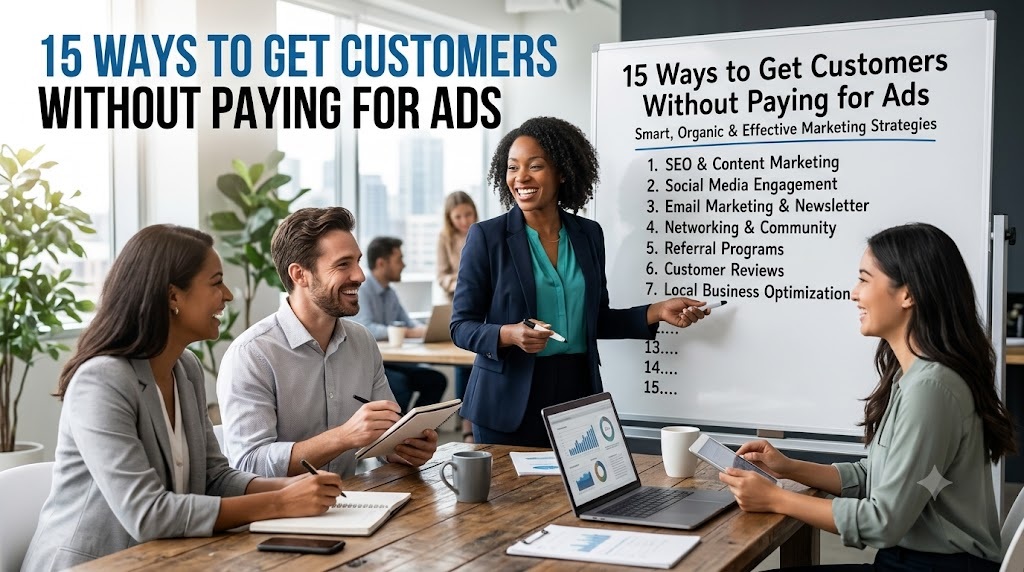
This guide explains 15 practical ways to get customers without paying for ads, improve your online visibility and turn more people into paying customers.
First, Understand How Customers Find Local Businesses
Before promoting your business, understand how people search for products and services.
Imagine someone in Noida is looking for a maths tutor, a family in Delhi wants to find a nearby restaurant, or a customer in Jaipur needs an electrician. They may search on Google, check Google Maps, look at reviews, ask friends for recommendations or browse social media.
Your business has a better chance of getting enquiries when customers can find it, understand what you offer and trust you enough to contact you.
What Does Free Business Promotion Mean?
Free business promotion means using online platforms, useful content, customer relationships and personal recommendations to attract potential customers without paying for advertising space.
You may still need to invest your time, internet access or basic business resources. Some platforms also offer optional paid features. However, the methods in this guide do not require you to purchase ads.
What You Need Before You Start
Prepare these basics before promoting your business:
- A clear business description: Explain what you sell, which services you offer and who you serve.
- Accurate contact details: Keep your phone number, WhatsApp number, address and business hours updated.
- Good photographs: Show your products, premises, team, work samples or completed projects.
- A simple customer benefit: Give people a clear reason to choose your business.
- A way to receive enquiries: Make it easy for customers to call, message, visit your website or find your location.
Once these basics are ready, use the following 15 methods to attract customers without paying for ads.
1. Create and Optimise Your Google Business Profile
Your Google Business Profile is one of the most useful free tools for a local business. It can help your business appear in Google Search and Google Maps when people look for relevant products or services nearby.
For example, a person searching for “salon near me”, “best coaching centre in Lucknow” or “hotel in Karol Bagh” may discover businesses through local search results.
How to Improve Your Google Business Profile
-
- Enter your correct business name, address, phone number and working hours.
- Choose the most relevant primary business category and suitable additional categories.
- Write a clear description of your business and services.
- Upload genuine photographs of your products, premises, team and work.
- Add your website, appointment link or other relevant contact options where available.
- Keep your information updated, especially during holidays or changes in operating hours.
Practical Tip
If you run a bakery in Pune, do not rely only on the word “bakery”. Make sure your profile accurately describes the products you sell, such as cakes, pastries, bread or custom birthday cakes, where relevant.
Never add misleading keywords to your business name or create fake locations to improve rankings.
Best for: Shops, restaurants, salons, clinics, hotels, coaching centres and service businesses that serve a specific area.
2. List Your Business on Free Online Business Directories
When customers search for a local business, they may discover it through directories and business listing websites in addition to Google.
A business listing usually includes your business name, category, location, contact details, description, photographs and links to your website or other online profiles, depending on the platform.
For example, a customer searching for a diagnostic centre in Delhi or a tuition centre in Ghaziabad may come across a relevant business listing while researching available options.
How to Use Business Listings Effectively
-
- Choose reputable directories that accept genuine businesses.
- Complete every relevant field accurately.
- Write an original description explaining your services and location.
- Upload clear, authentic photographs where supported.
- Include your website and Google Business Profile link when permitted.
- Check your listing periodically to ensure the information remains correct.
Avoid submitting your business to hundreds of low-quality websites simply to collect backlinks. A smaller number of relevant, trustworthy listings is more useful than a large number of incomplete or unreliable ones.
Promote Your Business on HotList.in
HotList.in helps businesses improve their online visibility through business listings that connect potential customers with business information and contact options.
You can explore HotList.in to discover how business listings can support your online promotion efforts. Review the available listing options and the features included in each plan before submitting your business.
Best for: Local shops, hotels, restaurants, coaching institutes, service providers, retailers and other businesses looking to improve their online presence.
3. Use WhatsApp Business to Turn Conversations into Customers
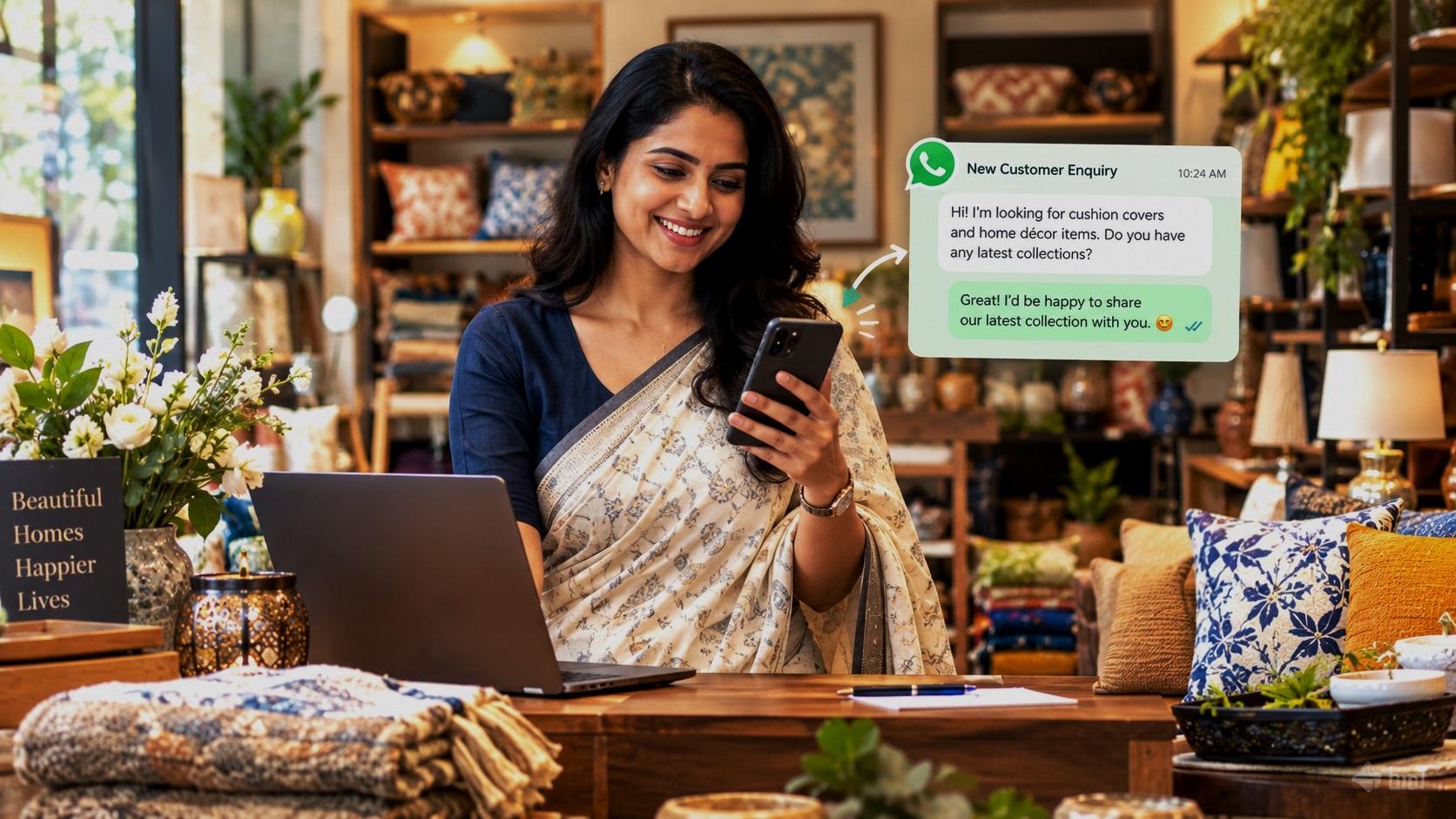
WhatsApp is already part of everyday life for millions of Indian consumers. For many small businesses, it is one of the easiest ways to answer questions, share product details and receive enquiries.
WhatsApp Business offers useful features that help you present your business professionally without purchasing advertisements.
Set Up WhatsApp Business Properly
-
- Create a complete business profile with your name, description, address and working hours.
- Add a catalogue of products or services where suitable.
- Set up a greeting message and an away message.
- Prepare quick replies for common questions about prices, availability, delivery and appointments.
- Share your WhatsApp contact link on your website, business listings and social profiles.
How to Get Customers Through WhatsApp
Suppose you operate a boutique. You can share new arrivals, available sizes, product photographs and seasonal collections with customers who have agreed to receive your updates.
A coaching centre can answer course enquiries, share batch timings and provide information about admissions.
Always obtain appropriate permission before sending promotional messages. Avoid adding people to groups without consent or repeatedly messaging people who have not expressed interest.
Best for: Retail shops, boutiques, restaurants, home businesses, tutors, consultants and appointment-based services.
4. Create a Facebook Page for Your Business
Facebook remains useful for many local businesses, particularly those serving neighbourhoods, residential communities and regional-language audiences.
A Facebook business page gives you a place to publish updates, display photographs, explain your services and interact with potential customers.
What Should You Post?
-
- New products and services.
- Photographs of your shop, premises or work.
- Customer questions and useful answers.
- Festival offers and seasonal updates.
- Practical tips related to your industry.
- Business milestones and genuine customer feedback.
For example, a home baker in Jaipur can post photographs of completed birthday cakes, explain available flavours and tell customers how to place an order.
How to Reach More People Organically
Share helpful posts consistently rather than publishing sales messages every day. Participate in relevant local discussions when allowed, and invite existing customers to follow your page.
Do not post the same promotional message repeatedly across unrelated groups. It can damage your reputation and may violate group rules.
Best for: Local retailers, restaurants, food businesses, salons, tutors and businesses targeting families or neighbourhood communities.
5. Use Instagram to Showcase Your Products and Services
Instagram is particularly useful when customers can understand your offering through photographs and short videos.
A restaurant can showcase its food. A salon can display hairstyles. A boutique can feature new collections. A fitness trainer can share exercise demonstrations, while a home décor business can present completed projects.
How to Promote Your Business on Instagram for Free
Optimise Your Profile
Use your business name, a clear description, your service location and a simple way to contact you. Add your website or relevant business listing link if available.
Publish Useful Visual Content
Create a mix of:
-
- Product photographs and demonstrations.
- Short videos showing your work.
- Before-and-after examples when appropriate and shared with permission.
- Frequently asked questions.
- Customer experiences shared with consent.
- Behind-the-scenes content that shows how your business operates.
Make Every Post Easy to Act On
Tell people what to do next. For example, invite them to message you for availability, view your catalogue or visit your shop.
Use relevant location tags and hashtags where appropriate, but do not expect hashtags alone to generate customers.
Best for: Fashion boutiques, cafés, restaurants, beauty salons, bakeries, fitness centres and visually driven businesses.
6. Publish Short Videos That Answer Customer Questions
You do not need expensive equipment or professional editing software to make useful videos. A smartphone, decent lighting and a clear explanation are often enough.
Short videos can help potential customers understand your products, see your expertise and decide whether your business meets their needs.
Video Ideas for Indian Local Businesses
| Business type | Video idea |
|---|---|
| Restaurant | Show how a popular dish is prepared |
| Coaching centre | Explain one difficult concept in 30 seconds |
| Salon | Demonstrate a simple hair-care technique |
| Retail shop | Compare two popular products |
| Electrician | Explain a common household electrical problem safely |
| Real estate agent | Show a property and explain its key features |
| Bakery | Record the decoration of a birthday cake |
| Travel agency | Share a practical travel-planning tip |
Post suitable videos on Instagram Reels, YouTube Shorts and Facebook, adapting the caption and format to each platform.
Use a clear opening that tells viewers why the video matters. Finish with a simple next step, such as contacting your business for details.
Avoid exaggerated claims, misleading demonstrations and copyrighted music or footage you do not have permission to use.
Best for: Businesses that can demonstrate products, explain services or share expertise visually.
7. Ask Satisfied Customers for Genuine Reviews
Customer reviews help people assess a business before contacting it. They can be especially important when customers are choosing a clinic, hotel, coaching centre, salon, restaurant or home service provider.
Positive reviews may strengthen customer confidence, although they cannot guarantee higher search rankings or sales.
How to Get More Genuine Reviews
-
- Deliver a good customer experience.
- Ask satisfied customers politely to share honest feedback.
- Send them a direct review link when appropriate.
- Thank customers who take the time to leave a review.
- Respond professionally to negative feedback and try to resolve genuine issues.
For example, after completing a home renovation project, you could say: “Thank you for choosing us. If you are happy with our work, we would appreciate an honest review of your experience.”
Do not buy reviews, write fake testimonials, offer rewards in exchange for positive reviews or pressure customers to change honest feedback. Follow the review platform’s policies.
Best for: Almost every local business, especially those where trust and reputation influence purchasing decisions.
8. Join Local Facebook Groups and Online Communities
People often use local online communities to ask for recommendations, discover nearby services and get advice from other residents.
Relevant groups may focus on a city, neighbourhood, apartment complex, parents’ community, local shopping or a particular interest.
How to Participate Without Spamming
-
- Join groups where your target customers are active.
- Read the rules before posting.
- Answer relevant questions genuinely.
- Share useful advice related to your industry.
- Recommend your own business when it is relevant and permitted.
- Keep your business contact details available on your profile where appropriate.
For example, a tutor in Noida could answer a parent’s question about choosing a maths tutor and explain what to consider when selecting one. If the group permits business recommendations, the tutor can share their profile.
A restaurant owner might contribute useful information about catering for local events rather than repeatedly posting “Visit our restaurant today”.
Best for: Tutors, home service providers, local retailers, event planners, caterers and neighbourhood businesses.
9. Use LinkedIn to Build Professional Relationships
LinkedIn is not limited to job seekers and large companies. It can also help consultants, accountants, business service providers, trainers, recruitment agencies and B2B businesses reach potential customers.
The goal is to demonstrate your knowledge and build relationships, not to send sales pitches to strangers.
How to Generate Business Enquiries on LinkedIn
-
- Complete your profile or company page.
- Explain clearly who you help and what problem you solve.
- Publish practical advice related to your industry.
- Share genuine case studies and business lessons.
- Connect with relevant professionals and potential partners.
- Participate thoughtfully in discussions within your field.
For example, an accountant serving small businesses can publish a simple guide to organising invoices and business records. A web designer can explain common website mistakes that affect enquiries.
Useful content gives people a reason to remember you when they need your services.
Best for: Consultants, accountants, IT companies, trainers, agencies, manufacturers and professional service providers.
10. Start a Blog That Answers What Customers Search For
A business blog can attract people who are already looking for information related to your products or services. Helpful articles can appear in search results and continue attracting visitors long after publication.
You do not need to publish every day. Start by answering questions your customers frequently ask.
Blog Topics That Can Attract Potential Customers
A salon could write about choosing a suitable hair treatment. A coaching centre could explain how students can prepare for board exams. A travel agency could publish a guide to planning a family holiday.
A local service provider could answer questions about pricing, common problems, maintenance or how to choose a reliable professional.
How to Make Your Blog SEO-Friendly
-
- Choose a topic that addresses a real customer question.
- Use the words people naturally search for in the title and headings.
- Include your service area when it is genuinely relevant.
- Explain the answer clearly and provide practical steps.
- Link to relevant service pages and useful resources.
- Add a clear way to contact your business.
- Keep the information accurate and update it when necessary.
For example, “How to Choose a Maths Tutor in Noida” is more useful to a parent than a vague article titled “Why Education Is Important”.
Do not repeat the same keyword unnaturally or publish dozens of nearly identical city pages. Useful, original content is a stronger long-term strategy.
Best for: Coaching centres, consultants, clinics, educational businesses, travel companies and service providers with questions customers regularly ask.
11. Create a Simple Website or Improve the One You Have
Social media profiles and business listings help people discover you, but a website gives you more control over how your business is presented.
A simple website can explain your services, show your work, answer common questions and make it easier for customers to enquire.
If you cannot build a website immediately, start with a complete business listing and well-maintained social profiles. You can develop a website as your business grows.
What Should Your Website Include?
-
- A clear description of what your business does.
- Your main products or services.
- Your service area or physical address, where relevant.
- Genuine photographs and examples of your work.
- Customer reviews or testimonials used with permission.
- Your phone number and enquiry options.
- Answers to common customer questions.
- A clear call to action on important pages.
For local SEO, use descriptive page titles such as “AC Repair Services in Jaipur” when they accurately describe your offering. Make sure your website works well on mobile phones and loads efficiently.
Best for: Businesses that want a professional online presence and a central destination for customers from Google, social media and directories.
12. Make It Easy for Customers to Contact You on WhatsApp, Phone or Your Website
Getting visibility is only the first step. You also need to convert that attention into enquiries.
A customer may discover your business but leave if they cannot find your phone number, understand your services or work out how to place an order.
Remove Common Barriers to Enquiries
-
- Display your phone number clearly.
- Add a WhatsApp contact option where appropriate.
- Explain how customers can book, order or request a quotation.
- Mention your operating hours and service area.
- Answer common questions about pricing and availability.
- Keep enquiry forms short and easy to complete.
- Respond promptly during your stated business hours.
For example, a customer looking for a birthday cake should be able to see the available options and quickly ask about size, flavour, delivery and pricing.
Do not make customers search through multiple pages to find basic contact information.
Best for: Every business that depends on phone calls, messages, bookings, quotations or walk-in visits.
13. Encourage Referrals From Existing Customers
A satisfied customer can introduce your business to friends, relatives, colleagues and neighbours. Referrals are valuable because the recommendation comes from someone the potential customer already knows.
You do not need an expensive referral programme to start generating word-of-mouth business.
How to Encourage More Referrals
-
- Deliver reliable service and communicate clearly.
- Ask happy customers to recommend you when someone needs a similar service.
- Make it easy for customers to share your business profile or contact details.
- Thank customers who refer others.
- Stay in touch with past customers where appropriate.
For example, a tuition provider can share a professional tutor profile that parents can forward to other families. A home cleaning business can provide a simple digital card with its services and contact number.
You can also introduce a referral benefit if it suits your business, but explain the terms clearly and account for the cost. Referrals do not have to involve discounts or rewards.
Best for: Tutors, salons, home services, consultants, clinics, retailers and businesses built on repeat relationships.
14. Partner With Other Local Businesses
You do not have to find every customer on your own. Other businesses may already serve people who need your products or services.
A relevant partnership lets both businesses reach a new audience without purchasing advertisements.
Examples of Local Business Partnerships
| Your business | Potential partner |
|---|---|
| Wedding photographer | Wedding planner or bridal boutique |
| Bakery | Café or event planner |
| Tuition centre | Children’s activity centre |
| Gym | Sports shop or fitness trainer |
| Travel agency | Hotel or local tour operator |
| Interior designer | Furniture store |
| Corporate trainer | HR consultant |
| Party decorator | Caterer or photographer |
Start with businesses whose services complement yours rather than directly compete with you.
Agree on how you will introduce customers, what information you can share and whether any referral fees or other benefits apply. Be transparent with customers and obtain permission before sharing their personal details.
You can also exchange useful content, collaborate on a local event or create a joint guide for customers.
Best for: Businesses serving related customer groups, particularly those operating in the same city or neighbourhood.
15. Follow Up With Previous Customers and Old Enquiries
Many businesses focus so much on finding new customers that they forget people who have already purchased from them or previously expressed interest.
A past customer may need another purchase, a renewal, a new service or a recommendation. Someone who requested a quotation may also be ready to proceed later.
Build a Simple Customer Follow-Up System
Keep a basic record of customer enquiries, previous purchases, follow-up dates and next steps. A spreadsheet may be enough for a small business.
Use follow-ups to:
-
- Check whether a customer needs further assistance.
- Inform interested customers about relevant new products or services.
- Remind customers about upcoming appointments or renewals.
- Ask for feedback after a purchase.
- Reconnect with previous customers who may need your service again.
For example, a computer repair shop can follow up after a repair to check whether the issue has been resolved. A salon can remind customers about an appointment they have booked. A coaching centre can contact previous enquirers when a relevant new batch opens.
Keep messages personal, useful and respectful. Follow applicable privacy and messaging rules, and stop promotional communication when a person opts out.
Best for: Businesses with repeat customers, regular bookings, seasonal demand or enquiries that take time to convert.
How to Choose the Right Free Marketing Methods for Your Business
You do not need to use all 15 methods at once. Choose the methods that match your customers, available time and type of business.
| Business type | Best methods to start with |
|---|---|
| Local shop or retailer | Google Business Profile, business listings, WhatsApp and Instagram |
| Restaurant or café | Google Business Profile, reviews, Instagram and short videos |
| Coaching centre or tutor | Google Business Profile, useful blog content, local communities and referrals |
| Salon or beauty business | Google Business Profile, Instagram, reviews and WhatsApp |
| Home service provider | Google Business Profile, local communities, referrals and business listings |
| Consultant or professional service | LinkedIn, blog content, website and referrals |
| Hotel or travel agency | Google Business Profile, business listings, reviews and useful travel content |
| B2B company | LinkedIn, website, partnerships and helpful industry articles |
The most effective combination depends on where your customers search and how they prefer to make purchasing decisions.
A Simple 30-Day Plan to Get Customers Without Ads
Knowing what to do is useful, but taking consistent action is what makes the difference. Use this practical plan to get started.
Week 1: Build Your Online Foundation
-
- Complete or improve your Google Business Profile.
- Check your business name, phone number, address and working hours.
- Create or update your WhatsApp Business profile.
- Prepare clear photographs and a short business description.
- Check whether your business information is consistent across existing online listings.
Week 2: Improve Your Visibility
-
- Submit your business to a few relevant, reputable directories.
- Update your Facebook and Instagram business profiles.
- Publish two or three useful posts or short videos.
- Ask recent, satisfied customers for honest reviews.
- Make sure customers can easily contact you.
Week 3: Reach More Potential Customers
-
- Answer relevant questions in local online communities.
- Publish a useful article or detailed post about a common customer problem.
- Contact a few suitable businesses about possible partnerships.
- Share your business profile with interested customers and professional contacts.
- Review which posts and listings are generating attention or enquiries.
Week 4: Turn Enquiries Into Sales
-
- Follow up on genuine enquiries that have not converted.
- Improve any incomplete or confusing service information.
- Ask customers what helped them choose your business.
- Identify which channels generated the most useful enquiries.
- Continue the activities that produce results and adjust those that do not.
This plan is a starting point, not a promise of a particular number of customers. Results depend on your industry, location, competition, offer and consistency.
How to Measure Whether Your Free Promotion Is Working
Likes, followers and views can indicate interest, but they do not necessarily mean your business is getting customers.
Track the activities that matter to your business.
Important Numbers to Monitor
Profile views: How many people are discovering your business on relevant platforms?
Website visits: Are more people visiting your website or business listing?
Phone calls and WhatsApp enquiries: Are potential customers contacting you?
Qualified leads: How many enquiries come from people who genuinely need your product or service?
Conversions: How many enquiries become purchases, bookings or paying customers?
Repeat customers: Are previous customers returning or recommending you to others?
You can use a simple spreadsheet to record the date, source of the enquiry, service requested, outcome and sale value.
When possible, ask customers how they found you. Over time, this will help you identify the free marketing methods that deserve more attention.
Common Mistakes to Avoid When Promoting Your Business for Free
Free marketing can be effective, but certain mistakes waste time and damage trust.
1. Trying to Be Everywhere at Once
You do not need to manage every social platform. Start with the channels your customers actually use.
2. Posting Only Sales Messages
People are more likely to engage when your content answers questions, demonstrates expertise or helps them make a decision.
3. Ignoring Customer Enquiries
A potential customer may choose a competitor if you take too long to respond. Set realistic response times and meet them consistently.
4. Using Fake Reviews or Misleading Claims
Trust takes time to build and can be lost quickly. Use genuine customer feedback and make claims you can support.
5. Expecting Instant Results
Organic visibility and referrals often take time. Test your approach, learn from actual enquiries and improve gradually.
6. Focusing on Followers Instead of Customers
A smaller audience of relevant local customers may be more valuable than thousands of followers who are unlikely to buy.
7. Leaving Business Listings Incomplete
Missing phone numbers, outdated hours, poor photographs and unclear service descriptions can discourage enquiries.
Start Small, Stay Consistent and Make Your Business Easy to Find
You do not need a large marketing budget to start attracting customers. You need a clear offer, accurate business information, a trustworthy online presence and a reliable way for customers to contact you.
Start with your Google Business Profile, complete your online business listings, use WhatsApp Business, publish helpful content and encourage genuine customer referrals. Then expand into the methods that make sense for your business.
For Indian business owners, the biggest opportunity is often to improve the online presence they already have. A customer searching for a service in your area should be able to discover your business, understand what you offer, assess your credibility and contact you without difficulty.
Explore HotList.in to discover business listings and learn more about promoting your business online. Make it easier for potential customers to find your business and take the next step towards contacting you.
Remember: Free marketing is not about doing everything. It is about choosing the right activities, doing them well and continuing to improve based on real customer enquiries.
Related Posts
25 Free Ways to Promote Your Business Online in India
20 Websites Where You Can List Your Business for Free
10 Best Online Directories for Indian Businesses
20 Free Marketing Tools Every Small Business Should Know
15 Ways to Get More WhatsApp Enquiries for Your Business
10 Ways to Promote a New Business Locally
15 Lead Generation Ideas for Service-Based Businesses