Running a business in India is challenging enough. You have products to sell, customers to serve, bills to pay and competitors to beat. Spending a large amount on advertising may not be possible, especially when you are starting out or trying to grow a small business.
The good news? You do not need a big marketing budget to promote your business online. You need the right information, a little time and a consistent effort.
Whether you run a shop, restaurant, coaching centre, hotel, salon, clinic, tuition service, home-based business or online store, there are several free ways to reach potential customers on the internet.
The key is to help people discover your business when they search for a product or service, compare their options or ask for recommendations.
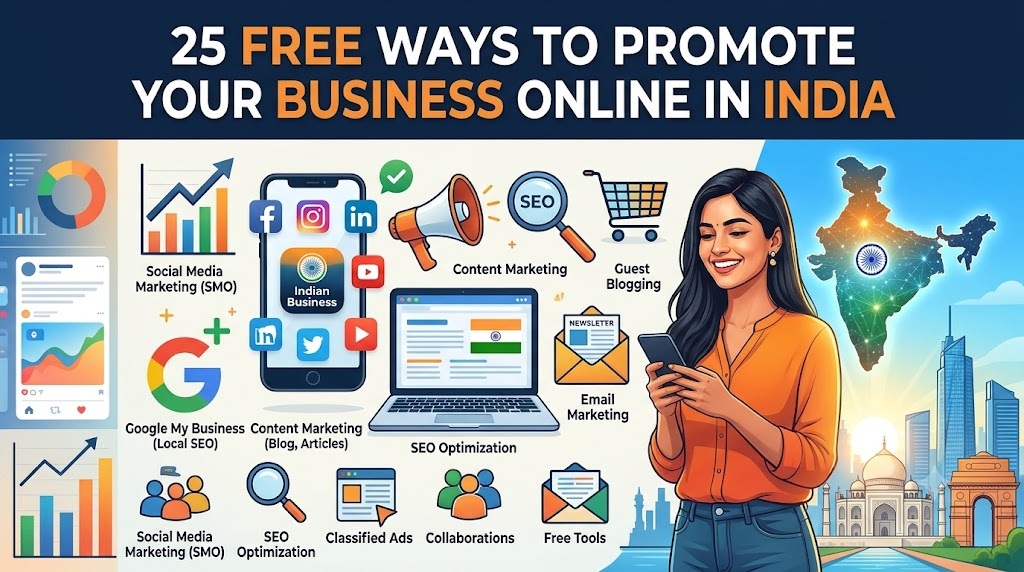
In this guide, you will learn 25 practical ways to promote your business online for free in India, attract local customers, build trust and generate inquiries without spending money on advertisements.
Why Is Online Promotion Important for Indian Businesses?
Think about how people find businesses today. Someone looking for a nearby restaurant might search on Google. A parent searching for a tutor may check online listings. A customer looking for a boutique might explore Instagram before visiting the shop.
If your business does not appear where potential customers are looking, they may choose a competitor instead.
Online promotion helps you:
-
- Increase visibility: Make it easier for customers to discover your business.
- Reach local buyers: Connect with people searching for products and services in your city or neighborhood.
- Build credibility: Share your business information, photographs, reviews and customer experiences.
- Generate inquiries: Encourage people to call, message you on WhatsApp or visit your website.
- Compete affordably: Use free online tools before investing in paid advertising.
The best part is that many free promotion methods continue to provide value after you have completed the initial work.
Before You Start: Get These 5 Basics Right
Before trying all 25 methods, make sure your business is ready to be discovered online.
1. Write a Clear Business Description
Explain what you offer, who you serve and where you operate.
For example, instead of writing “We provide the best services,” a Delhi-based coaching centre could write:
“We provide classroom and online coaching for Classes 9–12 in Mathematics, Science and competitive exam preparation in Delhi.”
A clear description helps customers understand your business immediately.
2. Use the Same Business Details Everywhere
Keep your business name, address, phone number, opening hours and website consistent across your online profiles.
Inconsistent details can confuse customers and make it harder for them to contact you.
3. Prepare Good Business Photographs
Use clear, genuine photographs of your shop, products, team, premises, completed work or services.
You do not always need a professional photographer. A smartphone and good lighting can produce useful images.
4. Make It Easy for Customers to Contact You
Give potential customers a clear next step. Depending on your business, this could be a phone call, WhatsApp message, website visit, appointment request or shop visit.
5. Decide What You Want to Achieve
Do you want more walk-in customers, online orders, bookings, tuition inquiries or phone calls?
Choose one main goal and measure your progress. More views are useful, but relevant enquiries and paying customers matter more.
25 Free Ways to Promote Your Business Online in India
1. Create a Free Google Business Profile
For a business that serves customers locally, this should be one of your first priorities.
A Google Business Profile helps eligible businesses appear on Google Search and Google Maps when people look for relevant products or services nearby.
For example, a person searching for “salon in Rohini,” “hotel in Karol Bagh” or “IAS coaching in Noida” may discover local businesses through these results.
How to get started
-
- Visit Google Business Profile at https://www.google.com/business/
- Add or claim your business profile.
- Enter accurate business details and complete Google’s verification process.
- Select the most relevant business category.
- Add your address or service area, phone number, opening hours and website, where applicable.
- Upload genuine photographs and keep the profile updated.
How to get better results
Complete every relevant section, respond to reviews and update your information when something changes. Never create fake locations or duplicate profiles to manipulate search results.
Google Business Profile is especially useful for shops, restaurants, hotels, clinics, salons, coaching centres and service providers who meet Google’s eligibility requirements.
2. List Your Business on Free Online Business Directories
Business directories help customers discover businesses by category, location and service.
They also give you another place to present your business information online. Some directories may provide a link to your website, contact details or a way for customers to inquire.
Where can you list your business?
Consider relevant platforms such as:
-
- HotList.in: Explore business listing opportunities at https://hotlist.in/
- Justdial: https://www.justdial.com/
- IndiaMART: https://www.indiamart.com/
- TradeIndia: https://www.tradeindia.com/
Availability of free listings and features varies by platform. Some offer paid upgrades, and certain platforms are better suited to particular business types.
HotList.in helps businesses present their details online and improve their discoverability. Its free listing option is a starting point for businesses that want an online presence without an upfront listing fee.
How to make directory listings useful
Choose directories that suit your business and target market. Write a clear description, select the correct category, provide accurate contact details and include genuine business information.
Do not submit your business to hundreds of low-quality directories simply to collect links. A few relevant, complete listings are more useful than a large number of neglected ones.
3. Promote Your Business on WhatsApp
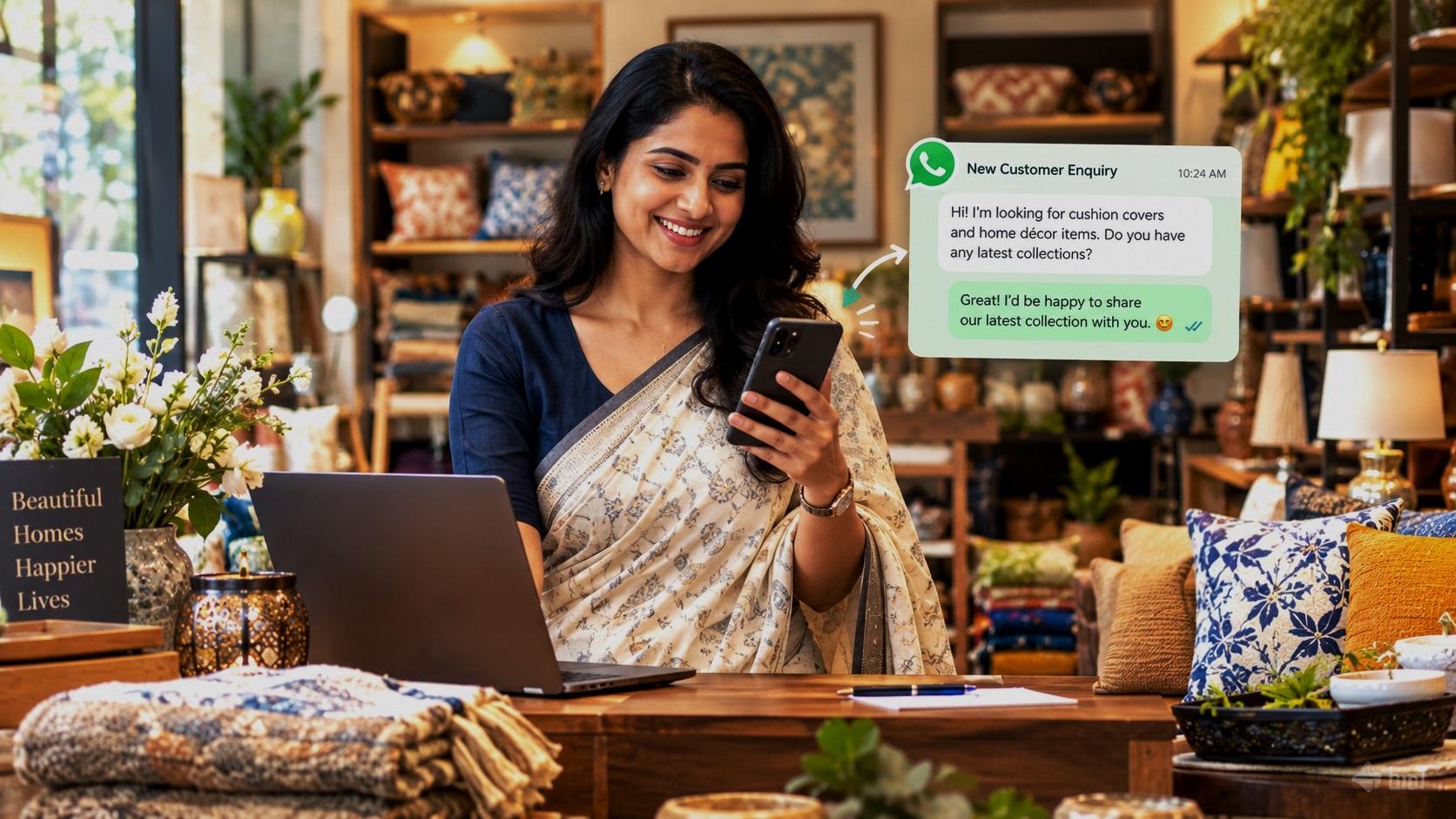
WhatsApp is widely used in India, making it a practical way to communicate with existing customers and attract new ones.
You can use it to share product updates, answer questions, send catalogues and make it easier for customers to contact your business.
Ways to use WhatsApp for free
-
- Set up WhatsApp Business if it suits your needs.
- Add your business name, category, description, address and opening hours.
- Create a catalogue of products or services where relevant.
- Share useful updates through Status.
- Respond promptly to customer questions.
- Ask satisfied customers to share your business details with people who may need your services.
For example, a bakery can post its daily menu, a boutique can showcase new arrivals, and a tutor can share information about available classes.
Important: Send promotional messages only to people who have agreed to receive them. Avoid unsolicited bulk messages, which can annoy customers and lead to account restrictions.
4. Create a Free Instagram Business Presence
Instagram is particularly useful for businesses that can demonstrate their products, work or services visually.
Restaurants, cafés, fashion boutiques, salons, bakeries, fitness centres, travel businesses and home-based sellers can use it to show potential customers what they offer.
What should you post?
-
- Product photographs and demonstrations
- Before-and-after examples, where appropriate
- Short videos showing your work
- Answers to common customer questions
- Customer feedback shared with permission
- New products, offers and seasonal collections
Add your city or service area to relevant posts. Use a clear profile description that explains what you sell and how customers can contact you.
For example, “Custom cakes in Noida | Birthday and wedding cakes | Order on WhatsApp” tells customers much more than “Welcome to our page.”
You do not need to post several times every day. Start with a manageable schedule and focus on useful, original content.
5. Create a Facebook Business Page
Facebook remains a useful platform for many local businesses in India, particularly those serving neighborhoods, families and local communities.
Create a business page with your contact details, location, photographs, services and opening hours.
Publish updates about your work, answer questions and share information that helps potential customers make decisions.
For example:
-
- A restaurant can post its menu and dining photographs.
- A coaching centre can share class schedules and educational tips.
- A home repair service can demonstrate completed projects.
- A retail shop can announce new stock.
You can also participate in relevant local Facebook groups, subject to their rules. Avoid repeatedly posting advertisements in groups where promotions are not allowed.
6. Use LinkedIn to Reach Professional and Business Customers
LinkedIn is not only for job seekers. It can also help consultants, accountants, IT companies, manufacturers, recruiters, business service providers and B2B sellers connect with potential customers.
How to promote your business on LinkedIn
Create a professional personal profile and, where appropriate, a company page. Explain your expertise and the problems you solve.
Share practical advice, case studies, industry insights and examples of your work. Connect with relevant professionals and participate in discussions where you can contribute something useful.
For instance, a small accounting firm could publish tips about maintaining business records, while a software company could explain how its services solve a common operational problem.
Avoid sending generic sales pitches to every new connection. Build relationships before asking people to buy.
7. Create YouTube Videos About Your Products or Services
YouTube can help potential customers discover your business through both YouTube search and, in some cases, Google search results.
You do not need expensive equipment or a studio. Start with a smartphone and a topic that customers genuinely care about.
Video ideas for different businesses
| Business type | Video idea |
|---|---|
| Restaurant | How your signature dish is prepared |
| Coaching centre | A short lesson on a difficult topic |
| Salon | Haircare tips for common problems |
| Boutique | How to style an outfit for different occasions |
| Real estate agent | A neighborhood property walkthrough |
| Repair service | How to identify a common household problem |
Use a descriptive title, explain the topic clearly and include your business name and contact information where appropriate.
A video titled “5 Tips to Choose the Right Maths Tutor in Delhi” is more informative and searchable than a title such as “Our New Video.”
Do not expect every video to go viral. Focus on answering questions your potential customers are already asking.
8. Publish Short Videos and Reels
Short videos are useful for showing products, demonstrating services and introducing your team.
You can publish suitable original videos on Instagram Reels, YouTube Shorts and Facebook Reels.
What makes a useful short video?
Start with an interesting question or a clear benefit. Show the product, process or result. End with a simple next step, such as visiting your shop, viewing your catalogue or contacting you.
Examples include:
-
- “Three things to check before choosing a preschool.”
- “See how we prepare our most popular cake.”
- “What should you look for before buying a laptop?”
- “A quick tour of our hotel rooms.”
- “One common mistake students make in algebra.”
Keep the information relevant and the video easy to understand. Use captions where possible so people can follow along without sound.
9. Start a Free Blog on Your Website
A blog can attract people who search online for answers related to your business.
Unlike a social media post that may quickly disappear from a feed, a useful article can continue attracting visitors through search engines over time.
What should you write about?
Write about the questions customers ask before purchasing.
For example:
-
- A dentist can explain how to choose a toothbrush.
- A tutor can write about preparing for board examinations.
- A travel agency can publish a guide to planning a family holiday.
- An interior designer can share ideas for small Indian homes.
- An accountant can explain common business bookkeeping mistakes.
Use descriptive titles, relevant keywords and clear headings. Link articles to relevant service pages so readers can learn more about your offerings.
If you do not have a website, you can start by sharing useful educational posts on platforms that support publishing. A free publishing option may have limitations, so check its terms before relying on it for your long-term business presence.
10. Answer Questions on Quora
Quora can help you reach people who are actively looking for information.
The most effective approach is to answer relevant questions with practical, detailed advice rather than treating every answer as an advertisement.
For example, a tutor could answer “How can I help my child improve in Mathematics?” A travel business could explain how to plan a family trip to Rajasthan.
How to use Quora effectively
-
- Search for questions related to your industry.
- Choose questions you can answer accurately.
- Give a complete, helpful answer.
- Mention your business only when it is relevant.
- Include a link only when it genuinely adds value and is permitted by the platform’s rules.
Useful answers build credibility and may introduce your business to people who would not otherwise have discovered it.
11. Participate in Relevant Reddit Communities
Reddit contains discussions about local areas, products, services, careers, education, technology and many other subjects.
Look for communities where your target customers discuss problems that your business can help solve.
Read the rules before participating. Some communities prohibit self-promotion or restrict links to businesses.
Share genuine knowledge, explain your experience where relevant and answer questions honestly. Do not create fake customer accounts, post fabricated reviews or disguise advertisements as independent recommendations.
Reddit is best approached as a place to contribute to discussions, not as a free advertising board.
12. Join Local Online Communities
Local online communities can help you reach customers in your city, neighborhood or service area.
These may include neighborhood groups, resident welfare association groups, community forums and local business groups.
For example, a home tutor in Noida may benefit from a relevant parents’ community, while a bakery in Pune may find customers in neighborhood food groups.
How to promote your business without annoying people
-
- Follow the group’s rules.
- Answer questions when your expertise is relevant.
- Share helpful information rather than repeated advertisements.
- Mention your location clearly.
- Respond politely to questions.
- Ask administrators before posting promotional content if the rules are unclear.
A useful recommendation in the right community can be more valuable than dozens of generic promotional posts.
13. Encourage Genuine Customer Reviews
Customer reviews help potential buyers understand other people’s experiences with your business.
They can be particularly useful for restaurants, hotels, clinics, salons, tutors, repair services and other businesses where trust matters.
How to get more genuine reviews
After completing a purchase or service, politely ask the customer to share honest feedback.
You can send a review link, place a QR code at your counter or include a review request in your follow-up message.
Respond professionally to both positive and negative reviews. If a customer raises a legitimate problem, explain how you intend to address it.
Never buy fake reviews, write reviews for your own business under false identities or offer incentives in exchange for positive ratings. Follow the review platform’s policies.
14. Ask Satisfied Customers for Referrals
Your existing customers may know other people who need your products or services.
A referral programme does not have to involve money or discounts. Sometimes, simply asking a satisfied customer to recommend your business is enough.
For example, a tutor can ask parents to share their profile with other families looking for tuition. A caterer can ask a happy client to recommend the service to someone planning an event.
Make referrals easy by providing a clear business profile, a shareable link or a concise description of your services.
Always respect customers’ privacy and avoid pressuring them to recommend you.
15. Share Your Business in Your Personal WhatsApp Status
Your personal network can be a useful starting point when promoting a new business.
Share a short introduction explaining what you do, who you serve and how people can contact you.
You can also post product photographs, service updates, useful tips and genuine customer feedback shared with permission.
For example:
“Looking for fresh, customized cakes in Jaipur? We make birthday and celebration cakes to order. Message us to discuss your requirements.”
Keep the message natural and occasional. Your contacts are more likely to engage when your updates provide useful information rather than constant sales messages.
16. Make Your Website Search-Friendly
If you already have a website, you can improve its chances of appearing in relevant search results without paying for advertisements.
Search engine optimization, or SEO, involves making your website easier for search engines and people to understand.
Start with these basic SEO improvements
-
- Give every important page a clear, descriptive title.
- Explain your products and services in simple language.
- Mention your service area naturally where relevant.
- Use useful headings to organize information.
- Add descriptive text to important images.
- Link related pages together.
- Make sure your website works well on mobile phones.
- Check that important pages can be indexed by search engines.
For example, a page titled “AC Repair Services in Indirapuram, Ghaziabad” gives a clearer indication of the service and location than a page titled only “Our Services.”
Do not stuff the same keyword into every sentence. Write for customers first.
17. Create Dedicated Pages for Your Services and Locations
If your business offers several services or serves different areas, consider creating a separate page for each important service or location.
For example, a tuition provider may offer Mathematics, Science and English tuition. Each subject could have its own page explaining the classes offered, teaching approach and contact options.
A service business operating in multiple areas could create location pages when each page provides genuinely useful, location-specific information.
What should each page include?
-
- The service or product offered
- Who it is suitable for
- Important details, benefits or features
- Relevant photographs or examples
- The areas served, where applicable
- Answers to common customer questions
- A clear contact or inquiry option
Avoid creating dozens of nearly identical pages that simply swap city names. Each page should offer real value to the reader.
18. Register Your Website With Google Search Console
Google Search Console is a free tool that helps website owners understand how their sites perform in Google Search.
It can show which search queries bring visitors to your website, how often pages appear in results and whether Google has identified indexing issues.
How to use it
-
- Visit https://search.google.com/search-console/
- Add your website property.
- Complete the ownership verification process.
- Submit your XML sitemap if your website has one.
- Check the Performance report to understand which queries and pages receive impressions and clicks.
- Review indexing information and address important problems.
Search Console does not guarantee higher rankings. However, it helps you identify opportunities and technical issues without paying for a separate SEO reporting tool.
19. Use Free Website Analytics
You cannot improve what you never measure.
Google Analytics offers a free standard service that helps you understand how people interact with your website.
Visit https://analytics.google.com/ to explore the service.
Depending on your setup, you can measure website visits, traffic sources, page engagement and events such as button clicks or form submissions.
What should you track?
For a local business, useful measures may include:
-
- Visitors arriving from Google Search
- Visitors coming from social media
- Most-visited service pages
- Clicks on contact links
- Inquiry form submissions
- Traffic from specific campaigns
Do not focus only on total page views. A smaller number of visitors who are genuinely interested in your services may be more valuable than thousands of unrelated visits.
Set up tracking correctly and respect applicable privacy requirements.
20. Create a Free Email Newsletter
Email remains a practical way to maintain relationships with customers who have agreed to receive updates.
You can use an email service with a free plan, subject to its current limits and conditions, to send useful information and business updates.
What can you send?
A retailer can share new collections. A coaching centre can send study tips and admission updates. A consultant can publish practical advice. A restaurant can announce seasonal menus.
Keep your messages relevant, easy to read and clear about why the recipient is receiving them.
Build your email list through voluntary sign-ups. Do not purchase mailing lists or send unsolicited bulk emails. Include an appropriate unsubscribe option and comply with applicable email and privacy rules.
21. List Products on Free Online Marketplaces Where Available
If you sell physical products, relevant online marketplaces can help you reach buyers who are already searching for what you offer.
Some platforms provide free registration or limited free listing options, while others charge fees for certain services, transactions or seller features.
Research the current terms before investing time in a platform.
For example, a manufacturer may explore B2B marketplaces, while a local retailer may investigate suitable product discovery platforms.
Before listing your products
-
- Use accurate product names and descriptions.
- Upload clear, genuine photographs.
- Mention specifications and important limitations.
- Keep prices and availability up to date.
- Explain delivery, returns and payment conditions clearly.
A free product listing does not necessarily mean that every sale will be free of platform fees. Check the complete fee structure before accepting orders.
22. Use Pinterest for Products and Visual Ideas
Pinterest can be useful for businesses that offer visually appealing products, inspiration or ideas people save for future use.
Examples include interior design, home décor, fashion, jewellery, wedding services, recipes, crafts and travel planning.
Create relevant pins using clear images, descriptive titles and helpful descriptions. Link them to the relevant product, service or article on your website when permitted.
For example, a home décor business could publish “Small Living Room Ideas for Indian Apartments,” while a boutique could share outfit styling suggestions.
Pinterest is not equally useful for every business. Test whether your target customers use the platform before making it a major part of your marketing routine.
23. Collaborate With Complementary Local Businesses Online
You do not always have to promote your business alone.
Find businesses that serve a similar audience without directly competing with you. You can share useful content, recommend each other’s services where appropriate or organize a joint online session.
Examples include:
-
- A wedding photographer and a wedding planner
- A bakery and an event decorator
- A fitness trainer and a sports equipment shop
- A tutor and an educational content creator
- A travel agent and a local tour guide
You could create a joint video, exchange educational tips or publish a useful guide together.
Make sure any recommendation is genuine and transparent. Do not exchange fake reviews or mislead customers about commercial relationships.
24. Offer Free Useful Resources
A free resource can introduce potential customers to your business by helping them solve a problem.
The resource should be genuinely useful and related to the service you offer.
Examples of free resources
| Business | Free resource idea |
|---|---|
| Coaching centre | Revision checklist or sample worksheet |
| Accountant | Basic business expense checklist |
| Fitness trainer | Beginner workout plan |
| Interior designer | Room measurement checklist |
| Travel agency | Trip planning checklist |
| Digital marketing agency | Website review checklist |
| Retailer | Product selection guide |
You can publish these resources on your website, share them on social media or distribute them to people who request them.
Do not make exaggerated claims about what a free guide can achieve. Its purpose is to help people and demonstrate your knowledge.
25. Turn Every Customer Interaction Into an Opportunity for Online Discovery
Many businesses overlook one of the simplest ways to increase online visibility: making their existing business information easy to share.
Whenever a customer interacts with your business, give them a convenient way to find you again or recommend you to someone else.
Simple ways to do this
-
- Add your website or business listing link to appropriate messages.
- Include your online profile in your email signature.
- Put a QR code linking to your business page at your counter.
- Add your social profile links to your website.
- Share a digital catalogue instead of sending scattered product photographs.
- Include your contact details on invoices and relevant business documents.
- Make it easy for customers to forward your business information.
A complete online business profile gives customers one convenient place to find essential information instead of searching through old messages.
For businesses listed on HotList.in, sharing the published listing link can help customers discover the business details collected on that page.
How to Choose the Best Free Promotion Methods for Your Business
You do not need to use all 25 methods at once. The best approach depends on what you sell, whom you serve and how customers normally find businesses like yours.
Here is a practical starting point.
| Business type | Methods to prioritise |
|---|---|
| Local shop or retailer | Google Business Profile, business directories, WhatsApp, Instagram and Facebook |
| Restaurant, café or bakery | Google Business Profile, customer reviews, Instagram Reels, WhatsApp and local communities |
| Tutor or coaching centre | Google Business Profile if eligible, business listings, YouTube, educational articles and parent communities |
| Hotel or travel business | Google Business Profile if eligible, relevant directories, YouTube, Instagram and customer reviews |
| Salon, spa or fitness centre | Google Business Profile, Instagram, Facebook, WhatsApp and genuine reviews |
| Consultant or professional service | LinkedIn, website SEO, useful articles, referrals and email |
| Manufacturer or B2B business | Relevant B2B directories, LinkedIn, website SEO, product pages and YouTube demonstrations |
| Home-based business | WhatsApp Business, Instagram, Facebook, relevant directories and customer referrals |
Use this table as a starting point, not a rigid rule. For example, a local service provider who receives most inquiries through Google may benefit more from improving their business profile than from starting a YouTube channel immediately.
A Simple 30-Day Free Online Business Promotion Plan
Knowing what to do is one thing. Doing it consistently is another.
Use this four-week plan to get started without feeling overwhelmed.
Week 1: Build Your Online Foundation
Goal: Make your business easy to find.
-
- Create or improve your Google Business Profile if eligible.
- Prepare a clear business description and genuine photographs.
- Check that your phone number, address and opening hours are correct.
- Create or update your social media profiles.
- Publish a complete business listing on a relevant directory, such as HotList.in.
By the end of the week, your business should have accurate information on the main platforms relevant to your customers.
Week 2: Start Sharing Useful Content
Goal: Give potential customers a reason to notice your business.
-
- Publish two or three helpful social media posts.
- Create one short video demonstrating your product, service or expertise.
- Share suitable updates through WhatsApp Status.
- Answer a relevant question in an online community.
- Ask a few satisfied customers for honest feedback.
Focus on quality and consistency instead of trying to post everywhere.
Week 3: Improve Search Visibility and Trust
Goal: Help people find and evaluate your business.
-
- Improve your website’s main service page, if you have a website.
- Add relevant photographs and complete missing business details.
- Respond to customer reviews.
- Write one useful article or guide.
- Check your business listings for incorrect or outdated information.
If you have a website, set up Google Search Console and begin monitoring your search performance.
Week 4: Measure Results and Improve
Goal: Identify which methods are worth continuing.
Review the activity from the previous three weeks.
Ask yourself:
-
- Which platform brought the most relevant visitors?
- Did anyone contact the business through WhatsApp, phone or a form?
- Which posts generated questions or meaningful conversations?
- Which business pages received attention?
- What did customers ask about most frequently?
Continue the methods that show promise. Improve or stop activities that consume time without reaching your target customers.
Remember that search visibility and audience growth can take time. Thirty days is a useful starting period, not a guarantee of sales.
How to Measure the Success of Free Online Promotion
Free promotion still costs something: your time and effort. That is why you should measure whether it is helping your business.
Start with a simple spreadsheet. Record your main promotional activities, the platforms you used and the inquiries received.
Track these five indicators:
1. Visibility
Are more people discovering your business through search, social media and directories?
2. Engagement
Are people asking questions, saving useful posts, sharing your content or visiting your profile?
3. Enquiries
How many relevant phone calls, WhatsApp messages, emails or form submissions did you receive?
4. Conversions
How many inquiries became bookings, store visits, orders or paying customers?
5. Time Spent
How much time did you spend on each activity, and was the result worthwhile?
A simple example illustrates the difference.
Suppose one social media post receives 2,000 views but generates no relevant inquiries. Another receives 300 views and brings five genuine customer inquiries. For a local business, the second post may be more valuable.
Measure business results, not just likes and views.
Common Online Promotion Mistakes to Avoid
Even free marketing can waste time if you approach it incorrectly.
1. Trying to Be Everywhere at Once
Managing ten platforms poorly is less useful than managing three platforms consistently.
Start with the places where your customers are most likely to look for your products or services.
2. Posting Only Advertisements
People do not want every post to tell them to buy something. Share useful advice, demonstrations, answers to common questions and genuine business updates.
3. Ignoring Your Online Profiles
Outdated phone numbers, incorrect opening hours and missing photographs can discourage potential customers.
Review your main profiles regularly.
4. Expecting Immediate Results
Some social media posts may attract attention quickly, while search visibility and website traffic can take longer to develop.
Build a sustainable routine instead of abandoning a method after a few days.
5. Using Fake Reviews or Misleading Claims
Trust takes time to build and can be lost quickly. Be honest about your products, qualifications, pricing and customer experiences.
6. Forgetting to Make Contact Easy
A customer may be interested in your product but leave if they cannot find your phone number, location or ordering instructions.
Give people a clear next step wherever you promote your business.
7. Spending Time on Irrelevant Platforms
A platform may be popular without being useful for your particular business.
Choose promotion methods based on your customers, not simply on how many users a platform claims to have.
Can You Promote a Business Online Without a Website?
Yes. A website is useful, but it is not the only way to establish an online presence.
You can start with a Google Business Profile if your business is eligible, social media pages, WhatsApp Business and relevant online business directories.
These channels can help potential customers discover your business, learn what you offer and contact you.
However, each platform has its own limitations and rules. You do not control how another platform changes its features, visibility or eligibility requirements.
As your business grows, consider building a website that you control. It can give you more flexibility over your content, service pages, inquiries and customer experience.
How HotList.in Can Help You Promote Your Business Online
If you run a business in India, one of your first priorities should be to establish a clear, shareable online presence.
HotList.in is a business listing and local lead generation platform designed to help businesses improve their online visibility and make it easier for potential customers to discover them.
A business listing can provide a convenient page where people can find information about your business and explore the available contact options.
HotList.in offers two listing options:
The paid option is intended for businesses that want additional listing features and promotional support. Review the current submission requirements and terms before applying.
You can explore HotList.in here: https://hotlist.in/
A business listing is one part of your marketing strategy, not a guarantee of leads or sales. For the best results, combine an accurate listing with useful content, genuine customer feedback, clear contact details and consistent promotion.
Frequently Asked Questions
What is the best free way to promote a business online in India?
For eligible local businesses, creating and maintaining a Google Business Profile is an excellent starting point. Relevant business directories, WhatsApp Business, social media and customer referrals can complement it. The best combination depends on your industry and target audience.
How can I promote my small business online without spending money?
Start by completing your business profiles, creating relevant directory listings, sharing useful social media content, encouraging honest customer reviews and participating in suitable local communities. Improve your website’s SEO if you have one. Focus on methods that generate relevant inquiries rather than trying to use every available platform.
How can I attract local customers online?
Use accurate business details, relevant location information, genuine photographs, customer reviews and useful content. Maintain your Google Business Profile if eligible, list your business in relevant directories and make it easy for people to call or message you.
Which websites offer free business listings in India?
Platforms to investigate include HotList.in, Justdial, IndiaMART and TradeIndia. The availability of free listings, the information displayed and the features included may vary. Check each platform’s current terms before registering.
Can free online promotion generate customers?
Yes, free promotion can generate inquiries and sales, but results are not guaranteed. Success depends on factors such as customer demand, competition, business quality, relevance, visibility and how effectively you handle inquiries.
How long does free online promotion take to work?
Some social media posts or customer referrals may produce inquiries quickly. Search engine visibility and organic website traffic often take longer to build. Results vary by business and platform, so monitor your progress over several weeks and adjust your approach.
Do I need to post on social media every day?
No. Consistency and usefulness matter more than posting every day on every platform. Choose a schedule you can maintain and focus on content that answers customer questions, demonstrates your work or explains your products and services.
Is a free business listing enough to promote my business?
A free listing can improve your online presence, but it should be part of a broader strategy. Keep the listing accurate, share its link, collect genuine reviews, publish useful content and make it easy for customers to contact you.
Start Small, Stay Consistent and Grow
Promoting your business online does not have to begin with expensive advertisements or complicated marketing campaigns.
Start with the basics. Make your business easy to find, explain what you offer, share useful information and build trust with potential customers.
Choose three to five methods from this guide that suit your business. Put them into practice, track the inquiries they generate and improve your approach every month.
Most importantly, do not confuse online visibility with business growth. Your ultimate goal is not simply to collect followers, views or likes. It is to connect with the right people, answer their needs and turn genuine interest into lasting customer relationships.
Start promoting your business today. A small, consistent effort can help you build a stronger online presence without stretching your marketing budget.
Related Posts
20 Websites Where You Can List Your Business for Free
15 Ways to Get Customers Without Paying for Ads
10 Best Online Directories for Indian Businesses
20 Free Marketing Tools Every Small Business Should Know
15 Ways to Get More WhatsApp Enquiries for Your Business
10 Ways to Promote a New Business Locally
15 Lead Generation Ideas for Service-Based Businesses