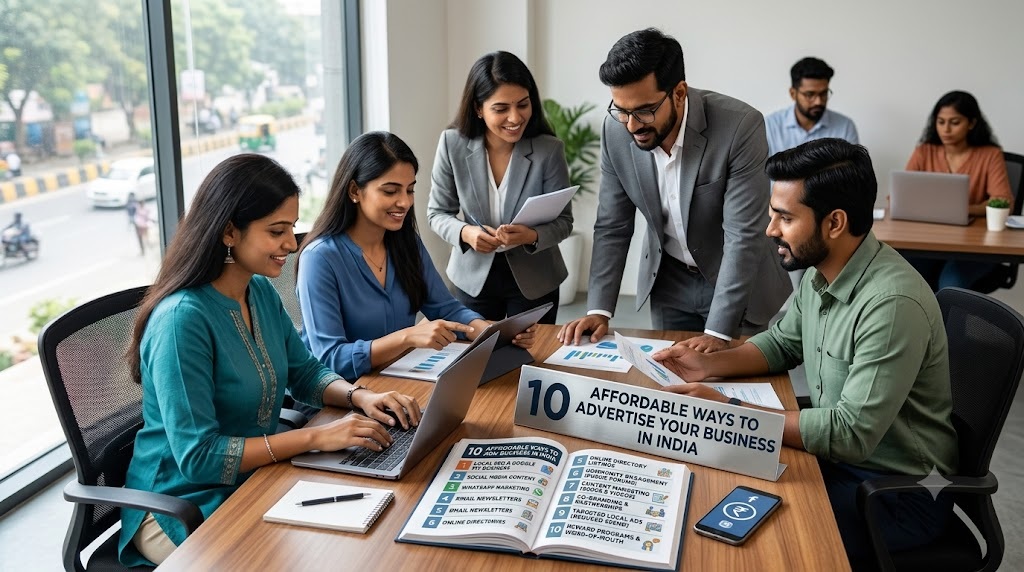
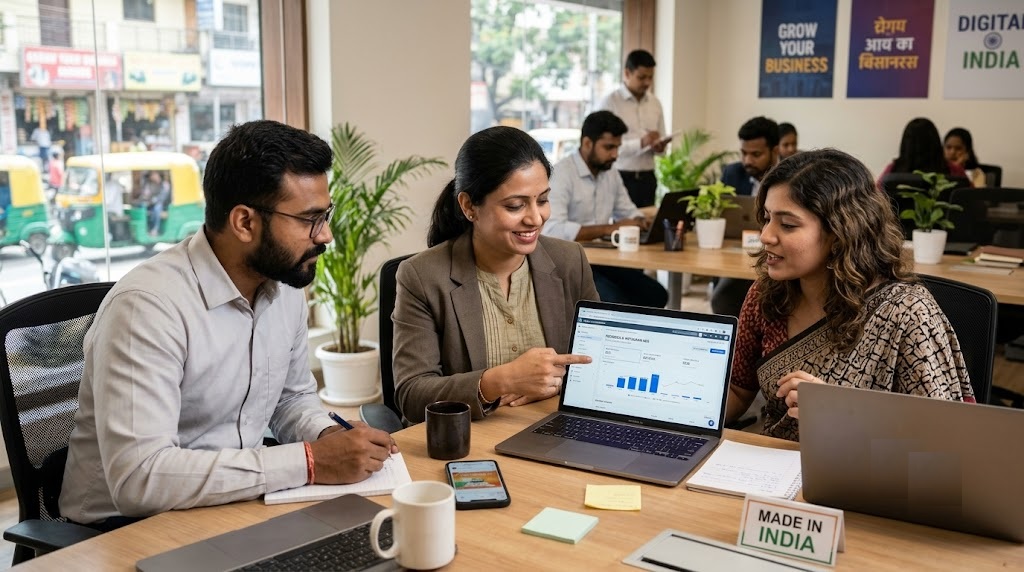
Running a small business in India is not easy. You have products to sell, customers to serve, employees to manage and expenses to control. Finding new customers while managing everything else can be challenging.
You may already have a Facebook page or an Instagram account. You might post pictures of your products, share offers, upload videos and wait for people to contact you. But getting consistent enquiries through regular posts is not always easy.
This is where Facebook and Instagram advertising can help.
With the right advertising strategy, even a small business with a limited marketing budget can reach potential customers in its city, neighbourhood or target market. You don’t need a large marketing team or an expensive advertising agency to get started.
This guide explains how Facebook and Instagram ads work, how much they cost in India, how to choose the right audience, create effective advertisements and turn interested people into paying customers.
Whether you own a restaurant, clothing store, coaching centre, salon, clinic, hotel, bakery, fitness centre or any other local business, you will find practical ideas to promote your business online.
1. What Are Facebook and Instagram Ads?
Facebook and Instagram ads are paid advertisements that businesses use to promote their products, services, offers and brands to selected audiences.
Both platforms are owned by Meta and allow businesses to create and manage advertisements through Meta Ads Manager.
Unlike regular social media posts, which mainly reach your existing followers and some additional users, paid advertisements can reach people who have never heard of your business.
For example:
- A restaurant in Delhi can advertise its lunch offers to people living nearby.
- A beauty salon in Pune can reach women interested in beauty and skincare services.
- A coaching centre in Jaipur can promote its admission programmes to parents and students.
- A clothing boutique in Mumbai can showcase its latest collection to potential customers.
- A fitness centre in Bengaluru can attract people interested in fitness and healthy living.
The biggest advantage is that you can decide whom you want to reach, where your advertisements should appear and how much you want to spend.
2. Why Should Small Businesses in India Advertise on Facebook and Instagram?
Facebook and Instagram offer small businesses an opportunity to compete for attention without needing the advertising budgets of large companies.
Here are some important benefits.
Reach More Potential Customers
Your social media followers represent only a small part of your potential market.
Paid advertisements help you reach people beyond your existing audience. You can introduce your business to new customers based on location, interests and other available targeting options.
Promote Your Business Locally
Local advertising is particularly useful for businesses that depend on customers from specific areas.
For example, if you operate a salon in Rohini, Delhi, reaching people across the entire country may not be useful. You want to attract customers who can actually visit your salon.
Facebook and Instagram ads allow you to focus your campaigns on relevant geographical areas.
Generate Direct Customer Enquiries
You don’t always need customers to visit your website before contacting you.
Depending on the campaign objective, you can encourage people to:
- Send a WhatsApp message.
- Contact your business through Instagram Direct.
- Fill out an enquiry form.
- Visit your website.
- Call your business.
This makes social media advertising particularly useful for service providers and local businesses.
Showcase Products and Services Visually
A picture of a delicious restaurant meal, an attractive clothing collection, a beautifully designed home or a salon makeover can quickly capture attention.
Instagram and Facebook provide several advertising formats that help businesses showcase what they offer.
Control Your Advertising Budget
You can start with a modest budget, test different advertisements and increase spending when you find a campaign that generates worthwhile results.
You don’t have to commit to a large advertising contract or spend a fixed amount every month.
3. Facebook Ads vs Instagram Ads: Which Is Better for Your Business?
Both platforms offer valuable advertising opportunities, but their audiences and content formats can serve different purposes.
| Facebook Ads | Instagram Ads |
|---|---|
| Useful for reaching local communities | Excellent for visual product promotion |
| Suitable for many age groups | Popular for visual discovery and trends |
| Supports lead forms and messaging | Strong for Reels, Stories and shopping discovery |
| Useful for events, offers and services | Useful for fashion, food, beauty and lifestyle |
| Offers multiple advertising placements | Offers highly engaging visual formats |
When Should You Choose Facebook Ads?
Facebook can be useful for businesses targeting local communities, families, homeowners, working professionals and other customer groups.
Consider Facebook advertising if you operate:
- Coaching and tuition centres.
- Diagnostic centres.
- Home improvement services.
- Restaurants and hotels.
- Real estate services.
- Local retail stores.
- Professional service businesses.
When Should You Choose Instagram Ads?
Instagram is particularly useful when your products or services can be presented through attractive photographs and videos.
Consider Instagram advertising if you operate:
- Fashion boutiques.
- Beauty salons.
- Restaurants and cafés.
- Bakeries.
- Jewellery stores.
- Fitness centres.
- Interior design businesses.
- Travel and lifestyle services.
Should You Advertise on Both Platforms?
For many small businesses, advertising on both platforms is a sensible starting point.
You can use Meta Ads Manager to manage campaigns across Facebook and Instagram, then evaluate which placements generate better enquiries and customers.
Don’t assume that one platform will always perform better. Results depend on your business, audience, advertisement and campaign objective.
4. How Much Do Facebook and Instagram Ads Cost in India?
One of the first questions small business owners ask is: How much money do I need to advertise on Facebook and Instagram?
The good news is that you can start with a relatively small budget.
Meta uses an auction system to deliver advertisements. The actual cost depends on several factors, including:
- Your target audience.
- Location and competition.
- Advertising objective.
- Quality and relevance of your advertisement.
- Time of year.
- Number of businesses competing for the same audience.
There is no fixed price for reaching a particular number of people or generating one customer enquiry.
Suggested Starting Advertising Budgets
The following are illustrative testing budgets, not official Meta prices or guaranteed performance benchmarks.
| Daily budget | Approximate 30-day budget | Suitable for |
|---|---|---|
| ₹100 | ₹3,000 | Small initial experiments |
| ₹200 | ₹6,000 | Testing local audiences and creatives |
| ₹300 | ₹9,000 | Regular local campaigns |
| ₹500 | ₹15,000 | More extensive campaign testing |
| ₹1,000 | ₹30,000 | Businesses ready to scale |
You don’t need to start with ₹1,000 per day. Begin with an amount you can comfortably afford to test.
How Much Should a Small Business Spend?
Your advertising budget should depend on the value of a new customer and the profit your business earns.
For example, imagine you own a beauty salon.
- Average customer bill: ₹1,000.
- Estimated profit per visit: ₹400.
- Advertising expenditure: ₹3,000.
- New customers acquired through advertising: 15.
Your advertising cost per customer would be ₹200.
If those 15 customers each generate ₹400 in profit, your total profit before advertising expenditure would be ₹6,000. After deducting ₹3,000 in advertising expenditure, you would have ₹3,000 remaining.
This is a simplified example. You should also consider repeat visits, discounts, operating expenses and the time required to convert enquiries into paying customers.
Remember: A campaign that generates inexpensive clicks is not necessarily successful. What matters is how many genuine enquiries and profitable customers you acquire.
5. How to Set Up Facebook and Instagram Advertising
You don’t need advanced technical knowledge to start advertising. However, setting up your accounts correctly will make campaign management easier.
Step 1: Create a Facebook Business Page
Your business should have a dedicated Facebook Page rather than relying only on a personal profile.
Add the following information:
- Correct business name.
- Business category.
- Profile picture or business logo.
- Cover photograph.
- Business description.
- Address and location, where applicable.
- Contact number.
- Website and WhatsApp details.
- Business hours.
Use clear photographs and keep your information accurate.
Step 2: Set Up an Instagram Professional Account
Switch your Instagram account to a professional Business account.
Complete your profile with:
- Business name.
- Relevant username.
- Clear profile photograph.
- Short business description.
- Location.
- Contact information.
- Website link.
- WhatsApp contact option, where available.
Your profile should immediately tell visitors what you sell, where you operate and how they can contact you.
Step 3: Set Up Meta Business Suite
Meta Business Suite helps you manage your Facebook Page and Instagram account from one place.
You can use it to:
- Manage messages and comments.
- Schedule posts.
- Review account performance.
- Manage connected business assets.
- Access advertising tools.
Step 4: Open Meta Ads Manager
Meta Ads Manager is the main platform for creating and managing advertising campaigns.
It allows you to choose campaign objectives, define audiences, set budgets, create advertisements and track performance.
For better control and reporting, use Ads Manager rather than depending entirely on the Boost Post option.
6. Choose the Right Facebook and Instagram Advertising Objective
Before creating an advertisement, decide what you want people to do.
Meta offers different campaign objectives to support different business goals.
Choosing the right objective is important because the advertising system uses it to find people who are more likely to take the action you want.
Awareness
Use an awareness campaign when you want more people to discover your business.
This can be useful when:
- Opening a new shop.
- Launching a new restaurant.
- Introducing a new brand.
- Promoting a new business location.
- Building recognition in a local market.
Traffic
Traffic campaigns aim to send people to a destination such as your website or landing page.
Use this objective when you want potential customers to explore:
- Your product collection.
- Service information.
- Business website.
- Special offers.
- Online catalogue.
However, website visits alone don’t guarantee enquiries or sales.
Engagement
Engagement campaigns help encourage interactions with your content.
These may include video views, post engagement or messaging interactions, depending on the campaign setup.
They can help increase interest in your products, services and brand.
Leads
Lead campaigns are particularly useful for businesses that depend on enquiries.
Potential customers can submit their details through an instant form or use other supported contact methods.
Examples include:
- Coaching centres collecting admission enquiries.
- Real estate agents collecting property enquiries.
- Interior designers receiving project enquiries.
- Clinics receiving appointment requests.
- Travel agencies collecting holiday package enquiries.
Sales
Sales campaigns are designed to encourage purchases or other valuable conversion actions.
They are particularly useful for businesses with online stores, product catalogues or websites that can track customer purchases.
Which Objective Should You Choose?
| Business requirement | Suitable objective |
|---|---|
| Introduce a new business | Awareness |
| Send people to your website | Traffic |
| Encourage content interaction | Engagement |
| Collect customer enquiries | Leads |
| Generate online purchases | Sales |
Choose the objective based on your actual business goal, not simply because one option sounds more attractive.
7. How to Target the Right Customers for Your Local Business
One of the biggest advantages of Facebook and Instagram advertising is the ability to reach relevant audiences.
However, showing your advertisements to everyone is rarely a good strategy.
A local business should concentrate on people who are most likely to purchase its products or services.
Target Customers by Location
Location targeting is particularly important for Indian local businesses.
For example:
- A restaurant in Karol Bagh can focus on nearby areas of Delhi.
- A salon in Rohini can target relevant neighbourhoods.
- A coaching centre in Noida can reach parents and students in nearby sectors.
- A boutique in South Delhi can target potential shoppers in its service area.
Start with a realistic geographical area based on how far customers are willing to travel.
Target Customers by Age and Demographics
Think about the people most likely to purchase from you.
For example:
| Business | Potential customer audience |
|---|---|
| Playschool | Parents of young children |
| Coaching centre | Students and parents |
| Beauty salon | People interested in beauty services |
| Fitness centre | People interested in fitness |
| Furniture store | Homeowners and people furnishing homes |
| Wedding photographer | People planning weddings |
Use age and demographic filters where appropriate, while following Meta’s advertising policies and any applicable restrictions.
Target Customers by Interests
Depending on available targeting options, you can explore interests related to your business.
For example:
- A fitness centre can explore fitness-related audiences.
- A bakery can explore baking and food-related audiences.
- A travel agency can explore travel-related audiences.
- A clothing store can explore fashion-related audiences.
Remember that interest targeting is not a guarantee of buying intent.
Use Custom Audiences
Custom Audiences can help you reconnect with people who have already interacted with your business.
Depending on your available data and permissions, these audiences can include:
- Existing customers.
- Website visitors.
- People who engaged with your Facebook Page.
- Instagram account engagers.
- People who watched your videos.
- Previous customer enquiry lists.
This can be particularly useful when promoting a new offer to people who already know your business.
Try Lookalike Audiences
Lookalike Audiences help businesses reach new people who share characteristics with an existing customer or other source audience.
For example, if you have a good-quality customer list, you may be able to use it to find people with similar characteristics.
Availability and eligibility depend on your account, data source and Meta’s current requirements.
8. How to Create Facebook and Instagram Ads That Attract Customers
You can target the right people and still get poor results if your advertisement doesn’t capture their attention.
People scroll through social media quickly. Your advertisement needs to communicate its value within a few seconds.
Write a Headline That Grabs Attention
Avoid vague headlines such as:
“Welcome to Our Business.”
Instead, communicate a specific benefit.
Examples:
- Looking for the Best Cakes in Rohini?
- Upgrade Your Fitness with Personal Training in Noida.
- Admissions Open for Classes 6–12.
- Discover the Latest Fashion Collection in Karol Bagh.
- Get Professional Home Cleaning Services in Delhi.
Use High-Quality Photographs
Your photographs should show what customers can actually expect from your business.
A restaurant should showcase its food. A clothing store should display its collection. A salon should feature its services and genuine work.
Avoid blurry photographs, excessive text and misleading product images.
Create Short and Engaging Videos
Short videos are an effective way to demonstrate products and services.
For example:
- Restaurants can show food preparation and popular dishes.
- Salons can demonstrate their services.
- Fitness centres can showcase workouts.
- Boutiques can present new collections.
- Coaching centres can introduce teachers and classrooms.
- Hotels can offer a quick tour of their rooms and facilities.
Make the first few seconds interesting. Add captions so people can understand your message even when their sound is turned off.
Include a Clear Call to Action
Every advertisement should tell people what to do next.
Examples:
- Send Us a WhatsApp Message.
- Book Your Appointment Today.
- Enquire About Our Courses.
- Explore Our Latest Collection.
- Call Us for More Information.
- Visit Our Website.
Don’t make potential customers guess how to contact you.
9. Best Facebook and Instagram Ad Formats for Small Businesses
Meta offers several advertising formats. You should select the one that presents your business most effectively.
Image Ads
Image advertisements are simple and suitable for promoting individual products, services, discounts and special offers.
Use clear photographs with a short headline and a strong call to action.
Video Ads
Video ads help demonstrate your products, services, premises and customer experience.
They work particularly well when people need to see what makes your business different.
Carousel Ads
Carousel ads allow you to display multiple images or videos in one advertisement.
They are useful for:
- Clothing collections.
- Restaurant menus.
- Different service packages.
- Property listings.
- Product categories.
- Multiple business offerings.
Each card can highlight a different product or benefit.
Instagram Stories and Reels Ads
Stories and Reels are full-screen vertical formats that can help businesses present engaging visual content.
Use them to showcase:
- New products.
- Limited-time offers.
- Behind-the-scenes activities.
- Customer experiences.
- Product demonstrations.
- Business introductions.
Design these advertisements for mobile screens and avoid placing important text where platform interface elements may cover it.
Lead Form Ads
Lead form ads allow potential customers to submit their details without necessarily visiting your website.
You can ask for relevant information such as:
- Name.
- Phone number.
- Email address.
- Service required.
- Preferred location.
Keep the form short. Asking for too many details can discourage people from completing it.
Make sure you follow applicable privacy and consent requirements when collecting customer information.
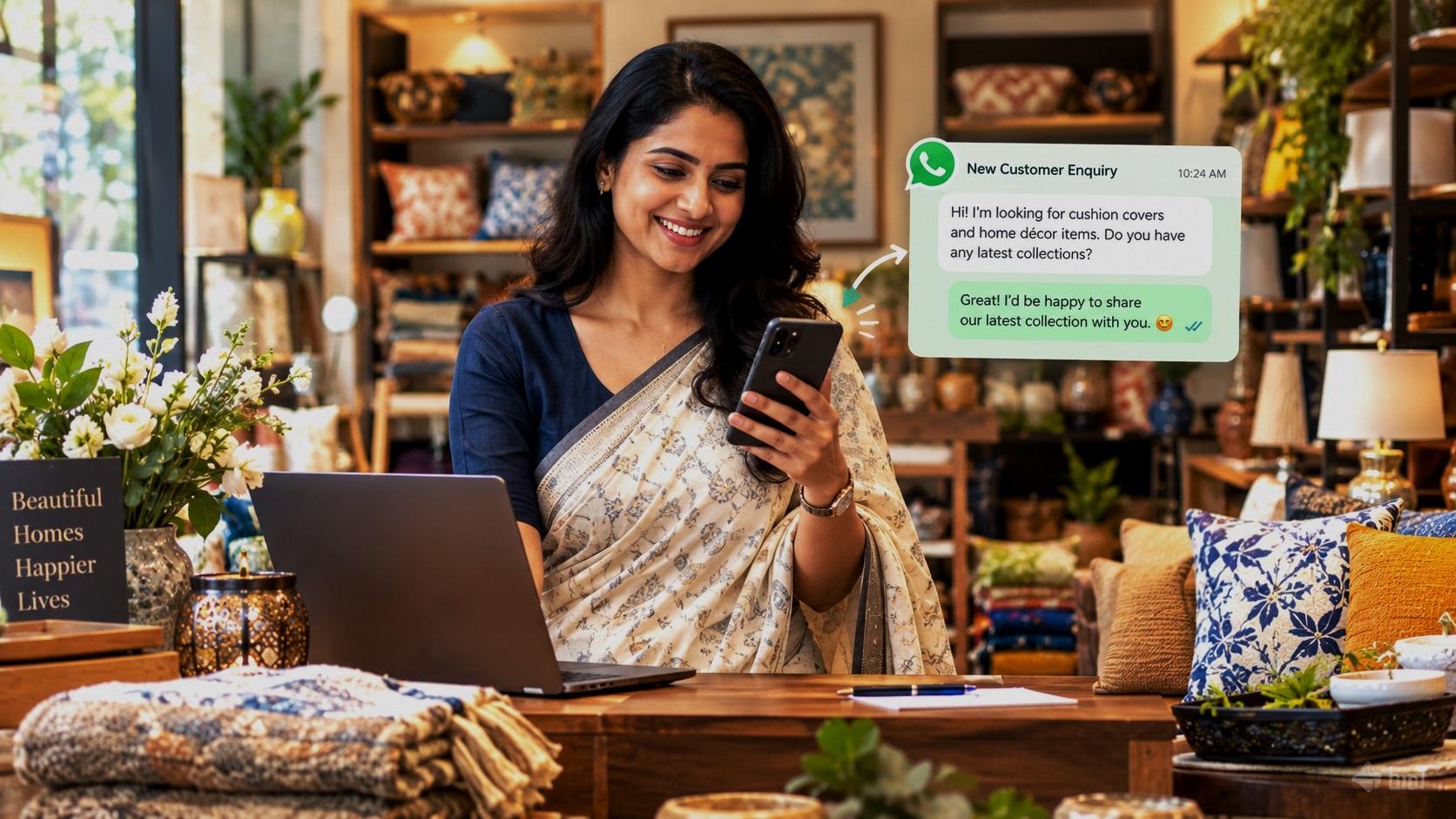
10. WhatsApp Advertising: Turn Social Media Interest into Direct Enquiries
For many Indian businesses, WhatsApp is one of the most convenient ways to communicate with customers.
Meta supports advertisements that can start conversations through WhatsApp, subject to account eligibility and setup.
These advertisements can be particularly useful for businesses where customers want to ask questions before making a purchase.
For example:
A coaching centre
“Looking for expert tuition for your child? Message us on WhatsApp to enquire about courses, subjects and fees.”
A beauty salon
“Want to book your next makeover? Contact us on WhatsApp for appointments and service details.”
A restaurant
“Planning a family dinner? Message us on WhatsApp to enquire about our menu and reservations.”
A travel agency
“Planning your next holiday? Message us to explore available travel packages.”
How to Improve WhatsApp Enquiries
- Respond to enquiries promptly.
- Create a clear business profile.
- Display your services and product catalogue.
- Prepare answers to frequently asked questions.
- Share accurate prices and service details.
- Follow up politely when appropriate.
- Avoid sending unwanted promotional messages.
Getting a WhatsApp enquiry is only the first step. Good communication and timely follow-up help turn interest into business.
11. 10 Facebook and Instagram Ad Ideas for Different Indian Businesses
Not every business should advertise in the same way. Your advertisement should reflect what customers actually want.
Here are practical ideas for different business categories.
| Business type | Advertisement idea |
|---|---|
| Restaurant | Promote popular dishes and meal offers |
| Coaching centre | Advertise new batches and admissions |
| Beauty salon | Showcase services and special packages |
| Clothing store | Display new arrivals and seasonal collections |
| Playschool | Introduce facilities, activities and admissions |
| Fitness centre | Promote membership and training programmes |
| Diagnostic centre | Highlight available tests and facilities |
| Hotel | Showcase rooms, amenities and location |
| Bakery | Feature cakes, customised orders and celebrations |
| Travel agency | Promote holiday packages and destinations |
Examples of Effective Advertisement Messages
For a restaurant
“Craving delicious food in Karol Bagh? Explore our menu, discover our special dishes and plan your next meal with us.”
For a coaching centre
“Admissions Open! Looking for experienced teachers and focused academic support? Enquire about our upcoming batches today.”
For a boutique
“Discover the latest styles for every occasion. Explore our new collection and contact us for details.”
For a fitness centre
“Ready to take your fitness seriously? Explore our training programmes and find the right membership for your goals.”
These examples are starting points. Add your business name, actual location, genuine offers and a clear way to contact you.
12. How to Measure the Success of Your Facebook and Instagram Ads
Don’t judge an advertisement only by the number of likes, comments or views it receives.
Your actual business objective should determine which results matter.
Here are the important advertising metrics to understand.
Reach
Reach tells you how many unique people saw your advertisement.
It helps you understand how widely your campaign is being distributed.
Impressions
Impressions represent the total number of times your advertisement was displayed.
One person may see the same advertisement multiple times.
Click-Through Rate (CTR)
CTR measures the percentage of impressions that resulted in clicks.
A higher CTR can indicate that your advertisement is attracting interest, although it doesn’t automatically mean that people are becoming customers.
Cost Per Click (CPC)
CPC tells you how much you pay for each click, based on the relevant click metric reported in Ads Manager.
It helps you compare the cost of attracting visitors.
Cost Per Lead
This measures how much you spend to generate an enquiry.
For example, if you spend ₹3,000 and receive 30 leads, your cost per lead is ₹100.
However, not all leads are genuine or equally valuable.
Conversion Rate
Conversion rate measures how many people complete the action you want them to take.
This might be making a purchase, booking an appointment or becoming a paying customer.
Return on Advertising Spend (ROAS)
ROAS compares the revenue attributed to your advertising with your advertising expenditure.
For example, if a campaign generates ₹20,000 in attributed sales from ₹5,000 in advertising expenditure, the ROAS is 4.
ROAS is not the same as profit. You must still account for product costs, operating expenses and other business expenses.
Track the Entire Customer Journey
A successful campaign should be evaluated beyond the advertising dashboard.
Keep track of:
- Total enquiries received.
- Genuine enquiries.
- Appointments booked.
- Customers acquired.
- Sales generated.
- Revenue earned.
- Repeat purchases.
This will help you identify which campaigns actually contribute to business growth.
13. 10 Common Facebook and Instagram Advertising Mistakes to Avoid
Many small businesses waste advertising money because they start campaigns without a clear plan.
Avoid these mistakes.
1. Advertising Without a Clear Objective
Decide whether you want website visits, enquiries, appointments or purchases before creating your campaign.
2. Targeting Everyone
An advertisement designed for everyone may attract very few relevant customers. Focus on your actual target market.
3. Using Poor-Quality Images
Blurry photographs, outdated product pictures and unattractive designs can make people ignore your advertisement.
4. Writing Long and Confusing Advertisements
Keep your message simple. Highlight the main benefit and tell people what to do next.
5. Ignoring Mobile Users
Most social media browsing happens on mobile devices. Make sure your advertisements, website and enquiry forms work properly on smartphones.
6. Spending Too Much Too Soon
Don’t increase your budget simply because an advertisement has received likes or views. First evaluate its actual performance.
7. Not Testing Different Advertisements
Try different headlines, photographs, videos and calls to action. Small changes can influence campaign performance.
8. Ignoring Customer Enquiries
An advertisement may generate interest, but delayed responses can cause potential customers to approach competitors.
9. Sending Customers to a Poor Website
If your website is slow, confusing or difficult to navigate, visitors may leave without contacting you.
10. Stopping Campaigns Too Quickly
Give campaigns sufficient time and budget to gather useful information. Avoid making decisions based on a handful of clicks or enquiries.
14. How to Get Better Results from Facebook and Instagram Ads on a Small Budget
If you own a small business, every rupee spent on advertising matters.
You don’t need complicated campaigns to get started. Focus on the following practical steps.
Start with One Business Goal
Choose one clear objective, such as generating WhatsApp enquiries or collecting admission enquiries.
Don’t try to achieve everything through one advertisement.
Promote Your Most Popular Product or Service
Start with something customers already want.
A restaurant can promote its best-selling meal. A boutique can showcase a popular collection. A coaching centre can advertise its most in-demand courses.
Focus on Your Local Market
If customers need to visit your premises, target a realistic service area.
Avoid spending money reaching people who are unlikely to become customers because of distance.
Test Two or Three Creative Ideas
Try different photographs, videos or headlines.
Compare their performance using relevant metrics rather than choosing the advertisement with the most likes.
Make Contact Easy
Give people a clear next step. A WhatsApp button, enquiry form, telephone number or website link can make it easier for interested customers to reach you.
Follow Up with Every Genuine Enquiry
Create a simple record of enquiries and their outcomes.
Note whether a person contacted you, booked an appointment, purchased a product or stopped responding.
This will help you understand the real value of your advertising expenditure.
15. Do You Need a Website to Run Facebook and Instagram Ads?
No. You can run several types of Facebook and Instagram campaigns without having a website.
For example, you can use advertisements that generate enquiries through WhatsApp, Instagram messages or instant lead forms.
However, having a professional online presence can make your business more credible.
When potential customers discover your business through an advertisement, they may want to know:
- What does the business offer?
- Where is it located?
- What products or services are available?
- How can they contact the business?
- Does the business have a website?
- Can they see customer reviews?
If they cannot find reliable information, they may hesitate before making an enquiry.
Why Your Business Should Have an Online Listing
A business listing provides an additional place where potential customers can discover your business information.
A useful listing can display:
- Business name and category.
- Location and contact details.
- Products and services.
- Google Business Profile link.
- Website link.
- WhatsApp contact option.
- Business photographs.
This gives interested customers another way to learn about your business and contact you.
16. Promote Your Business Beyond Facebook and Instagram with HotList.in
Facebook and Instagram advertising can help your business reach new audiences. However, building a strong online presence should not depend on paid advertisements alone.
Think about what happens when someone sees your advertisement but wants to learn more about your business before contacting you.
They may search for your business name on Google, look for your location, check your website or search for your contact details.
This is where HotList.in can help.
HotList is a business listing and local lead generation platform designed to help Indian businesses improve their online visibility and connect with potential customers.
You can create a business listing and give customers another place to discover your products and services.
What Can Your HotList Business Listing Offer?
Depending on the selected listing plan, your business can benefit from:
- Published business information and details.
- A link to your Google Business Profile.
- A website link.
- A direct WhatsApp contact button.
- Business promotion on HotList.in and its social networks.
Give your business more opportunities to be discovered. Create your HotList business listing and start building your online presence.
17. Your 30-Day Facebook and Instagram Advertising Action Plan
If you are new to social media advertising, the easiest way to begin is to follow a simple plan.
Here is a practical 30-day approach.
Week 1: Prepare Your Business
- Set up your Facebook Business Page.
- Complete your Instagram Business profile.
- Add correct contact information and business details.
- Prepare attractive photographs and short videos.
- Decide which product or service you want to promote.
- Create a clear advertising budget.
Week 2: Launch Your First Campaign
- Open Meta Ads Manager.
- Choose your advertising objective.
- Define your target location and audience.
- Prepare two or three advertisement variations.
- Add an appropriate call to action.
- Launch your campaign with a manageable budget.
Week 3: Review and Improve
- Check your campaign performance.
- Compare different advertisements.
- Review the quality of enquiries.
- Identify which audiences respond better.
- Improve your photographs, videos or advertising message.
Week 4: Focus on What Works
- Pause advertisements that consistently perform poorly.
- Continue testing promising creatives.
- Follow up with interested customers.
- Calculate your cost per genuine enquiry.
- Review actual sales and customer acquisition costs.
- Consider increasing your budget if the campaign is profitable.
At the end of 30 days, you should have a much clearer understanding of which advertisements attract your potential customers and what it costs to generate business enquiries.
18. Frequently Asked Questions About Facebook and Instagram Ads in India
Are Facebook and Instagram ads suitable for small businesses in India?
Yes. Small businesses can use these platforms to reach potential customers, promote products and services, generate enquiries and build brand awareness. You can start with a modest testing budget and increase spending according to results.
What is the minimum budget for Facebook and Instagram ads in India?
There is no single minimum budget suitable for every campaign. Meta uses an advertising auction system, and actual costs depend on your objective, audience, competition and campaign settings. Start with an affordable budget and test your advertisements before increasing expenditure.
Can I advertise on Facebook and Instagram without a website?
Yes. You can run campaigns that direct people to WhatsApp, Instagram messages or instant lead forms. However, having a website or a detailed online business listing can provide additional information and help build customer confidence.
Which is better for local business advertising: Facebook or Instagram?
Both can work well. Facebook can be useful for local communities, services and broad audience reach, while Instagram is particularly effective for visual products, food, fashion and lifestyle businesses. Test both platforms to identify what works for your business.
How can I get WhatsApp enquiries through Facebook and Instagram ads?
You can create eligible messaging campaigns that direct interested users to WhatsApp. Use an attractive advertisement, a relevant offer and a clear message encouraging customers to enquire.
How long does it take to see results from Facebook and Instagram ads?
Some campaigns may start generating activity soon after launch, but meaningful results take testing and evaluation. The time required depends on your audience, advertising budget, competition, offer and follow-up process.
Can I manage Facebook and Instagram ads myself?
Yes. Small business owners can create and manage campaigns through Meta Ads Manager. Start with simple objectives, learn the available settings and review performance regularly. You can consider professional help when your advertising requirements become more complex.
Are Facebook and Instagram ads better than Google Ads?
They serve different purposes. Facebook and Instagram can help introduce your products and services to people who may be interested in them. Google Ads can reach people actively searching for particular products or services. The better option depends on your business and marketing goals.
Do Facebook and Instagram ads guarantee customers?
No. Advertising can generate visibility, website visits and enquiries, but it cannot guarantee sales. Your product quality, pricing, customer service, advertisement and follow-up process all influence the final result.
Make Facebook and Instagram Advertising Work for Your Business
Facebook and Instagram advertising can open new opportunities for small businesses across India. You don’t need a huge marketing budget to get started. You need a clear goal, an understanding of your customers, an attractive advertisement and a sensible approach to spending.
Start small. Promote your best products or services. Reach people who are most likely to become customers. Test different advertisements and measure the enquiries and sales they generate.
Most importantly, remember that advertising is only one part of building a successful online presence.
Make sure customers can easily find your business information, understand what you offer and contact you when they are interested.
Combine effective social media advertising with a credible online presence through your website, Google Business Profile and business listings on platforms such as HotList.in.
The objective is simple: help more people discover your business, build their confidence in what you offer and make it easier for them to become your customers.
Related Posts
Instagram Marketing for Small Businesses in India
How to Get More Google Reviews for Your Business