Effective Ways to Generate Online Customer Leads for Your Local Business in India

Effective Ways to Generate Online Customer Leads for Your Local Business in India

Running a local business in India is no longer just about having a good shop, offering quality services or getting customers through word of mouth. Today, people use Google, WhatsApp, social media and online business directories to find products, compare services and decide whom to contact.

Whether you run a coaching centre, restaurant, hotel, salon, diagnostic centre, retail shop, tuition service, travel agency or any other local business, your potential customers are already searching online. The real question is: Can they find your business, trust it and contact you easily?

Online customer lead generation helps you turn online visibility into genuine enquiries, phone calls, WhatsApp messages, appointments and sales.

This guide explains the basics of online lead generation and shows you practical, affordable ways to attract potential customers for your local business in India.

1. What Is Online Customer Lead Generation?

Online customer lead generation is the process of attracting people who may be interested in your products or services and encouraging them to contact your business.

A lead is a potential customer who shows interest in what you offer. This could be someone who calls your shop, sends a WhatsApp message, fills out an enquiry form, requests a quotation or books an appointment.

For example, imagine you own a coaching centre in Noida. A parent searches Google for “best coaching centre near Sector 15 Noida.” They find your business listing, check your reviews and click your WhatsApp button to ask about fees.

That enquiry is a lead.

Similarly, a person searching for a diagnostic centre in Jaipur, a wedding photographer in Delhi or a hotel in Karol Bagh may become a customer after discovering your business online.

How Does Online Lead Generation Work?

The process is straightforward:

  1. Get discovered: Make your business visible where potential customers search.
  2. Build trust: Show accurate business details, useful information, reviews and evidence of your work.
  3. Encourage contact: Give visitors a clear way to call, message or submit an enquiry.
  4. Follow up: Respond promptly, answer questions and help interested people make a decision.
  5. Convert leads into customers: Turn genuine enquiries into bookings, purchases or paid services.

The goal is not simply to get more website visitors or social media followers. It is to attract people who are likely to buy from your business.

2. Understand Your Ideal Customer Before Spending Money

Before choosing any online marketing method, identify the people you want to reach.

Marketing becomes easier and more effective when you know exactly who your customers are, what they need and where they are likely to search for a solution.

Identify Your Target Audience

Consider these questions:

  • Who is most likely to buy your product or service?
  • Which age group or customer segment do you serve?
  • Which city, locality or neighbourhood do your customers come from?
  • What problem does your business solve?
  • What information do customers need before making a purchase?
  • Why should they choose your business over a competitor?

For example, a playschool may target parents living within a few kilometres, while a travel agency offering international tour packages may serve customers across several cities.

A home tutor may focus on parents looking for classes in a particular neighbourhood, whereas an online tutor can reach students throughout India and even overseas.

Choose the Right Local Keywords

Think about what a customer would type into Google when searching for your services.

Examples include:

  • Best salon in Rohini
  • Affordable hotel in Karol Bagh Delhi
  • Maths tuition classes in Indirapuram
  • Diagnostic centre near me
  • Wedding photographer in Lucknow
  • Digital marketing agency in Pune
  • Best bakery in South Delhi

These are examples of local search keywords. They combine a product or service with a location or a specific need.

Use relevant phrases naturally in your website pages, business descriptions, online listings and social media content. Avoid stuffing the same keywords repeatedly into every sentence.

Practical tip: Start with five to ten search phrases your ideal customers might use. Build your online presence around the services and locations that matter most to your business.

3. Optimise Your Google Business Profile

For businesses that serve customers at a physical location or travel to customers, a Google Business Profile is one of the most important starting points for online visibility.

It can help your business appear on Google Search and Google Maps when people look for relevant products and services nearby.

Complete Every Important Business Detail

Make sure your profile contains:

  • Your correct business name
  • The most suitable business category
  • Accurate address or service area, as applicable
  • Current phone number
  • Business hours and holiday timings
  • Website link, if available
  • Relevant products and services
  • Good-quality photographs
  • A clear business description

Keep your information accurate and consistent. Incorrect phone numbers, outdated timings and mismatched addresses can cause customers to lose trust or contact the wrong business.

Use the Right Business Category

Choose the category that best describes your main business. Add relevant additional categories only when they accurately represent the services you provide.

For example, a business that primarily provides dental care should not choose an unrelated category simply because it seems popular.

Add Genuine Business Photographs

Show customers what they can expect when they visit or hire you.

A restaurant can share photographs of its food and dining area. A salon can display its premises and examples of its work, with appropriate customer permission. A coaching centre can show its classrooms and facilities.

Use genuine, relevant photographs rather than misleading stock images.

Collect Genuine Customer Reviews

Reviews help potential customers understand other people’s experiences with your business.

After completing a sale, service or appointment, politely ask satisfied customers to share honest feedback on Google.

Respond professionally to positive and negative reviews. If a customer raises a genuine concern, acknowledge it and explain how you will address it.

Never buy fake reviews, offer rewards in exchange for positive reviews or ask people to post misleading feedback.

Important: A complete Google Business Profile improves your chances of being discovered, but it does not guarantee top rankings. Google considers several factors, including relevance, distance and prominence.

4. Create a Website That Generates Enquiries

A website gives your business a dedicated online space where customers can learn about your services and decide whether to contact you.

You do not need an expensive, complicated website to begin generating leads. A small business can start with a focused website that clearly explains what it offers and how customers can get in touch.

What Should Your Business Website Include?

At a minimum, include these essential elements:

  • A clear headline: Tell visitors what your business offers and whom you serve.
  • Services or products: Explain what customers can buy or book.
  • Location and service area: Mention the cities or neighbourhoods you serve.
  • Contact information: Display your phone number, email and WhatsApp contact option where appropriate.
  • Customer reviews: Share genuine testimonials with permission.
  • Business photographs: Show your products, premises, team or completed work.
  • A clear call to action: Encourage visitors to call, enquire, book or request a quotation.

For example, a plumbing business in Gurugram could use a headline such as “Plumbing Services in Gurugram for Homes and Offices” followed by its services, service areas and a prominent contact option.

This is much more useful than a vague headline such as “Welcome to Our Website.”

Create Separate Pages for Important Services

If your business offers several services, give each major service its own useful page.

For example, a coaching institute might have separate pages for:

  • Class 9 and 10 tuition
  • Class 11 and 12 tuition
  • JEE preparation
  • NEET preparation

A salon might have pages for haircuts, bridal makeup and skincare services.

Each page should explain the specific service, who it is for, relevant pricing information where appropriate, and how to enquire.

Make Your Website Mobile-Friendly

Many Indian customers discover businesses and contact them through smartphones. Your website should load reasonably quickly, display correctly on smaller screens and make important buttons easy to tap.

Test your website on a mobile phone. Check whether customers can read the content, find your phone number and submit an enquiry without difficulty.

A website that looks impressive on a desktop but is difficult to use on mobile can lose potential leads.

5. Use Online Business Directories to Increase Visibility

Online business directories allow customers to discover businesses by category, service and location.

They can be particularly useful for small businesses that want additional visibility without investing heavily in a full digital marketing campaign.

For example, someone searching for a hotel in Delhi, a tutor in Hyderabad or a beauty parlour in Jaipur may explore an online directory before contacting a business.

Choose Directories That Match Your Business

Look for platforms that:

  • Accept businesses in your category
  • Reach customers in your target city or service area
  • Display clear business information
  • Allow potential customers to contact you
  • Provide a useful business profile page
  • Have transparent listing terms and pricing

Do not submit your business to every directory you find. Focus on relevant platforms that can help customers discover and contact you.

Make Your Business Listing Useful

A good business listing should include:

  • Correct business name and category
  • Clear description of products or services
  • Accurate location and contact information
  • Business hours, where relevant
  • Genuine photographs
  • Website link
  • Google Business Profile link, where supported
  • WhatsApp contact option, where available

Avoid writing a description that simply repeats your business name or contains a long list of unrelated keywords.

Explain what you offer, whom you serve and what a customer should do next.

Consider HotList.in for Local Business Promotion

HotList.in is a business listings and local lead generation platform designed to help Indian businesses improve online visibility and make it easier for potential customers to discover their services.

A business listing can give customers another place to find your business information and explore your offerings.

Depending on the listing plan, a business can use its profile to direct potential customers to its Google Business Profile, website and WhatsApp contact option. Additional promotion can help businesses present their offerings to a wider online audience.

For local business owners, this provides another opportunity to make their business discoverable without relying entirely on social media or paid advertisements.

When evaluating any business listing platform, check the available features, pricing, listing duration and terms before choosing a plan.

6. Use WhatsApp to Turn Interest into Enquiries

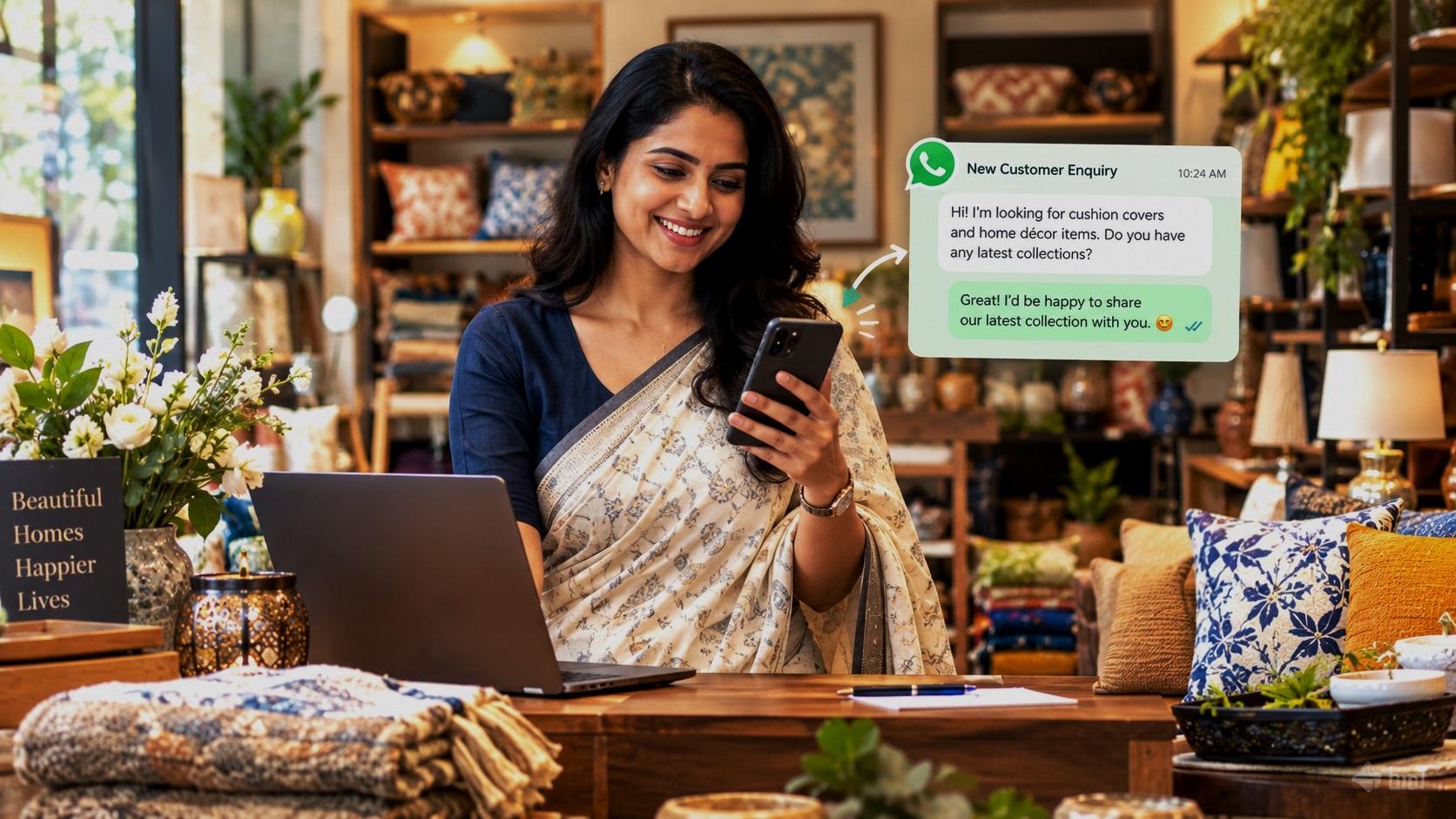
WhatsApp is already a familiar communication tool for many Indian consumers. Businesses can use it to answer questions, share product details, confirm appointments and follow up with interested customers.

A customer who is not ready to call may be more comfortable sending a quick message.

Make It Easy for Customers to Contact You

Where suitable, add a WhatsApp contact button to your website and business profiles.

Use WhatsApp Business to organise your communication and present your business professionally.

Useful features include:

  • A business profile with your description, hours and contact information
  • Greeting messages for new conversations
  • Away messages when you cannot respond
  • Quick replies to frequently asked questions
  • Labels to organise enquiries by status
  • A product or service catalogue, where appropriate

Prepare Replies to Common Questions

Customers often ask the same questions before purchasing.

A coaching centre may receive questions about fees, class timings, subjects and batches. A hotel may receive questions about room availability, facilities and check-in times.

Prepare short, clear answers to save time and help customers get the information they need.

For example:

“Thank you for contacting ABC Coaching Centre. Please share the student’s class, preferred subject and locality so we can provide the relevant batch details.”

Follow Up Without Being Pushy

If someone enquires but does not complete a booking, a polite follow-up may help.

Ask whether they need any additional information. Do not repeatedly message people who have declined or opted out, and respect their communication preferences.

The key principle: Make it easy for interested customers to start a conversation, then respond promptly and helpfully.

7. Promote Your Business on Social Media

Social media can help your business reach new audiences, demonstrate its expertise and maintain relationships with existing customers.

However, simply creating an account and posting occasional advertisements is unlikely to deliver consistent results.

Choose platforms based on your customers and the type of business you run.

Choose the Right Social Media Platforms

Instagram

Instagram can work well for salons, boutiques, restaurants, bakeries, fitness centres, cafés, photographers and other visually oriented businesses.

Share useful photographs, short videos, demonstrations, customer-approved testimonials and information about your products or services.

Facebook

Facebook can be useful for local communities, neighbourhood businesses, classes, events and businesses targeting customers who use local groups and pages.

Participate in relevant community discussions and follow each group’s promotional rules.

YouTube

YouTube is useful for businesses that can demonstrate expertise, explain a process or answer common customer questions.

A tutor can publish educational videos. A fitness trainer can demonstrate exercises. A home improvement business can explain common repair problems.

Include relevant business details and a clear way for interested viewers to contact you.

LinkedIn

LinkedIn is particularly useful for professional services, consultants, B2B companies, recruitment services, training providers and businesses targeting other businesses.

Publish practical insights, case studies and useful advice rather than posting only promotional messages.

Follow a Simple Content Plan

You do not need to publish several times every day. Consistency and relevance matter more than posting constantly.

Try this weekly schedule:

Day Content idea
Monday A common customer problem and its solution
Tuesday A product or service demonstration
Wednesday A useful tip related to your industry
Thursday A genuine customer testimonial or case study
Friday An explanation of your service, offer or booking process
Saturday A behind-the-scenes look at your business
Sunday Answers to frequently asked questions

Adjust the schedule to suit your resources. Three useful posts a week are better than seven repetitive posts that offer little value.

Add a Clear Call to Action

Every promotional post should make the next step obvious.

Depending on your business, invite people to:

  • Send a WhatsApp message
  • Call to check availability
  • Request a quotation
  • Book an appointment
  • Visit your business profile
  • Explore your products or services

Avoid asking people to perform too many actions in one post.

8. Use Local SEO to Attract Customers from Google

Search engine optimisation, commonly called SEO, helps your website and business pages appear when people search for relevant products or services.

Local SEO focuses on searches connected to a particular city, neighbourhood or service area.

Unlike advertising, SEO does not require you to pay for every click. However, it takes time, effort and ongoing improvements, and rankings are never guaranteed.

Find the Search Terms Your Customers Use

Start by identifying phrases related to your products, services and locations.

Examples:

  • Best dentist in Dwarka
  • English tutor in Gurgaon
  • Affordable wedding photographer in Mumbai
  • AC repair service in Chennai
  • Organic grocery store in Bengaluru

Use Google Search suggestions, your customers’ questions and available keyword research tools to identify relevant searches.

Prioritise keywords that reflect a genuine need and are relevant to your business.

Optimise Your Website Pages

For important pages:

  • Write a descriptive page title.
  • Use a clear heading that explains the service.
  • Mention the relevant city or locality naturally.
  • Describe your services in useful detail.
  • Include answers to common customer questions.
  • Link to related service pages.
  • Provide accurate contact information.

For example, a page about dental implants in Dwarka should explain the service, the consultation process and how patients can contact the clinic. It should not merely repeat “best dentist in Dwarka” throughout the page.

Publish Helpful Local Content

Articles can help your business answer questions customers search for before making a purchase.

A tax consultant could publish an article explaining common tax filing mistakes. A wedding photographer could write about choosing photography packages. A tutor could share practical examination preparation tips.

Create content that solves real problems and demonstrates your knowledge.

Do not publish dozens of nearly identical pages for different localities unless each page provides genuinely useful information for customers in that area.

9. Run Google Ads to Generate Leads Faster

SEO and organic social media can take time to produce consistent results. If you need enquiries sooner and have a suitable budget, paid advertising may help.

Google Ads allows businesses to advertise against relevant search terms and reach people who are actively looking for products or services.

For example, a customer searching for “emergency electrician in Pune” may have an immediate need. A relevant advertisement can put your business in front of that customer.

Start with a Focused Campaign

Before launching a campaign:

  1. Select one main service or product.
  2. Target the cities or localities you actually serve.
  3. Choose keywords that indicate customer intent.
  4. Write an advertisement that clearly explains your offering.
  5. Direct visitors to a relevant landing page or suitable contact option.
  6. Track calls, form submissions and WhatsApp enquiries where measurable.

Avoid sending every visitor to your homepage if you have a more relevant service page.

Set a Budget You Can Afford

Start with a manageable test budget rather than spending heavily before understanding your results.

Track how many enquiries the campaign generates, how many are genuine, how many become paying customers and how much revenue those customers bring in.

A campaign that generates many clicks but few qualified enquiries may be less valuable than one that produces fewer, more relevant leads.

Remember that advertising costs vary by industry, location, competition and customer demand.

10. Use Facebook and Instagram Ads for Local Reach

Meta advertising can help businesses reach audiences on Facebook and Instagram.

Unlike search advertising, which can capture people actively looking for a service, social media advertising can introduce your business to relevant audiences before they begin searching.

This can work well for products, local events, classes, beauty services, restaurants, retail offers and other businesses with a clear audience.

Choose an Objective That Matches Your Goal

Depending on the options available for your account and campaign, you may focus on:

  • WhatsApp conversations
  • Enquiry forms
  • Phone calls or other contact actions
  • Website visits
  • Purchases or bookings

Select the objective that most closely matches the result you want.

Test Different Advertisements

Create a few variations with different headlines, images or offers.

For example, a fitness centre could test an advertisement highlighting personal training against one highlighting flexible membership options.

Compare the quality and cost of the enquiries each advertisement generates. Do not judge success only by likes, views or reach.

Avoid Advertising Without a Follow-Up Process

Before paying for advertisements, make sure your business can respond to incoming enquiries, answer questions and fulfil the orders or appointments it receives.

Paid advertising can increase demand, but it cannot compensate for poor customer service or an unclear offer.

11. Generate Leads Through Google Maps and Local Search Intent

Many people use Google Maps to discover nearby businesses, check directions, view photographs and read reviews.

Your Google Business Profile is an important part of this discovery process.

However, visibility depends on several factors, and no business can guarantee that it will appear first for every nearby search.

Improve Your Local Discovery Opportunities

  • Keep your profile information accurate.
  • Choose relevant categories and services.
  • Collect genuine reviews consistently.
  • Respond to customer feedback.
  • Add useful, current photographs.
  • Maintain a website or other suitable online presence.
  • Ensure your contact details are easy to find.

If your business serves customers at their locations rather than at a shop, configure your service areas accurately and follow Google’s eligibility guidelines.

Never create fake business addresses or misleading profiles to target additional locations.

12. Offer Something Valuable to Encourage Enquiries

People are more likely to contact your business when they understand what they will receive and why it is worth their time.

A clear offer can help reduce hesitation and give potential customers a reason to take the next step.

Examples of Offers for Different Businesses

Business type Lead-generating offer
Coaching centre Free counselling session or course information
Tutor Introductory discussion about the student’s learning needs
Salon A clearly priced introductory service
Fitness centre Trial session, where available
Diagnostic centre Clear information about available tests and booking
Restaurant A specific meal offer or menu highlight
Travel agency A customised holiday quotation
Interior designer Initial project discussion
Accountant A consultation about the customer’s requirements
Retail shop Product demonstration or a special promotion

Choose offers that make sense financially and are easy for your team to deliver.

A free offer is not always necessary. Clear pricing, reliable service, convenient appointments or a quick quotation can be equally effective.

Make the Next Step Simple

Instead of writing “Contact us for more information,” use a more specific message.

For example:

“Planning a family holiday? Send us your destination, travel dates and budget to request a customised quotation.”

Specific instructions help potential customers understand what information to provide and what happens next.

13. Turn Customer Questions into New Leads

Many customers hesitate because they do not have enough information to make a decision.

Your online content should answer the questions people commonly ask before contacting you.

Create a List of Frequently Asked Questions

Depending on your business, customers may want to know:

  • What services do you provide?
  • How much does the service cost?
  • Which areas do you serve?
  • What are your working hours?
  • How do I book an appointment?
  • How long does the process take?
  • What makes your service suitable for my needs?
  • What payment methods do you accept?

Publish accurate answers on your website, business profiles and social media pages.

For services where prices depend on the customer’s requirements, explain what affects the price and how to request an estimate.

Use Short Videos to Explain Your Services

A short video can show customers how a product works, explain a service or answer a common question.

For example, a tutor could explain a difficult concept, a restaurant could show how a popular dish is prepared, and a repair service could demonstrate how to identify a common problem.

Keep videos focused. Explain one useful point at a time and provide a clear way to enquire.

Avoid making unsupported claims, especially in healthcare, financial services and other regulated fields.

14. Build Trust Before Asking for the Sale

Customers often compare several businesses before making a decision. Your online presence should give them enough information to feel comfortable contacting you.

What Builds Customer Trust?

Accurate information: Use consistent business details across your website and profiles.

Real photographs: Show your actual premises, products, staff or work wherever appropriate.

Genuine reviews: Let customers describe their real experiences.

Clear pricing: Explain fees, packages and additional charges where relevant.

Professional communication: Respond politely, answer questions and avoid making promises you cannot fulfil.

Evidence of experience: Share relevant qualifications, examples of work, case studies or business experience where appropriate.

Transparent policies: Explain cancellation terms, delivery timelines, warranties or service conditions when relevant.

A professional-looking listing or website helps, but the actual experience must match what you promise.

15. Use Email and Customer Follow-Ups to Recover Lost Leads

Not every customer will buy during the first interaction. Some need more time, additional information or approval from someone else.

A simple follow-up system can help you reconnect with interested prospects without spending money to attract them again.

Keep a Record of Enquiries

Use a spreadsheet or customer relationship management (CRM) tool to track:

  • Customer name and contact details, where appropriately collected
  • Date of enquiry
  • Product or service requested
  • Source of the lead
  • Current status
  • Follow-up date
  • Final outcome

You could organise leads into categories such as New Enquiry, Contacted, Interested, Quotation Sent, Converted and Not Proceeding.

Follow Up at the Right Time

After sending a quotation, ask whether the customer needs any clarification.

If someone requested details about a course, send the relevant information and offer to answer questions.

For customers who have agreed to receive further communication, email can be useful for sharing updates, useful content and relevant offers. Follow applicable privacy, consent and messaging rules, and provide a way to opt out where required.

Do not purchase random contact lists or send unsolicited bulk messages.

16. Use Referral Marketing Alongside Online Promotion

Word of mouth remains valuable for local businesses. Online tools can make it easier for satisfied customers to recommend your services to others.

Encourage Happy Customers to Recommend You

After providing a good experience, invite customers to share your business details with people who may need your services.

You can also make your business profile, website or contact information easy to share through WhatsApp.

For example, a parent satisfied with a tutor may recommend the tutor to another family. A restaurant customer may share its menu with colleagues. A local contractor may receive enquiries from previous customers’ neighbours.

Referral programmes can be useful, but any incentive should be transparent and comply with the rules applicable to your industry and the platform involved.

Make Every Customer Experience Worth Sharing

The strongest referral strategy begins with reliable service, honest communication and a positive customer experience.

Do not depend on referrals alone. Combine them with search visibility, business listings and other suitable online channels to reach new customers consistently.

17. Use Lead Generation Platforms to Expand Your Reach

Building your own website, maintaining social media accounts and managing advertisements all require time and effort.

Business listing and lead generation platforms offer another route for customers to discover your business.

The right platform can help you reach people who are already exploring businesses in your category or location.

What Should You Look for in a Lead Generation Platform?

Before joining, evaluate:

  • Whether the platform serves your target audience
  • Whether your business category is relevant
  • Whether your listing can display useful business information
  • Whether customers can contact you directly
  • Whether you can include your website or Google Business Profile
  • Whether WhatsApp contact is available
  • Whether promotional support is included
  • Whether the pricing and duration are clear
  • Whether you retain control over how you respond to enquiries

Be cautious about paying large sums for vague promises of guaranteed leads or sales.

Ask what the service actually includes and how results will be measured.

Why Direct Enquiries Matter

Some lead generation services sell the same lead to several businesses or act as intermediaries between customers and service providers.

A platform that lets interested customers contact your business directly can make communication simpler and help you build your own customer relationships.

However, direct contact options alone do not guarantee enquiries. Your results still depend on visibility, relevance, customer trust, pricing and follow-up.

For Indian business owners looking for additional online visibility, HotList.in offers a way to present business information and direct interested customers towards available contact channels, depending on the listing plan.

Consider it as one part of a broader lead generation strategy rather than a replacement for every other marketing channel.

18. Common Online Lead Generation Mistakes to Avoid

Even businesses that invest time and money in digital marketing can struggle to generate useful enquiries. Often, the problem is not the absence of marketing but the way it is managed.

Mistake 1: Trying Every Platform at Once

Managing Google, several social media accounts, paid advertising and multiple directories simultaneously can become overwhelming.

Start with a few channels that match your customers and business goals. Expand after you understand what works.

Mistake 2: Focusing Only on Likes and Followers

Likes, views and followers may indicate interest, but they do not automatically translate into sales.

Measure calls, messages, bookings, qualified enquiries and paying customers.

Mistake 3: Ignoring Incoming Enquiries

A customer may contact a competitor if you take too long to respond.

Set a realistic response target, monitor your contact channels and make sure someone is responsible for handling new enquiries.

Mistake 4: Using Incomplete or Incorrect Business Details

A broken website link, incorrect phone number or outdated address can cost you a potential customer.

Review your important business profiles regularly.

Mistake 5: Spending on Ads Without Tracking Results

If you cannot tell which advertisement generated an enquiry, it becomes difficult to improve your campaign.

Use tracking tools and record the source of each lead wherever possible.

Mistake 6: Making Unrealistic Promises

Avoid guaranteed rankings, exaggerated claims and misleading offers.

Build your marketing around the real benefits your business can deliver.

Mistake 7: Giving Up Too Early

Some channels can produce enquiries quickly, while others take months to develop.

Evaluate results over an appropriate period, make improvements and focus on meaningful business outcomes rather than expecting every method to work immediately.

19. How to Measure Your Online Lead Generation Results

You do not need expensive software to start measuring performance. A spreadsheet is enough for many small businesses.

Track a few important numbers every week or month.

Essential Lead Generation Metrics

Metric What it tells you
Website visitors How many people visit your website
Business profile views How often people view your profile, where the platform provides this data
Calls and messages How many people try to contact you
Total enquiries How many potential customers contact your business
Qualified leads How many enquiries match your target customer
Conversion rate What percentage of leads become paying customers
Cost per lead How much you spend to generate each lead
Customer acquisition cost How much you spend to acquire each new customer
Revenue generated How much business those leads produce

Understand the Difference Between Leads and Sales

Suppose your business receives 50 enquiries in one month. Of these, 30 are relevant potential customers, and 10 eventually buy from you.

Your conversion rate from qualified leads to customers is:

10 ÷ 30 × 100 = 33.3%

This tells you more than the total number of enquiries alone.

A business with 20 highly relevant enquiries may perform better than one with 100 enquiries from people who are unlikely to buy.

Calculate Your Cost Per Lead

Suppose you spend ₹5,000 on a marketing campaign and receive 25 enquiries.

Your cost per lead is:

₹5,000 ÷ 25 = ₹200

But this figure does not tell you whether the campaign is profitable. You also need to know how many leads became customers, how much those customers spent and what it cost to serve them.

The real goal is profitable customer acquisition, not simply generating the cheapest leads.

20. A Practical 30-Day Online Lead Generation Plan for Indian Businesses

If you are new to online promotion, do not try to implement everything at once. Follow this simple 30-day plan and build your online presence step by step.

Week 1: Build Your Foundation

Day 1–2: Define your target customer. Identify the services you want to promote, the customers you want to reach and the areas you serve.

Day 3–4: Review your Google Business Profile. Correct your business details, categories, contact information and hours, if applicable.

Day 5–6: Improve your website or main business page. Explain your services clearly, add relevant contact options and check the mobile experience.

Day 7: Prepare your lead tracking sheet. Create columns for enquiry date, source, customer requirement, status and outcome.

Week 2: Expand Your Online Visibility

Day 8–9: Improve your business listings. Review relevant online directories and update your business information.

Day 10–11: Prepare useful content. Create posts answering common customer questions.

Day 12–13: Publish your first posts. Share useful information on the social media platforms your audience uses.

Day 14: Request honest reviews. Invite recent, satisfied customers to share genuine feedback without offering incentives for positive ratings.

Week 3: Make It Easier to Generate Enquiries

Day 15–16: Improve WhatsApp communication. Set up your business profile, greeting message and frequently used replies.

Day 17–18: Create a focused service page or offer. Explain one important service and provide a clear way to enquire.

Day 19–20: Test a short video or demonstration. Answer one common customer question.

Day 21: Review the results. Record calls, messages, website activity and enquiries from the channels you can measure.

Week 4: Test, Improve and Scale

Day 22–24: Identify the strongest channel. Determine which sources are generating the most relevant enquiries.

Day 25–26: Improve weak points. Update unclear descriptions, improve contact options or adjust your content.

Day 27–28: Consider a small advertising test. If your budget permits, test one focused campaign with clear tracking.

Day 29: Follow up on outstanding enquiries. Contact interested prospects appropriately and answer any remaining questions.

Day 30: Review the month. Compare leads, conversions and spending. Decide which activities to continue, improve or stop.

At the end of the month, you should have a clearer understanding of where your customers come from and which activities deserve more attention.

21. Which Online Lead Generation Methods Are Best for Your Business?

There is no single method that works equally well for every business. The right approach depends on your target customers, location, budget and the time you can devote to marketing.

Business type Recommended starting points
Restaurant or café Google Business Profile, local listings, Instagram and WhatsApp
Coaching centre Google Search, local SEO, business listings and educational content
Tutor or tuition service Relevant directories, local search, educational videos and parent enquiries
Salon or beauty parlour Google Maps, Instagram, customer reviews and appointment messaging
Hotel or travel agency Google Business Profile, a useful website, relevant directories and targeted advertising
Retail shop Google Maps, local listings, WhatsApp Business and social media
Diagnostic centre Accurate business information, local search and compliant healthcare promotion
Consultant or professional service Website SEO, LinkedIn, referrals and relevant business directories
Home service provider Local search, Google Business Profile, service-area listings and customer reviews
B2B business LinkedIn, targeted search advertising, a professional website and direct enquiries

Start with the methods most likely to reach your customers. You can add more channels as your business grows.

22. How Small Businesses Can Generate Leads on a Limited Budget

You do not need a large marketing budget to begin promoting your business online.

The important thing is to build a strong foundation before spending money on advertisements.

Start with These Affordable Activities

  • Complete and maintain your eligible Google Business Profile.
  • Create or improve a simple, mobile-friendly website.
  • Register on relevant business directories after checking their terms.
  • Share useful content consistently on suitable social media platforms.
  • Ask satisfied customers for honest reviews.
  • Use WhatsApp Business to handle enquiries efficiently.
  • Keep a record of where your leads come from.
  • Follow up with interested prospects.
  • Reinvest in the channels that produce paying customers.

Choose Paid Services Carefully

Free marketing methods can take time, and paid services may help you reach more customers. The best decision depends on the likely return and the resources available to you.

Compare the actual benefits of each service rather than choosing solely by price.

For example, a paid listing may be useful if it offers additional visibility, relevant promotional support or convenient contact options at a price your business can justify.

Likewise, paid advertising may be worth testing when your business has a clear offer, an effective follow-up process and enough capacity to serve new customers.

Do not assume that a paid service will automatically generate sales. Evaluate the results.

23. Your Online Lead Generation Checklist

Use this checklist to identify the most important tasks for your business.

  • I know which customers and locations I want to target.

  • My Google Business Profile is accurate, where applicable.

  • My website or business page explains my services clearly.

  • My phone number and contact links work correctly.

  • My business appears on relevant online directories.

  • I have genuine photographs and useful business information online.

  • I encourage honest customer reviews.

  • I use suitable social media platforms consistently.

  • Customers can contact me easily through an appropriate channel.

  • I respond to enquiries promptly.

  • I track the source and outcome of my leads.

  • I know which marketing activities generate paying customers.

  • I review my results and improve my approach regularly.

You do not need to complete every item on the first day. Begin with the basics and improve your online presence systematically.

Turn Your Online Visibility into Real Business Opportunities

Generating online customer leads in India does not require you to be an expert in digital marketing. It requires a clear understanding of your customers, a professional online presence, relevant information and a reliable way for people to contact you.

Start by improving your Google Business Profile, creating a useful website or business page, listing your business on relevant directories and making contact through phone or WhatsApp convenient. Then use social media, local SEO and paid advertising where they make sense for your business.

Most importantly, track your enquiries and focus on the methods that bring you genuine customers.

Your business does not need to be visible everywhere. It needs to be visible in the right places, to the right people, at the right time.

Looking to improve your local business visibility? Explore HotList.in to discover how a business listing can help present your business information online and connect interested customers with your available contact channels.

Start with the basics, stay consistent and build a lead generation system that supports your business growth over time.

Frequently Asked Questions

1. What is the best way to generate online leads for a local business in India?

Start with an accurate Google Business Profile, a useful website or business page, relevant online business listings and easy contact options. Add local SEO, social media and paid advertising according to your customers and budget.

2. Can I generate leads online without a website?

Yes. Depending on your business, you can start with an eligible Google Business Profile, relevant online directories, social media pages and WhatsApp Business. However, a website can provide greater control over your content, service information and customer enquiries.

3. How can I get local customers from Google?

Keep your Google Business Profile accurate, choose relevant categories, collect genuine reviews, add useful photographs and maintain a helpful website where possible. Use location-specific information naturally and ensure your services match what customers are searching for.

4. How much does online lead generation cost in India?

Costs vary widely. You can start with free tools and organic marketing, while websites, paid listings, professional services and advertisements may involve additional costs. Set a budget based on your business needs and measure the enquiries and sales generated.

5. How long does it take to generate online leads?

Some paid campaigns and well-targeted offers can generate enquiries quickly, while SEO, organic content and reputation building may take weeks or months. Results depend on your industry, competition, location, budget and the quality of your marketing.

6. Are online business directories useful for local businesses?

They can be useful when they reach your target audience and provide accurate business information and convenient contact options. Choose relevant directories, review their terms and measure whether they generate meaningful enquiries.

7. How do I turn online leads into paying customers?

Respond promptly, understand the customer’s needs, provide clear information and pricing, answer questions and follow up appropriately. Track how many enquiries become customers so you can improve both your marketing and sales process.

8. Is WhatsApp useful for local business lead generation?

Yes. WhatsApp can make it easy for customers to ask questions, request quotations, book appointments and receive relevant information. A well-managed WhatsApp Business profile and timely, professional responses can support the conversion process.

9. Should I choose SEO or paid advertising?

SEO can help build long-term organic visibility, while paid advertising can bring targeted traffic more quickly when campaigns are well designed. Many businesses benefit from combining both, but the right balance depends on their budget, goals and ability to convert enquiries into sales.

10. How can HotList.in help local businesses?

HotList.in provides a platform for presenting business information online and helping potential customers discover local businesses. Depending on the listing plan, businesses can direct visitors to their Google Business Profile, website and WhatsApp contact option, with additional promotional support available through applicable paid features.

Related Posts

How to Get More Customers for Your Small Business in India

How to Rank Higher on Google Maps and Attract More Local Customers

How to Promote Your Business Online for Free in India: 10 Practical Ways
How to Get More Customers from Your Google Business Profile

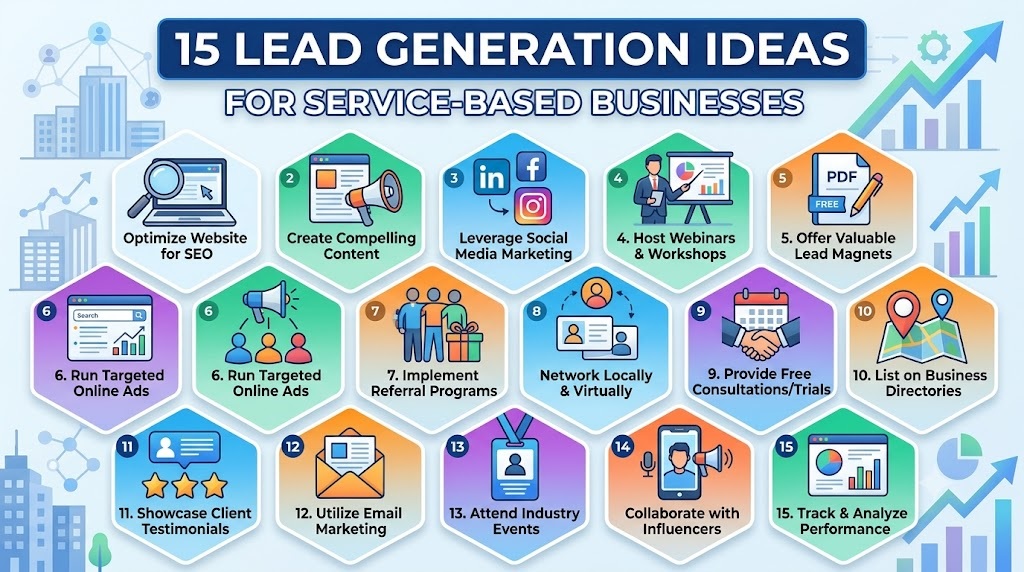
15 Lead Generation Ideas for Service-Based Businesses

15 Lead Generation Ideas for Service-Based Businesses

Running a service-based business is one thing. Finding customers who are ready to pay for your services is another.

Whether you run a coaching centre, tuition service, salon, diagnostic centre, travel agency, digital marketing agency, repair service, consultancy, playschool or fitness studio, one challenge remains the same: How do you consistently attract new customers without spending a fortune on marketing?

You may offer excellent services, have an experienced team and receive good feedback from existing customers. But if potential customers cannot find your business online, they may choose a competitor instead.

The good news is that you do not need a huge marketing budget to generate leads. You need the right approach, a strong online presence, clear communication and a system for turning enquiries into paying customers.

This guide explains 15 practical lead generation ideas for service-based businesses in India. You will learn how to attract local customers, promote your business online, generate direct enquiries and build a more reliable source of new business.

What Is Lead Generation?

Lead generation is the process of attracting people who may be interested in your products or services and encouraging them to contact your business.

A lead is a potential customer who takes an action that shows interest in what you offer.

For example:

  • A parent enquires about admission at your coaching centre.
  • Someone sends your salon a WhatsApp message asking about prices.
  • A homeowner calls a plumber after finding the business on Google.
  • A patient contacts a diagnostic centre to enquire about a health test.
  • A company owner fills out a form to request a consultation.

Each of these is a potential business opportunity.

The objective of lead generation is not simply to get more website visitors or social media followers. It is to attract people who are likely to need your services and give them an easy way to contact you.

Lead Generation vs Sales: What Is the Difference?

Lead generation and sales are connected, but they are not the same.

Lead generation attracts potential customers and encourages them to enquire.

Sales involves understanding their requirements, answering questions, presenting the right service and convincing them to make a purchase.

For example, if 50 people enquire about your tuition classes and 10 register, your marketing has generated 50 leads and your sales process has converted 10 of them into customers.

Both activities matter. Generating enquiries is the first step, but following up effectively is what helps turn those enquiries into revenue.

Why Is Lead Generation Important for Local Businesses in India?

Many Indian business owners depend heavily on referrals, existing customers and walk-in enquiries. These are valuable sources of business, but they may not provide a consistent flow of new customers.

Online lead generation helps you reach people who are actively looking for the services you provide.

Consider a person searching for a maths tutor in Noida, a beauty salon in Jaipur, a diagnostic centre in Lucknow or a hotel in Karol Bagh, Delhi. These searches can connect local businesses with potential customers who already have a specific need.

A strong lead generation strategy can help your business:

  • Reach more people in your service area.
  • Attract customers beyond your existing network.
  • Generate enquiries through WhatsApp, phone calls and websites.
  • Promote your services without relying entirely on paid advertising.
  • Build trust before a potential customer contacts you.
  • Reduce dependence on a single source of business.
  • Measure which marketing activities generate actual enquiries.

The key is to choose methods that suit your business, budget, target audience and location.

15 Lead Generation Ideas for Service-Based Businesses

You do not need to implement every marketing method at once. Start with the ideas that are easiest to manage and most relevant to your customers. Improve them over time as you learn what works.

1. Create and Optimise Your Google Business Profile

When people need a local service, they often search Google for businesses near them.

They may use phrases such as “best dentist in Delhi”, “AC repair near me”, “English tutor in Pune” or “salon in Gurgaon”.

A well-maintained Google Business Profile can help your business appear in relevant local search results and on Google Maps.

For a local business, this is one of the most important starting points for online lead generation.

How to Get More Enquiries from Google

Complete your business information. Add your correct business name, address or service area, phone number, operating hours, categories and website.

Choose relevant categories. Select the category that best describes your main service. Add other appropriate categories where available.

Describe your services clearly. Explain what you offer, whom you serve and which areas you cover.

Upload genuine photographs. Show your premises, team, equipment, products or completed work. Real photographs help potential customers understand your business.

Collect genuine customer reviews. Encourage satisfied customers to share honest feedback. Never buy fake reviews or offer rewards in exchange for positive ratings.

Respond to reviews. Thank customers for their feedback and address concerns professionally.

Keep your profile updated. Check your contact details, opening hours and services regularly.

Example

A diagnostic centre in Jaipur could clearly list its available tests, operating hours, contact information and location. Someone searching for a relevant test in the area would then have useful information to assess whether the centre meets their needs.

Best for: Salons, restaurants, clinics, diagnostic centres, coaching institutes, repair services, consultants and other businesses serving specific locations.

2. List Your Business on Local Business Directories

Your business should not depend entirely on one online platform.

Local business directories provide another way for potential customers to discover your services. They can also give customers a convenient place to review your business information and find your contact details.

For Indian business owners, directories can be particularly useful when they organise businesses by category and location.

For example, a parent looking for a tuition centre in Noida may prefer a directory where they can explore relevant businesses in the area rather than search through unrelated results.

How to Use Business Listings for Lead Generation

  • Choose directories that are relevant to your business and target customers.
  • Create a complete profile with your business name, category, location and contact details.
  • Explain your main services in simple language.
  • Add your website and other enquiry channels where supported.
  • Keep your information consistent across different platforms.
  • Update your listing whenever your contact details or services change.

You can also explore local business discovery platforms such as HotList.in to promote your business online.

HotList.in helps businesses showcase their services and improve their online visibility through dedicated business listings. Depending on the listing plan, businesses can include their Google Business Profile, website and WhatsApp contact options.

This gives potential customers more ways to discover your business and contact you directly.

Why Business Listings Matter

A directory listing is more than a place to display your business name. A well-presented profile can help customers understand what you offer, where you operate and how to contact you.

Best for: Almost every local service-based business, including coaching centres, hotels, salons, travel agencies, consultants, clinics and home service providers.

3. Turn WhatsApp into a Lead Generation Channel

WhatsApp is already part of everyday communication for millions of Indians. Customers often prefer sending a quick message rather than filling out a long enquiry form or making a phone call.

That makes WhatsApp a useful channel for generating and managing business enquiries.

However, simply displaying your phone number is not enough. Make it easy for potential customers to start a conversation.

How to Generate Leads Through WhatsApp

Add a WhatsApp Contact Option

Include a WhatsApp contact option on your website, business listings and relevant social media profiles.

Where appropriate, use a direct chat link so customers can start a conversation without saving your number first.

Tell Customers What They Can Enquire About

Instead of writing only “Contact us”, use a more specific message:

  • Ask about tuition fees and available batches.
  • Request a quotation for home cleaning.
  • Enquire about salon packages.
  • Check availability for hotel bookings.
  • Schedule a consultation.

Specific prompts help customers understand what they can ask.

Respond Promptly

When someone contacts your business, acknowledge the enquiry and explain the next step.

If you cannot respond immediately, use an appropriate greeting or away message to let the customer know when you will reply.

Organise Your Enquiries

Use WhatsApp Business features such as labels, quick replies and a business profile to manage conversations more efficiently.

You can categorise enquiries as new, follow-up required, quotation sent or converted, according to your workflow.

Example

A wedding photographer could receive an enquiry through a WhatsApp button on a business listing. The photographer can then ask about the wedding date, location, event duration and photography requirements before preparing a quotation.

Best for: Consultants, tutors, salons, photographers, travel agents, repair services, event planners and other businesses where customers prefer direct communication.

4. Build a Simple Website That Generates Enquiries

A website gives your business a dedicated online presence where potential customers can learn about your services without relying entirely on social media or third-party platforms.

But a website should do more than look attractive. It should help visitors take the next step.

A potential customer should quickly understand what you offer, whom you serve and how to contact you.

Essential Elements of a Lead-Generating Website

A clear headline: Tell visitors exactly what your business does.

A services section: Explain your main offerings and the problems they solve.

A location or service area: Mention the cities, neighbourhoods or regions you serve.

Visible contact details: Make your phone number and email address easy to find.

A WhatsApp button: Give visitors a convenient way to enquire.

A simple enquiry form: Ask only for information you genuinely need, such as a name, contact number and service requirement.

Customer testimonials: With permission, share genuine feedback from customers.

A clear call to action: Use messages such as “Request a Quote”, “Book a Consultation” or “Enquire About Classes”.

Create Separate Pages for Important Services

If your business provides several services, consider creating a dedicated page for each major offering.

For example, a digital marketing agency could have separate pages for SEO, website development and social media management.

A tuition provider could create separate pages for Mathematics tuition, Science tuition and competitive exam preparation.

Each page should explain the service, identify the intended audience and provide an easy way to enquire.

This helps visitors find relevant information and gives search engines a clearer understanding of your website.

Best for: Businesses offering multiple services, professional consultants, agencies, coaching institutes and service providers looking to build a long-term online presence.

5. Use Local SEO to Attract Customers from Your Area

Search engine optimisation, commonly called SEO, helps your website appear in relevant search results without paying for every click.

For local businesses, the goal is to attract people searching for services in the areas you actually serve.

For example:

  • Interior designer in Indore.
  • Home tutor in South Delhi.
  • Pest control service in Ahmedabad.
  • Digital marketing agency in Chandigarh.
  • Wedding photographer in Jaipur.

These searches communicate both a service requirement and a geographical preference.

How to Improve Local SEO

Research What Customers Search For

Think about the words customers use when looking for your services.

Include relevant service terms, locations and specific offerings naturally in your website content.

Optimise Important Website Pages

Use descriptive page titles, clear headings and useful service information.

Mention your service area where relevant, but avoid repeating the same city name unnaturally throughout the page.

Create Useful Local Content

Publish articles that answer questions your customers commonly ask.

A property consultant, for example, could write about the documents required to rent a flat in their city.

A coaching centre could explain how parents can choose the right tuition programme for their child’s class.

Keep Business Information Consistent

Make sure your business name, address and phone number are accurate across your website and major business directories.

Make Your Website Mobile-Friendly

Many local searches happen on smartphones. Your website should load properly, display contact buttons clearly and remain easy to navigate on smaller screens.

How Long Does Local SEO Take?

SEO is a long-term strategy. Results depend on competition, website quality, the relevance of your content, your location and other factors.

Do not expect every page to rank immediately. Focus on creating genuinely useful content and improving your online presence consistently.

Best for: Businesses that want to attract relevant search traffic and generate enquiries over the long term.

6. Publish Helpful Content That Answers Customer Questions

Potential customers often research a service before deciding whom to contact.

They may want to understand prices, compare options, learn about a process or find out whether they actually need professional help.

Useful content allows your business to answer these questions before the customer contacts you.

This approach is called content marketing.

Content Ideas for Service-Based Businesses

Coaching centre: How to choose the right coaching programme for Class 10 board exams.

Salon: Five things to consider before booking a hair treatment.

Travel agency: How to plan a family holiday within a fixed budget.

Accountant: Common tax filing mistakes small business owners should avoid.

Interior designer: How to plan a home renovation without overspending.

Digital marketing agency: What should a small business website include to generate enquiries?

Fitness studio: How beginners can choose a suitable fitness programme.

How to Turn Content into Leads

Start with a question your potential customers frequently ask.

Write a clear, practical answer using examples and simple language. Explain what they can do themselves and when professional assistance may be useful.

At the end, provide a relevant next step.

For example, a travel agency publishing a guide to planning a family holiday could invite readers to enquire about customised travel packages.

Avoid making every article a sales pitch. The purpose is to help first and introduce your services where they genuinely fit.

Best for: Consultants, educators, agencies, professional service providers and businesses whose customers research before purchasing.

7. Promote Your Business on Social Media

Social media can help local businesses stay visible, demonstrate their expertise and build relationships with potential customers.

You do not need to maintain a presence on every platform. Choose the platforms your target customers use and focus on publishing useful, relevant content consistently.

What Should Your Business Post?

Try a mix of these content types:

Educational posts: Answer common customer questions and share useful tips.

Service demonstrations: Show how your service works or explain what customers receive.

Customer feedback: Share genuine testimonials with permission.

Behind-the-scenes content: Introduce your team, premises, working process or equipment.

Frequently asked questions: Explain pricing factors, booking procedures, service areas or other common concerns.

Offers and announcements: Promote relevant packages, seasonal services or upcoming events.

Choose Platforms That Suit Your Business

Instagram can be useful for visually appealing services such as salons, boutiques, restaurants and event photography.

Facebook can help businesses reach local communities and participate in relevant neighbourhood groups, subject to each group’s rules.

LinkedIn is useful for B2B service providers, consultants and professional agencies.

YouTube can help businesses demonstrate expertise through tutorials, explainers and educational videos.

The right choice depends on your audience and the type of content you can produce well.

Include a Clear Next Step

Do not assume that people will know how to contact you.

When appropriate, invite them to visit your website, view your business listing, send a WhatsApp message or request a consultation.

Best for: Businesses that can demonstrate their services visually, share expertise or build trust through regular communication.

8. Create Short Videos That Show Your Expertise

Short-form video is a practical way to introduce your business, demonstrate a service and answer customer questions.

You do not need expensive cameras or professional editing equipment to get started. A smartphone, good lighting and a clear message are often enough.

Short Video Ideas for Local Businesses

  • A tutor explaining a difficult concept in 30 seconds.
  • A salon professional sharing hair care advice.
  • A fitness trainer demonstrating a beginner-friendly exercise.
  • A travel agent explaining how to avoid common booking mistakes.
  • An electrician discussing simple electrical safety precautions.
  • A consultant answering a frequently asked question.
  • A restaurant showing how a popular dish is prepared.

A Simple Video Formula

Start with the problem. Open with a question or issue your audience recognises.

Share useful information. Give one clear tip or explanation.

Connect it to your service. Explain how your business can help when professional assistance is needed.

End with a call to action. Invite viewers to enquire, book a consultation or explore your services.

Keep the message focused. One useful idea is often more effective than trying to explain everything in one video.

Publish relevant videos on platforms that support your content strategy, such as Instagram Reels, YouTube Shorts and Facebook.

Best for: Tutors, trainers, salons, restaurants, consultants, repair services and businesses where demonstrations build trust.

9. Ask Satisfied Customers for Referrals

Referrals are among the most valuable sources of potential business because they come with an existing level of trust.

A customer who recommends your service introduces you to someone who may already be interested in what you offer.

However, referrals should not be left entirely to chance.

How to Encourage More Referrals

Deliver a good customer experience. People are more likely to recommend a business when they are satisfied with the service.

Ask at the right time. After successfully completing a project or receiving positive feedback, politely ask whether the customer knows anyone who might benefit from your services.

Make sharing easy. Provide your website, business listing or contact details so customers can forward them to others.

Consider a referral programme. Where appropriate, offer a clearly explained referral benefit, subject to applicable rules and industry requirements.

Thank customers for recommendations. Acknowledge their support and maintain the relationship.

Example

A home tutor could ask satisfied parents to share the tutor’s profile with other parents who are looking for tuition.

A pest control company could encourage customers to recommend its services to neighbours who need similar assistance.

The key is to make the request politely and avoid pressuring customers.

Best for: Businesses with satisfied customers, repeat clients and strong personal relationships.

10. Partner with Complementary Local Businesses

You do not always have to find customers on your own. Other businesses may already serve the audience you want to reach.

A strategic partnership can help both businesses connect with relevant customers without directly competing with each other.

Examples of Local Business Partnerships

Your Business Potential Partner
Wedding photographer Wedding planner or event venue
Interior designer Real estate agent or home renovation contractor
Tuition centre Children’s activity centre
Fitness trainer Sports shop or wellness centre
Travel agency Wedding planner or corporate event organiser
Digital marketing agency Website developer or business consultant
Pest control service Property manager or cleaning company
Accountant Business consultant or company registration service

How to Build a Useful Partnership

Identify businesses that serve a similar audience but offer different services.

Approach them with a specific idea for working together. You might exchange referrals, create educational content, organise an event or develop a joint package.

Agree on how enquiries will be handled and how any referral fees or commercial arrangements will work.

Always obtain customer permission before sharing personal contact information.

Best for: Local service providers, consultants, agencies and businesses serving a clearly defined customer group.

11. Run Targeted Google Ads to Generate Immediate Enquiries

SEO can take time to produce results. If you need enquiries sooner and have a suitable budget, Google Ads may help you reach people searching for your services.

Unlike broad awareness campaigns, search advertising can target users who are actively looking for a particular service.

For example, a person searching for “emergency plumber in Noida” may have an immediate requirement.

How to Make Google Ads More Effective

Choose specific keywords. Focus on services you actually provide and locations you can serve.

Set a realistic budget. Start with an amount you can afford to test and review the results before increasing your spending.

Write relevant advertisements. Make the service, location and main benefit clear.

Send visitors to the right page. An advertisement for home cleaning should lead to a page about home cleaning, not a generic homepage with little relevant information.

Make contacting you easy. Include a visible call button, WhatsApp option where appropriate or a short enquiry form.

Track conversions. Measure meaningful actions such as calls, completed enquiry forms and qualified leads.

Understand the Cost of a Lead

Suppose you spend ₹5,000 on advertising and receive 25 genuine enquiries.

Your cost per lead is ₹200.

However, not every enquiry will become a customer. If only five people purchase your service, your advertising cost per acquired customer is ₹1,000.

This is why you should measure both lead generation and sales.

Best for: Businesses with a clear service offering, a defined target area and sufficient margins to support paid advertising.

12. Use Facebook and Instagram Ads to Reach Local Customers

Not every potential customer is actively searching for your service.

Someone may need a new gym, a coaching programme, a salon appointment or a wedding photographer but may not be searching for it at that exact moment.

Social media advertising can help introduce your business to relevant audiences.

How to Plan a Local Advertising Campaign

Define Your Target Audience

Consider the location, interests, needs and other targeting options relevant to your customers.

A playschool may focus on families in its service area, while a wedding photographer may target people planning events.

Use the targeting options permitted by the platform and applicable advertising policies.

Promote One Clear Offer

Avoid advertising too many unrelated services in one campaign.

Promote a specific service, introductory consultation, package or event that gives people a reason to enquire.

Use Relevant Creative

Choose an image, short video or message that clearly communicates the service and its benefits.

Make the Next Step Simple

Depending on the campaign, send people to a relevant landing page, an enquiry form or a supported messaging channel.

Review Lead Quality

A low cost per enquiry does not automatically mean a successful campaign.

Check whether the people contacting you are genuinely interested, within your service area and able to purchase your services.

Best for: Salons, fitness centres, coaching institutes, event services, restaurants and businesses that benefit from local awareness and targeted promotions.

13. Offer Free Consultations, Assessments or Useful Resources

People may hesitate to contact a business when they are unsure about the price, process or suitability of a service.

A useful introductory offer can reduce this hesitation and encourage potential customers to start a conversation.

The offer should provide genuine value without requiring you to give away excessive time or resources.

Examples of Lead Generation Offers

Digital marketing agency: A short website or online presence review.

Interior designer: An initial project discussion.

Fitness trainer: A basic fitness goal assessment.

Accountant: An introductory consultation about the customer’s requirements.

Coaching centre: A sample class or an academic assessment, where appropriate.

Travel agency: A preliminary discussion about the customer’s travel plans.

Business consultant: A short discovery call to understand the business challenge.

You can also create useful resources, such as a checklist, planning worksheet or guide, that visitors can request by submitting their contact details.

How to Turn an Offer into a Lead

Clearly explain what the customer will receive, how long it will take and whether any conditions apply.

Ask only for the contact information needed to deliver the offer and follow up appropriately.

Once the person responds, focus on understanding their needs rather than immediately pushing for a sale.

Best for: Professional services, consultants, agencies, educators and businesses where customers need advice before making a decision.

14. Build an Email List and Follow Up with Potential Customers

Not every potential customer is ready to buy when they first discover your business.

Someone may enquire about a course several months before joining. A company may request a quotation and then need time to obtain approval. A homeowner may compare multiple service providers before making a decision.

If you have permission to contact these prospects, email marketing can help you maintain the relationship.

How to Build a Useful Email List

Invite interested visitors to subscribe to relevant updates, request a resource or receive information about your services.

Explain what they can expect from your emails and obtain appropriate consent.

Avoid purchasing random email lists or sending unsolicited bulk messages.

What Should You Send?

  • Helpful advice related to your services.
  • Answers to frequently asked questions.
  • New service announcements.
  • Relevant seasonal offers.
  • Useful checklists and guides.
  • Invitations to consultations or events.

Keep emails relevant and easy to read. Include a clear way for recipients to unsubscribe.

Follow Up on Existing Enquiries

A potential customer who has already contacted you may need a different message from someone who has never heard of your business.

For example, if a parent enquires about tuition but has not registered, a polite follow-up could ask whether they need additional information about the classes.

Avoid repeatedly messaging people who do not respond or have declined further communication.

Best for: Coaching institutes, consultants, agencies, travel companies and businesses with longer decision-making cycles.

15. Track Your Leads and Improve Your Marketing

Generating enquiries is important, but knowing which activities produce paying customers is what helps you make better marketing decisions.

Without tracking, you may continue spending time or money on activities that generate little business while overlooking channels that perform well.

You do not need expensive software to get started.

A simple spreadsheet can help you understand where your leads come from and what happens after they enquire.

What Should You Track?

Record the following information for each enquiry:

  • Date of enquiry.
  • Customer name or business name.
  • Service required.
  • Contact details, collected and stored appropriately.
  • Source of the lead.
  • Whether the lead is relevant to your business.
  • Follow-up status.
  • Whether the enquiry converted into a sale.
  • Revenue generated, where applicable.

Identify Your Best Lead Sources

Suppose a local service business receives the following enquiries in one month:

Lead Source Enquiries New Customers
Google Business Profile 30 8
Business directories 20 5
Social media 25 3
Paid advertising 40 6
Customer referrals 10 5

These figures are illustrative, not industry benchmarks.

The table shows why lead volume alone can be misleading. Social media generated more enquiries than referrals, but referrals produced more customers relative to the number of enquiries.

Your own results may be different. The purpose of tracking is to understand which channels work for your business.

Calculate Your Lead Conversion Rate

Use this formula:

Lead Conversion Rate = (Number of Leads Converted into Customers ÷ Total Leads) × 100

For example, if 50 people enquire and 10 become paying customers, your lead conversion rate is 20%.

You can also calculate your cost per lead:

Cost Per Lead = Total Lead Generation Spend ÷ Number of Leads Generated

To understand profitability, go a step further and compare marketing costs with the revenue and profit generated by those customers.

Review these numbers regularly and adjust your marketing strategy accordingly.

Best for: Every business that wants to improve marketing performance and use its budget more effectively.

How to Convert More Leads into Paying Customers

Generating enquiries is only half the job. You also need a process that helps interested people make a decision.

Here are six practical ways to improve lead conversion.

1. Respond Quickly

A potential customer may contact several businesses at once.

A timely response helps you engage with the customer while their requirement is still active.

If you cannot provide a detailed answer immediately, acknowledge the enquiry and explain when you will respond.

2. Understand the Customer’s Requirement

Do not start every conversation by describing everything your business offers.

Ask relevant questions to understand the customer’s needs, budget, preferences and timeline.

This helps you recommend the most suitable service.

3. Explain Your Pricing Clearly

Customers often hesitate when they cannot understand what a service costs or what the price includes.

Where possible, provide clear starting prices, package details or an explanation of how quotations are calculated.

If the price depends on the customer’s requirements, explain what information you need to prepare an accurate quotation.

4. Build Trust Before Asking for a Sale

Share relevant experience, genuine testimonials, examples of completed work and clear information about your business.

Do not make promises you cannot support.

Customers should understand what they are paying for and what they can reasonably expect.

5. Follow Up Professionally

Some customers need time to compare options or discuss a purchase with family members or colleagues.

A polite follow-up can answer outstanding questions and help them move forward.

However, respect their decision if they are not interested.

6. Make Booking or Purchasing Easy

Once a customer decides to proceed, the next step should be clear.

Explain how to book, what information is required, which payment methods are accepted and what happens after confirmation.

Avoid unnecessary steps that make it difficult for customers to complete the purchase.

Common Lead Generation Mistakes Small Businesses Should Avoid

Even a business with good services can struggle to generate leads if its marketing approach is poorly planned.

Watch out for these common mistakes.

Depending on Only One Marketing Channel

If all your enquiries come from one platform, a change in its visibility, rules or performance can affect your business.

Build a balanced approach using suitable channels such as search, business listings, referrals, social media and your website.

Focusing on Followers Instead of Enquiries

A large social media following does not automatically generate revenue.

Measure relevant actions such as enquiries, qualified leads, bookings and sales.

Using Incomplete Business Listings

Missing phone numbers, outdated opening hours, vague service descriptions and broken website links can cause potential customers to lose interest.

Review your important business profiles regularly.

Spending on Ads Without Tracking Results

Advertising can generate enquiries, but you need to understand their quality and cost.

Set up suitable conversion tracking before increasing your advertising budget.

Ignoring Follow-Ups

A customer may be interested but unable to decide immediately.

Maintain a simple follow-up process and respond to genuine enquiries consistently.

Trying Every Marketing Method at Once

Managing a website, several social media accounts, paid advertising, email campaigns and multiple directories can become overwhelming.

Choose a manageable set of activities and improve them before expanding.

Buying Fake Reviews or Sending Spam

Fake reviews can damage trust and violate platform policies. Unsolicited bulk messages can harm your reputation and create compliance problems.

Build your audience through genuine customer experiences, useful content and appropriate communication.

A Simple 30-Day Lead Generation Plan for Indian Businesses

If you are starting from scratch, use this four-week plan to build your online presence and begin generating enquiries.

Week 1: Strengthen Your Online Presence

Focus on the basics.

  • Review and complete your Google Business Profile, where eligible.
  • Create or update your HotList.in business listing.
  • Make sure your business name, phone number, services and location are accurate.
  • Add your website and WhatsApp contact options where available.
  • Prepare a clear description of your main services.

Goal: Make your business easier to discover and contact online.

Week 2: Improve Your Content and Website

Make it easier for potential customers to understand what you offer.

  • Update your website’s main service pages.
  • Add clear contact options and calls to action.
  • Publish two or three useful social media posts.
  • Create a short video answering a common customer question.
  • Write down the questions customers frequently ask and turn them into content ideas.

Goal: Give potential customers useful information and a clear reason to contact you.

Week 3: Generate More Enquiries

Start promoting your services actively.

  • Ask satisfied customers for genuine reviews and referrals.
  • Contact a few complementary local businesses about partnerships.
  • Share your business listing with relevant audiences.
  • Test a suitable introductory offer.
  • Consider a small, targeted advertising campaign if your budget allows.

Goal: Encourage relevant people to enquire about your services.

Week 4: Follow Up and Measure Results

Review the enquiries you have received.

  • Record the source of every new lead.
  • Respond to pending enquiries.
  • Follow up professionally with interested prospects.
  • Calculate the cost of any paid campaigns.
  • Identify which activities generated the most relevant enquiries.
  • Decide what to improve or continue in the next month.

Goal: Build a repeatable process instead of relying on occasional marketing activity.

Remember that 30 days is enough to establish a routine and collect initial data, but it does not guarantee a particular number of leads or sales. Results depend on your industry, competition, location, offer and execution.

Which Lead Generation Methods Are Best for Your Business?

Different businesses need different marketing approaches. The best strategy depends on how customers discover, evaluate and purchase your services.

Business Type Recommended Lead Generation Methods
Coaching centres and tutors Google Business Profile, local SEO, business listings, educational content and referrals
Salons and beauty parlours Google Business Profile, Instagram, WhatsApp, customer reviews and local advertising
Diagnostic centres and clinics Accurate business profiles, local SEO, professional referrals and clear service information
Hotels and travel agencies Business listings, search marketing, social media, partnerships and direct enquiry channels
Consultants and professional services SEO, useful articles, LinkedIn, referrals and introductory consultations
Home repair and maintenance services Local search, business directories, WhatsApp, customer reviews and referral partnerships
Fitness centres and trainers Short videos, social media, local listings, trial sessions and referrals
Digital marketing agencies SEO, case studies, helpful content, LinkedIn, business listings and consultations
Interior designers and contractors Portfolio pages, local SEO, partnerships, customer testimonials and social media
Playschools and activity centres Local search, parent referrals, business listings, open-house events and social media

Use this table as a starting point, not a rigid formula. Track the results and prioritise the methods that bring suitable customers to your business.

How Much Should a Small Business Spend on Lead Generation?

There is no single marketing budget that works for every business.

A local tutor, a diagnostic centre and a digital marketing agency have different customer values, operating costs and sales cycles.

The right budget depends on what you can afford, how much profit you earn from each customer and how consistently your marketing generates qualified leads.

Start with Affordable Marketing Activities

Before investing heavily in paid advertising, establish the basics:

  • Complete your online business profiles.
  • Create a clear service description.
  • Make your contact information easy to find.
  • Encourage genuine reviews and referrals.
  • Publish helpful content.
  • Follow up on enquiries.
  • Track your results.

These activities require time and effort, but they do not all require an advertising budget.

Spend More Only When You Understand the Results

If a marketing channel consistently generates suitable customers at an acceptable cost, you can consider increasing your investment.

For example, if a paid campaign brings in customers whose profit comfortably exceeds the advertising cost, expanding the campaign may make sense.

However, calculate the full cost of serving those customers, not just the revenue they generate.

The objective is not to spend the least amount on marketing. It is to acquire profitable customers sustainably.

Frequently Asked Questions About Lead Generation for Service-Based Businesses

What Is the Best Way to Generate Leads for a Local Business?

There is no universal best method. For many local businesses, a good starting point is to optimise their Google Business Profile, maintain complete business listings, use direct contact options such as WhatsApp and build a simple website or service page.

The most effective combination depends on your target customers, location, competition and service.

How Can I Generate Leads Without Spending Money on Advertising?

Start with your existing online presence. Improve your Google Business Profile if eligible, create a business listing, publish useful social media content, request genuine customer reviews, encourage referrals and follow up on existing enquiries.

These activities require time and consistent effort, and they may take time to produce results.

How Can I Get More Customers Through WhatsApp?

Make your WhatsApp contact option visible on your website and business listings. Tell customers what they can enquire about, respond promptly and organise conversations using WhatsApp Business tools.

Always respect customer preferences and applicable messaging rules.

Are Business Directories Useful for Lead Generation?

They can be useful when they help potential customers discover relevant businesses and provide accurate information about services and contact options.

Choose directories that suit your audience, keep your listings updated and track how many enquiries each platform generates.

How Long Does It Take to Generate Leads Online?

The timeframe varies. Paid advertising may generate enquiries soon after a campaign starts, while SEO and content marketing generally require sustained effort.

Business listings, referrals and social media can produce results at different rates depending on customer demand, competition and the quality of your marketing.

What Is a Qualified Lead?

A qualified lead is a potential customer who appears to match your business’s target audience and has a genuine requirement for your service.

For example, someone enquiring about Class 10 Mathematics tuition in your service area may be a qualified lead for your tuition business. Someone looking for a service you do not provide would not be.

Should I Focus on Lead Generation or Brand Awareness?

Both matter, but your priorities should reflect your business stage and goals.

A new business may need to build awareness and trust while making it easy for interested people to enquire. An established business with a recognised local presence may focus more heavily on increasing qualified leads and improving conversion rates.

Make Lead Generation a Regular Business Activity

Finding new customers should not depend entirely on luck, occasional referrals or last-minute advertising.

A consistent lead generation strategy helps you make your business easier to discover, communicate your value clearly and give potential customers convenient ways to contact you.

Start with the fundamentals: maintain accurate business information, optimise your online profiles, build trust through genuine customer feedback and make enquiries easy through your website and WhatsApp.

Then expand into local SEO, useful content, social media, partnerships and paid advertising as your budget and business needs allow.

Most importantly, track your results. Learn where your best customers come from, improve your follow-up process and invest more effort in the methods that produce meaningful business.

Give Your Business More Opportunities to Be Discovered with HotList.in

Your potential customers are already searching online for services like yours. The challenge is helping them find your business.

HotList.in provides a platform for businesses to showcase their services through dedicated online business listings.

Create a business presence that helps customers understand what you offer and discover ways to contact you. Depending on the listing plan, you can include your Google Business Profile link, website link and WhatsApp contact option.

If you own a local service-based business, explore how HotList.in can support your online visibility and help potential customers find your business.

Get your business listed on HotList.in and take another step towards building a stronger online presence.

Related Posts

25 Free Ways to Promote Your Business Online in India

20 Websites Where You Can List Your Business for Free

15 Ways to Get Customers Without Paying for Ads

10 Best Online Directories for Indian Businesses

20 Free Marketing Tools Every Small Business Should Know

15 Ways to Get More WhatsApp Enquiries for Your Business

10 Ways to Promote a New Business Locally

20 Business Promotion Ideas for Home-Based Businesses

10 Affordable Ways to Advertise Your Business in India

error: Content is protected !!